Kathmandu
Tuesday, July 28, 2026






KATHMANDU: Nepal News presents today’s snapshot of Nepal’s economic activities. Get quick updates on major market movements, policy shifts and financial developments shaping Nepal’s economy. Here are the key economic highlights for today:
Nepal’s petroleum imports rise in first eight months of FY 2025/26 amid LPG decline:
In the first eight months of the current fiscal year 2025/26, Nepal has witnessed a significant increase in both the volume and value of petroleum product imports. According to the latest data released by the Department of Customs, petroleum products worth a total of almost Rs 210 billion were imported during this period, compared to petroleum imports worth Rs 206.376 billion in the same period of the previous fiscal year. This represents a 1.76 percent increase in import value compared to the previous year. While imports of other petroleum products saw a slight increase in the current year, the import of Liquefied Petroleum Gas (LPG) decreased. Among various petroleum products, diesel imports were the highest, rising by 3.95 percent in value this fiscal year to Rs 82.10 billion from Rs 78.86 billion in the previous year. Diesel imports increased 2.80 percent to 896,448 kiloliters from 871,399 kiloliters in the previous fiscal year. Petrol imports increased 2.49 percent in value this fiscal year to Rs 43.9 billion, from Rs 42.80 billion in the previous fiscal year.
NNRFC suggests Rs 151 billion in fiscal equalization grant to province and local governments:
The National Natural Resources and Finance Commission (NNRFC) has recommended to the federal government to allocate a grant of Rs 151.707 billion under the financial equalization grant heading – Rs 61.50 to provinces and Rs 90.20 billion to local governments – for the upcoming fiscal year. The NNRFC has recommended for financial equalization grants by classifying the grants into minimum grant, formula-based grant, and performance-based grant. For the upcoming fiscal year, the minimum financial equalization grant to be received by each of the seven provincial governments has been set at R 15.37 billion. This accounts for 25 percent of the total grants. The NNRFC has stated that the share of the minimum grant that a province will receive has been determined by giving equal 50/50 percent weight to population and area. Accordingly, an amount of Rs 2.82 billion has been recommended for Koshi Province, Rs 1.90 billion for Madhesh Province, Rs 2.75 billion for Bagmati Province and Rs 1.82 billion for Gandaki Province under the title of minimum grant for the upcoming fiscal year. Similarly, Rs 2.46 billion has been recommended for Lumbini Province, R 1.78 billion for Karnali, and Rs 1.81 billion for Sudurpaschim Province. The Commission has stated that the minimum equalization grant to be received by local governments has been set at Rs 30.83 billion. This accounts for 34.18 per cent of the total financial equalization grant that the local governments will receive.
Nepalgunj customs fails to meet revenue collection target:
The Nepalgunj Customs Office has collected only about 52 percent of the target revenue in the first eight months of the current fiscal year. Out of the annual target of Rs 24.54 billion for the current fiscal year 2025/26, only Rs 12.75 billion or 51.97 percent of the target could be collected in eight months. The customs office faces the challenge of collecting the remaining 48 percent of the target revenue in the remaining four months. The office has failed to collect revenue as per the monthly target so far. In the first seven months of FY 2025/26 – from Shrawan (mid-July to mid-August 2025), Bhadra, Asoj, Kartik, Mangsir, Poush and Magh (mid-January to mid-February 2026) of the current fiscal year, only 74, 69, 87, 72, 83, 83 and 88 percent of the target were met. In the last fiscal year 2024/25, the Nepalgunj Customs collected 74.64 percent of the target revenue, while in the previous fiscal year 2023/24, it collected 63.35 percent. Although it was expected that the customs revenue would increase due to an increase in imports and exports after the operation of the integrated check post at Jamunaha on the Nepal-India border, the target has not been met.
Nepal’s trade deficit reaches Rs 1 .1 trillion till second quarter:
The country’s foreign trade deficit has reached around Rs 1.1 trillion till the second quarter of the current fiscal year 2025/26. As per the foreign trade statistics till March 14 released by the Department of Customs on Sunday, out of the total foreign trade of Rs 1.44 trillion, the country recorded a trade deficit of Rs 1.098 trillion, importing goods worth Rs 1.289 trillion and exporting goods worth Rs 1.112 billion in the first eight months of the current fiscal year. Total imports increased by 12.54 per cent and exports by 29.83 per cent in the period as compared to corresponding period of the previous fiscal year. Nepal’s trade deficit with India stood at Rs 567.39 billion till March 14. While imports from India stood at Rs 724.06 billion, exports to India stood at Rs 156.66 billion during the period. Similarly, Nepal imported goods worth Rs 275.66 billion from China and exported goods worth Rs 983.3 million to the northern neighbor. The trade deficit with China amounted to Rs 264.3 billion. Among other countries with which Nepal recorded a large trade deficit, Argentina is in the third place, the United Arab Emirates in the fourth place and Indonesia in the fifth place. Countries with which Nepal recorded a trade surplus include Romania, Norway, Iceland, Niger, Iraq, Kenya and others. In the first eight months of the current fiscal year, Nepal has recorded a trade surplus worth Rs 506.5 million with Romania, Rs 33.30 million with Norway and Rs 25.70 million with Iceland.
NEPSE gains 54.51 points on Sunday, turnover reaches Rs 23.59 billion:
The Nepal Stock Exchange (NEPSE) index rose by 54.51 points on Sunday, the first trading day of the week, closing at 2,931.55. This marks a 1.89% increase compared to the previous trading session. The Sensitive Index also gained 11.11 points, reaching 505.31, which is a 2.24% rise from the previous day. A total of 364 companies were traded through 204,955 transactions, with 61.4 million shares changing hands, generating a turnover of Rs 23.59 billion. Among the traded companies, 183 saw their share prices increase, 73 saw a decline, and 8 remained unchanged. Of the 13 sectoral indices, all except the trading group ended in the green, with the trading sector slipping marginally by 0.11%. Major gainers included commercial banks (2.49%), development banks (2.46%), finance (2.13%), hotels and tourism (3.05%), hydropower (0.33%), and investment (0.77%), while life insurance (2.00%), manufacturing and processing (1.93%), microfinance (4.21%), mutual funds (1.24%), non-life insurance (2.72%), and others (1.71%) also posted gains. Six companies hit the positive circuit limit of 10%, including Corporate Development Bank, Salpa Development Bank, Reliance Spinning Mills, Abhiyan Laghubitta, Solu Hydropower Limited, and Bhujung Hydropower Limited, while investors in NIC Asia Balanced Fund faced a loss of 5.71%.
Kalika Municipality fines construction company Rs 11.6 million for delayed administrative building project:
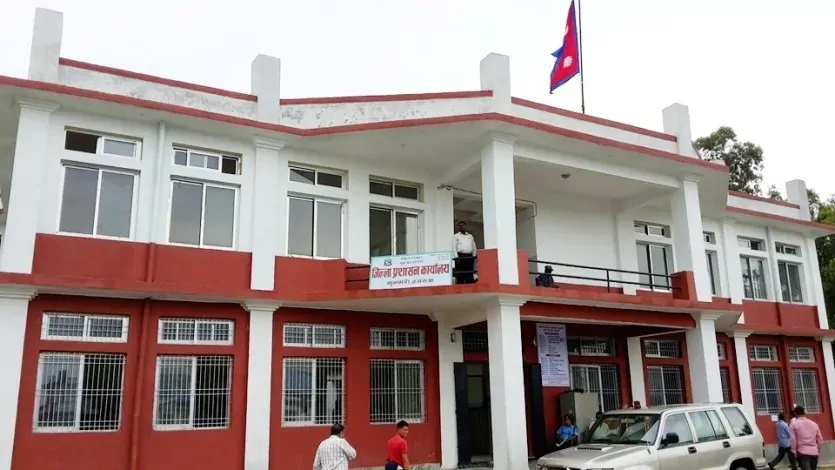
Kalika Municipality has fined the construction company Rs 11.6 million for failing to complete the administrative building construction by the stipulated deadline. The fine was imposed after the deadline was not extended despite multiple extensions granted for the work. According to Mayor Binod Regmi, Rabina Construction was awarded the contract on February 27, 2020 with a completion target of two years. When the work was not finished by that date, the municipality extended the deadline four times, finally setting it for November 16, 2024. The Public Procurement Act allows for imposing a fine and granting an extension if the work is not completed after the deadline expires. The fined construction entrepreneur filed a case at the Hetauda Bench of the High Court, challenging the municipality’s decision but the court dismissed the case.
Kavre farmers face crisis as potato prices plummet despite bumper harvest:
Farmers in Kavrepalanchowk are currently harvesting potatoes from their fields. Despite increased production, the farmers are worried due to a lack of market. In areas primarily known for vegetable production in the district, such as Panchkhal, Mandandeupur, Nala, and Panauti, farmers are busy harvesting potatoes. Sacks of potatoes are stacked in the field terraces, and piles of potatoes are visible along the roadside. However, the farmers do not appear happy because market prices are falling and traders who usually come to the fields have stopped visiting. Potatoes are currently selling for between Rs 7 and Rs 10 per kilogram. Due to the low selling price, farmers are confused about whether to harvest the potatoes or not. Farmers say that this year, due to the drop in potato prices, it will be difficult to even cover the cost of production. Compared to other crops, the cost of potato farming is higher. Taking into account the expenses – land preparation, organic and chemical fertilizers, potato seeds, irrigation, pesticides, and labor – the cost per kilogram ranges from Rs 18 to Rs 20. In the same period last year, potatoes were selling for Rs 28 to Rs 35 per kilogram. According to the Agriculture Branch of Panchkhal Municipality, potato farming is carried out on about 70,000 ropanis of land in the municipal area.
Bakrahaghat remains unfinished even after three years:
Bakrahaghat, being constructed on the banks of the Bakrahakhola in Urlabari-4, Morang, has remained incomplete even three years after the construction work began. Due to rapid urbanization and increasing population density, Urlabari Municipality had initiated the construction of the cremation site three years ago, aiming to complete it within five months. After 35 locals of Urlabari-4 donated four bighas of land for the project, a detailed project report (DPR) was prepared for the construction of the cremation site. In 2017, the municipality had allocated Rs 10 million for the project. However, the budget was frozen as the land had not been acquired at that time. The municipality later included the project in the budget of the last fiscal year. It had been proposed by then mayor Khadga Bahadur Fhago as a pride project of the city. Due to the lack of a well-managed cremation site in Urlabari, bodies are being cremated on both the eastern and western banks of the Bakraha River. On average, two to three bodies are cremated daily on the riverbanks. The municipality allocated Rs 7 million for the project in the fiscal year 2022/23, and the contract was awarded for Rs. 6.3 million to Dronika Construction on July 13, 2023, with a completion deadline of December 16, 2023. However, even after 28 months, the project remains incomplete.
Rain causes millions in losses to brick industries:
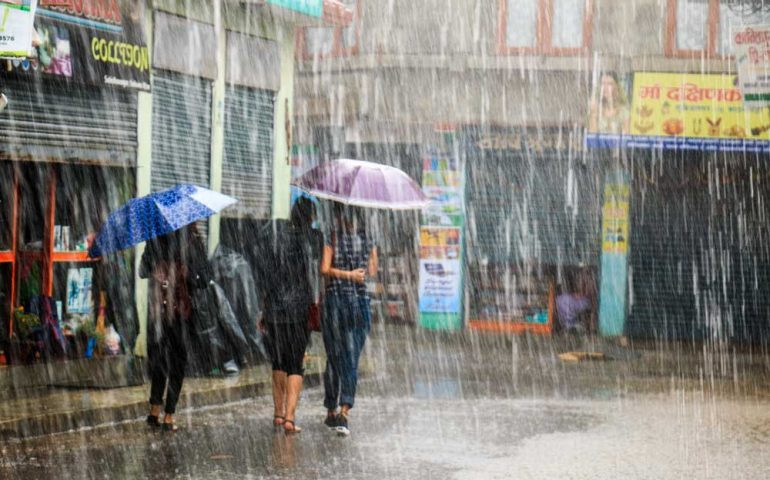
Brick makers in various districts of Madhes Province, including Saptari, Mahottari and Sarlahi, have suffered heavy losses after unseasonal rain and storms damaged large quantities of raw bricks. Due to the wind and rain that has been ongoing since Friday night, brick entrepreneurs in Saptari have faced severe difficulties. Bricks kept out in the sun for drying were soaked in water and decomposed, causing significant financial losses to some 45 brick kilns currently operating in the district. It costs Rs 4.38 to make a raw brick, according to entrepreneurs. At this rate, the losses run into millions of rupees across all brick industries in the district. Entrepreneurs maintain that brick producers will continue to suffer until a policy is introduced to close kilns from mid-November and allow firing to begin from mid-March. Currently, kilns are allowed to begin firing from mid-January, but it starts raining just two months later, causing brick kilns severe difficulties. Heavy rain on Friday evening, which continued until Saturday afternoon, destroyed raw bricks in other districts mas well.
Gold price drops by Rs 12,500 per tola:
Gold prices saw a significant drop in the local market in Nepal on Sunday. Today, the price decreased by Rs 12,500 per tola (11.66 grams). According to the Federation of Nepal Gold and Silver Dealers’ Associations, the price set for Sunday is Rs 282,000 per tola. On Friday, the precious yellow metal was traded at Rs 294,500 per tola. Similarly, the price of silver also decreased by Rs 355 per tola to Rs 4,540. On Friday, silver was traded at Rs 4,895 per tola.
Mcap of five of top-10 most valued firms erodes by Rs 1 trillion; HDFC Bank biggest laggard:
The combined market valuation of five of the top-10 most-valued firms eroded by Rs 1 trillion last week, with HDFC Bank taking the biggest hit. Last week, the BSE benchmark Sensex dipped 30.96 points, or 0.04 per cent, and the NSE Nifty slipped 36.6 points, or 0.15 per cent. Research institutions said markets ended the week on a largely flat note with a negative bias, reflecting underlying caution among participants. The tone remained positive during the first three sessions; however, a sharp decline on Thursday erased the gains, followed by a volatile final session. While HDFC Bank, ICICI Bank, Tata Consultancy Services (TCS), Bajaj Finance and Hindustan Unilever were the laggards, Reliance Industries, Bharti Airtel, State Bank of India, Infosys and Life Insurance Corporation of India (LIC) emerged as the winners. HDFC Bank’s valuation tumbled Rs 561.2448 billion to Rs 12,01,2.67 billion.The market valuation of Hindustan Unilever dropped by Rs 18,0.0962 billion to Rs 4,89,6.3132 billion. Bajaj Finance lost Rs 15,3.3842 billion to Rs 5,16,7.1512 billion. The market capitalisation (mcap) of TCS declined by Rs 7,1.2763 billion to Rs 8,64,9.40 billion and that of ICICI Bank edged lower by Rs 6,1.7172 billion to Rs 8,91,6.7306 billion. However, the valuation of Reliance Industries jumped Rs 459.4275 billion to Rs 19,14,2.3592 billion. The mcap of Bharti Airtel surged Rs 24,4.6203 billion to Rs 10,52,8.9375 billion and that of State Bank of India climbed Rs 10,7.0752 billion to Rs 9,76,9.6857 billion. The market valuation of LIC edged higher by Rs 2,6.2488 billion to Rs 4,91,6.1045 billion and Infosys added Rs 2,4.7379 billion, taking its mcap to Rs 5,08,7.8937 billion. Reliance Industries remained the most-valued firm, followed by HDFC Bank, Bharti Airtel, State Bank of India, ICICI Bank, TCS, Bajaj Finance, Infosys, LIC and Hindustan Unilever Ltd.
Middle East conflict disrupting supply chains, energy flows; Indian economy resilient, claims CII:
The ongoing conflict in West Asia is disrupting global supply chains and putting pressure on energy markets, affecting imports and exports worldwide, according to the Confederation of Indian Industry (CII). In a statement, the CII said the tensions in the region have impacted critical maritime routes and created ripple effects across industries. Indian companies are already witnessing operational challenges due to delays and shortages in key inputs. Indian companies are experiencing downstream effects, from shipment delays to constraints in key energy inputs, as well as emerging shortages in essential raw materials and intermediates across several sectors that rely heavily on timely cross border flows. Despite the challenges, the CII noted that India entered the current situation from a strong position due to reforms and the government’s push for self-reliance.
Strait of Hormuz disruption threatens Indian auto sector with Technical Grade Urea shortages and rising costs:
The effective shutdown of the Strait of Hormuz poses a severe threat to the Indian automobile sector, specifically endangering cargo movement due to a looming shortage of technical grade urea. A DAM Capital report noted that the maritime disruption compromises the supply of essential chemicals and raw materials, potentially bringing the country’s logistics network to a standstill. The crisis centers on India’s heavy reliance on imports for its automotive emissions control systems, which are now facing an immediate bottleneck. According to the report, India currently imports 50-60 per cent of its technical grade urea (TGU) requirements from major trade hubs in Egypt and Dubai. This specific grade of urea is a critical component in the production of diesel exhaust fluid (DEF). In modern vehicles, DEF is injected into the exhaust stream of diesel engines equipped with selective catalytic reduction (SCR) systems to convert harmful nitrogen oxides into nitrogen and water. All BSVI-compliant heavy-duty trucks and buses, along with large diesel passenger vehicles with engines typically over 2.0L, feature a mandatory engine interlock mechanism. Under this safety regulation, a “vehicle cannot operate if DEF levels are exhausted. The industry is now facing a countdown to potential immobilization. As per the report, the Society of Indian Automobile Manufacturers (SIAM) has formally engaged with the authorities regarding the depleting reserves. The report highlighted that SIAM has raised concerns with the government that “there is no clear visibility of urea supplies beyond early Apr’26.
Strait of Hormuz disruption could hit India’s LPG supplies, refined product markets more vulnerable than crude oil markets:
Disruptions around the Strait of Hormuz could pose significant risks to India’s energy security, particularly LPG supplies, according to a report by PL Capital. According to the report, disruptions around the Strait are likely to impact refined petroleum products more severely than crude oil. The report highlights that damage to refining infrastructure and logistical challenges could tighten the supply of products such as diesel, gasoline, LPG and jet fuel. The report said the global oil market is vulnerable to supply shocks due to the strategic importance of the Strait of Hormuz, through which a large portion of global oil trade passes. Iran’s influence over the Strait of Hormuz is often viewed as ‘nuclear-level leverage’, given that the chokepoint carries roughly Rs 20 per cent of global oil flows. For India, the risk is particularly high due to its dependence on energy imports from the Middle East. India is particularly vulnerable to the current disruption due to its dependence on Middle Eastern LPG. 50-60 per cent of India’s LPG imports transit via the Strait of Hormuz.
Strait of Hormuz closure triggers logistics shock for Indian fertilizer sector:
The effective closure of the Strait of Hormuz is set to trigger a significant input-cost and logistics shock for the Indian fertilizer sector, although the industry currently maintains comfortable near-term supplies. According to a report by DAM Capital, the current disruption is an input-cost and logistics shock, not an immediate availability crisis, particularly as the industry enters a lean demand period before Kharif requirements climb in mid-May. The Di-Ammonium Phosphate (DAP) segment faces the highest level of risk due to its structural reliance on foreign markets. The report stated that “DAP remains the most exposed due to import dependence and import-chain vulnerability.” The report stated that “China is no longer a dependable fallback” for Indian procurement needs. In fact, “China is halting most fertilizer exports to secure domestic supply and stabilize prices ahead of spring planting,” which forces Indian importers to look toward more distant or expensive alternatives like Morocco and Jordan.