Kathmandu
Tuesday, July 28, 2026





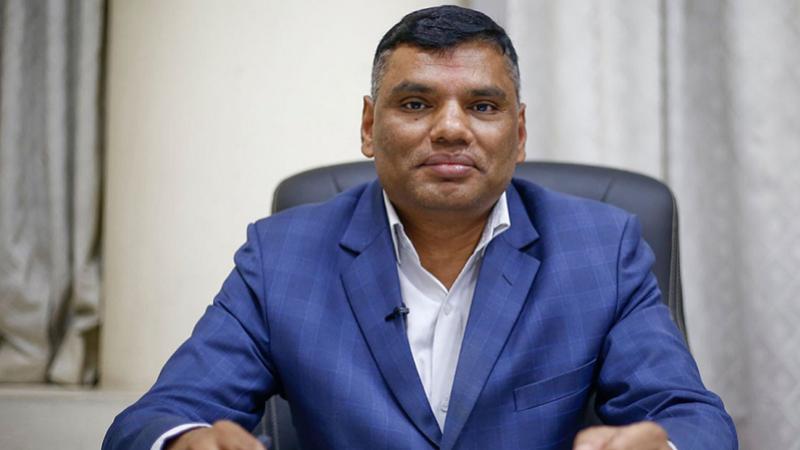
KATHMANDU: Then-Home Secretary Gokarna Mani Duwadi has told a high-level inquiry commission that no formal decisions were taken and no clear directives were issued as the Gen-Z protests spiraled into violence on September 8–9, 2025.
According to the report by the commission led by former high court judge Gauri Bahadur Karki, Duwadi described a situation marked by uncertainty, delayed response, and lack of coordinated command at the highest levels of government.
He said a Central Security Committee meeting was held on September 7 at the Ministry of Home Affairs in Singha Durbar, where officials were briefed that the protests were expected to remain peaceful. While there was a general policy to exercise restraint, no written decisions or operational directives were made.
“I returned to the ministry after receiving information around midday on September 8 that protesters were breaching security cordons and entering the Parliament building while I was attending a parliamentary session,” Duwadi stated.
He added that after learning of a curfew imposed by the Kathmandu Chief District Officer, he instructed security agencies to act with restraint and focus on protecting lives. He also contacted Chief of the Army Staff Ashok Sigdel twice to coordinate possible army support.
Duwadi told the commission that although a high-level review meeting was held at Baluwatar later that evening to discuss strengthening security at sensitive installations, the situation on the ground continued to deteriorate.
Following the resignation of then-Home Minister Ramesh Lekhak, security reporting was routed through the Chief Secretary. However, even as widespread arson, vandalism, and looting were reported across the country on September 9, Duwadi said no clear instructions were issued in response.
Duwadi denied issuing any orders related to the use of force, stating that he did not have the authority to direct “ceasefire” decisions or operational firing orders. He also clarified that he had no role in any decision related to the release of Rabi Lamichhane or the management of prisoners during the unrest.
The former Home Secretary acknowledged that the scale of violence-including arson and coordinated attacks-was not anticipated, given prior intelligence suggesting a peaceful demonstration.
He stressed the need for systemic reforms, including improved public service delivery, transparency, job creation, merit-based political appointments, and stronger security preparedness to prevent similar crises in the future.
Here is the full translation of then home secretary Gokarna Mani Duwadi statement:
A meeting of the Central Security Committee was held at the Ministry of Home Affairs, Singha Durbar, on the evening of Bhadra 22, prior to the incident. During the meeting, briefings were received from the heads of security agencies and the Chief District Officer (CDO) stating that the youth generation was organizing a protest, which the organizers claimed would remain peaceful.
Although the Ministry’s policy was to prevent the protest from becoming provocative and to maintain restraint, no written decision was made at that time. I was not aware of digital platforms like Reddit and Discord being used by the “Gen-Z” youth at that time. I have clarified that managing the potential consequences of shutting down social media did not fall under the jurisdiction of the Ministry of Home Affairs, and I had no information regarding that matter.
On the morning of Bhadra 23, I was present at a meeting of the State Affairs and Good Governance Committee under the House of Representatives at Singha Durbar. Reporting on protests and related activities usually occurred through the Ministry’s control room, and information was also occasionally received from Chief District Officers and heads of security agencies. Around 11:30 AM – 12:00 PM that day, after receiving information from the head of the National Investigation Department that protesters were breaking through security perimeters and entering the Parliament building, I left the meeting and reached the Ministry.
Since the Chief District Officer holds the authority to impose a curfew under Section 6(A) of the Local Administration Act, 2028, the then CDO of Kathmandu informed me via telephone that a curfew had been imposed. Instructions were subsequently given to security agencies to act with restraint and within legal bounds during the implementation of the curfew.
Following the curfew order, the CDO of Kathmandu requested coordination for the assistance of the Nepali Army; I then immediately called the Chief of Army Staff twice to request the necessary support and coordination. I received verbal reports from the heads of security agencies stating that a large number of protesters and security personnel were injured during the demonstrations, and those full details, I immediately informed the Home Minister.
Given the high number of casualties in the tragic incident at the Parliament building premises, my focus, along with that of all security agency heads, remained on the treatment and facilitation of the injured. Reports were received that protests had occurred nationwide that day, with incidents taking place in many locations. During a security briefing held that evening at the Prime Minister’s residence in Baluwatar, it was conveyed that the situation in the Parliament building area had been brought under control. I learned that a tragic event had occurred during the protests, but at that time, I did not have detailed information regarding who specifically had been shot.
On the evening of Bhadra 23, a review of the incident took place at Baluwatar. During this session, discussions were held regarding effective coordination between the Nepali Army and all security agencies to face potential security challenges and ensure the proper security of Vital Installations. Following the resignation of the Home Minister amidst the critical situation arising from the human casualties during the Gen-Z movement on Bhadra 23-and before the situation was fully under control-I began submitting security reports to the Chief Secretary.
On the morning of Bhadra 24, 2082, at approximately 8:00 AM, I reached the Ministry of Home Affairs, Singha Durbar, and subsequently the Prime Minister’s residence in Baluwatar. After receiving information from the heads of security agencies regarding arson, vandalism, and looting at the private residences of party leaders, party offices, police stations, government offices, and commercial establishments across the Kathmandu Valley and various parts of the country, I reported these matters to the Chief Secretary. The Chief Secretary stated he would inform the then Prime Minister; however, no concrete instructions were received in that regard.
Regarding the release of Rabi Lamichhane, President of the Rastriya Swatantra Party-who was being held at Nakkhu Jail in Lalitpur-from the prison premises with a formal letter for security reasons, I issued no orders or directives, as this falls outside the jurisdiction of the Home Secretary.
Similarly, I did not issue the order on Bhadra 24 via the communication sets of the Nepal Police Headquarters or the Valley Police Office to prepare a list of detainees, release them if such a situation arose, or secure one’s own weapons, communication sets, and vehicles while refraining from using any force other than tear gas. I had no information regarding that matter.
Following the Prime Minister’s resignation on the afternoon of Bhadra 24, and given the need to sit together with the heads of all security agencies to work coordinately to ease the uneasy situation of peace and security in the country, we all gathered at the Army Headquarters in Bhadrakali for coordination. In that process, a public appeal was also made to resolve the problem through talks and dialogue.
Regarding the provision of relief and compensation for those who died or were injured during the protests on Bhadra 23 and 24, a decision was made by the Council of Ministers based on a proposal from the Ministry of Home Affairs while I was still in office. According to that decision, those who died during the protests were to be declared martyrs, relief of 1.5 million rupees (15 Lakhs) was to be provided to each deceased person’s family, the Ministry of Health was to arrange free treatment for the injured, and the Ministry of Urban Development was to arrange the construction of a memorial in a suitable location. During those days, the Ministry of Home Affairs effectively coordinated and facilitated the management of the bodies of the deceased and the treatment of the injured. Later that same afternoon, while I was deployed in managing peace and security, I learned that an unidentified group had entered my private residence located in Nagarjun Municipality, Ward No. 2, Kathmandu District, and committed vandalism, arson, and looting.
Among the main reasons for the incidents of Bhadra 23 and 24, although the primary demands appeared to be against the government’s controls on social media and for the maintenance of good governance through corruption control, it is my view that this must be viewed in connection with the country’s overall administrative system, socio-economic condition, and the effectiveness of service delivery.
To ensure such incidents do not recur in the future, I have emphasized that: public service delivery must be made technology-friendly, swift, effective, and high-quality; the delays, hassles, and middleman-control seen in service delivery must be eliminated; political appointments must be based on merit, skill, and competence; an environment for employment and investment must be created; government performance must be made transparent and accountable; development and construction work must be completed on time; and equal access and equitable distribution of state resources must be ensured for everyone.
It appears necessary to equip the agencies under the Ministry of Home Affairs through physical infrastructure, system development, and training to make them efficient and citizen-friendly. As the District Administration Office is the leader and coordinating body of the entire district, it should be developed as a model office.
Since the Chief District Officer (CDO) also has to perform quasi-judicial duties, and given that matters of peace and security are grave and sensitive, it is my understanding that human resource management in the form of a Ministerial Cadre is necessary within the Ministry of Home Affairs and its subordinate bodies. Furthermore, I have pointed out the need to grant additional responsibilities and authority by undertaking legal reforms to simplify service delivery, develop and utilize technology, and facilitate coordination between the federal, provincial, and local levels.
As security teams deployed in the field use force based on their analysis of the immediate situation and circumstances, issuing direct orders such as a “Cease Fire” on behalf of the Home Secretary does not fall within my legal jurisdiction. I admit that because we had received information that the Gen-Z movement would be peaceful, I could not anticipate a situation involving such high-scale violence, arson, and vandalism. While systems for inter-agency coordination through structures like the Central Security Committee and District Security Committee exist and have been implemented, it is my view that the Commission should comprehensively analyze how effective they truly were during the incidents of Bhadra 23 and 24.
Technical aspects such as the Parliament building premises, buffer zones, escape routes, safety corridors, layered defense, and Zeroing fall under the jurisdiction of the field-deployed security agencies and the District Security Committee; therefore, it is natural that I would not have direct knowledge of those matters. Similarly, the criteria for distinguishing between protesters and bystanders, crowd control SOPs, and specialized training also fall within the technical responsibilities of the security agencies.
In summary, I define my role as a coordinating body acting within legal limits. Since the use of force, mobilization, and technical decisions are guided by field conditions and the law, I maintain that I did not issue any orders exceeding my authority. I express my confidence that the overall truth of the incident and the determination of responsibility will be established through the Commission’s impartial analysis.