Kathmandu
Friday, July 3, 2026





When primary education is freed from written exams, the alternative could be the continuous assessment system (CAS)
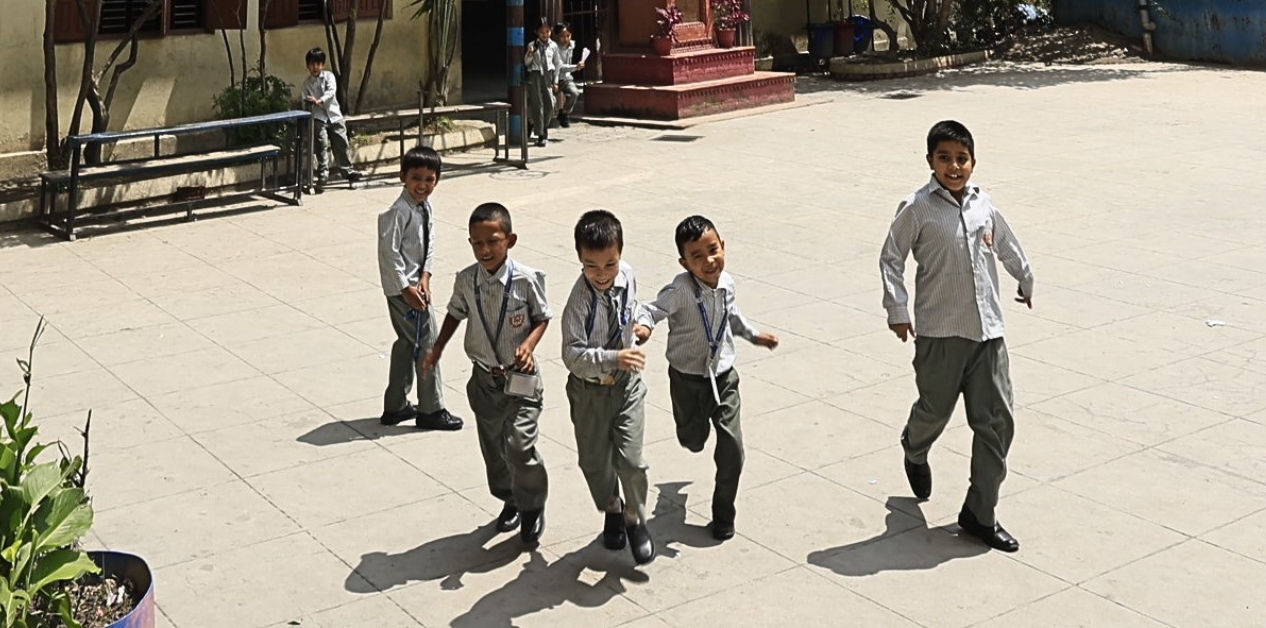
KATHMANDU: In the 100-point governance reform announced on March 27 by the Council of Ministers led by Balendra Shah (Balen), the government has decided not to hold internal examinations for students up to grade 5 starting from the next academic session. With this government decision, discussion has begun about alternative student assessment systems. Since written examinations at the primary level cause psychological impact and pressure on students, this decision is now pressuring school teachers to move toward alternative assessment systems. The Continuous Assessment System (CAS), currently practiced in lower grades, could be one such alternative. However, implementing this system is not straightforward.
Educationist Meenakshi Dahal considers implementing CAS challenging because teachers do not have the practice of continuously assessing students and helping them improve their learning. “When genuinely implemented, the continuous assessment system helps identify and improve students’ learning levels,” she says, “But have our teachers been prepared to genuinely implement it? Even so, this system is not new for Nepal.”
Under-secretary and spokesperson of the Planning and Monitoring Division at the Ministry of Education, Shiva Kumar Sapkota, says that in accordance with the government’s decision, it is possible to move forward by discussing alternative assessment systems in place of internal examinations for students up to grade 5. “It has only been two days since the announcement. We can discuss how to implement it and make a decision when needed,” he says.
In the past, when written examinations were removed from schools in the name of continuous assessment systems, primary level learning actually declined further. The practice of removing written exams and promoting weaker students to higher grades without proper assessment carries the risk of further weakening the foundation of primary-level education.
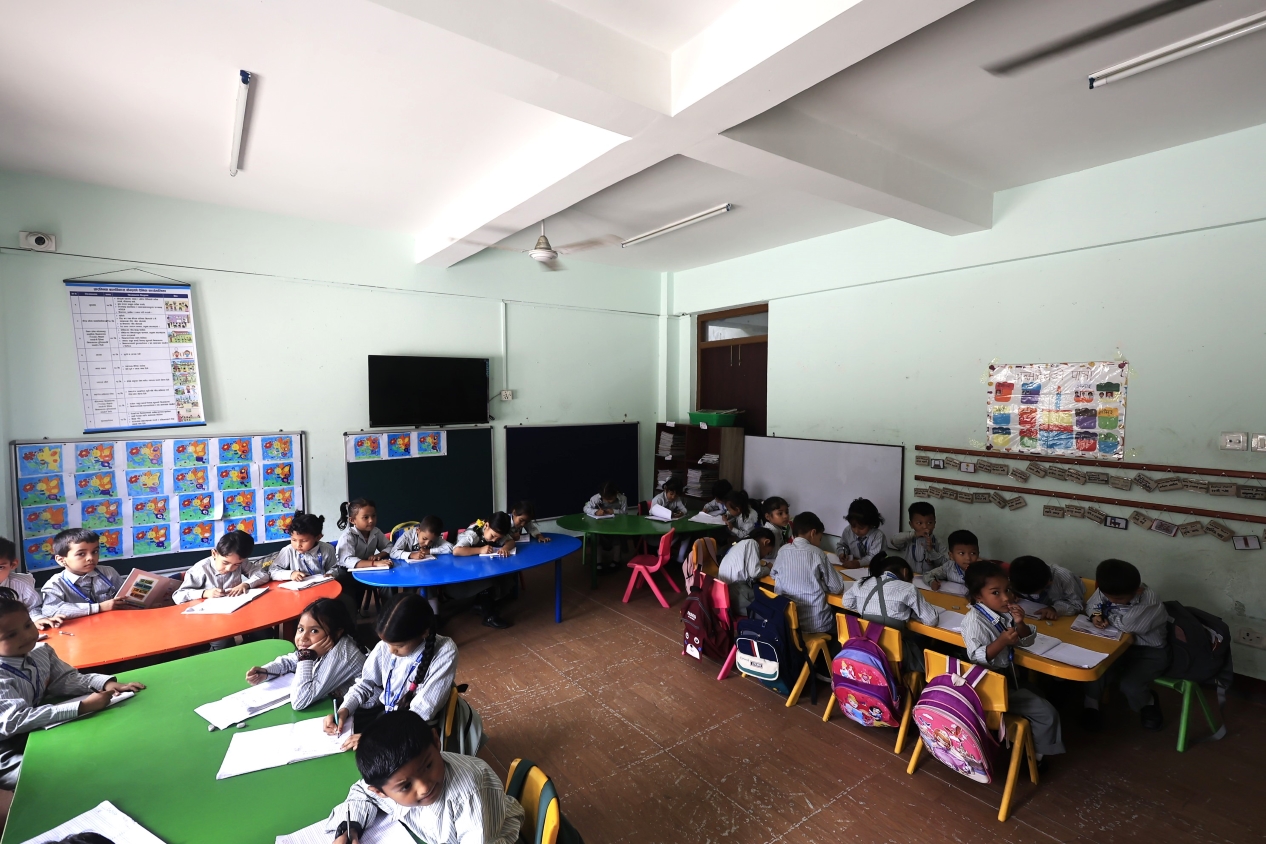
Students of Gyanodaya Secondary School in Bafal, Kathmandu, doing class work. Photo: Bikram Rai
Rajkumar Thapa, chairperson of the management committee of Siddhiganesh Secondary School in Kageshwari Manohara, Kathmandu, says, “This decision could make teachers in community schools who lack enthusiasm, willingness, and motivation to teach even lazier.” According to him, teachers accustomed to administering written exams once a year and checking answer sheets will find it even harder to continuously assess students.
Siddhiganesh School had been declared the best among community schools in Kathmandu by achieving a 3.24 GPA in the 2021 Secondary Education Examination (SEE).
According to the Economic Survey 2024/25, the total number of students studying from grade 1 to 5 across both community and private schools nationwide in academic session 2081 BS is 3,514,928. Similarly, the number of teachers is 154,235, comprising 113,604 in community schools and 40,631 in private schools. The Balen government’s decision to free grades up to 5 from written examinations will directly affect this number.
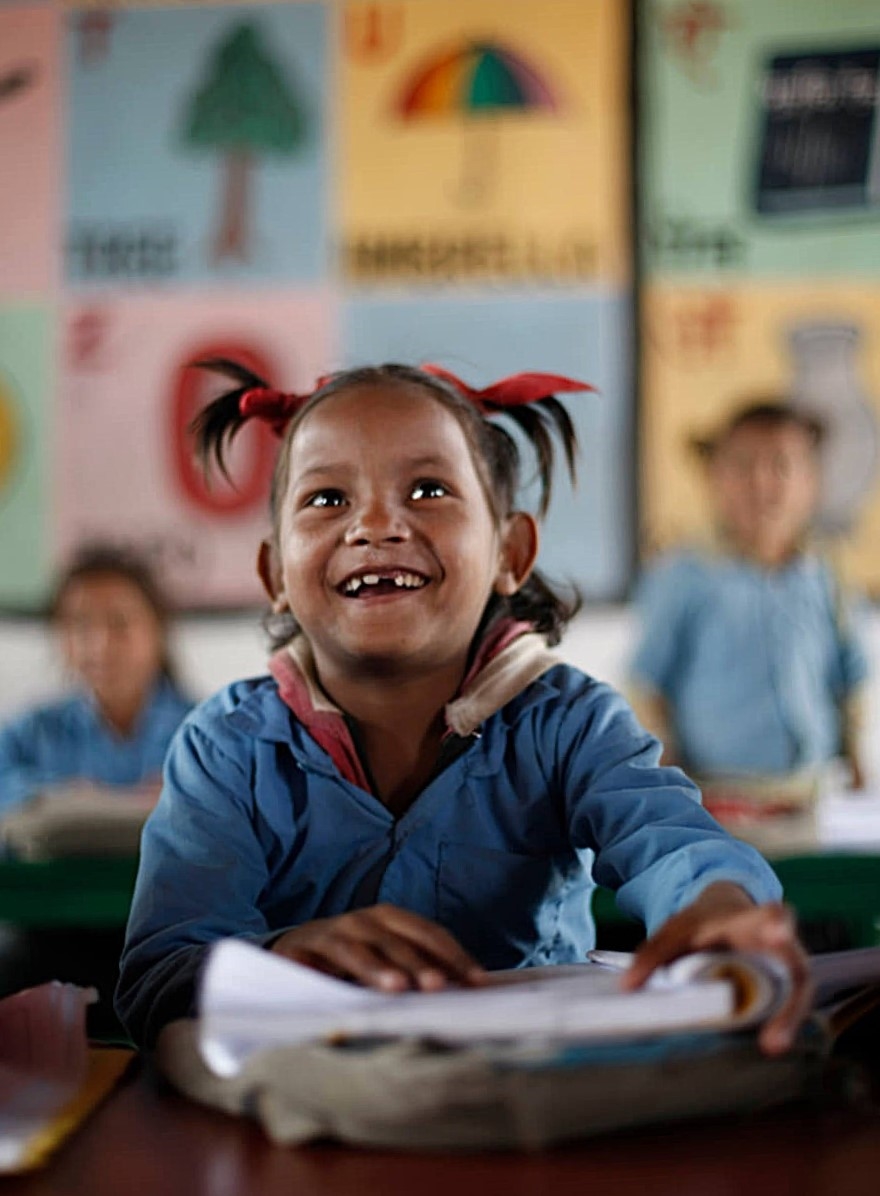
A girl student studying at a community school. Photo: Bikram Rai
Indeed, the government had introduced CAS as an alternative assessment system since 1999 to free primary-level students from the pressure of traditional written examinations. The continuous assessment system has provisions for daily assessment of students through methods such as classwork, project work, creative work, attendance, and behavioral change (learning achievement). This assessment system was initiated under the Ninth Five-Year Plan (1997/98–2001/02) to improve primary-level educational standards. The system was initially implemented in 1999 in Ilam, Chitwan, Syangja, Surkhet, and Kanchanpur, and from 2000 it was expanded nationwide. According to the Curriculum Development Center, the assessment system was implemented under the Basic and Primary Education Project funded by donors including the World Bank, ADB, UNICEF, European Commission, Denmark, Norway, Japan, and Finland. It was also continued in the School Sector Reform Plan that ran from 2009/10 to 2015/16.
Similarly, the ‘Primary Education Curriculum, 2062 BS’ has a provision for implementing the continuous student assessment system for grades 1 to 3. The ‘Primary Education Curriculum, 2065 BS’ also states that a mixed assessment system will be implemented for students in grades 4 and 5, with 50 percent summative (annual examination) and 50 percent continuous student assessment (formative, meaning assessment for learning). However, weak curriculum implementation, poor teaching and learning, and inadequate monitoring and supervision have meant that the implementation of the continuous assessment system has not achieved the expected success. This fact is also shown by a study titled ‘Continuous Assessment System at School Level’ published in 2022.
Although it is said that the continuous assessment system does not burden students mentally, an official from the Educational Quality Testing Center of the Ministry of Education, Science and Technology says its implementation is not without challenges. “The continuous assessment system is good,” he says, “But there are challenges in implementing it; the government has been trying since 1999 and has still not been able to implement it properly.” Teachers accustomed to old learning practices find it troublesome to carry out daily student assessments as required by the continuous assessment system. Teachers who find it easy and simple to assess students by conducting written exams once or twice a year may find the continuous assessment system burdensome. Implementing the continuous assessment system can also be difficult because some parents pressure schools to evaluate their children through written examinations.