Kathmandu
Saturday, July 18, 2026





Female advocates and judges are redefining the legal landscape while pursuing respect, growth, and empowerment
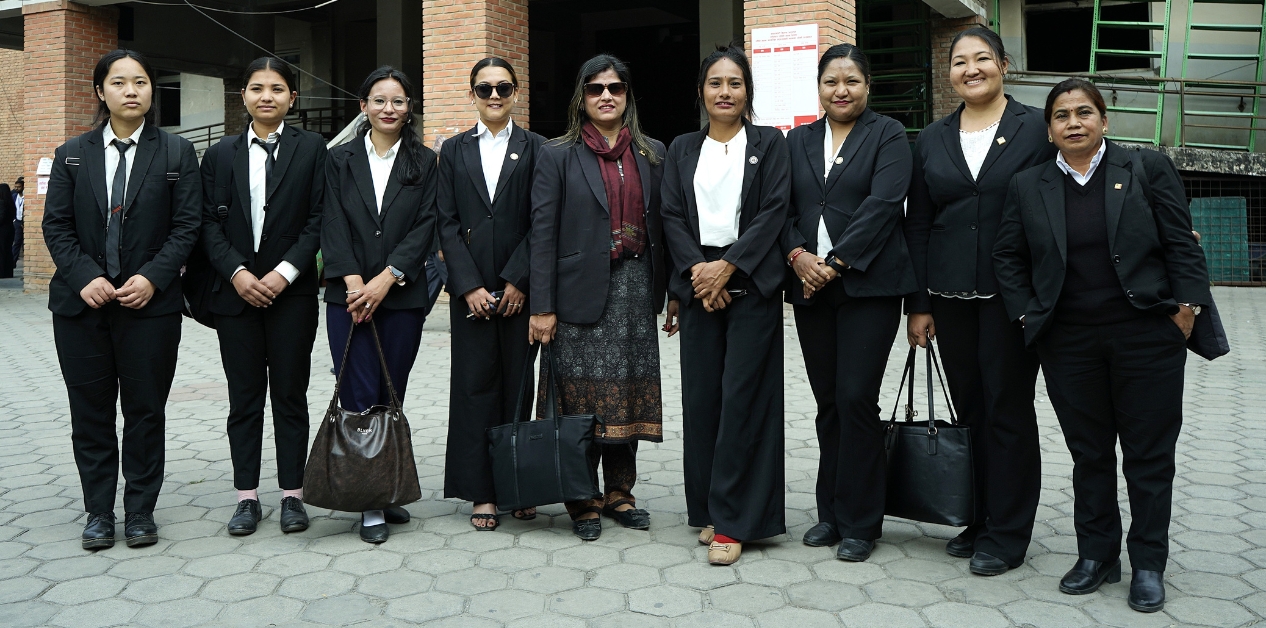
KATHMANDU: Women were long forced to remain absent from the legal profession, a field envisioned for ‘gentlemen.’ In such an environment, it was not surprising that many found it unusual when Sharada Shrestha became Nepal’s first female judge in 1967 at the Land Reform Special Court.
Records show that between 1969 and 1979, only 10 women received a lawyer’s license in Nepal. In the following decade, that number rose to 74, among them Sushila Karki.
Karki, the first female chief justice of Nepal, wrote in her memoir Nyaya, “My advocacy began at a time when there was a concept that women could not practice law,” said Karki. Born in 1952, she argued her first case on February 9, 1979.
Advocate Anjita Khanal from Gorkha, who began practicing law two decades later in 2000, recalled that female participation in the profession remained low even in her time. “Until our generation, there were not many women studying law. Even if they studied, many were forced to leave midway due to family responsibilities or pressure. They could not last long in this profession,” said Khanal, who is also the immediate past general secretary of the Nepal Bar Association. “The number of women who actually practiced law was even lower.” Khanal was the first female general secretary of the Bar Association.
Advocate Sushila Chaudhary said that compared to the time of these senior generations, the current judicial and legal landscape has changed significantly. “The number of women taking exams from colleges and universities is high. For some years now, women have even been leading in the top ten of the Bar Council exam results,” said Chaudhary, Joint Secretary of the High Court Bar Association Patan Executive Committee.
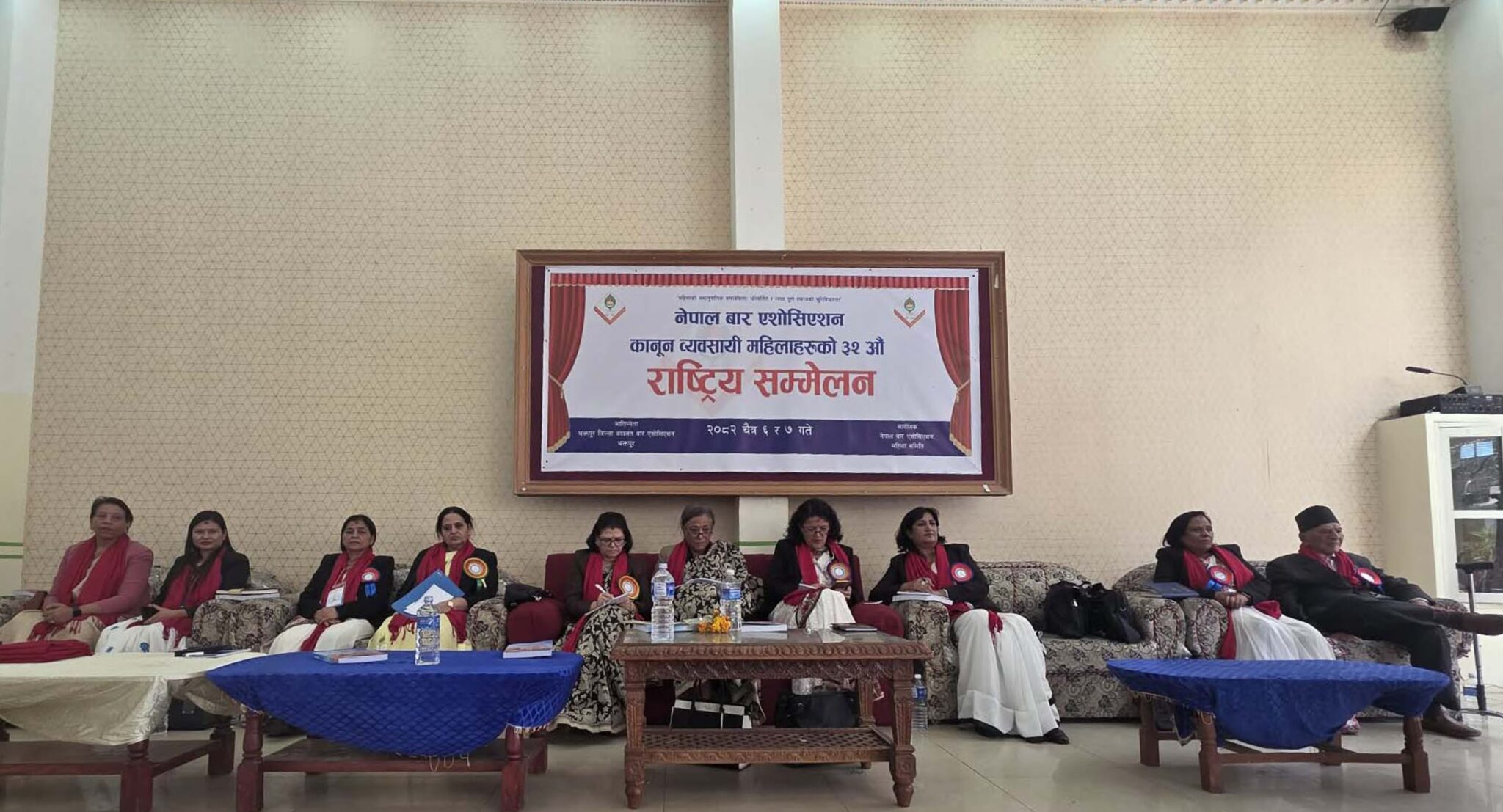
Supreme Court Justice Sapana Pradhan Malla at the 32nd National Conference of Women Legal Practitioners in Bhaktapur. Photo courtesy: RSS
Advocate Prabika Sintakala said that positive results in female participation have been evident over the last two decades. “Currently, women are more numerous among those studying law and passing the advocate exams,” said Sintakala.
In the mid-1990s, women taking advocate licenses were less than 5 percent, whereas today this number has quadrupled. From 2015 to 2025, at least 3,121 women obtained advocate certificates, while during the same period, 4,154 men received licenses.
Shrestha, who has been active in the profession for about a decade and also teaches at Kathmandu University School of Law, Dhulikhel, said, “The number of female students in college classrooms is higher. The results of the advocate exams also show a higher passing percentage for women compared to men. There are even examples where seven of the top ten were women.”
Sintakala said that previously, law was taught only in a few colleges. “When colleges and universities teaching law expanded across the country, student numbers increased. There are no rigid rules for studying law. Students from any background, such as science, commerce, or arts, can pursue it,” said Sintakala.
Law is now taught in many colleges across the country under Tribhuvan University, Kathmandu University, Purbanchal University, and Mid-West University. In many of these colleges, female students make up more than 50% of the enrollment. In some colleges, female students account for over 70%.
In the mid-1990s, women taking advocate licenses were less than 5 percent, whereas today this number has quadrupled. From 2015 to 2025, at least 3,121 women obtained advocate certificates, while during the same period, 4,154 men received licenses.
According to Aditi Shah, a BA LLB student at Kathmandu School of Law, Bhaktapur, “In my college, the ratio of female to male students is about 70 to 30,” said Shah.
Prabisha Sejuwal, a third-year student at Kathmandu University School of Law, Dhulikhel, said, “In my class, there are 18 male students and 30 female students,” said Sejuwal.
Reasons for attraction
Since studying law opens up opportunities in many sectors, students appear increasingly attracted to the field. Female advocates working in the profession say that this appeal has grown because one can work in government service, non-governmental organizations, corporate houses, teaching, banks, or independently by opening one’s own law firm.
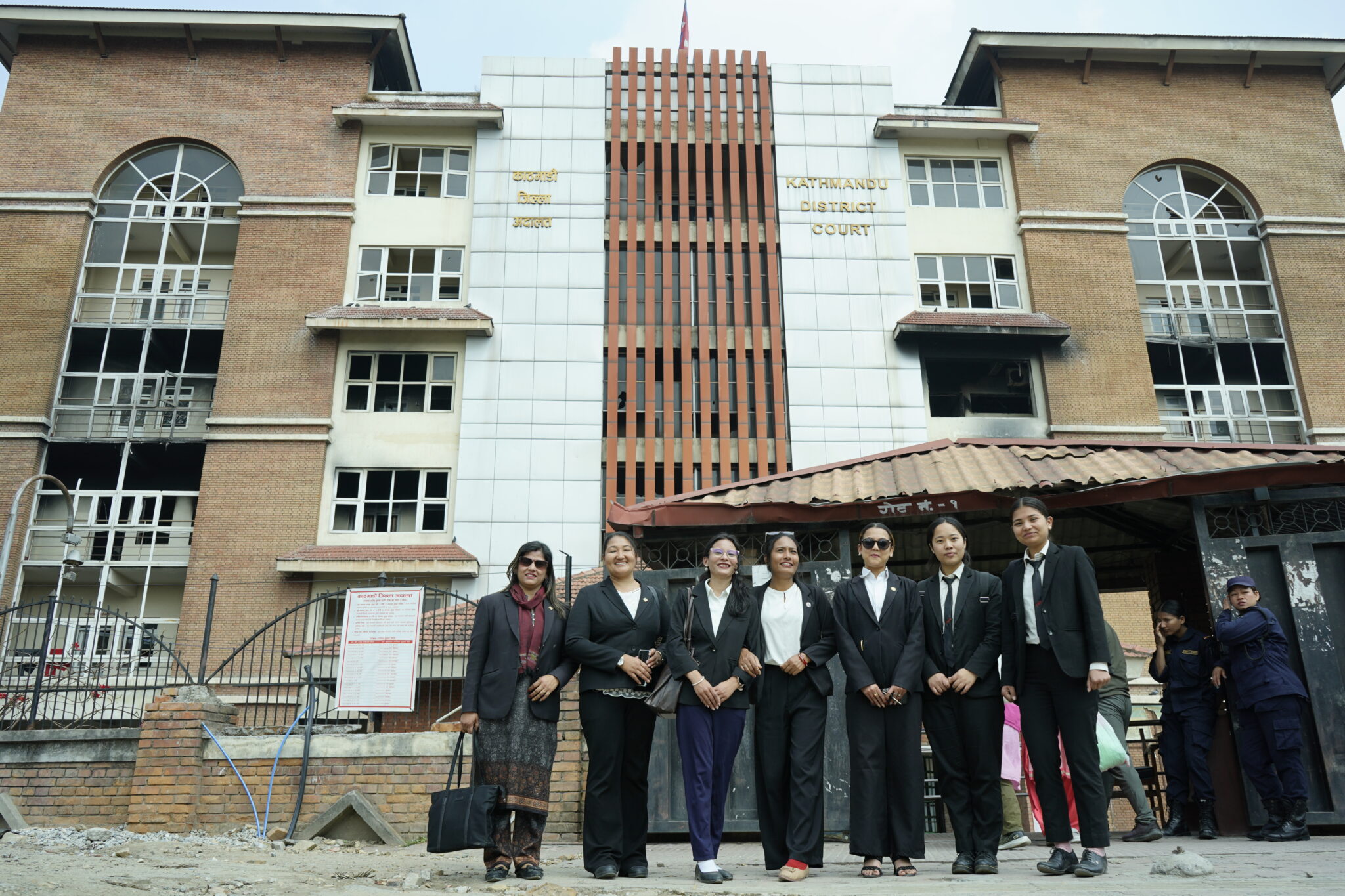
Advocate Chaudhary said that after the country transitioned to federalism, the demand for human resources with legal knowledge increased. “According to federalism, there was a demand for human resources with knowledge of law at the federal, provincial, and local levels. Women also received opportunities in these roles,” said Chaudhary.
Among women entering the legal profession, which offers broad career possibilities in both the private and government sectors, interest in government service appears higher. Advocate Sushila Shrestha said, “Due to reasons such as a stable career, certainty of basic service facilities, and social prestige, many women coming from a law background are attracted to government service. Government reservations have also further ensured female participation.”
Advocate Narayani Khadka, who has been working in government judicial service for the past two years, said, “In our context, there is arbitrariness in the private sector. Even though working hours are long, salaries are low, and the chance of becoming permanent quickly is limited. Therefore, I find that many women are attracted to the government sector because of stability, maternity leave, and social security,” said Khadka.
Opportunities and challenges together
Even though encouraging achievements have been seen over the past two decades, the number of women in the legal profession still lags behind men. According to data up to February 13 of this year, a total of 22,667 advocate licenses have been issued.
Shree Ram Khanal, secretary of the Nepal Bar Council, said, “Among them, 17,498 are male advocates, while only 5,169 are female advocates. Furthermore, the number of female judges remains very low. Among 740 senior advocates, 706 are men and only 34 are women.”
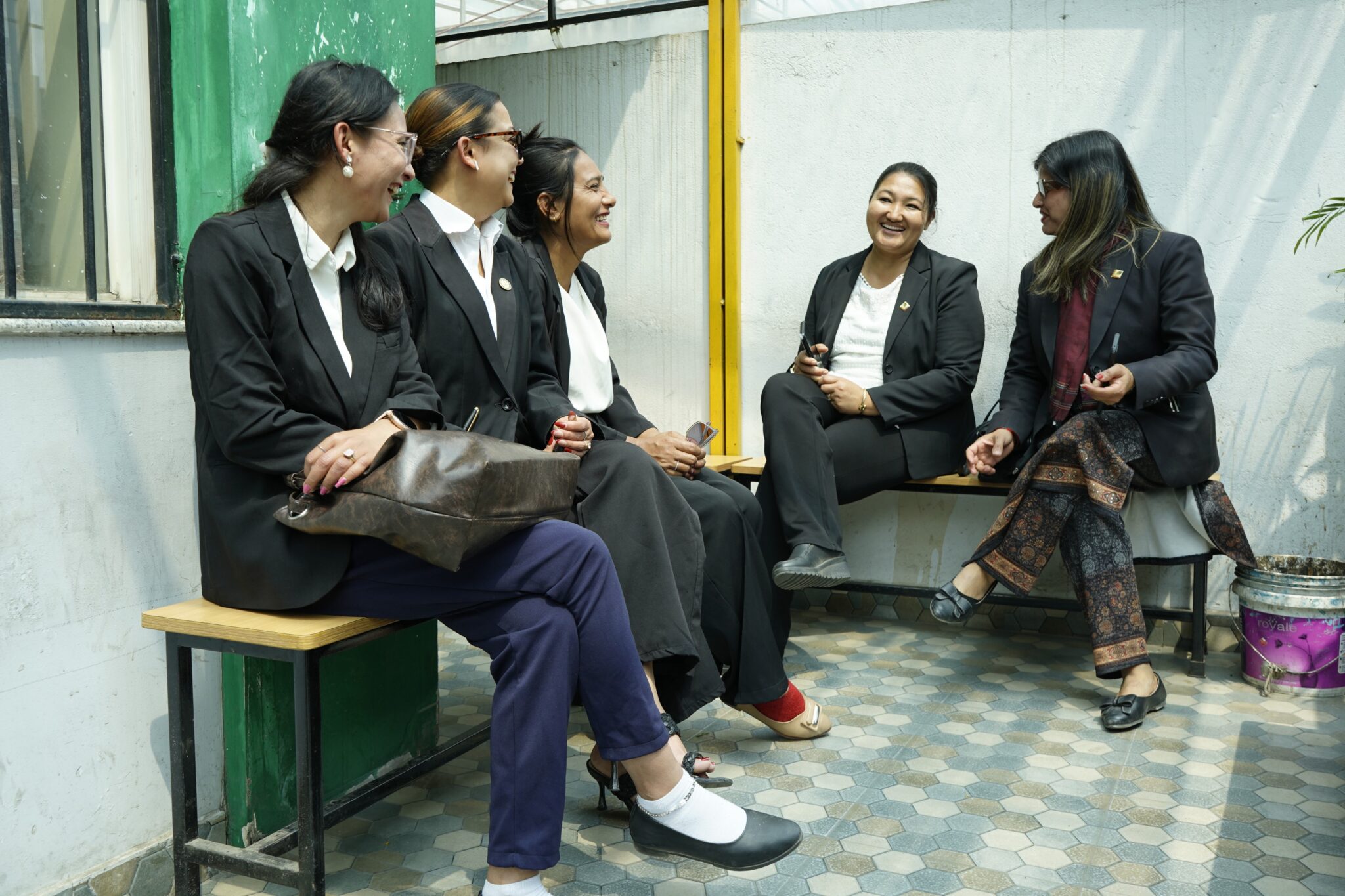
This highlights the need for women to advance into leadership roles alongside their growing numbers in the profession. There is a pressing need to increase the proportion of women in leadership positions, from the Bar Association and District Courts to the High Court and Supreme Court.
Advocate Khanal said, “For women entering the legal profession, we have come to a more encouraging situation than in our time. However, the gap still remains.”
To prepare this report, conversations were held with female students from law colleges around Bijulibazar and about a dozen new-generation female advocates who frequent the courts. Many noted, “It takes five to seven years for a new advocate to prove themselves and earn work by gaining trust. Many hesitate to give cases simply because the advocate is a woman.”
Sushila Shrestha said, “For this very reason, some women have not been able to continue in this profession. Women working in the law and justice sector provide justice to victims, but they must also face challenges and discrimination within the public sphere and the workplace itself, alongside the legal battles.”
Prabika Sintakala expressed dissatisfaction over the prevailing tendency to hesitate in assigning major cases to women.
Narayani Khadka, active in government service, said, “The impact of many forms of discrimination between men and women exists in the justice sector as well. Even today, men are addressed as ‘Wakil Saab,’ meaning ‘Lawyer Sir,’ while women are considered ‘Sister’ Bahini in Nepali.”
The presence of women in the legal field is not just a matter of participation and leadership; it is also a pursuit of self-respect and a medium for self-development. One advocate said, “I studied law because women can also play leadership roles in law and contribute to social transformation.”
Bipana Darlami, 21, and Sheetal Bista, 22, of Chakrabarti HaBi Education Academy, said, “Law is a subject that makes women aware and self-reliant,” said Darlami and Bista.
Narayani Khadka, active in government service, said, “The impact of many forms of discrimination between men and women exists in the justice sector as well. Even today, men are addressed as ‘Wakil Saab,’ meaning ‘Lawyer Sir,’ while women are considered ‘Sister’ Bahini in Nepali.”
Prabisha Sejuwal, 19, of Kathmandu University School of Law, said, “I was motivated to study law because it fosters self-confidence, leadership development, and understanding of world law.”
For many, law is becoming a tool for women’s empowerment and a way to address gender imbalance in society.
Aditi Shah, who came to Kathmandu from Parsa, said, “Previously, my understanding of society was limited. After coming to law camp, subjects like history, philosophy, and economics changed the very way I think. Coming from a Madhesh background, I was not previously connected to these subjects, but now I have started to understand society, history, and human behavior from a different perspective,” said Shah.