Kathmandu
Saturday, July 18, 2026





Lack of internal resource self-reliance, absence of participatory shared platforms, and failure to match international programming practices leave local film festivals unable to expand
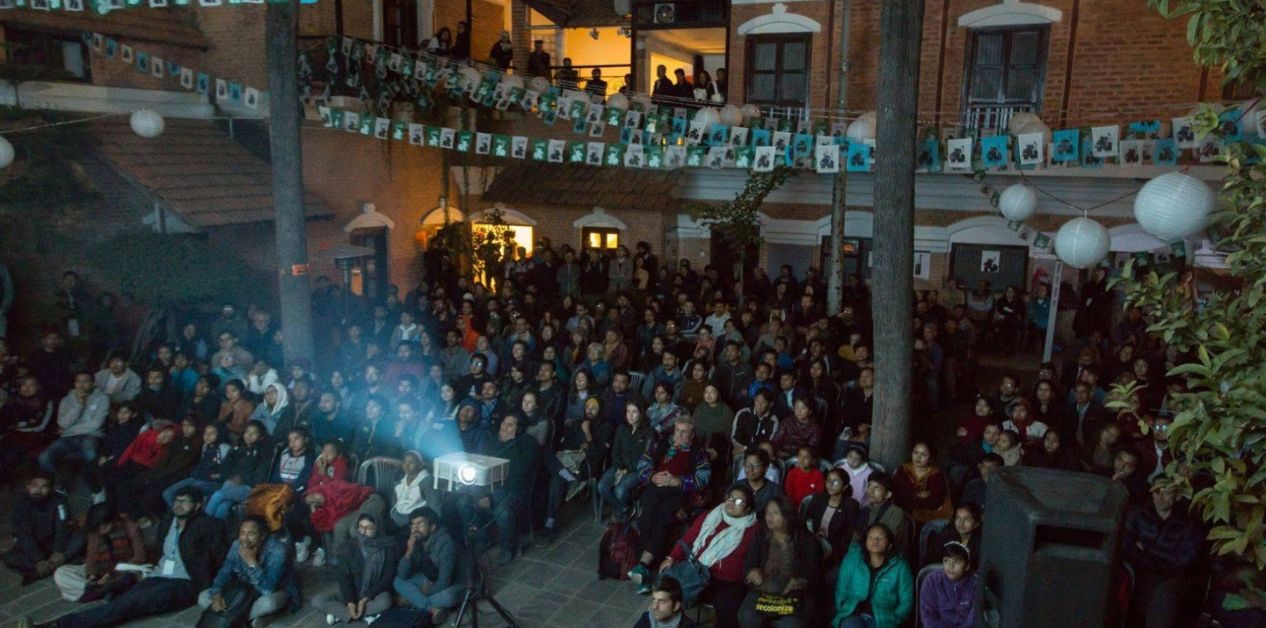
KATHMANDU: At one time, film analyst Anup Subedi watched almost all the films at film festivals held in Kathmandu without missing any. In the period since Covid, however, Subedi attends such festivals only to watch a few films.
“The quality of the films shown at the festival is one reason. I started to find many films I went to watch there, the discussions held there, and the people met there to be similar. Newness kept decreasing,” Subedi says, “As I did not get intellectual or creative satisfaction, my interest has also been declining.”
In informal conversations, complaints like Subedi’s are heard from many people that the quality of film festivals organized in Nepal has not been able to increase. This demands a debate about the quality of festivals.
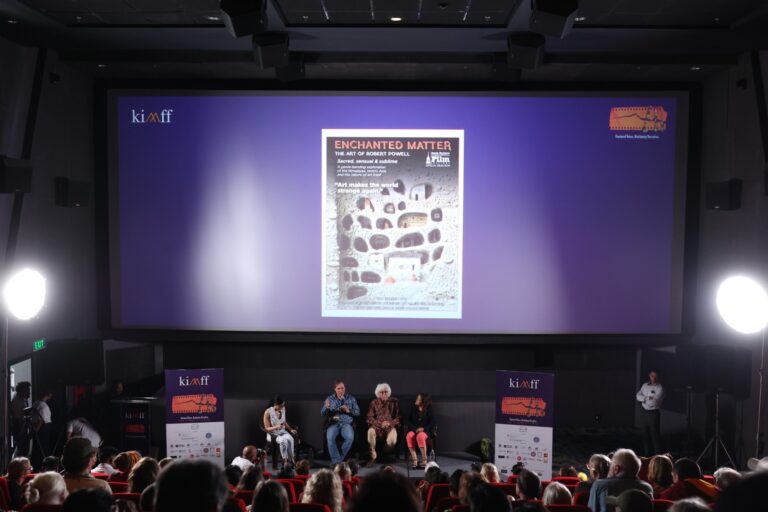
Currently, about one dozen small and grand film festivals are organized in Nepal. Among them, Film South Asia (FSA, year 1997), which is about to reach nearly three decades, and the Kathmandu International Mountain Film Festival (KIMFF, 2000), which has completed 26 years, are the oldest festivals in Nepal. Apart from these, some festivals have reached around a decade of age. New festivals are being added every one or two years. Even though the number is added, some festivals are organized irregularly, while some have even shut down. Ekadeshma International Short Film Festival and the Pokhara International Film Festival are festivals that shut down despite being good.
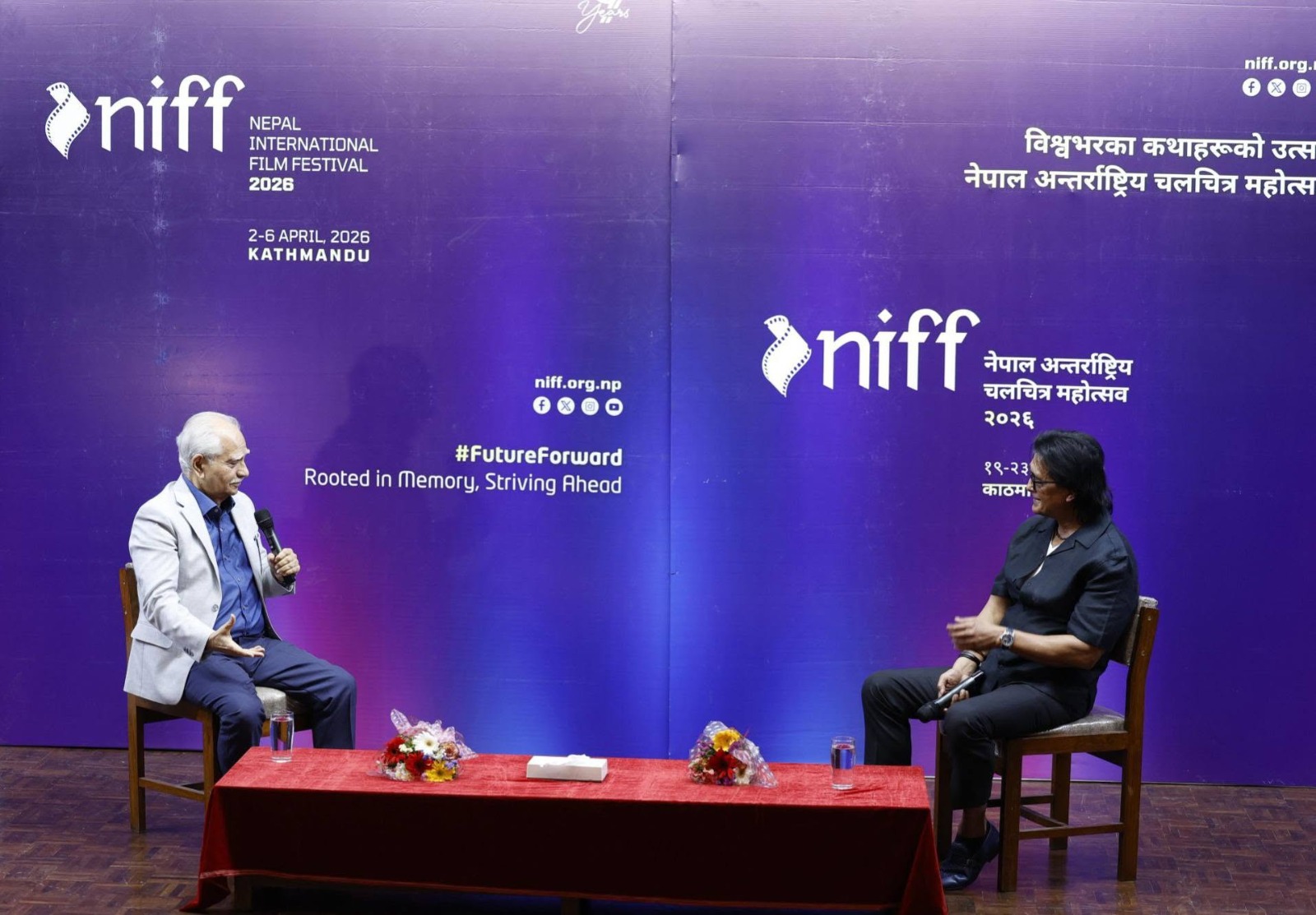
Nepal International Film Festival. Photo courtesy: NIFF’s Facebook
The initial objective of starting film festivals in Nepal was to develop a culture of watching and showing quality national and international films. That was a time when it was extremely difficult for organizers to attract viewers toward different-stream quality films that were not exhibited in theaters. Basanta Thapa, who is associated with the documentary special FSA and KIMFF, which exhibits and promotes the culture of mountains and hills, recalls that in the initial years, the participation of foreign viewers used to be higher than Nepali viewers. According to him, 70 percent of the viewers at KIMFF used to be foreigners. Only after reaching the third and fourth editions did the number of Nepali viewers begin to increase.
Even at the time of starting the Human Rights Film Festival, which began being organized since the year 2010, long after FSA and KIMFF, the main challenge for the organizers was how to pull the viewers from spicy cinema toward serious cinema.
Dilip Nepali, the Founder General Secretary of the festival which was started keeping human rights issues at the center, says, “Song-and-dance, action, and comedy films were dominant. We chose the work of showing political films. But there was no Nepali content showing human rights matters in films or documentaries. It was bound to take even more time to habituate viewers to issue-centric films.”
The saying of KP Pathak, the founder of the Nepal International Film Festival (NIFF), which is about to reach a decade, is also similar. He states that the objective of increasing the film-watching culture and making viewers is the initial basis of the festival.
Pathak says, “At that time, feeling that mainstream cinema could not adequately cover the main stream of Nepali film festivals, we started NIFF with the objective of connecting that.”
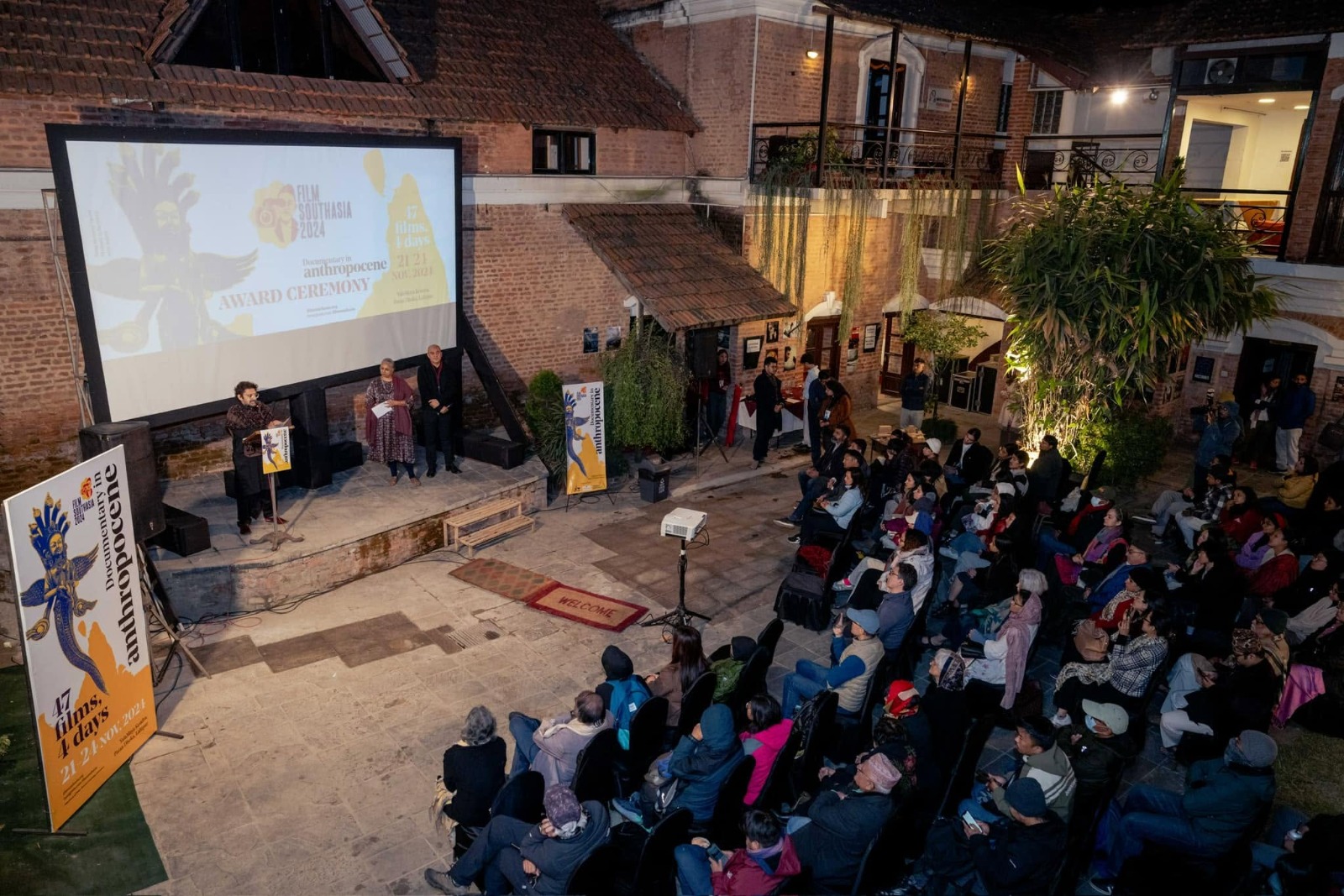
Since then, as more festivals have kept being added, viewers who watch meaningful films of new tastes and styles are also increasing. Currently, the number of festivals regularly held in Nepal has reached about a dozen. These festivals have not only earned viewers but have also established themselves as a place for filmmakers to tell stories, sharpen skills, and create opportunities.
FSA and KIMFF, which made documentaries and short films popular, are also praised as festivals that establish directors and producers of the new generation. Viewers watched the initial works of numerous filmmakers, including Kesang Tseten, Tsering Rhitar Sherpa, Min Bham, Deepak Rauniyar, and Abinash Bikram Shah, through these very festivals. Some directors who participated in these very festivals later even made an international identity.
Currently, genre-specific and regional festivals such as the Nepal Cultural International Film Festival (NCIFF), International Women’s Film Festival (IWHR), International Film Festival Pame, Janakpur International Film Festival (JIFF), Karnali International Film Festival (KIFF), Something Like a Film Festival, Thaha Film Festival, Nepal Rural Film Festival, and Bhaktapur Film Festival are increasing.
The expansion of Kathmandu-centered festivals from Madhesh to Sudurpashchim can be taken as development and expansion. The contribution of these festivals in the work of identifying talent and giving opportunities to the new generation cannot be denied. But whether film festivals have been able to cover diverse aspects like art, society, community, tourism, identity, and creativity, evaluation of that is also necessary. Because numerical growth and continuity alone are not sufficient. Why is one festival different from another? What is the specific uniqueness, objective, and target of every festival? A clear roadmap is needed regarding this too.

Swiss Ambassador to Nepal Danielle Meuwly addressing the Kathmandu International Mountain Film Festival on May 28, 2026
In small and large festivals organized in Nepal, filmmakers from neighboring countries India, China, Bhutan, Sri Lanka, Bangladesh, and Pakistan to Europe and America participate. In this course, it has become a common thing for numerous influential creators to come to Nepal. But the participation of a few famous cinemas and two or four renowned filmmakers alone does not make any festival international. It must be able to conduct a dialogue between communities and cultures while also doing international branding.
The word ‘international’ is hung on the names of most festivals. But are they international in the true sense? To become international, such festivals must be able to become shared. A festival needs to attract not only filmmakers and cinema lovers inside the country but also those outside the country. But in our case, there is a situation where even festivals like FSA and KIMFF, which once carried the feature and capacity to become shared, are shrinking instead of expanding. FSA, which at one time used to be organized at the Russian Cultural Center, has now shrunk to the Yalamaya Kendra. KIMFF, which used to be organized in public and convenient places like the Rashtriya Sabha Griha, has shifted to the inconvenient Chhaya Center where a hefty parking fee has to be paid.
Whether any festival is developing or not is shown by the films included in it, the filmmakers who participate, the judging panel, guests, and the level and dignity of awards. It can also be measured on the basis of the impact made by the intellectual dialogues and interactions taking place there.
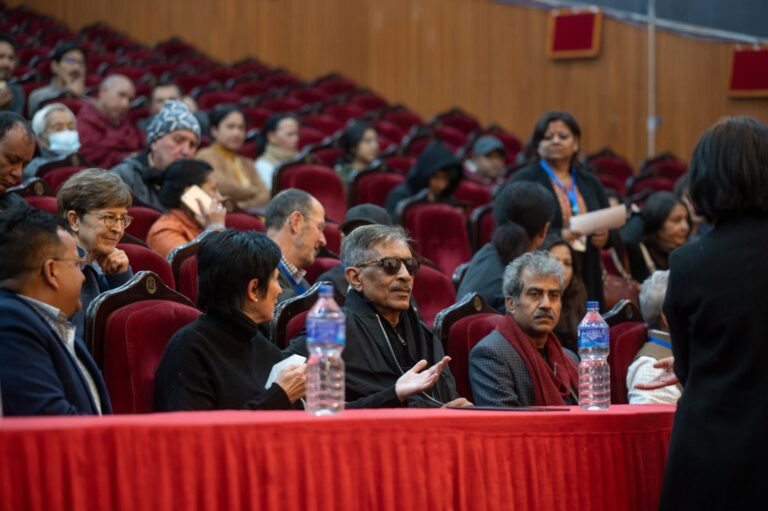
Former President of KIMFF Thapa comments that this kind of growth has not been able to happen continuously in Nepal. It is his concern that our festivals are becoming narrow instead of expanding.
“It is felt that even festivals carrying a long experience and legacy have shrunk to mere programs rather than a cultural campaign. This is a situation that all of us have to accept,” Thapa says.
Director Ganesh Pandey states that when festivals are limited to one individual, institution, or a small group, an obstacle arises in their expansion. His evaluation is, “One main reason why festivals in Nepal could not expand as expected is also that they could not become like public institutions.”
Subedi, who has also performed the roles of speaker and jury in various festivals, says that self-reliant yet liberal institutions are needed to make a festival sustainable. A strong group carrying a collective spirit is needed for this.
“But in our case, all festivals appeared as if they were under the direction and control of some limited individuals and a small circle. The work of making the institution bigger than personal ambition, however, could not happen as expected,” Subedi says.
In the discussion about the problems faced by film festivals and their future, the financial aspect is always at the center. Organizers manage the expenses of one year’s festival somehow and immediately get into the anxiety of how to make financial arrangements for the next year.
At the time when festivals started in Nepal, there was no clear structure on how to operate them. There was no environment to receive support and ownership from the state or the private sector, which has not been able to happen to this day. Old festivals like KIMFF, FSA, and AIFA operated through projects themselves. But even after decades have passed, the dependence on foreign grants and external sources has not been able to disappear. Efforts to raise alternative internal sources have not been able to happen. Subedi says, our festivals should have become public entities, but they became project-oriented.
In festivals being unable to become self-reliant, there appears a lack not only of the financial aspect but also of leadership handover, participatory structures, and liberal practices. The opinion of Festival Coordinator Abhas of the Human Rights Film Festival is also similar. He states that any institution must be able to stand on its own feet after a certain time. “The real test of an institution begins after leadership handover. Whether an institution ran under the influence of some individual or ran due to an institutional structure becomes clear only after the responsibility goes to the new generation,” he says, “In our case, leadership handover does not happen easily; even if it does happen, there are more examples of that institution losing its weight and faltering.”
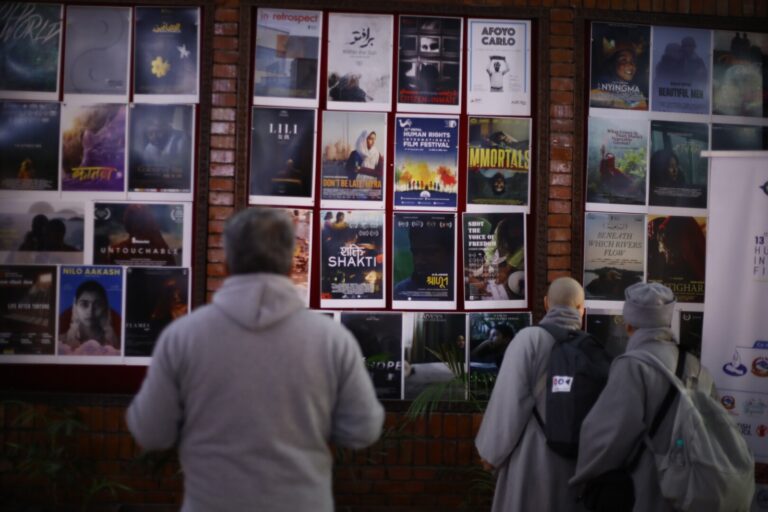
Without being financially sustainable, it is difficult to run any cultural campaign for a long time. For this very reason, Basanta Thapa, who has already retired after handling the leadership of KIMFF for two decades, states that for longevity and self-reliance, the festival must place emphasis on internal sources. Dependence on grants and the lack of participatory practices also seem to have become the reason for the closure of several good festivals.
Therefore, festivals that have crossed a decade are also entangled in the struggle of saving their existence and giving continuity. Everything from the internal economic condition in the country, the lack of institutional support, and the cut in foreign grants to the tendency of excessively depending on personal leadership is affecting the festivals negatively. Despite this, the attraction toward festivals is increasing in the past three decades. In the past three decades, the exposure of Nepali filmmakers to foreign festivals also increased extensively. The world’s most prestigious and oldest festivals like Venice, Cannes, and Locarno are no longer distant stories for Nepali filmmakers. Now, Nepali films have even started being awarded in those festivals, let alone just participating.
But the condition of Nepali festivals, however, has shrunk to surviving and giving continuity. An international festival must have the same level of technical facilities and be accessible. KIMFF President Ramyata Limbu states that the government or concerned bodies must construct such public infrastructure. She says, “This is the big lack we have felt in Kathmandu for organizing festivals.” But the problem is not only of place, it is also of content and programming. Festivals are not just a program of filmmakers. In this, there must be the interest of investors, distributors, sellers, and critics. Looking at the example of the Busan Festival of Asia itself, they conduct training programs throughout the year, produce new talent, and connect it with international networks.
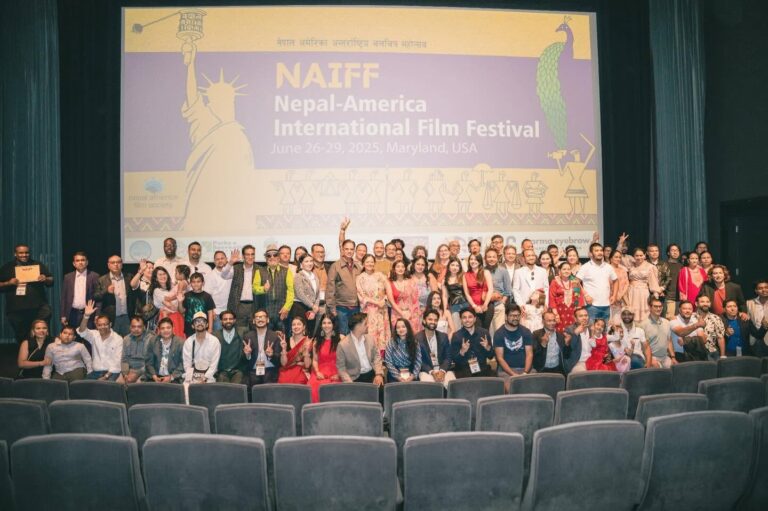
But in Nepal, the manpower capable of doing such work itself is limited. Therefore, before organizing a new festival or its expansion, it is necessary for us to focus on building capable manpower, Subedi says, “In the current situation, I think the most necessary thing is building capable manpower, quality education, and institutional development.”
In the year 2026 itself, the announcement of the Animation and VFX Artists Association of Nepal (AVAAN) Animation Film Festival and the Global Film Festival has already taken place. Thapa places emphasis on the fact that such new festivals added yearly in Nepal must learn a lesson from the old ones.
“The increase in creative activities across the country is commendable. However, unless we honestly review why some festivals shut down, why they are irregular, and where their weaknesses lie, there is no point in organizing new ones,” suggested Thapa, who led KIMFF for two decades. “New festivals must emerge with a clearer vision, better management, and long-term plans.”