Kathmandu
Friday, June 19, 2026





SEE answer-sheets being checked at the respective exam centers starting yesterday, results to be made public within a month
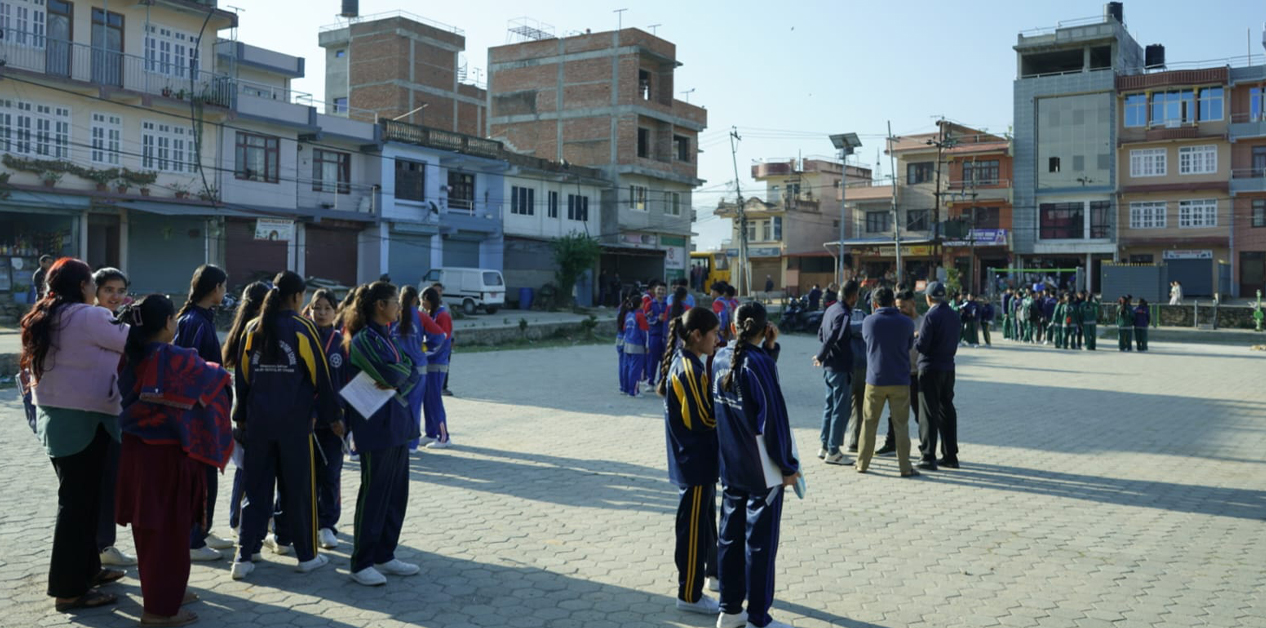
KATHMANDU: The National Examination Board has started checking the ‘Secondary Education Examination’ (SEE) answer sheets at the respective exam centers themselves from this year. The SEE exams that began on Thursday (April 2) have had their answer sheets checked immediately after each exam concludes.
Since waiting long periods for results increases mental stress on students, Minister for Education, Science and Technology Sasmit Pokharel had on April 1 directed subordinate staff to make results public within a month. After discussions with all 77 Education Development and Coordination Units, the Ministry of Education had concluded that results could be released within one month.
National Examination Board Controller Tuka Raj Adhikari informed Nepal News that answer sheets have begun to be checked at exam centers as per the government’s directive. According to him, arrangements have been made to carry out checking at another location with the facilitation of the Education Development and Coordination Unit (formerly the District Education Office) in cases where a particular exam center lacks teachers to check answer sheets or is deemed unsafe.
Until last year, answer sheets from one province were taken to another province for checking, and results were only made public three months after the completion of exams. Teachers, students, parents, education sector officials, and experts have welcomed the government’s plan to make results public within one month. On the other hand, some have expressed doubts about whether checking answer sheets hastily at exam centers will ensure impartial evaluation, while others have pointed to the risks and consequences it may bring.
Since teachers checking answer sheets can be easily identified, there is also a risk that students dissatisfied with their results and their relatives could threaten teachers. It is feared that teachers involved in checking, being in a state of psychological fear, may carry out lenient evaluation with the intention of failing as few students as possible. During the COVID-19 pandemic, results were produced through internal assessment of students, and the student pass rate that year was higher than in previous years.
Exam Controller Adhikari says there is no need for suspicion since SEE answer sheets are being checked at exam centers based on the government’s trust that teachers are competent and honest. “Occasional weaknesses may occur, and if so, the concerned student can view their answer sheets,” he says, “If a teacher checking SEE answer books acts with ill intent or becomes irresponsible, departmental action will be taken; action up to and including blacklisting is possible.” He requests parents not to distrust teachers involved in checking SEE answer sheets. “Distrust only leads to further betrayal of trust,” he says.
Professor Bal Chandra Luintel, Dean of the School of Education at Kathmandu University, has praised the government’s decision to make SEE results public within one month. “Those who fail the exam will be able to sit the exam again sooner,” he says. He also requests that teachers involved in checking answer sheets not be doubted. “One must be able to trust the teachers who teach. Teachers must also check answer sheets while remaining within ethical bounds,” he says.
According to the National Examination Board, a total of 512,421 students from across the country (female: 257,613, male: 254,801, other: 7) are participating in the regular and grade improvement SEE examination for academic session 2082 BS (2025/26). A total of 1,961 centers have been designated for conducting the exam.
Similarly, the board has announced that group monitoring has been banned at this year’s SEE exams. Since complaints had arisen in previous years about exam takers being disturbed when heads and representatives of various organizations entered exam halls in the name of monitoring exam centers, the government has banned this practice this year. This time, monitoring of the external areas of exam centers has been carried out only by official representatives of the ‘District Exam Coordination Committee’ formed under the coordination of the Chief District Officer in each district.
Fifteen police personnel have been deployed at each exam center for security. A center chief and one assistant center chief have been assigned to each center. According to the board, one invigilator per 20 examinees, one office assistant per 100 examinees, and two additional staff members have also been deployed.