Kathmandu
Monday, July 27, 2026






KATHMANDU: Nepal News presents today’s snapshot of Nepal’s economic activities. Get quick updates on major market movements, policy shifts, and financial developments shaping the economy of Nepal. Here are the key economic highlights for today:
100 MW pumped storage hydropower project planned in Makwanpur:
Preparations have begun for the construction of a 100 MW pumped storage hydropower project in Makwanpur. The Nepal Electricity Authority (NEA) is moving forward with plans to develop the Kulekhani-Sisneri pumped storage hydropower project in Indrasarovar Rural Municipality. The proposed project is expected to reduce electricity imports from India during the dry winter season. Under the project, electricity will be generated using water from the Kulekhani reservoir in Indrasarovar and the water will then be pumped back into the reservoir, forming a closed-loop system. The NEA has called for public feedback to determine the scope for the Environmental Impact Assessment (EIA). The authority has also begun consultations in the affected wards of the rural municipality. Ward Nos. 1, 2 and 3 of Indrasarovar are expected to be impacted by the project. Discussions and consultations with the local residents focused on potential impacts on settlements, infrastructure, the local economy, society and the natural environment, along with collecting suggestions for mitigation measures. According to the NEA, the project aims to generate electricity for 6 to 10 hours daily during peak demand periods.
More than 7,000 online betting apps and websites closed:
More than 7,000 applications (apps) and websites (URLs) related to online betting have been shut down. During the implementation of the government’s decision related to governance reforms, the Nepal Telecommunications Authority (NTA), in coordination with the Internet service providers, blocked the websites and apps. According to NTA Deputy Director Surya Prasad Lamichhane, internet service providers have been instructed to identify and shut down gambling-related apps and websites that are operating illegally. Among the one hundred action points on governance reforms approved in the cabinet meeting on March 27, point number 42 is related to shutting down betting-related apps and websites within 24 hours. In accordance with the same decision, NTA, in coordination with internet service providers, has immediately shut down all identified online betting apps and websites.
Govt. expediting reform works, Finance Minister says:
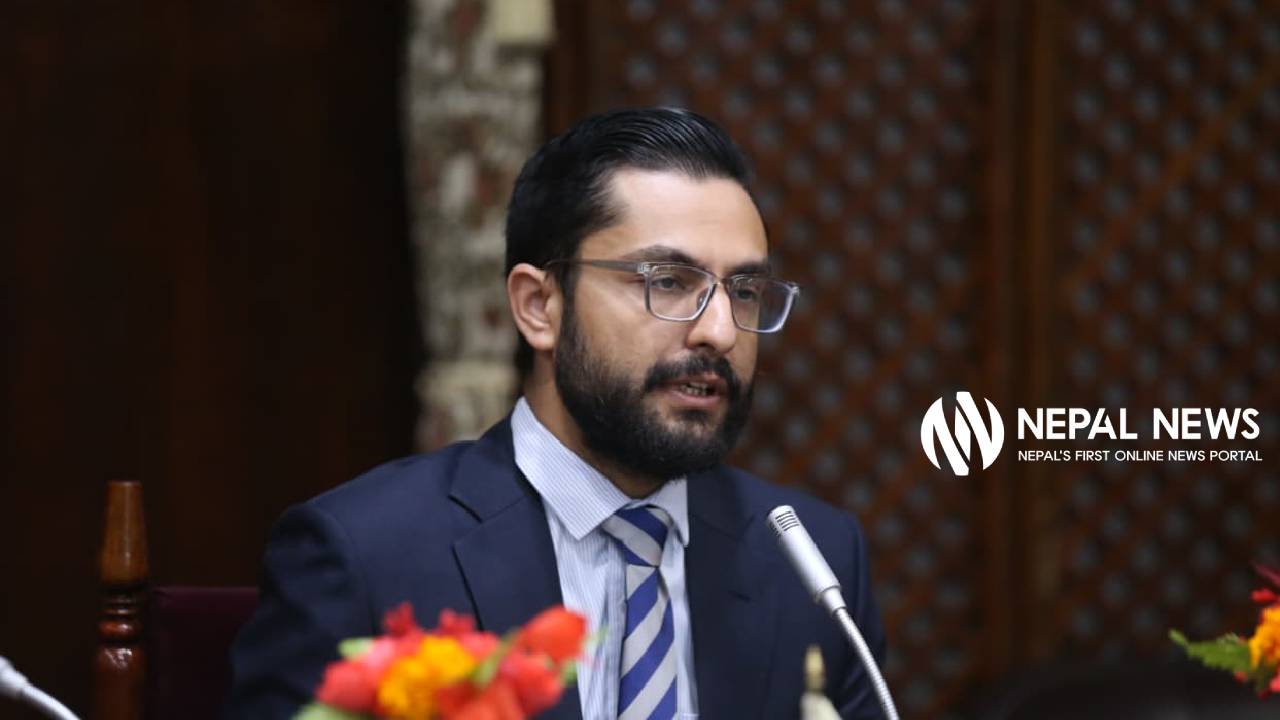
Finance Minister Dr Swarnim Wagle has said that the government has expedited the reform works. At a pre-budget interaction program organized by Birgunj Chamber of Commerce and Industry recently, the Finance Minister stated that the current government was working in the spirit of Prime Minister Balendra Shah’s speed. He also mentioned that the federal ministries are competing for better performance. Likewise, Dr Wagle shared that he had been making efforts to disseminate a positive message to industrialists and business people from the very beginning of his term in office. Similarly, Finance Minister Dr Wagle said that the sufferings and complaints of the business people are being resolved. Some of the recommendations given by the high-level economic reforms report prepared under the leadership of former minister Rameshore Prasad Khanal are being implemented, adding that the Department of Revenue Investigation and five irrelevant and outdated Acts were scrapped.
Nepal Rastra Bank absorbs Rs 40 billion in liquidity via deposit collection:
Nepal Rastra Bank collected Rs 40 billion in deposits for a period of 56 days today. The central bank initiated this deposit collection to manage excess liquidity within banks and financial institutions. The central bank has been absorbing liquidity through deposit collection tools and standing deposit facilities to manage excess liquidity and interest rates in the financial system. Only ‘A’, ‘B’, and ‘C’ class banks and financial institutions licensed by the Rastra Bank are eligible to participate in the bidding process. When allocating the long-term deposit collection amount, the central bank will prioritize bids with the lowest interest rates until the total requested amount is reached. The principal and interest for this deposit collection tool will be paid on May 10, 2026.
Banke farmer produces 800 quintals of potato seeds:
Jaypal Maurya, a farmer from Hirminiya of Duduwa Rural Municipality-6 in Banke, has produced 800 quintals of potato seeds this year. The 43-year-old farmer, who received the President’s Farmer Award last year, said that he cultivated potato seeds on 101 katthas of land this year and achieved a production of 800 quintals. Maurya, who has been active in agriculture for two decades, said that the potato seed yield has been very good this year. He said that the produced seeds have been stored in a cold storage facility built by the local government. According to him, the significant increase in production is due to the cultivation of the improved verity ‘cardinal’ of potato seeds over a larger area. Maurya said that he had invested around Rs 500,000 in potato seed production. During the planting season, the seeds will sell for Rs 35 to 55 per kilogram. He expects total income worth Rs1.2 million from the sale of this production.
Policy reforms will be made to expedite energy sector development: Minister Shrestha:
Minister for Energy, Water Resources and Irrigation, Biraj Bhakta Shrestha, has said that policy-level reforms will be prioritized to accelerate the pace of development in the energy sector. He made this remark during a meeting with the officials of the Nepal-India Chamber of Commerce and Industry (NICCI) recently. Stating that there are significant opportunities along with challenges in the energy sector, Minister Shrestha said that the new government is moving forward with policy reforms. He stressed the need for a realistic assessment of domestic and industrial demand for electricity, adding that the energy sector should be linked with production to serve as a foundation for economic development. He also said the government will facilitate development and that policies will aim to encourage greater participation from the private sector.
Nepal Layer Poultry Association increases egg prices:
The Nepal Layer Poultry Association has once again increased the selling price of eggs. According to the latest decision by the association’s executive committee, the price hike has come into effect starting today. Compared to the prices that were effective from March 30, the price of all types of eggs has now increased by 15 rupees per crate. Along with the price of eggs, transportation and packaging costs have also increased. The additional fee for freight, cartons, and crates incurred while transporting eggs from Chitwan to various depots across the country has increased by Rs 5 rupees, rising from Rs 140 to Rs 145.
Samsung Launches Galaxy A57 5G and A37 5G in Nepal with Advanced AI Features:
Samsung Nepal has introduced two new smartphones under its popular ‘A’ series, the Galaxy A57 5G and Galaxy A37 5G, into the Nepali market. Featuring cutting-edge AI capabilities, a sleek design, and a powerful camera system, pre-orders for these devices are open from April 5 to 18. Embracing the ‘Awesome Intelligence’ concept, the company has integrated advanced software and smart tools into these devices to simplify daily tasks. During the launch, Samsung Nepal’s Senior Director, Pranaya Ratna Sthapit, announced that a 24-month easy installment (EMI) facility has been introduced to make cutting-edge technology accessible to everyone. These smartphones are powered by One UI 8.5, featuring tools like ‘Voice Transcription’ to convert speech to text, ‘AI Select’ for easy screen object selection, and ‘Object Eraser’ to remove unwanted elements from photos. With Google’s ‘Circle to Search’ and enhanced Gemini AI, users can interact with their phones more naturally. For photography enthusiasts, both phones feature a triple camera setup with a 50-megapixel main sensor, while ‘Nightography’ helps capture excellent photos even in low light. The Galaxy A57 5G is available in a slim and lightweight 6.9mm design.In terms of security, these devices come with a guarantee of up to 6 years of security updates and OS upgrades. They also feature an IP68 rating for water and dust resistance and Samsung Knox Vault for enhanced security. Regarding pricing, the starting price for the Galaxy A57 5G is set at 84,999 rupees, and the Galaxy A37 5G starts at 64,999 rupees. Customers who pre-order can receive a memory upgrade offer worth up to 4,000 rupees and can purchase the phones on EMI starting from 1,764 rupees per month based solely on their citizenship card.
Ministry of Agriculture resumes farmer registration after five-month hiatus:
The Ministry of Agriculture and Livestock Development has resumed the registration of farmers after a five-month pause. The online system, designed to provide farmers with identification cards and access to various services and subsidies, had been non-operational since 11 November 2025 due to technical issues. Ministry officials say that the program, which aims to provide chemical fertilizers, seeds, subsidies, and service management to registered farmers, has proven effective. Consequently, the ministry has begun re-registering to include 1.737 million farmers. Preparations are underway to include the remaining farmers in the system soon. The system, coordinated with local governments nationwide, identifies genuine farmers and maintains integrated data and records, including details on land area cultivated and produce harvested. According to the 2021 Agriculture Census, there are 4.13 million farmers, of which 2.393 million have been included in the list so far, the ministry reported. The Agriculture Information and Training Center under the ministry has urged farmers to register their names at their respective local units.
Gold and silver prices remain stable in local market:
The prices of gold and silver remained stable in the local market today. This trend has continued since last Friday. The price of gold has remained unchanged since last Thursday. Compared to the previous day, the price of silver had increased by Rs 50 per tola last Friday. According to the Federation of Nepal Gold and Silver Dealers’ Association, the price of fine gold today is set at Rs 294,000 per tola, and the price of silver is set at Rs 4,830 per tola. Last Friday, the price of fine gold was Rs 294,000 per tola, and the price of silver was Rs 4,830 per tola. According to international media, gold is trading at USD 4,676 per ounce and silver at USD 73 per ounce in the international market today.
IBN sets up investor desk:
The Investment Board Nepal (IBN) has established an investor facilitation and grievance hearing desk. The desk has been set up to facilitate service delivery under the operation of a One-Stop Service Centre (OSSC). According to Hem Raj Tamang, Joint Secretary at the IBN, the Board is preparing to operate the OSSC digitally. As an initial step, the desk has been established to create a more investor-friendly environment. Through this desk, investors can obtain information related to investments, raise issues, and file complaints, he said. In coordination with the Office of the Prime Minister and Council of Ministers, the Investment Board has outlined a work plan following the establishment of the grievance hearing desk. This includes submitting a proposal to the Cabinet for One-Stop Service delivery, preparing for the establishment of the OSSC, coordinating with government agencies and departments, and launching an online portal for One-Stop services. Similarly, the Board has planned to submit a draft procedure related to the One-Stop Service for approval and ensure budget arrangements, among other tasks.
Businessman Sulav Agrawal taken into custody for investigation:
Businessman Sulav Agrawal has been taken into custody for investigation. The Department of Money Laundering Investigation has detained him. Director General of the Department of Money Laundering Investigation, Gajendra Thakur, informed Nepal News that Agrawal has been taken into custody for questioning. Agrawal is a director of the Shanker Group. His father, Shanker Agrawal, was arrested by the department on Friday evening and is currently under investigation.
Sugar production declines in Mahottari:
Sugar production in Mahottari district, a key hub for sugarcane farming, has continued to decline as mills struggle with inadequate raw material supply. According to Everest Sugar Mill in Ramnagar, the industry failed to meet its production target in the current crushing season 2025/26. The mill processed 2,853,178 quintals of sugarcane this season, producing only 261,738 quintals of sugar. The figure marks a drop compared to the previous years. The mill had produced 270,588 quintals of sugar in the 2023/24 season and 264,591 quintals in 2024/25. This year, the mill had aimed to crush at least 3.1 million quintals of sugarcane and produce around 279,000 quintals of sugar. However, due to a shortage of about 200,000 quintals of sugarcane supply, production fell short of the target by 18,000 quintals.
Fifty per cent cooperatives in Kathmandu fail to submit regular reports:
Nearly half of the 1,900 cooperatives operating under the purview of the Kathmandu Metropolitan City (KMC) have failed to submit their regular reports, according to the KMC’s Cooperatives Department. The fact that many cooperatives do not submit reports regularly means that there are problems in such cooperatives. The Department said that out of about 1,900 cooperatives operating within its jurisdiction, only 723 regularly submit annual reports. The Metropolis has been repeatedly requesting submission of annual reports regularly. If annual reports are not submitted for a long time under various excuses, the Metropolis said that it is preparing to take legal actions against those non-compliant cooperatives. Instructions have already been issued to the non-complaint cooperatives to conduct their annual general meetings and submit audit reports, decisions of the annual general meetings and the annual report to the Metropolis’s concerned Department.
Geopolitics overtakes economics as key driver of global trade flows: Experts:
As geopolitical tensions intensify across West Asia, global trade dynamics are undergoing a structural shift, with political risk insurance emerging as a critical safeguard for businesses navigating an increasingly volatile environment. Trade flows, once dictated largely by economic fundamentals, are now deeply influenced by geopolitical flashpoints. The ongoing instability in West Asia, particularly around key maritime corridors such as the Strait of Hormuz and the Red Sea, has amplified concerns over supply chain disruptions, rising freight costs, and delayed shipments. The West Asian crisis has underscored vulnerabilities in global shipping routes, with nearly 80 per cent of trade by volume moving via sea. Strategic chokepoints in the region are witnessing heightened strain, leading to cascading effects on energy prices, transit timelines, and contractual reliability. Freight rates on key routes have reportedly surged by 30-50 per cent, while delays of up to two weeks are becoming increasingly common. Experts assert that the nature of risk in global trade has fundamentally evolved.
From cricket league to economic giant: IPL valued at USD 18 billion:
The Indian Premier League (IPL) has evolved into a multi-billion-dollar economic engine, contributing significantly to India’s economy and redefining the business of sport, according to a recent report by Kotak Mutual Fund. The report noted that the IPL ecosystem is currently valued at around USD 18 billion as of FY25, placing it among the world’s leading sporting leagues. Remarkably, a tournament spanning just two months now generates economic value comparable to India’s entire sports industry, estimated at about USD 19 billion. According to the report, the league contributes between USD 182 million and USD 6.7 billion annually to the Indian economy through its wide-ranging ecosystem, including media, advertising, sponsorships, and ancillary sectors. A key driver of IPL’s financial growth has been its media rights, which have surged from USD 918 million in 2008 to USD 6.2 billion for the 2023-2027 cycle, reflecting a strong compounded annual growth rate and outpacing several global leagues. The report highlighted that the IPL now reaches nearly one billion viewers across television and digital platforms, with digital consumption witnessing rapid growth. Advertising revenues alone are projected to reach around USD 600 million in 2025, indicating robust monetization of viewership.