Kathmandu
Sunday, July 12, 2026





The first half of the year 2082 BS was a period of hope and momentum for Nepal's judiciary. The second half passed through crisis and difficulty.
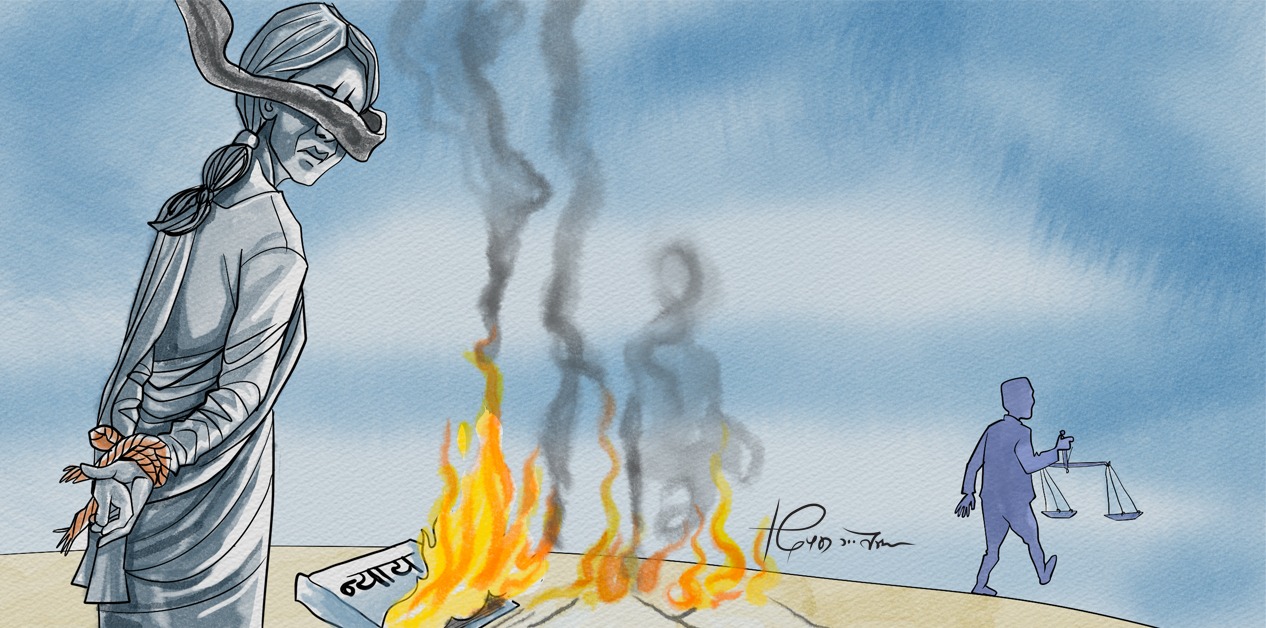
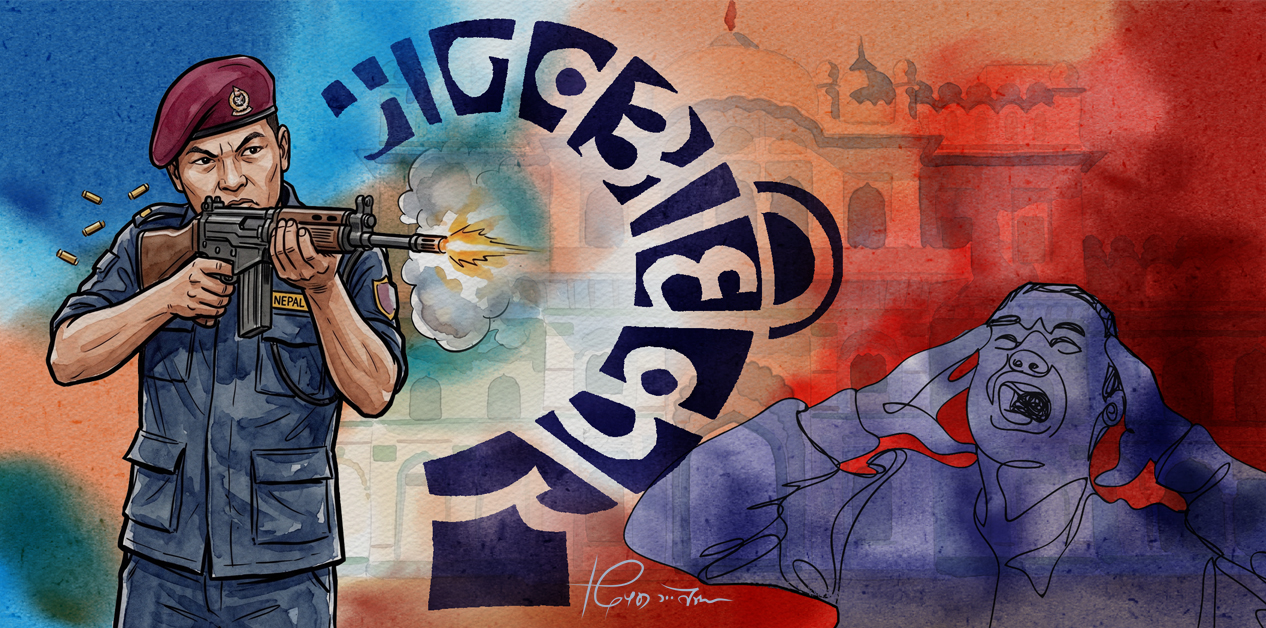
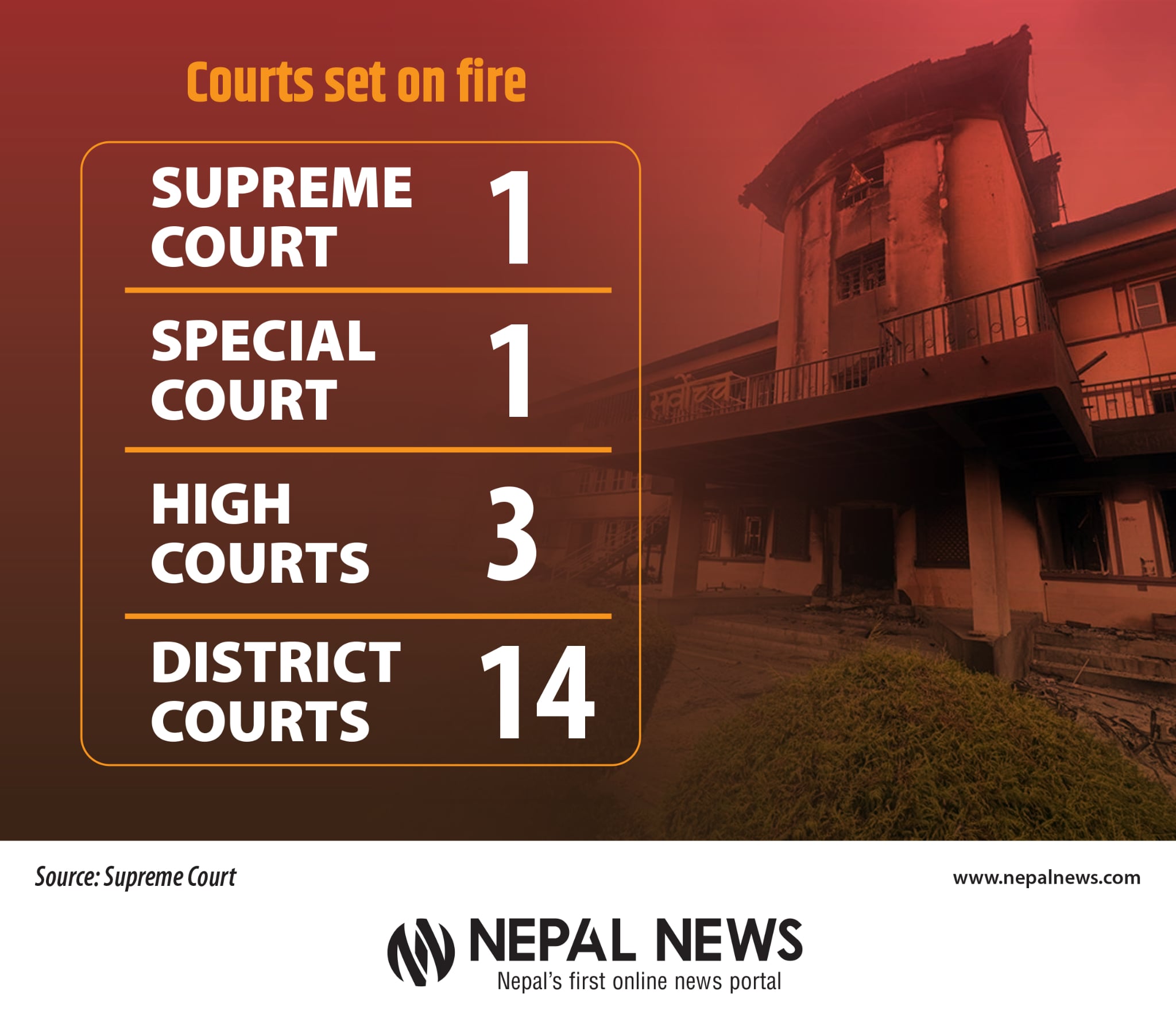
Just as the clearance of old cases was advancing as a national campaign, the fires of the Gen Z movement of September 8 and 9 last year reached the judiciary too. On September 9, the Supreme Court building and 13 courts across the country were set on fire. Habeas corpus cases had to be heard under tents pitched in the burnt-out court premises. New case registration came to a halt, and the backlog of pending cases set the courts back by seven months.
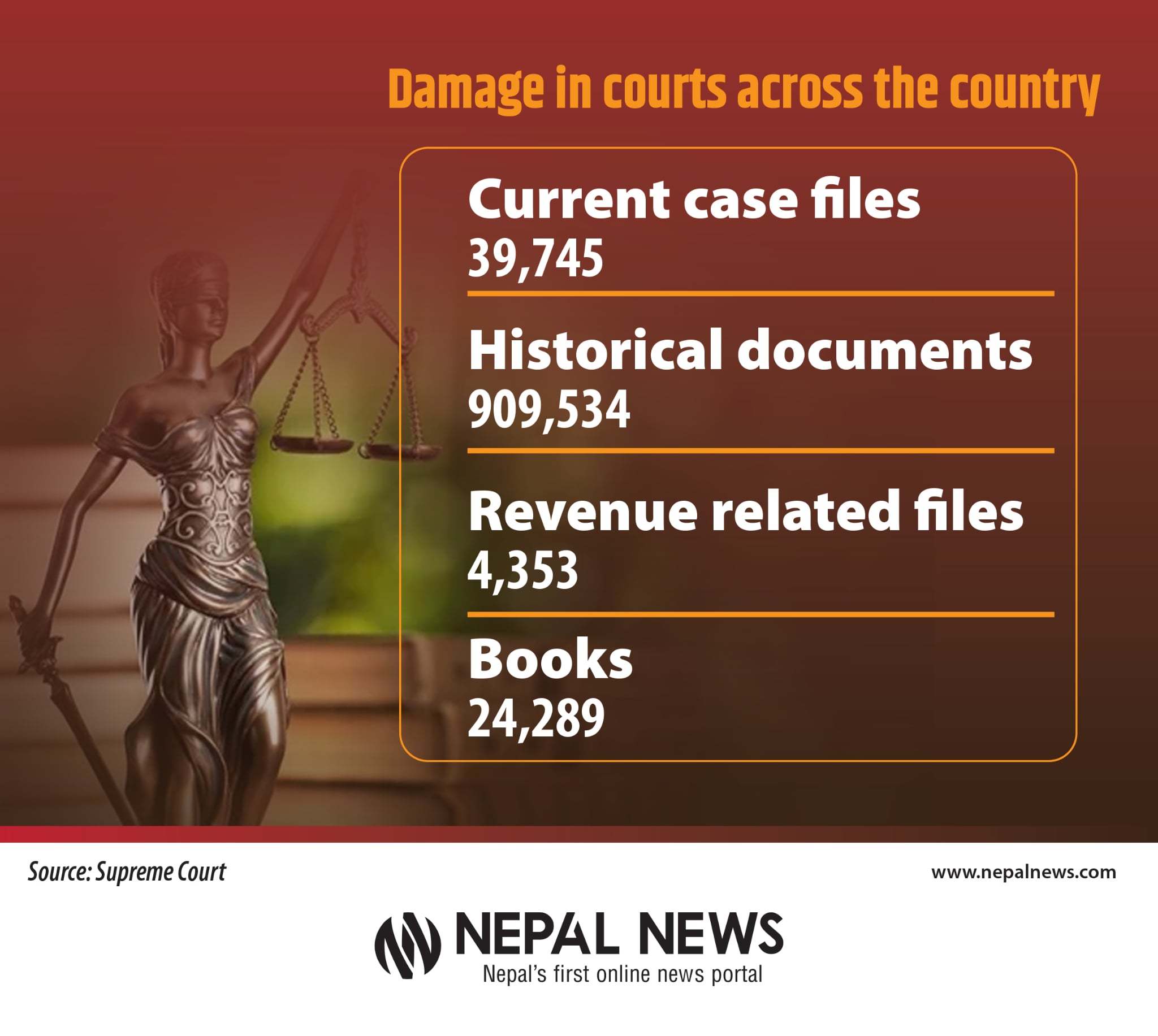
Across all courts, 39,745 active original case files, 909,534 record files including historical documents, 4,353 files held in the tahsil division, and 24,289 books were destroyed by fire.
At the Supreme Court alone, 20,734 active files and 197,000 record files were destroyed. The Supreme Court reports that 19,000 of those files have now been reconstructed.
The Supreme Court’s annual report for fiscal year 2024/25 (2081/82 BS) notes that the burning of case files has caused delays in the administration of justice and has posed a major challenge in reconstructing files. “In these circumstances, special arrangements and monitoring for the security of courts, judges, and personnel are necessary,” the report states.
The working environment for judges has been poisoned. Until that is addressed, the work of delivering justice will remain difficult.
Amid the crises and challenges of the year, Chief Justice Prakash Man Singh Raut retired from the Supreme Court on March 31, 2026 upon reaching the age limit of 65. Speaking to journalists at his farewell, he said, “Friends, I am happy because I am free; I have had the good fortune to make full use of my independence.” He urged that there be no compromise on judicial integrity, transparency, sanctity, and purity; that the judiciary stand against corruption; and that the agenda of judicial reform be continued.
He said that following the physical attacks on the judiciary, virtual attacks had also been carried out to create an atmosphere of fear among judges in deciding cases. “The working environment for judges has been poisoned. Until that is addressed, the work of delivering justice will remain difficult,” he said.
As the Bikram Sambat year draws to a close, Sapana Pradhan Malla has already assumed acting leadership of the Supreme Court. She will be appointed Chief Justice following a recommendation from the Constitutional Council and a parliamentary hearing.
The most difficult and tragic year in the judiciary’s history
In recent years, public complaint had been widespread that courts were failing to deliver swift justice to those wronged. At the start of 2082 BS, the judiciary therefore began focused work on reform action plans. Cases up to eight years old had been cleared by the end of last Ashadh (mid-July 2025), and the target of bringing cases more than two years old in the high courts down to zero had been met.
Early in the year the Supreme Court had also ruled on several remaining old cases, the most prominent being the 12-year-old case against then-Maoist leader Agni Sapkota and the case against the appointment of 52 officials to constitutional bodies.
On 29 April 2005, then-NCP (Maoist) leader Agni Sapkota and others were accused of abducting and killing Arjun Lama, 48, of Kavrepalanchowk. In July 2007, Lama’s wife Purnimaya went to the Kavre District Police Office to file a formal complaint against Sapkota, Surya Man Dong, and four others. When police initially refused to register the complaint, Purnimaya filed a writ petition in the Supreme Court. On 10 March 2008, the Supreme Court ordered that the complaint be registered and action taken in accordance with the law. On July 27, 2012, the government of Prime Minister Baburam Bhattarai decided to put the complaint filed against Sapkota at Kavre District Police into abeyance. Lama then filed a writ petition at the Supreme Court on 22 November 2012 against the decision.
The decision of then-Prime Minister Baburam Bhattarai’s government was overturned during Chief Justice Raut’s tenure on 4 June 2025, opening the path to investigation. A constitutional bench comprising Chief Justice Raut, senior justice Sapana Pradhan Malla, and justices Kumar Regmi, Manoj Kumar Sharma, and Kumar Chudal conducted a final hearing on three writ petitions filed on various dates against Sapkota and ordered investigation in the murder case.
The Supreme Court also ruled on 3 July 2025 on the case against the appointment of 52 officials to constitutional bodies, which had been pending for four and a half years.
In this case, colloquially known as the case of the 52 brothers, a constitutional bench of five justices including Chief Justice Prakash Man Singh Raut delivered a ruling with three separate opinions.
The ruling comprised a brief order reflecting the opinion of Chief Justice Raut and Justice Nahakul Subedi, a separate opinion from Justice Sapana Pradhan Malla, and a further separate opinion from Justices Manoj Kumar Sharma and Kumar Chudal. Although there were three distinct opinions, the positions of the three-justice majority — Malla, Sharma, and Chudal — aligned, and the jobs of those appointed to constitutional bodies were saved.
The Constitutional Council had recommended the appointment of 32 individuals on 15 December 2020 and 20 more on 9 May 2021, totaling 52. These appointments, made without parliamentary hearings, had been challenged in court. Almost all those currently serving in constitutional bodies date from those appointments.
Nepal Bar Association (NBA) President Dr Bijaya Prasad Mishra says the ruling was theoretically weak. “The verdict was not of the standard it should have been. It should have been the kind that students of constitutional law study. The principles one had hoped to see enunciated were not adequately set out,” Mishra says.
Just as the case clearance rate was improving, the Gen Z movement caused the courts to burn. NBA President Mishra says 2082 BS has become the most difficult and frightening year in the judiciary’s history, and he estimates it will take some time to normalize the situation. “Frightened officials are compelled to focus on finding safety, and attention shifts to security. It becomes difficult to be vocal about justice,” Mishra says. “After the Gen Z movement, opening the files of major pending cases in court required courage and a conducive social environment – and the courts do not appear to have felt that was present.”
The Gen Z movement put the brakes on the momentum with which the judiciary had been advancing in the first half of the year 2082 BS, says Yagya Raj Regmi, assistant spokesperson for the Special Court.
Mishra says the current state of the judiciary must be viewed through two principles. “The first is: wherever happiness lies, erase yourself to find it. The second is: live and let live. In the ‘live and let live’ principle, the state system continues and one can see its shadow falling on the justice system in certain respects,” he says.
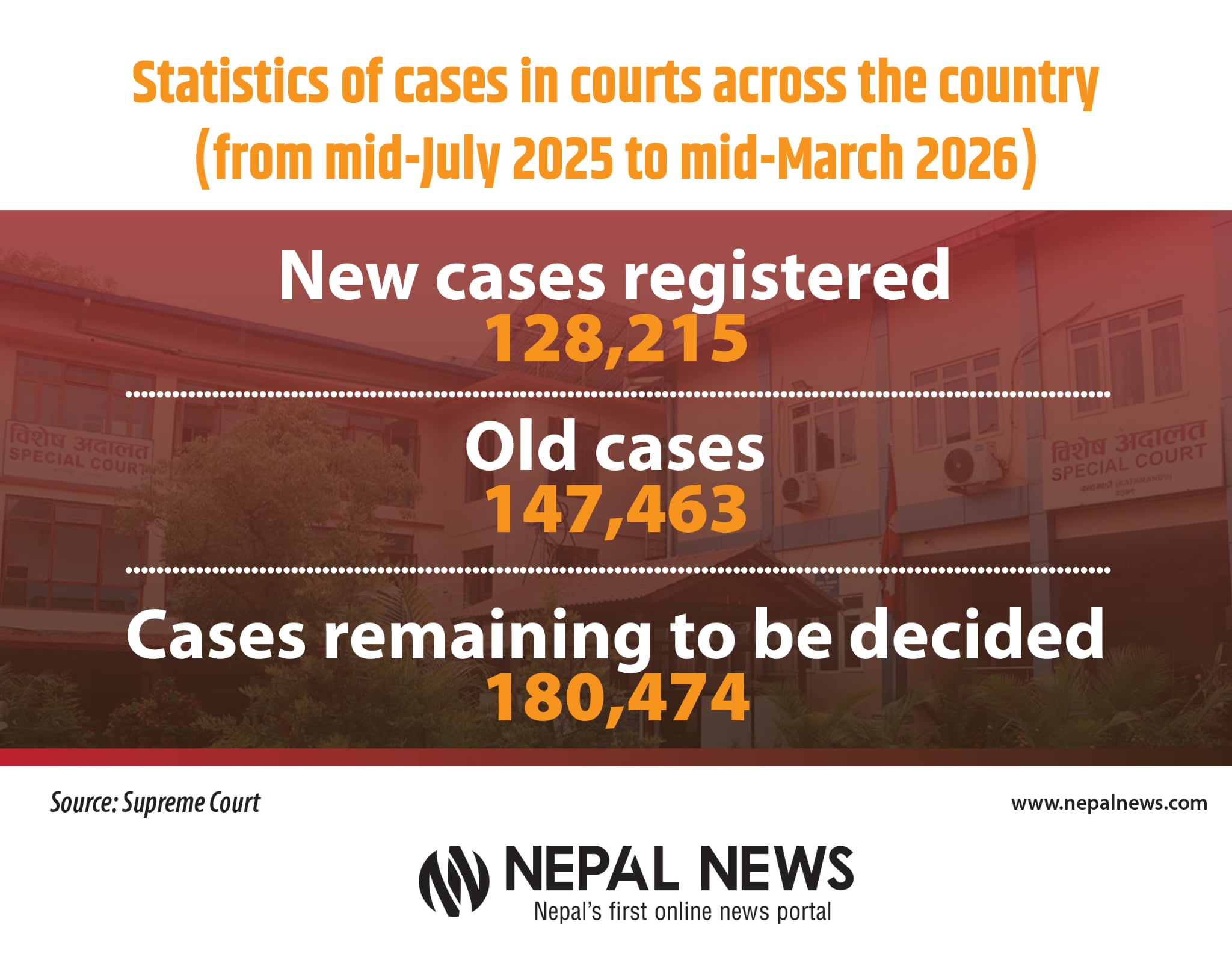
This fiscal year’s data from 17 July 2025 to 14 March 2026 shows 180,474 cases pending across the country’s courts, of which 18,938 are more than two years old. The burning of the courts has had a direct impact on case disposal. In the previous year, 26 percent of registered cases had been decided by mid-March; this year only 17.58 percent have been.
The problem of growing caseloads and delayed decisions remains serious, particularly in the Supreme Court and high courts.
The impact of the Gen Z movement
The year 2082 BS is also one in which corruption cases were filed against former prime ministers, former ministers, and senior government officials.
On 15 May 2025, the Commission for the Investigation of Abuse of Authority (CIAA) filed a corruption case against former Communications Minister Mohan Bahadur Basnet, Nepal Telecommunications Authority chairman Digambar Jha, and eight other officials in connection with the procurement of the Telecommunications Traffic Monitoring and Fraud Control System (TERAMOCS). The case is pending in the Special Court.
On 5 June 2025, a corruption case was registered in the Special Court against former Prime Minister Madhav Kumar Nepal and 92 others. In the Patanjali land case in Kavrepalanchowk, CIAA sought recovery of Rs 185.8 million from former PM Nepal.
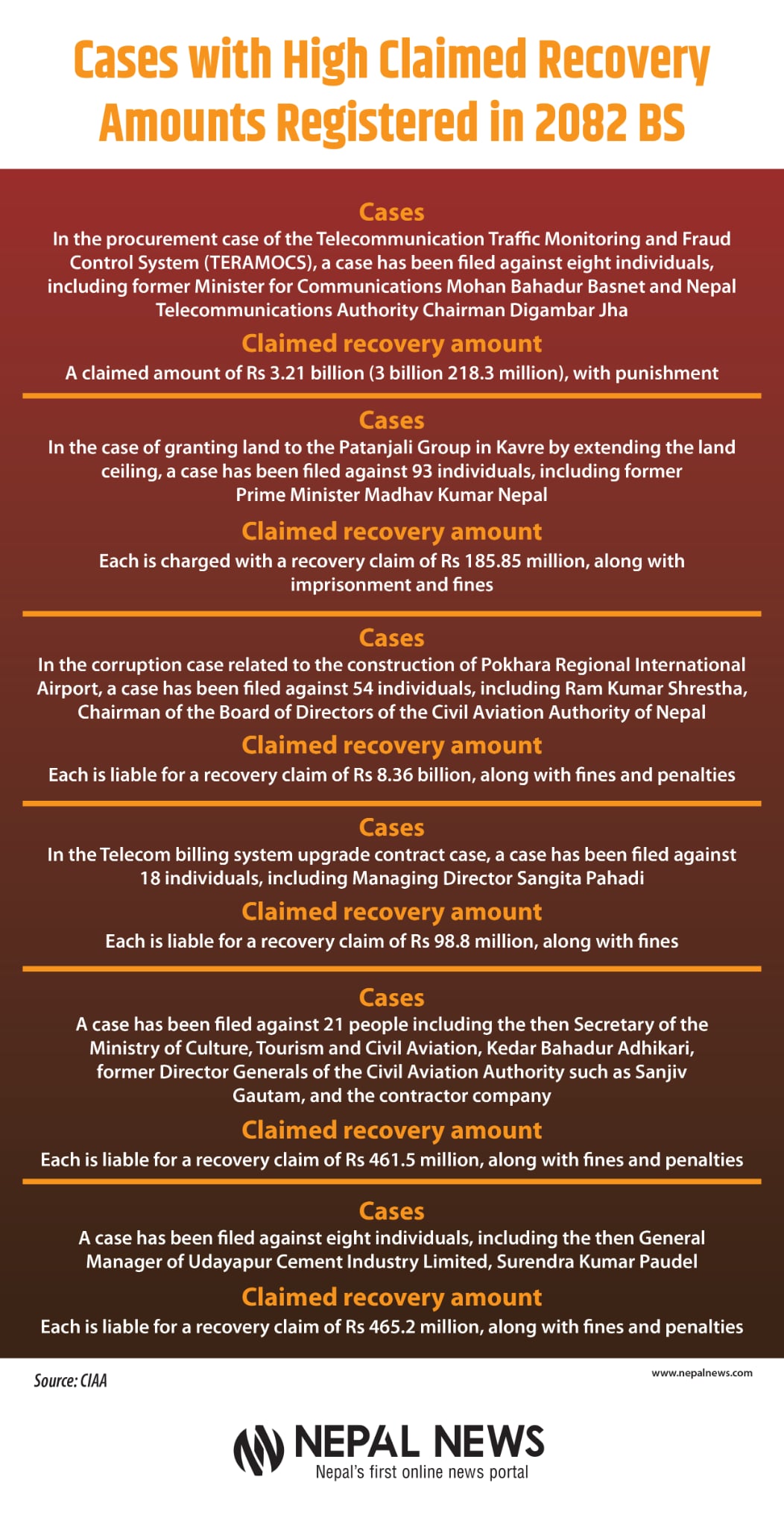
On 7 December 2025, a case was registered in the Special Court against Civil Aviation Authority board chairman Ram Kumar Shrestha and 53 others, with CIAA seeking recovery of Rs 8.36 billion.
On 29 May 2025, a case was filed against 18 individuals for allegedly embezzling Rs 334.8 million in collusion between the then-board and staff of Nepal Telecom in a billing system upgrade contract. CIAA filed the case seeking recovery of Rs98.8 million per person. These and other cases are currently in the process of being heard.
The Gen Z movement put the brakes on the momentum with which the judiciary had been advancing in the first half of the year, says Special Court assistant spokesperson Yagya Raj Regmi. “The building and information systems were damaged. We are recovering. The court that was brought to a halt from September 9 2025 was able to resume on 26 November 2025,” he says.
A case filed in the Supreme Court against the dissolution of parliament following the Gen Z movement is pending. Cases filed by two factions of the Nepali Congress seeking legal recognition are also pending. The court has also yet to rule on the petition against the amendment of charges by former Attorney General Sabita Bhandari in the money laundering and organized crime case against RSP Chairman Rabi Lamichhane. Writ petitions against Bhandari’s decisions not to proceed with other cases are also pending at the Supreme Court.
The Supreme Court’s recently published annual report for 2024/25 (2081/82 BS) notes that a pervasive sense of insecurity and uncertainty remains among judicial personnel. The report states: “A serious challenge has been created to the hopes and expectations of those seeking justice. In circumstances where prisoners broke out of jail on September 8 and 9 last year and have not returned, the security of courts, judges, and staff appears increasingly challenging.”
The future direction: Technology-friendly courts
In recent years the courts have been emphasizing the use of digital infrastructure and victim-friendly justice systems to reduce caseloads and make justice more accessible.
A ten-year master plan for building an integrated electronic system to reduce paper use in courts had been drawn up and implemented from mid-July 2014. The Supreme Court claims that integrated case management software from district courts up to the Supreme Court has been developed to make the system more organized and transparent. Some 4.5 million case record files currently exist across the country’s courts, of which digital copies of 340,000 files have been prepared. A system for checking hearing dates and case listings online had been established. When the main server connecting courts across the country was destroyed in the Gen Z movement, three months of work had to be conducted using handwritten ledgers.
The Supreme Court’s annual report points out that the internal working culture and service delivery of the judiciary still need improvement.
The announcement to make the Special Court a boutique smart court was made last Ashadh (mid-June to mid-July 2025). Then-Special Court chairman and justice Tek Narayan Kunwar announced the move to smarten court management after it received ISO certification. During his tenure, Kunwar had moved cases swiftly towards resolution. Since his transfer, delays in case decisions appear to have returned.
More recently, the expansion of e-court, online hearings, and digital filing systems has begun. Case disposal fell in 2082 BS because of server failure. Supreme Court joint registrar and head of the Research and Planning Division Baburam Dahal says a crisis management action plan has been drawn up and work has begun to address the problems.
According to him, the scanning and uploading of case files to software is ongoing. “The target is to clear all cases more than five years old by mid-July 2027. Cases more than 18 months old in the High Courts and district courts will be concluded soon,” he says. “There are currently 1,700 cases at the Supreme Court that are more than five years old. We are committed to implementing our differentiated case management approach. Physical damage to the courts was assessed at Rs 3 billion. We are determined to restore the situation to what it was before September 8, 2025.”
The annual report points out that the internal working culture and service delivery of the judiciary still need improvement, and states that attention must be paid to building an environment of full public trust in the courts and that further programs must be developed and implemented to strengthen public confidence. Under the principle of Justice for All, the fifth five-year strategic plan has been in implementation since 16 July 2024, with five priorities identified: swift and quality justice, easy access to justice, promotion of good governance, building public confidence, institutional development and effective use of information technology, and strengthening human resources and physical infrastructure.