Kathmandu
Saturday, July 18, 2026





Overcrowding forces patients to share beds in Biratnagar’s largest government hospital as attendants allege costly implant ‘arrangements’ and staff decry systemic neglect

BIRATNAGAR: Bimala Kumari Mehta, 35, of Harinagar Rural Municipality-2 in Sunsari had been in agony with stomach pain for two days. When the pain became unbearable, her husband Umnarayan Mehta took her to the local hospital, where health workers advised that she needed in-patient treatment and referred her to Koshi Hospital in Biratnagar.
For the Mehta couple, who had health insurance, Koshi Hospital was their last resort; they could not afford expensive private hospital treatment. They arrived at the hospital’s emergency ward at noon on April 7. But the scene Bimala encountered on entering added mental anguish to her physical pain. The 35-bed emergency ward was so overwhelmed that some patients were sitting by windows receiving intravenous drips.
There was no question of finding an empty bed in such crowding. Bimala eventually found a space on bed number 19 in the yellow zone, the area for patients whose condition could deteriorate and who require monitoring. But she had to share it, squeezed in alongside another patient. That bed was already occupied by Mamata Thakur, 45, of Kathari Rural Municipality-3 in Morang, who had been admitted since March 29. Bimala’s head faces west, Mamata’s faces east.
Bimala described how unbearable it was to share a single bed with another patient. “Only someone who has experienced it knows how difficult it is to get treatment two people to a bed,” she said, pointing to the cannula in her hand. “You can’t turn over; you’re worried about hitting the other patient. You have to spend the night with your legs curled up.”
As Bimala described her ordeal, Mamata nodded in agreement. “You’re a sick person and you can’t even move,” Mamata said.
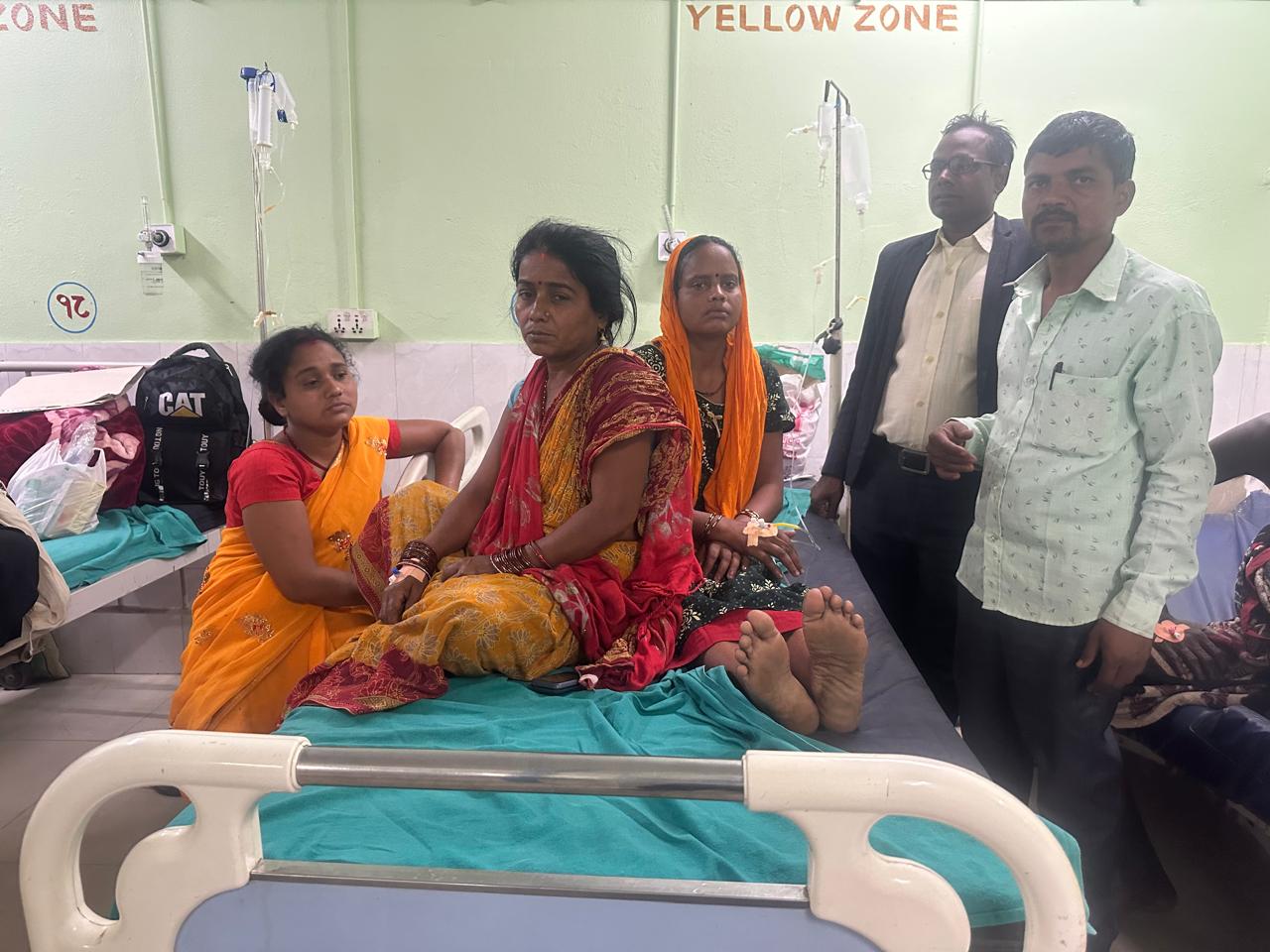
The crisis at Koshi Hospital is not confined to bed number 19. The neighboring bed number 18 is in the same state. Ayusha Khatun, 18, and Bikko Mandal, 65, are sharing that bed. Ayusha was admitted on April 7 and Bikko on 8 April. Though doctors recommended moving them to a ward, there are no free ward beds, leaving them squeezed onto a single emergency bed. “There are never any free beds in the wards. I’ve been here three days already,” Ayusha said.
The Mehta family lives on daily wages and cannot afford private hospital care. Health insurance guarantees subsidized treatment at government hospitals, but the extreme patient load means beds are rarely available. At Koshi Hospital, the right to lie in one’s own bed and receive treatment with basic dignity has been stripped away. Snakebite patients can be seen receiving treatment sitting by windows. These scenes reveal the true condition of the province’s largest government hospital.
The hospital’s response: No choice
According to Koshi Hospital administration, because patient load in the limited facility is so high, there is no option but to provide treatment with two patients sharing a single bed.
At a hospital with a 350-bed capacity, between 800 and 1,000 patients come to the OPD daily. With wards full to capacity, the pressure on the emergency ward is unmanageable, says emergency ward in-charge and information officer Gajendra Prasad Yadav. “We cannot turn away patients who come when there are no free beds. So our only option is to provide treatment even if it means putting two patients in one bed,” he says.
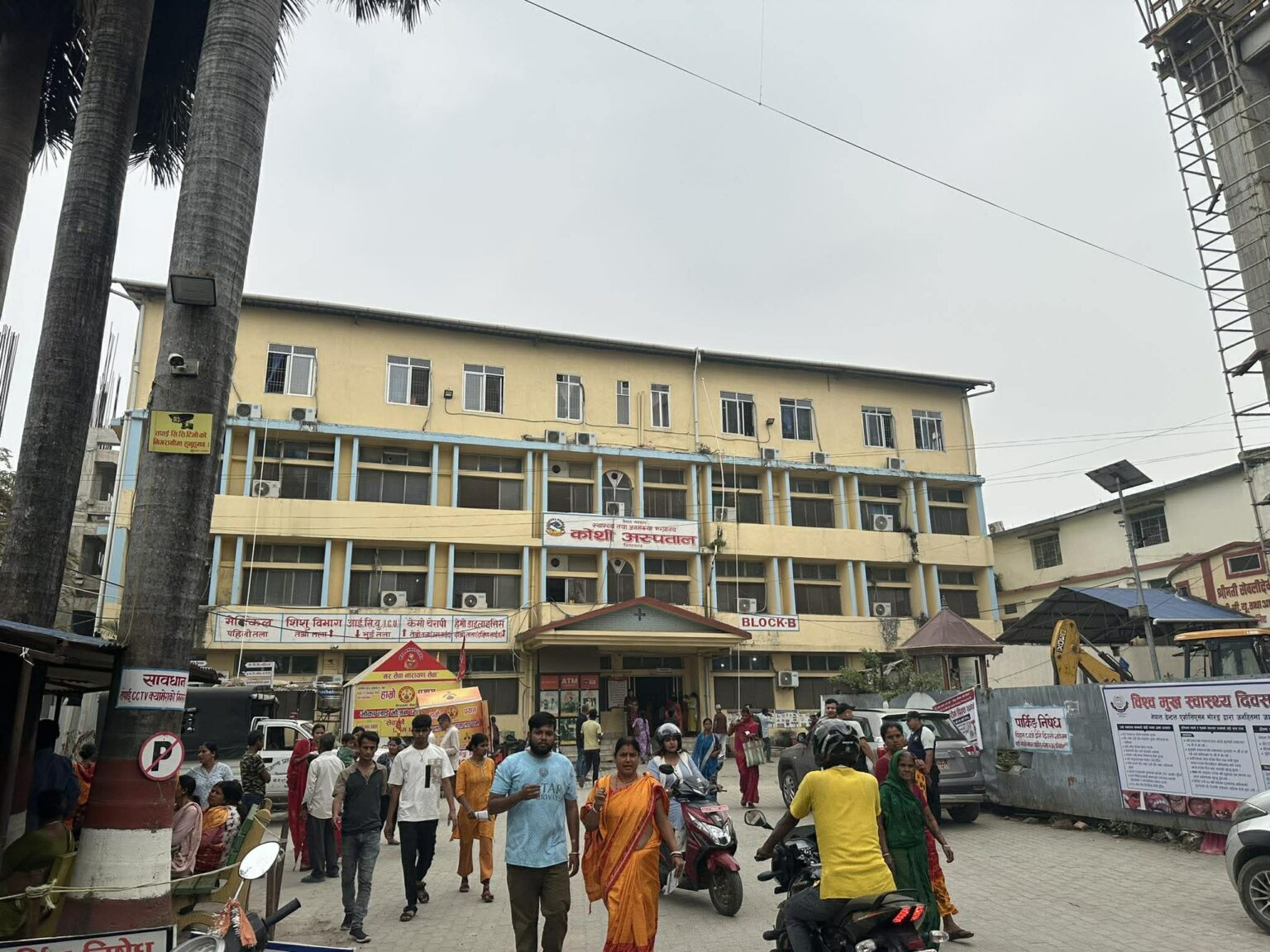
Koshi Hospital, Biratnagar.
The hospital has only 18 ICU beds. Every day, 10 to 15 critically ill patients are forced to wait in the emergency ward for an ICU bed to become available.
Medical Superintendent Dr Ram Narayan Chaudhary acknowledges that the inability to expand the hospital’s physical infrastructure has prevented any increase in beds and services. “We cannot increase ICU beds and general beds because of insufficient physical infrastructure, and until the infrastructure expands the pressure on the emergency ward cannot be reduced,” he says.
Attendants’ anger at the Minister’s visit
At around 3:30 in the afternoon of April 8, a vehicle carrying Federal Minister for Health and Population, Nisha Mehta, arrived at the chaotic grounds of Koshi Hospital.
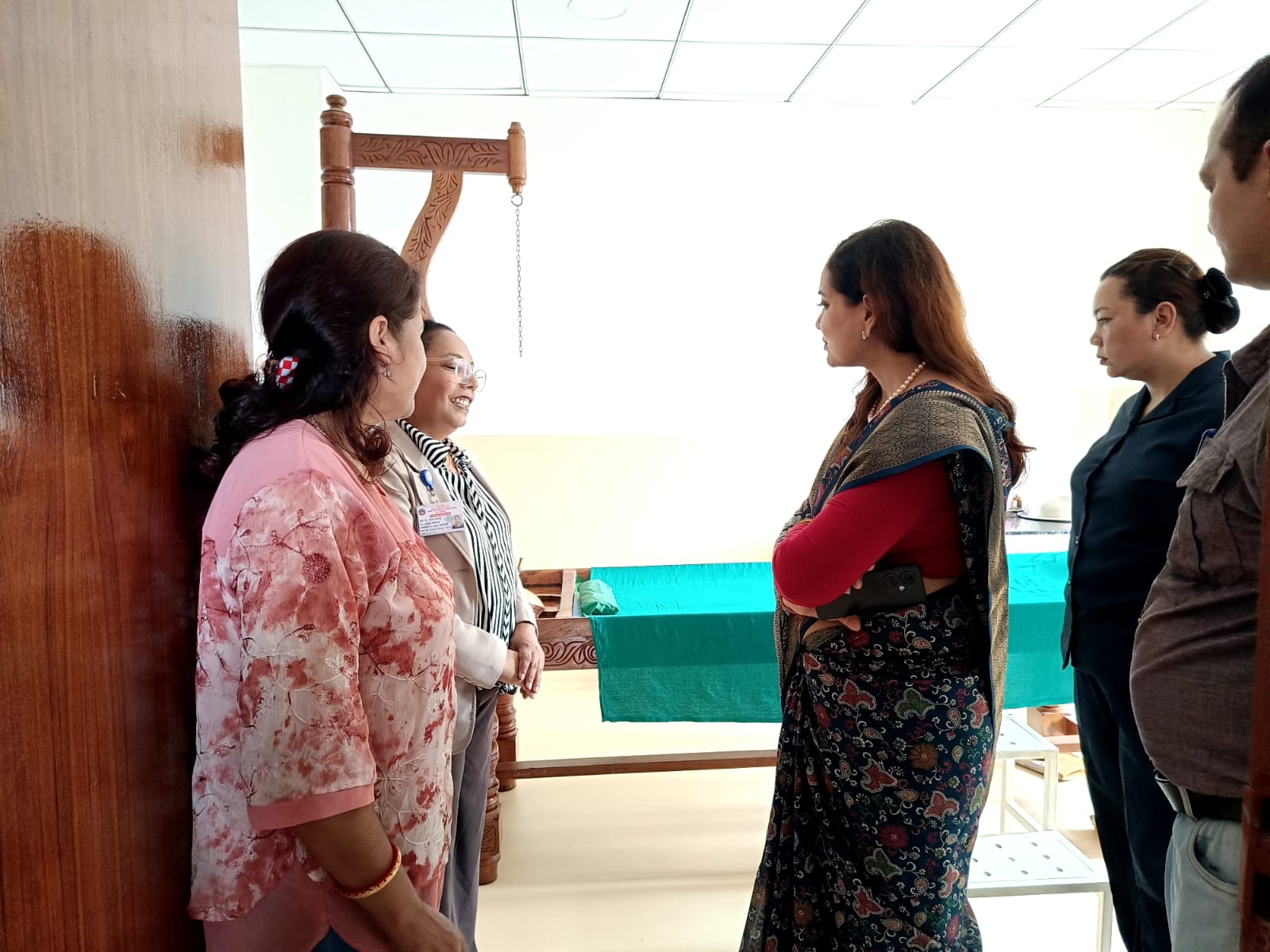
Minister Mehta began in the ICU ward, looking at equipment and patients’ conditions before moving toward the departmental wards. As she moved through the hospital’s clean-looking corridors and quiet wards, everything appeared normal. But when she stepped toward the emergency ward, the scene there and the anger of patient attendants laid bare the hospital’s true reality.
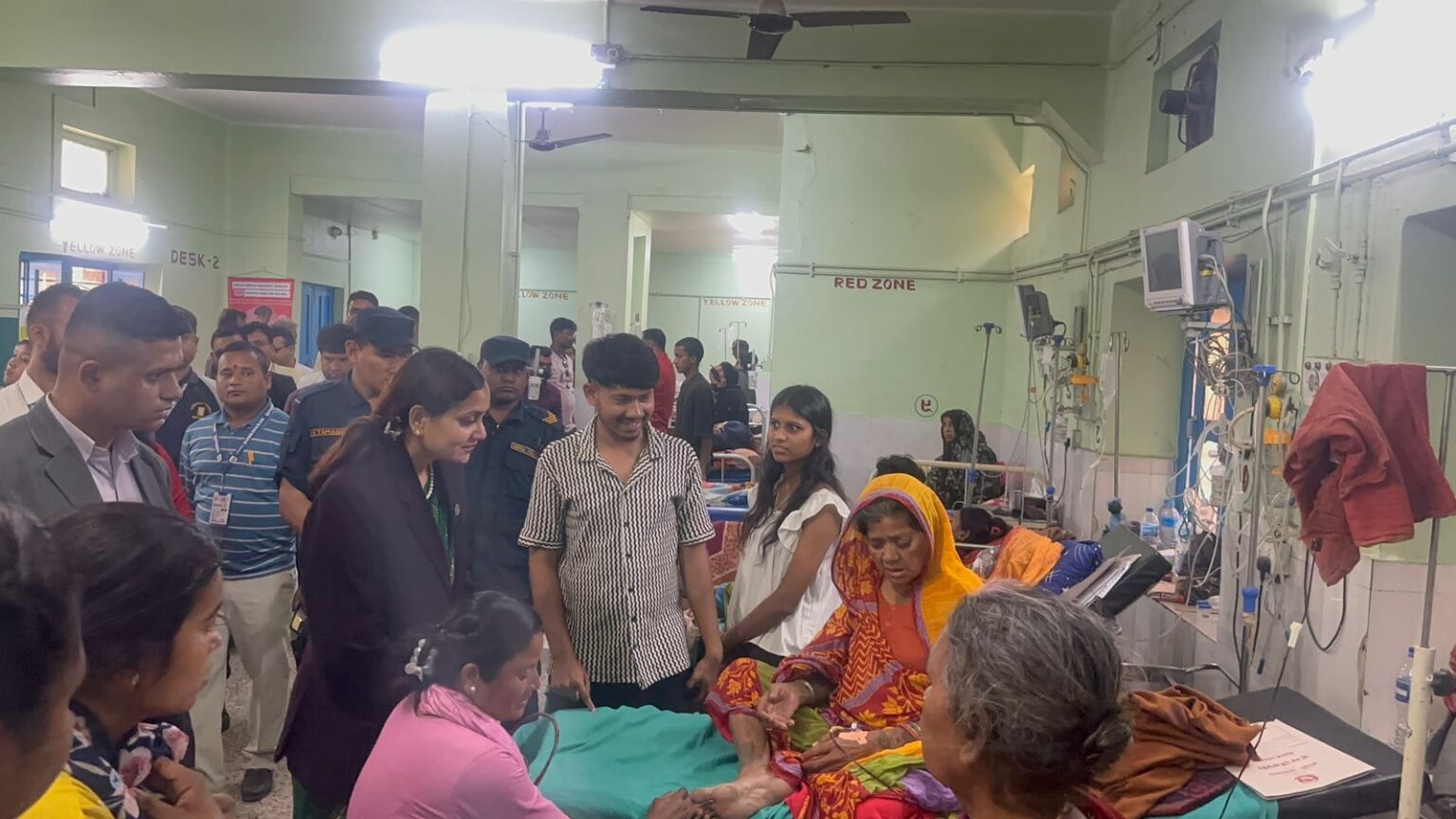
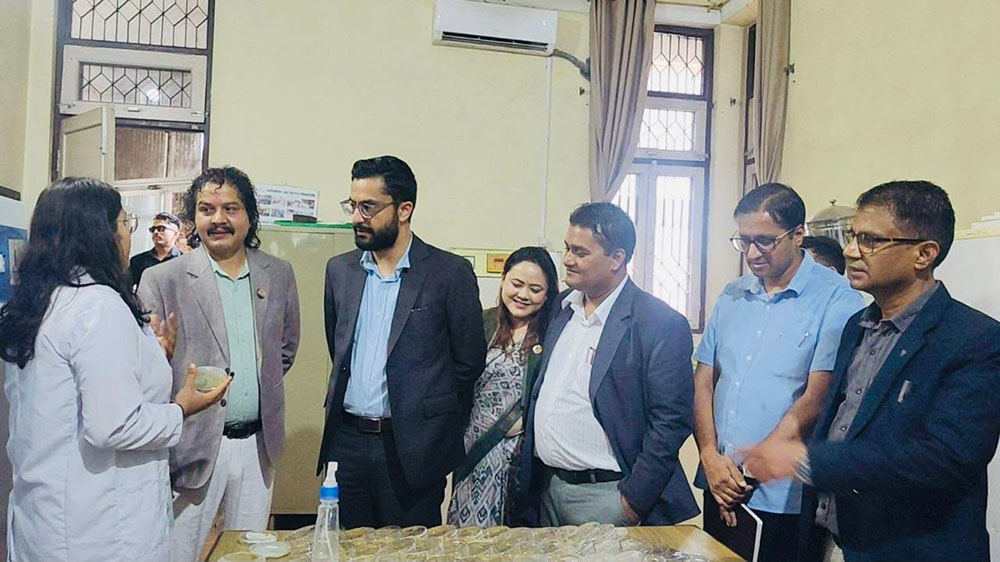
Health Minister Nisha Mehta during an inspection visit to Koshi Hospital in Biratnagar.
The moment the minister appeared, patient attendants surrounded her. Some had tears in their eyes, others were visibly angry. Emerging from the crowd was Bindesh Chaudhary of Bahuni, Belbari Municipality-7 in Morang, whose brother Dhruva Narayan Chaudhary, 47, had been there for 18 days with a broken leg. His voice broke as he recounted the ordeal they had been through at the hospital.
“Minister, what goes on here is not treatment; it is business,” Bindesh said, standing before her.
When he brought his brother to the emergency ward on March 21, he had assumed that being a government hospital, treatment would be affordable. Doctors referred him to the orthopedic department, where a team led by orthopedic and neurology specialist Dr Roshan Yadav began treatment. Problems arose, however, when it became clear that a surgical implant was needed.
Bindesh showed the minister a small slip of paper with a name and phone number written on it. “The doctors gave us a number and told us to bring the item from outside. When we enquired, we were initially asked for Rs 42,000,” he told the minister. “After a lot of pleading we got it for Rs 32,000. But the remarkable thing was, even after paying that much, we were given no bill.”
Bindesh alleged that there was a major arrangement between doctors at Koshi Hospital and the implant company. “If we bring the implant from anyone other than the person the doctor wrote down, they won’t fit it. Is this not outright robbery, Minister?” The question left Minister Mehta momentarily at a loss for words.
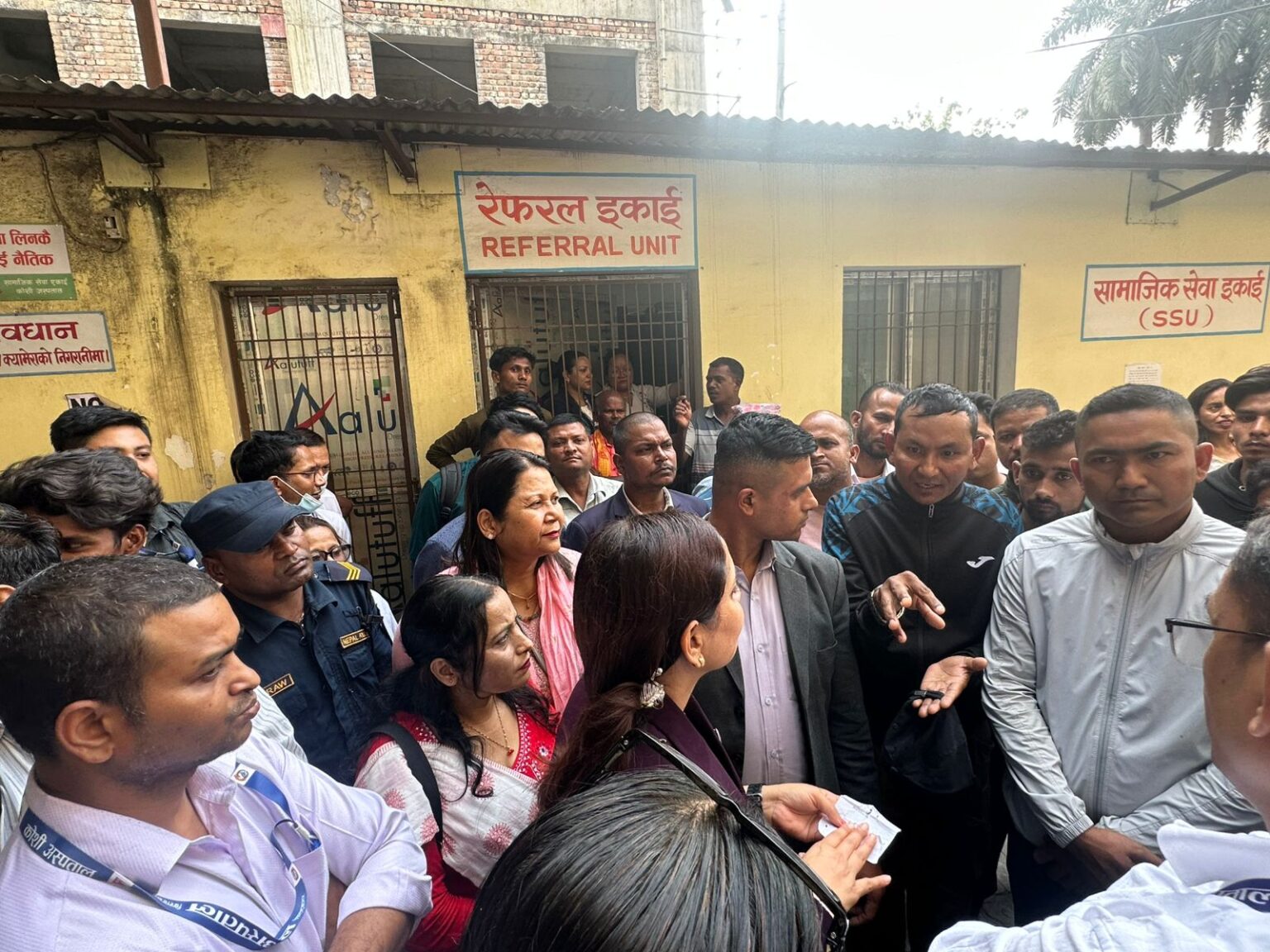
Bindesh Chaudhary of Belbari voicing his grievances to the Health Minister.
Dipak Kumar Mandal of Biratnagar Metropolitan City-18 also voiced his grievance. His sister Dandi Devi Mandal was admitted with a broken left arm. “I first brought a 20,000-rupee implant, Minister,” Dipak said. “Then I was told to take it back and was charged 45,000 rupees for two screws and a plate. We brought the materials from the company’s person as the doctor specified, but when we asked for a bill they wouldn’t give one.”
Patient relatives allege that doctors at Koshi Hospital direct patients to buy implants in exchange for commissions from suppliers. Implants from the company Madhura have been supplied to the hospital by individuals including Sanjay Mehta.
As these grievances were being heard, Medical Superintendent Dr Chaudhary, who was standing beside the minister, appeared visibly shaken. The minister immediately directed him to investigate the matter and establish the facts.
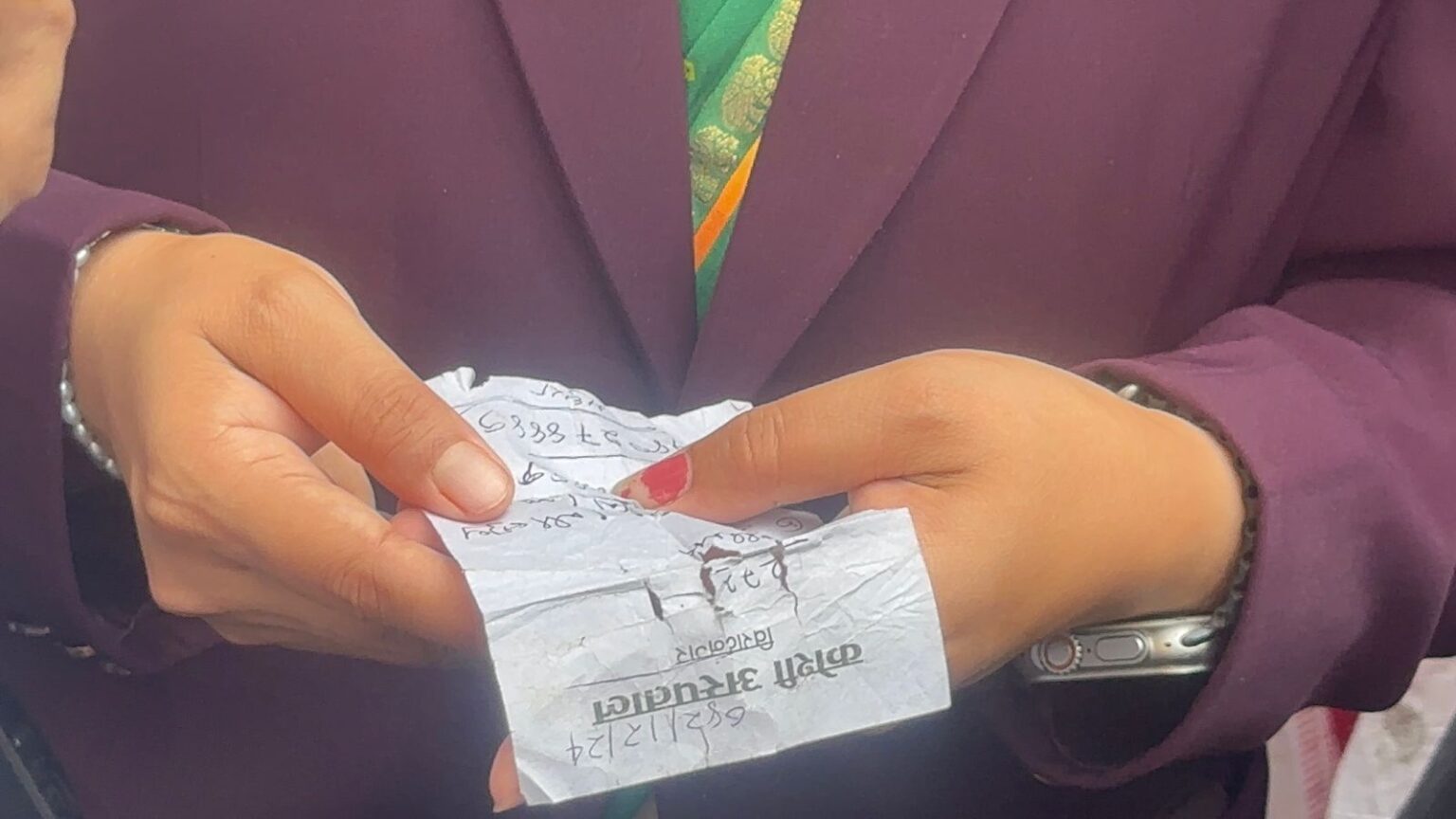
A slip of paper on which a doctor has written the name of an implant company and an individual.
Breaking free from the ring of attendants, Minister Mehta entered the emergency ward. The 35-bed room was packed to capacity. When the minister saw Bimala and Mamata sharing a single bed in the yellow zone’s bed number 19, she turned to look at the Medical Superintendent. Dr Chaudhary explained his predicament – “Minister, the patient load is so high that we simply have no beds. It is not our desire to put two patients in one bed; it is our only option.”
After the minister’s team emerged from the ward, as she was heading toward the hospital pharmacy a woman stopped her to share her own concerns. It was Ganga Subedi, coordinator of the Registration Assistants’ Association, from Biratnagar-10. Ganga told the minister that it was not only patients who had their own hardships at the hospital, but staff as well. “Minister, there are more than 7,000 registration assistants across the country. The state has given us neither a formal position nor any benefits,” she said. “We receive a 10 percent commission for enrolling people in health insurance, and nothing beyond that. We want the state to recognize our continuous work.” She urged the state to create formal positions for them.
According to Ganga, over seven years of operation the Registration Assistants’ Association has enrolled 2,392,766 families in health insurance nationwide, of which 557,712 families are from Koshi Province alone, representing a total of 2,861,852 insured individuals.
After hearing staff grievances, Minister Mehta went to inspect the hospital’s new building under construction. The large structures being built are not in a state to be completed and put into use in the near future. The minister took many notes during her inspection, but she had no immediate answers to offer the patient families who were looking for solutions now.
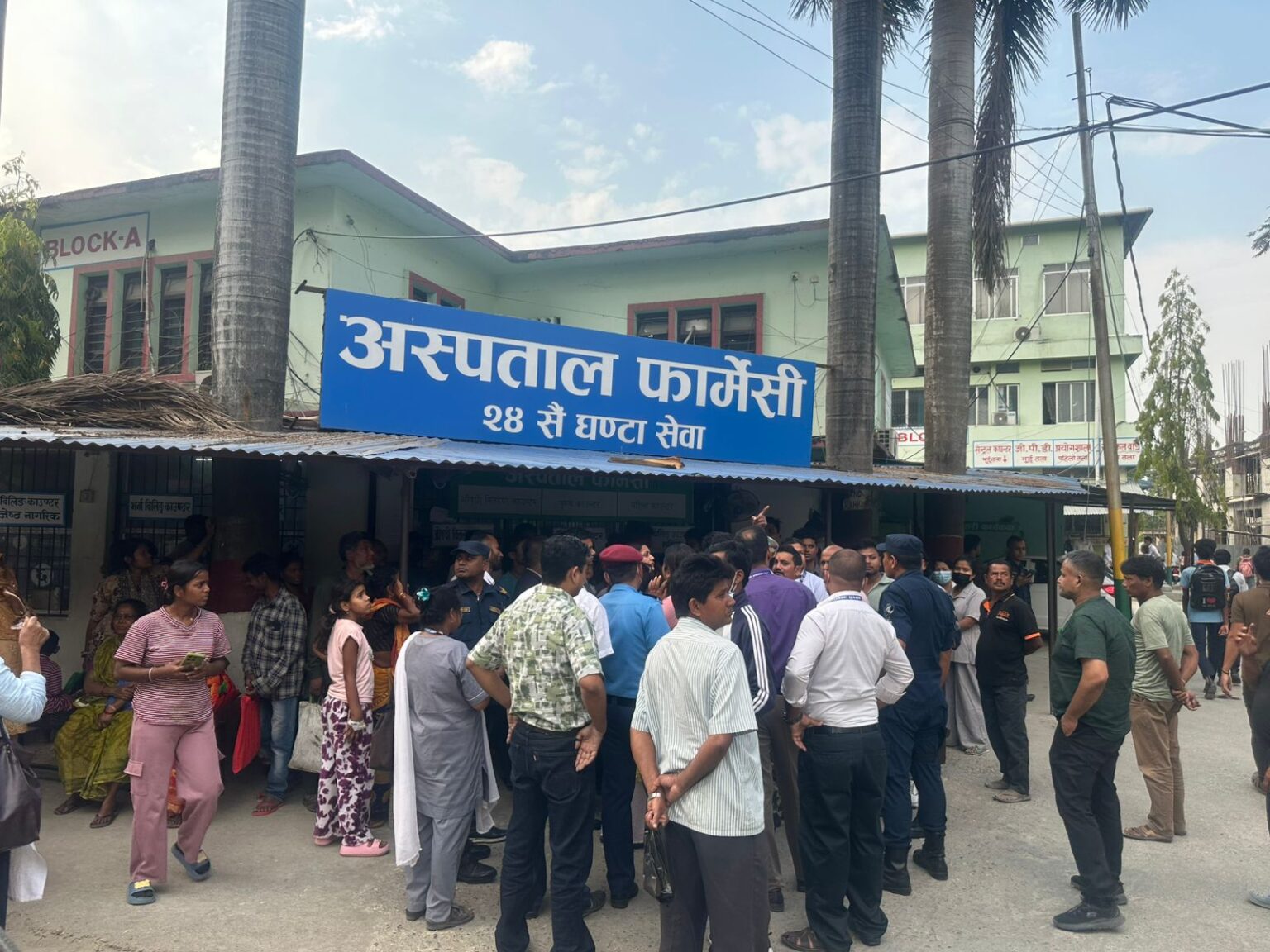
The pharmacy at the hospital.
As she prepared to leave after completing her inspection, the minister was asked about the hospital’s condition and prospects for improvement. “We have done the work of understanding the situation,” she said. “I am taking the problems observed here and the grievances of patient families seriously. After reviewing, we will work toward solutions. But improvement will take some time.”
Allegations of an ‘arrangement’
Patient relatives have alleged that doctors at Koshi Hospital are recommending Madhura-brand implants under financial influence from the company. Sanjay Mehta, who supplies Madhura implants to the hospital, denies there is any truth to the allegation.
He says he has been selling implants transparently for the past four months. “We give implants to patients at exactly the company’s set rate, not a paisa more. We also provide bills after purchase. We have not given a commission to anyone,” he says.
Doctors at Koshi Hospital direct patients to purchase implants from Madhura as well as from Green and Universal companies.
Dr Mahendra Prasad Yadav, head of the hospital’s orthopedic department, says the allegation that doctors are taking commissions is false. “When a patient needs surgery with an implant, we write down three company names. The patient must bring it themselves, and once they do we fit it. What is our fault in this? We have worked transparently,” he says.