Kathmandu
Saturday, June 13, 2026





From forged records to cabinet decisions, this piece traces how 143 ropanis of prime Baluwatar land were illegally transferred to private hands, the key actors behind the scheme, and the legal battles that forced the state to reclaim one of Nepal’s biggest corruption cases
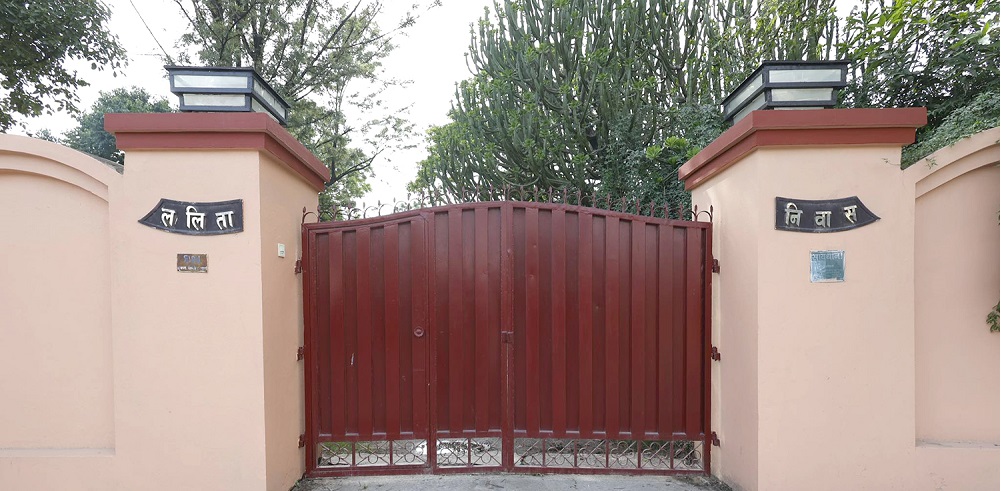
KATHMANDU: The Lalita Niwas scandal is the most sophisticated example of institutionalized corruption in Nepal’s history, involving the illegal privatization of roughly 143 ropanis (approx. 18 acres) of high-value government land in Baluwatar.
This land, located in the immediate vicinity of the Prime Minister’s official residence, was systematically siphoned off through a series of four distinct administrative “waves” between 1992 and 2013.
By manipulating cabinet policies and forging land revenue records, a syndicate of “land mafias,” high-ranking bureaucrats, and top-tier politicians—including three former Prime Ministers—successfully erased the state’s ownership.
This 20-question explainer dissects the details of the scandal, the legal battles that followed and the structural reforms triggered by its exposure.
What is the historical origin of the Lalita Niwas land, and how did it formally become government property?
The history of Lalita Niwas begins with the Rana dynasty, specifically belonging to Subarna Shumsher Rana, a key leader of the Nepali Congress. In 1964, during the Panchayat era, the Nepal government enacted a series of land acquisitions to establish administrative headquarters and residences for top state officials. While some properties were confiscated as political punishment, Lalita Niwas was handled differently.
The state legally requisitioned 284 ropanis of the estate under the Land Acquisition Act. Crucially, the government provided a fair market compensation of Rs 45,000 per ropani (a significant sum at the time) to the Rana family. This transaction was formally recorded in the Nepal Gazette, and the land was legally converted from Raikar (private) to Sarkari (government) property.
The state then utilized portions of this land for the Prime Minister’s residence, the Speaker’s quarters, and the Nepal Rastra Bank. For decades, the ownership was undisputed until the 1990s, when conspirators began a campaign to misrepresent this compensated acquisition as a “politically motivated confiscation” without payment.
This false historical narrative became the bedrock of the entire scam, allowing the syndicate to claim they were merely “correcting a historical wrong” when, in reality, they were stealing land the state had already purchased in full.
How did the land transition from state ownership back to private individuals in the early 1990s?
The first major breach of state integrity occurred in the immediate aftermath of the 1990 democratic movement. The Krishna Prasad Bhattarai-led interim government issued a cabinet decision intended as a restorative justice measure: land that had been confiscated from political activists by the Panchayat regime for opposing the monarchy was to be returned to its original owners.
This noble intent was hijacked by a syndicate operating within the Dillibazar Land Revenue Office. In 1992, Shailaja Rana and other heirs of Subarna Shumsher, in collusion with corrupt officials, submitted applications claiming that 112 ropanis of Lalita Niwas had been “confiscated” without compensation. To support this lie, the conspirators ensured that the original 1964 compensation records and the Gazette notifications “disappeared” from the government archives.
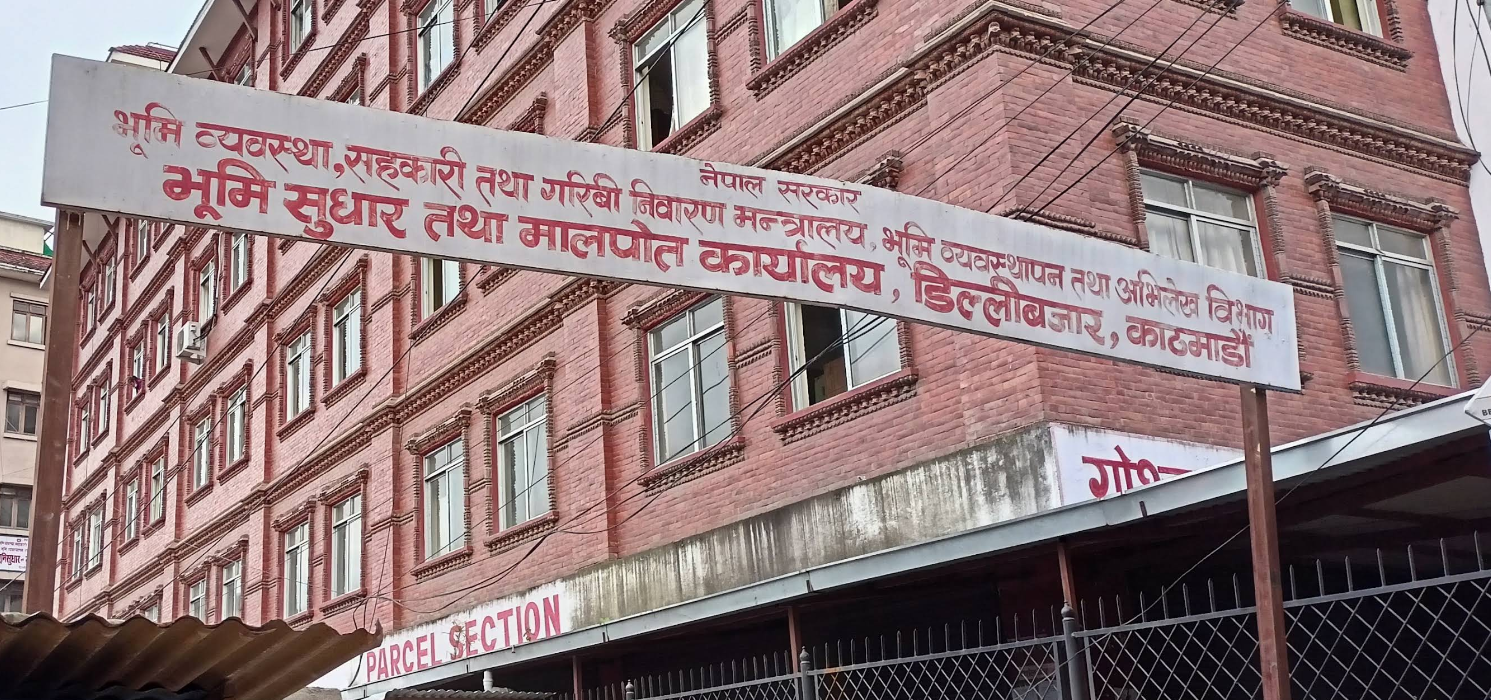
Dillibazar Land Revenue Office. File photo
Despite clear laws stating that land already compensated for could not be returned, Land Revenue officials bypassed the Cabinet’s specific criteria and registered the land in private names. This phase was the “original sin” of the scandal, as it moved the land out of the government’s protective ledger and into the private market, where it could be subdivided, sold, and eventually used to bribe the very officials who had facilitated the theft.
Who are Shobhakant Dhakal and Ram Kumar Maharjan, and what was their role as “land mafias”?
Shobhakant Dhakal and Ram Kumar Maharjan are the primary architects of the “land mafia” syndicate that managed the technical and political complexities of the grab for over two decades.
Dhakal, in particular, acted as the strategic bridge between the Rana heirs, the bureaucracy, and political leadership. After the Ranas reclaimed the land in 1992, Dhakal and Maharjan did not just act as brokers; they became the primary accumulators of the property.
They bought massive swathes of the “reclaimed” land at deeply discounted prices or received it as “service fees” for navigating the legal system. They then spent years lobbying every successive government to expand the privatization.
Their genius lay in creating a “multi-stakeholder” corruption model: they gifted small plots to influential politicians, their family members, and top bureaucrats to ensure that no one in power had an interest in investigating the land’s origins.
By the time the scam was exposed, these two individuals had effectively turned the Prime Minister’s neighborhood into a private real estate project, using forged certificates to launder the land’s history and sell it to unsuspecting (and some very suspect) high-profile investors.
How was the “tenant” (mohi) system manipulated to facilitate the grab in 2010?
The most audacious phase of the scam occurred in 2010 during the premiership of Madhav Kumar Nepal. The conspirators needed a way to privatize the land that was still stuck in a legal grey zone—specifically, the land surrounding the PM’s residence that was being used for expansion.
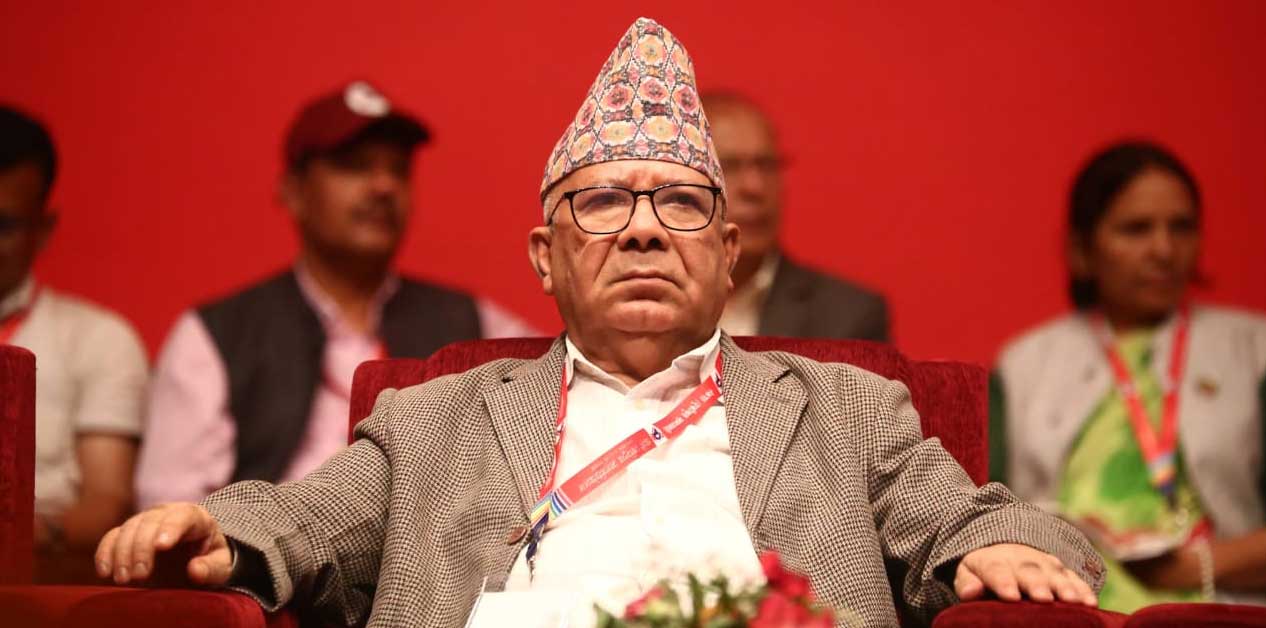
Madhav Kumar Nepal. File photo
They utilized the Mohi (tenant) system, a land-reform mechanism designed to protect poor farmers who tilled private land. However, Nepali law is explicit: the tenant system does not apply to government-owned land. To circumvent this, the syndicate created a list of “fake tenants”—individuals who had never farmed a day in their lives—and claimed they had historical rights to the Baluwatar property.
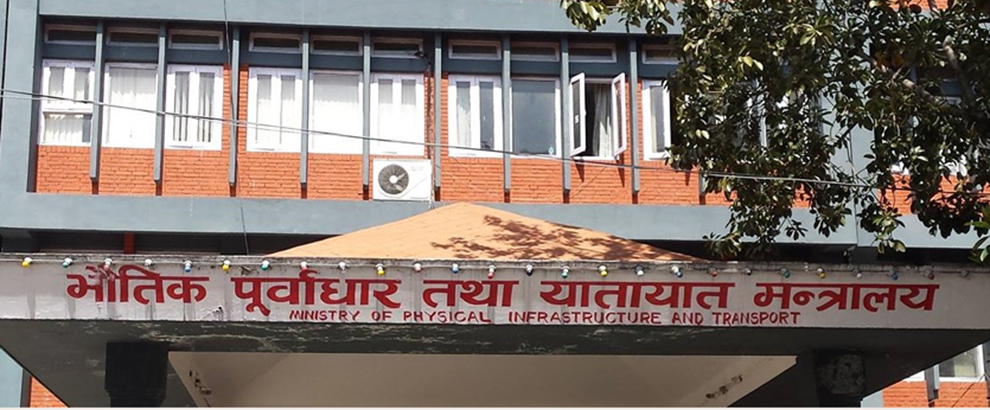
The Ministry of Physical Planning, led by Bijay Kumar Gachhadar at that time, pushed a proposal through the cabinet to expand the PM’s residence while “settling” the claims of these tenants by giving them nearly half of the land.
In reality, most of these “tenants” were proxies for Dhakal and Maharjan. This cabinet decision was a masterclass in administrative fraud; it used the expansion of a high-security government facility as a pretext to hand over nearly 27 ropanis of state land to private individuals under the guise of “social justice” for fake farmers.
What was the significance of the 2012 “Land Swap” and the Pashupati Tikinya Guthi decision?
In 2012, under the Baburam Bhattarai-led government, the syndicate identified yet another loophole to siphon off the remaining fragments of the estate. They focused on approximately 5 ropanis that were still registered as government property. The conspirators filed a claim asserting that this land actually belonged to a religious trust called the “Pashupati Tikinya Guthi.”
By converting the status from “Government Land” to “Guthi Land,” the syndicate removed the property from the direct protection of the Ministry of Land Reform and placed it under the Guthi Sansthan, which had much weaker oversight. Once the land was categorized as Guthi property, the “fake tenants” (proxies for the land mafia) were once again used to claim ownership rights. This “land swap” and Guthi registration was the final touch in the erasure of the state’s presence in Baluwatar.
It demonstrated a persistent and evolving strategy: if one legal argument (confiscation) or one system (tenant rights) failed to capture a specific plot, the syndicate would simply invent a new religious or historical claim to finish the job.
What was the role of the Sharada Prasad Trital Committee in exposing the scam?
For nearly thirty years, the Lalita Niwas land grab was protected by a wall of silence and “lost” files. This wall finally crumbled in 2018 when the government, under mounting pressure and internal whistleblowing, formed an investigation committee headed by former Secretary Sharada Prasad Trital.
The Trital Committee’s work was a landmark in forensic administration. The team spent months digging through the dusty archives of the Dillibazar Land Revenue Office, the Ministry of Land Reform, and the Cabinet Secretariat. They eventually found the “missing” 1964 Gazette notifications that proved the state had paid compensation for the land. The committee’s final report was a scathing 100-page indictment of the bureaucracy, explicitly stating that 143 ropanis had been stolen through “institutionalized forgery.”
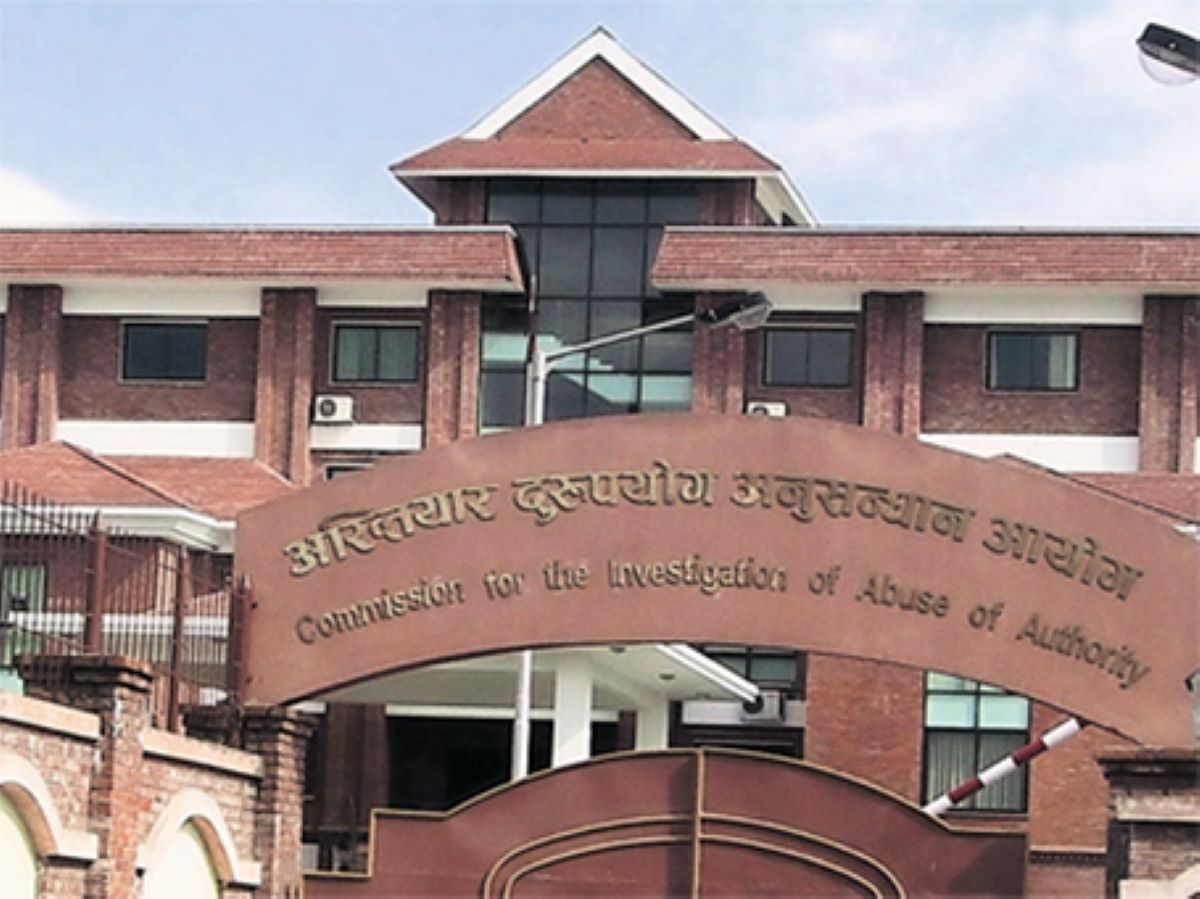
Commission for the Investigation of Abuse of Authority in Tangal/File photo
The report recommended the immediate cancellation of all private land certificates, the filing of corruption cases by the CIAA, and a criminal investigation by the CIB.
The Trital Report transformed a complex real estate mystery into a clear-cut criminal conspiracy, providing the legal foundation for every arrest and court case that followed.
Why were former Prime Ministers Madhav Kumar Nepal and Baburam Bhattarai not prosecuted by the CIAA?
One of the most controversial aspects of the 2020 CIAA filing was the exclusion of former PMs Madhav Kumar Nepal and Baburam Bhattarai. The CIAA’s reasoning was based on Section 4 of the CIAA Act, which prohibits the agency from investigating “policy decisions” made by the Council of Ministers (the Cabinet).
The CIAA argued that since the land transfers were triggered by formal cabinet decisions, the Prime Ministers who presided over them were legally immune, even if the decisions themselves were based on fraudulent premises. This sparked a national debate on the “Policy Decision Loophole.”
Critics argued that a decision to steal state land cannot be a “policy” and that the CIAA was simply protecting the political elite. This legal shield held for several years until 2023, when the Supreme Court ruled that “administrative” decisions hidden under the guise of “policy” are not immune from criminal investigation.
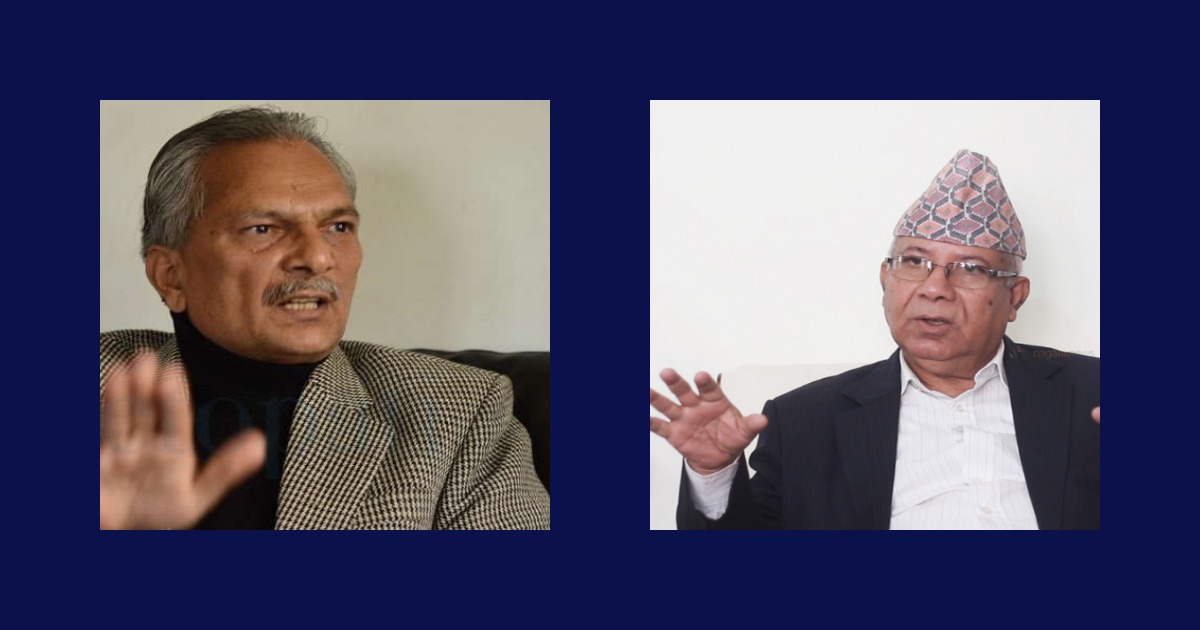
Babu Ram Bhattarai (left) and Madhav Kumar Nepal (right)
While Nepal and Bhattarai were eventually interrogated by the police (CIB) for “criminal forgery,” they have yet to face a formal trial, highlighting the immense difficulty of holding heads of government accountable in Nepal’s legal landscape.
Who is Min Bahadur Gurung, and why is his involvement so controversial?
Min Bahadur Gurung, the billionaire founder of Bhat-Bhateni Supermarket, represents the “corporate” side of the Lalita Niwas heist. His involvement turned a bureaucratic scam into a massive commercial enterprise.
Gurung purchased over 60 ropanis of the stolen land from the mafias (Dhakal and Maharjan) at various stages, often using his vast wealth to provide the necessary liquidity to keep the scam moving. He didn’t just hold the land; he used it as collateral to secure billions of rupees in loans from several commercial banks, effectively turning stolen state assets into active capital for his retail empire.
His conviction in 2024 was a watershed moment because it signaled that the state was willing to target “Big Business” alongside corrupt officials. Gurung’s defense—that he was merely a “good faith purchaser”—was rejected by the court, which ruled that a businessman of his stature should have known that 60 ropanis of land in the PM’s high-security backyard could not possibly be legitimate private property.
What happened to former Deputy Prime Minister Bijay Kumar Gachhadar in the court proceedings?
Bijay Kumar Gachhadar’s legal journey is a source of significant public cynicism. As the Minister for Physical Planning in 2010, he was the primary signatory on the cabinet file that authorized the “fake tenant” scheme.
The CIAA charged him with corruption, seeking to recover billions in losses. Gachhadar initially went into hiding, only surfacing after a change in government. In February 2024, the Special Court delivered a shocking verdict: while the court convicted Gachhadar’s subordinates (the secretaries who prepared the file), it acquitted Gachhadar himself.
The court ruled that there was insufficient evidence to prove he had “direct criminal intent” or that he personally profited from the file he signed. This “guilty secretary, innocent minister” logic was widely mocked by the public and legal experts, as it implies that a minister is not responsible for the massive illegalities contained in the documents he pushes through a cabinet meeting. The government has since appealed this acquittal to the Supreme Court.
What was the involvement of Bishnu Paudel in the Lalita Niwas scam, and why was he not prosecuted?
The involvement of Bishnu Paudel, a high-ranking leader of the CPN-UML and former Finance Minister, centered on 8 aana of land registered in the name of his son, Nabin Paudel. Investigative reports revealed that this land was part of the illegally privatized 143 ropanis.
Paudel claimed that the land had been purchased in “good faith” from the masterminds Shobhakant Dhakal and Ram Kumar Maharjan. The controversy intensified when it was alleged that the land was essentially a “gift” or a kickback for political protection. Despite intense public outcry, the CIAA did not file a corruption case against the Paudels.
The legal justification provided was that Nabin Paudel had formally agreed to return the land to the government voluntarily. Under a specific legal provision, the CIAA decided that since the property was being restored to the state, the criminal intent for “possession of illegal property” was mitigated.
Critics, however, viewed this as a “VIP escape clause,” arguing that returning stolen goods after being caught should not absolve a high-profile politician of the initial conspiracy or the benefits reaped from the transaction.
How did the Central Investigation Bureau (CIB) approach the case differently from the CIAA?
The investigation into Lalita Niwas is divided into two distinct legal channels: Corruption and Forgery. The CIAA handles “Corruption” (abuse of authority), which is often hampered by political immunity and “policy” definitions. However, in 2023, the Central Investigation Bureau (CIB) of the Nepal Police launched a massive “Criminal Forgery” investigation. Forgery is a crime under the General Code (Muluki Ain), and it has no “policy” immunity—even a Prime Minister can be arrested if they are part of a conspiracy to fake documents.
The CIB focused on the physical acts of fraud: the altered maps, the “lost” records, and the fake signatures. This approach allowed the police to arrest dozens of individuals who had previously felt safe, including former Election Commissioner Sudheer Kumar Shah and several powerful businessmen. By framing the scam as a “Documentary Heist” rather than just a bureaucratic lapse, the CIB was able to bypass the political roadblocks that had stalled the CIAA for years.
What were the specific findings of the Special Court’s February 2024 verdict?
On February 15, 2024, the Special Court delivered a massive, multi-volume judgment that clarified the legal status of the land. The court’s findings were clear on one major point: 143 ropanis of land in Baluwatar belong to the Government of Nepal.
The court ordered the cancellation of all private ownership certificates. Regarding the individuals, the court convicted 12 people for their roles in the conspiracy, including masterminds Shobhakant Dhakal and Ram Kumar Maharjan, businessman Min Bahadur Gurung, and former Secretary Deep Basnyat. Each was sentenced to two years in prison and fined heavily.
However, the verdict was criticized for acquitting 17 others, including former ministers Bijay Kumar Gachhadar and Chandra Deo Joshi. Despite the acquittals, the verdict was a historic victory for the state treasury, as it provided the legal authority to physically reclaim the land, marking the first time in decades that a major state asset was successfully recovered from the “land mafia.”
How does the Lalita Niwas scam reflect the problem of “Institutionalized Forgery” in Nepal?
Lalita Niwas is the ultimate case study in “Institutionalized Forgery,” a phenomenon where the state’s own administrative machinery is used to commit crimes against the state. This wasn’t a case of an outsider breaking into an office to steal a file; it was a collaborative effort by everyone from the Kharidar (Non-gazetted second class) to the Sachib (Secretary).
The forgery was “institutionalized” because it followed the formal hierarchy: a junior official would write a fake “on-site report,” a department head would “verify” it, and a minister would “approve” it.
Each layer of the bureaucracy provided a veneer of legitimacy to the lie. This process allowed the syndicate to bypass the “red flags” that should have stopped the transfer. It highlights a terrifying reality in Nepal’s land administration: if enough officials are bribed or intimidated, the “official record” can be completely rewritten to reflect whatever reality the highest bidder desires, effectively turning the Land Revenue Office into a “laundromat” for stolen property.
What was the role of Deep Basnyat, and why is his conviction so significant for the anti-corruption movement?
Deep Basnyat’s involvement is the most ironic and damaging aspect of the scandal. Basnyat was the Secretary at the Ministry of Physical Planning in 2010 when the “fake tenant” scheme was pushed through. He was the one who physically drafted the fraudulent proposal. Years later, he was promoted to become the Chief Commissioner of the CIAA—the very agency responsible for investigating corruption. His conviction in 2024 is significant because it exposes the “captured state” model, where criminals are promoted to the heads of integrity institutions to protect themselves and their cronies.
While heading the CIAA, Basnyat was famously aggressive in investigating others, a move now seen as a smoke-screen to maintain his image while he sat on the files of his own crimes in Baluwatar. His sentencing to two years in prison represents a rare moment where a “Supreme Guardian of Integrity” was unmasked as a primary architect of the very corruption he was sworn to fight.
What happened to the hundreds of individual owners who bought the land from the mafias?
By 2020, the 143 ropanis of Lalita Niwas had been fractured into hundreds of small plots and sold to a variety of buyers. These included high-profile politicians like Bishnu Paudel (whose son owned a plot), business leaders, and even ordinary families who had purchased land through real estate agents. The legal fallout for these “third-party buyers” has been devastating.
The Special Court’s 2024 ruling did not distinguish between a “malicious” buyer and an “innocent” one; it simply declared the land’s title void from the start (void ab initio). This means that anyone holding a Lalpurja (ownership certificate) for the Baluwatar land essentially holds a worthless piece of paper.
While the state has reclaimed the land, these owners have been left to sue the original sellers (Dhakal, Maharjan, or Gurung) to recover their money—a process that could take decades.
This serves as a harsh warning to all investors in Nepal: even an “official” government ownership certificate is no guarantee of legality if the underlying history of the land is tainted by fraud.
Is the land actually back in government possession, and what is its current status?
As of early 2026, the legal battle for ownership has been won by the state. The Land Revenue Office has formally re-entered all 143 ropanis into the “Government Property” ledger. However, the physical reality is more complex. Over the years, several permanent structures were built on the land, including warehouses for Bhat-Bhateni and several multi-story private residences.
Some areas have been fenced off and integrated back into the Prime Minister’s residence complex or the Nepal Rastra Bank grounds. The government’s long-term plan is to convert a significant portion of the recovered land into a “Public Democracy Park” and a high-security administrative zone.
While the legal title is restored, the “physical” restoration of the entire estate as an open public space remains an ongoing logistical challenge involving the removal of established encroachments and the resolution of remaining civil disputes.
What is the status of the “Criminal Forgery” cases in the District Court?
While the Special Court handled the “Corruption” (financial) side of the case, the “Criminal Forgery” trial is currently active in the Kathmandu District Court as of 2026. This case is massive, with over 310 defendants. The CIB’s charge sheet is a monumental document that traces every forged signature and altered map. This trial is significant because it carries heavier prison sentences than corruption charges and has a lower threshold for proving “intent.”
Even individuals who were acquitted of “corruption” by the Special Court—under the logic that they didn’t personally profit—could still be convicted of “forgery” if they were part of the chain that created the fake documents.
This “second layer” of legal jeopardy has kept the suspects under intense pressure, ensuring that the Lalita Niwas case remains a live wire in the Nepali judiciary long after the land itself was reclaimed.
How did the scam impact the Nepal Rastra Bank and the broader banking sector?
The impact on the Nepal Rastra Bank (NRB) was both physical and financial. Physically, the bank lost land that was essential for rebuilding its headquarters after the 2015 earthquake, leading to delays and increased costs.
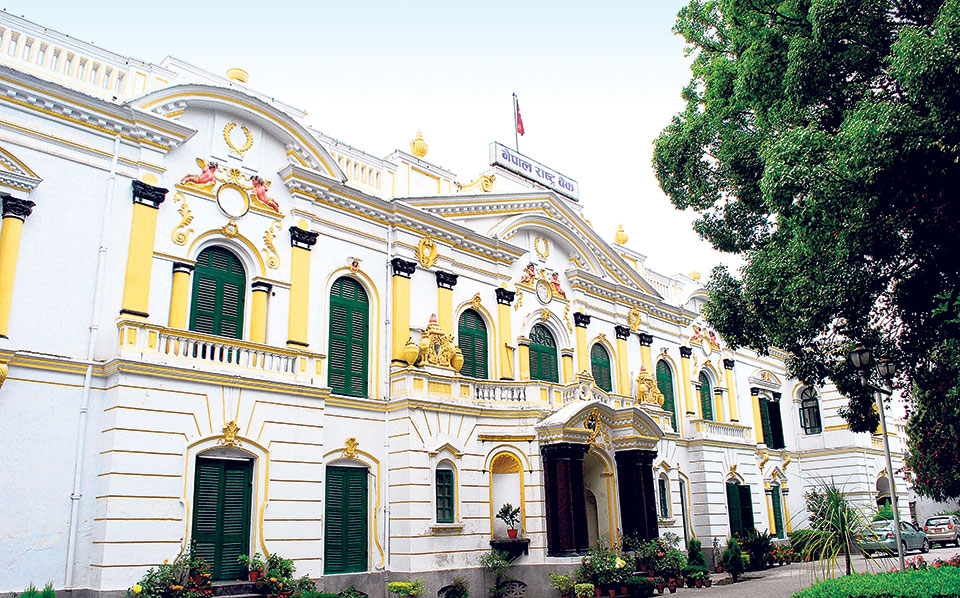
Building of Nepal Rastra Bank in Baluwatar, Kathmandu/File photo
Financially, the scam created a systemic risk in the banking sector. Because billionaire Min Bahadur Gurung and others had used the “stolen” Baluwatar land as collateral to take out loans from over a dozen commercial banks, the government’s seizure of the land effectively made those loans “unsecured.” Suddenly, billions of rupees in banking assets were at risk of becoming “Non-Performing Loans” (NPLs).
The NRB had to issue emergency circulars to banks, forcing them to demand additional collateral from the borrowers. This “collateral crisis” exposed how corruption in land administration can directly threaten the stability of the entire national financial system, prompting the 2026 reforms to mandate more rigorous “title verification” before banks can accept land as security.
What are the long-term legal implications of the “Policy Decision” debate?
The Lalita Niwas case has fundamentally altered the constitutional understanding of “Executive Privilege” in Nepal. For decades, the “Policy Decision” clause in the CIAA Act served as a “Get Out of Jail Free” card for Prime Ministers and Ministers. The Supreme Court’s 2023 intervention in this case set a revolutionary precedent: it ruled that the process of reaching a decision is not immune from investigation.
If a cabinet decision is based on forged documents or a criminal conspiracy, the “policy” label cannot protect the participants. This has shifted the power balance back toward the investigative agencies and the judiciary. It means that future cabinets can no longer “launder” illegal acts by passing them as a group decision.
This legal evolution is perhaps the most significant “indirect” benefit of the scandal, as it has closed a massive loophole that had allowed high-level corruption to flourish with impunity since the 1990s.
Why does Lalita Niwas remain the most important corruption case in Nepal’s history?
Lalita Niwas is more than just a land scam; it is a “biopsy” of the Nepali state, revealing a malignant tumor of corruption that had spread to every organ—the Cabinet, the Ministries, the Land Revenue Office, the CIAA, and the private sector.
It is the most important case because it proved that the “Land Mafia” was not an outside force, but an inside job. Its successful prosecution (reclaiming 143 ropanis) has restored a measure of public trust in the idea that the state can defend itself.
It serves as a permanent warning to the “extractive elite” that even the most sophisticated forgery can be unraveled by a determined investigation. As Nepal moves forward under the 2026 reforms, Lalita Niwas stands as the ultimate benchmark: if the state can win back its own backyard from its own leaders, it has a chance to build a truly accountable democracy.