Kathmandu
Tuesday, June 30, 2026






KATHMANDU: Nepal News presents today’s snapshot of Nepal’s economic activities. Get quick updates on major market movements, policy shifts, and financial developments shaping the economy of Nepal. Here are the key economic highlights for today:
NRB mops up Rs 40 Billion Excess Liquidity
To manage excess liquidity within the banking system, Nepal Rastra Bank (NRB) collected Rs 40 billion through a deposit collection instrument on Wednesday. The Monetary Management Department issued the 21-day deposit collection at an interest rate determined through a competitive bidding process, with the principal and interest set for repayment on June 24. Eligible Class ‘A’, ‘B’, and ‘C’ financial institutions participated in the online bidding, which required a minimum bid of Rs 100 million. This move follows the central bank’s strategy to stabilize market liquidity levels.
Wagle Plans 15-Day Salary Cycles and Budget Boost for Border Security
During an economics committee meeting on Wednesday, the Finance Minister, Swarnim Wagle, stated that the market has become more vibrant following the implementation of bi-monthly (15-day) salary payments and a two-day weekly public holiday. He announced plans to allocate a significant budget for the Police and Armed Police Force to strengthen border security and prevent revenue leakage. Additionally, the Ministry of Home Affairs has been tasked with managing 651 motorcycles and 41 cars currently stuck at customs to prevent misuse by officials. The government also confirmed that reports on three out of seven “sick” (ailing) projects have been received, with plans to operate all seven under a Public-Private Partnership (PPP) model.
NEPSE Slips Further as Turnover Falls Below Rs 3 Billion
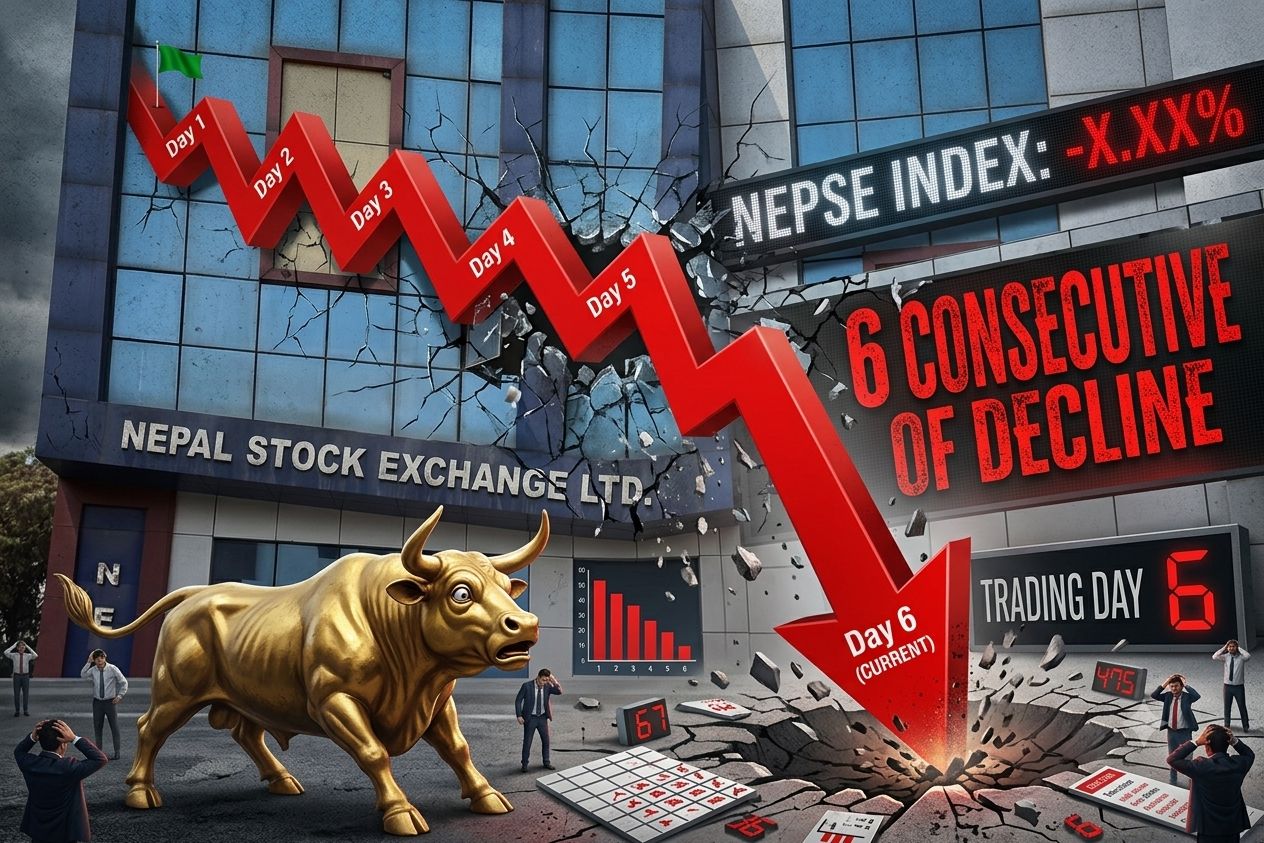
The Nepal Stock Exchange (NEPSE) declined by 4.15 points on Wednesday, the third trading day of the week, with market turnover also witnessing a sharp drop. The benchmark index fell by 0.15 percent to close at 2740.25, while the sensitive index dropped by 0.70 points to settle at 467.55. The float index declined by 0.19 percent and the sensitive float index by 0.16 percent. A total of 5.64 million shares of 339 companies were traded through 42,176 transactions, generating a turnover of Rs 2.807 billion. The daily turnover had stood at Rs 4.665 billion on Tuesday and Rs 4.613 billion on Monday. Share prices of only 82 companies advanced, while 176 declined and 12 remained unchanged. Out of the 13 trading groups, only the Manufacturing and Processing sector, which gained 0.47 percent, and the Trading group, up 1.50 percent, closed in positive territory. Most major sectors ended lower, including Commercial Banks, Hotels and Tourism, Hydropower, Finance, Microfinance, Life Insurance, and Non-Life Insurance.
Share Pledge Loans Increase by 13.4% in 9 Months
According to Nepal Rastra Bank, loans against shares (pledge loans) reached a total of Rs 159.488 by mid-April. This represents a 13.4 percent increase compared to the end of the last fiscal year on July 16. In just one month between mid-March and mid-April, such loans grew by Rs 3.21 billion. Significant growth was seen in small-scale loans under Rs 2.5 million, which surged by 47.2 percent to reach Rs 12 billion, while large loans over Rs 10 million grew by 11.1 percent to Rs 109 billion.
Mutual Funds Emerge as Strategic Investment Option During Market Fluctuations
Financial experts are highlighting Mutual Funds as a safer alternative for retail investors during stock market volatility. Nepal currently has 14 open-ended and 43 closed-ended schemes, with the latter traded directly on the stock exchange. These funds allow investors to benefit from professional management, diversified portfolios, and strategic buying during market downturns, which helps lower the average purchase price. With bank interest rates for savings falling below 3 percent and fixed deposits below 6 percent, mutual funds are being promoted for their potential to provide higher long-term dividends. Investors are advised to evaluate funds based on their Net Asset Value (NAV) and historical dividend performance before investing.
NOC Executive Director Chandika Bhatta Resigns
Chandika Bhatta, Executive Director of the Nepal Oil Corporation (NOC), has resigned from his position. On Wednesday, he submitted his resignation letter to Minister for Industry, Commerce and Supplies Gauri Kumari Yadav. According to reports, his resignation came after the government requested politically appointed officials to step aside in order to facilitate smoother administrative functioning. Bhatta is said to have resigned with the understanding that his decision would help ease government operations.
Nepal Telecom Profits Grow by 9.85% in 9 Months
Nepal Telecom reported a net profit of Rs 6.272 billion for the first nine months of the current fiscal year, a 9.85 percent increase compared to the same period last year. Total operating income rose by 2.42 percent to Rs 25.92 billion, driven largely by a Rs 577.4 million increase in GSM mobile revenue and better expense management. While the company’s earnings per share (EPS) rose to Rs 46.47, interest income from bank deposits dropped by 20.57 percent due to declining market interest rates. Overall, the company’s total income reached Rs 28.85 billion for the review period.
Government to Enroll Temporary and Contract Workers in Social Security Fund
The Ministry of Finance has given theoretical approval to the Ministry of Labour, Employment, and Social Security to include temporary, contract, and daily-wage government workers in the Social Security Fund (SSF). This move follows a Supreme Court ruling and provisions in the fiscal year 2025/26 budget, with a specialized package being prepared for the fiscal year 2026/27 budget. Under the proposed rules, the government as the employer will contribute 20 percent and the worker 11 percent based on at least 60 percent of the basic salary. This policy is expected to benefit approximately 35,000 workers currently paid through federal, provincial, or local government funds. Currently, the SSF has around 2.9 million total members and a fund balance of Rs 110 billion.
Private Sector Cautiously Optimistic Over New Government Policies
Business leaders in Chitwan have expressed a “wait and watch” attitude toward the government’s newly announced policies and programs for the upcoming fiscal year. While organizations like the Chitwan Chamber of Commerce and Industry and the Chitwan Industry Association find the policies encouraging specifically the one-door system and electricity reserve plans they emphasize that success depends entirely on budget allocation and implementation. Tourism entrepreneurs have noted that declaring 2028-29 as a “Visit Year” provides a glimmer of hope for the sector. Meanwhile, agricultural groups, including the Nepal Poultry Federation, have requested that the upcoming budget address missing issues to create a truly investment-friendly environment.
Ministry Initiates Repairs for Toppled Transmission Towers in Karnali
The Ministry of Energy, Water Resources, and Irrigation has begun efforts to restore power to Karnali Province after two towers of the Kohalpur-Surkhet 132 kV transmission line toppled due to falling trees during a storm. Energy Minister Biraj Bhakta Shrestha has ordered an immediate investigation and repair, which is estimated to take approximately three weeks as the foundations require complete reconstruction. In the interim, a limited power supply is being provided through an older 33 kV line, though its capacity is insufficient for the region’s needs. A probe committee led by Raman Raj Sharma has been formed to oversee the incident involving the RS Infra construction company.
Tea Exports to India Grind to a Halt Due to New Lab Testing Rules
Tea exports from Nepal to India have faced a complete standstill since April 27 due to a new Standard Operating Procedure (SOP) implemented by the Tea Board of India. The rule, which became mandatory on May 1, requires every single truck to undergo individual laboratory testing in Kolkata, a process that takes 10 to 15 days. Previously, one test report was valid for three months or 20 trucks. Industry experts warn that this regulation adds a cost of approximately Rs 11,750 per sample and risks deteriorating tea quality due to long transit delays. With 50 percent of Nepal’s CTC tea and 90 percent of its Orthodox tea destined for India, the sector which brought in Rs 1.02 billion in exports to India by mid-April, is facing a severe crisis.
Indian Customs Delaying Cargo Clearance at Birgunj ICP
Despite the establishment of Integrated Check Posts (ICP) to facilitate trade, Indian Customs has reportedly refused to clear and send Nepal-bound cargo trucks early in the morning. According to terminal management at the Birgunj ICP, while the Nepali side is ready to receive vehicles from 7:00 AM, Indian authorities rarely release trucks before 11:00 AM, citing a lack of manpower and the late arrival of staff from Raxaul. Birgunj Customs officials noted that while the issue has been raised in counterpart meetings, implementation remains an obstacle. Local administration in Parsa has pledged to coordinate through the Border Security Coordination Committee to resolve these persistent delays.
Tatopani Records Rs 18.939 Billion in Electric Vehicle Imports Over 2 Years
The Tatopani Customs Office reported that 7,492 units of electric vehicles (EVs) worth Rs 18.939 billion were imported from China via the Khasa route over the last two fiscal years. This trade generated Rs 10.456 billion in revenue for the government. In the current fiscal year 2082/83 up to mid-March, imports included 934 cars/jeeps in the 51-100 kW range, 479 microbuses, and various other units including delivery vans and three-wheelers. The previous fiscal year 2024/25 saw similar high volumes, with 888 SUVs in the 50 kW category and 809 microbuses, indicating a significant surge in Chinese EV demand.
Kathmandu Valley Records 1,687 Incidences of Traffic Violations
The Kathmandu Valley recorded 1,687 cases of traffic violations in the past 24 hours, generating Rs 2.31 million in fines from offenders. According to the Kathmandu Valley Traffic Police Office, 85 drivers were booked for drunk-driving, while 163 were penalized for operating ride-sharing services in violation of regulations during this period. Likewise, 142 drivers were fined for violating traffic signals and 117 for over-speeding driving. Similarly, 66 cases of breaching lane discipline and 86 cases of honking in restricted areas were recorded. Additionally, 98 vehicles were found parked on roadsides and pavements, while 121 cases involved driving on one-way route. A further 804 other traffic-related offences were also recorded over the past 24 hours.
Tokha Municipality Takes Action Against 46 Businesses During Market Monitoring
Tokha Municipality, Kathmandu, has taken action against 46 businesses during a market monitoring drive launched from May 8 across 11 wards to strengthen consumer protection and improve market management. According to the Municipality, inspections found several violations, including operation without registration renewal, sale of expired goods, lack of price lists, poor hygiene in meat shops, and failure to meet basic operating standards. Chief Administrative Officer Kamal Bhattarai said 39 businesses, including meat and fish shops, dairy stores, veterinary medicine outlets, handicraft shops, and groceries, were issued warnings. Under the Tokha Municipality Market Monitoring Directives, authorities fined six businesses between Rs 1,000 and Rs 50,000, while 1 shop was shut down.
Local Unit Cuts Services for Contractors with Outstanding Debts
Following an executive meeting on April 28, Bhajani Municipality, Kailali, has suspended all non-essential administrative services for contractors and firms failing to pay lease arrears for local ponds. The municipality relies on these ponds as a primary internal revenue source, but unpaid dues have reached a total of Rs 56.9 million across 27 firms or individuals. The highest defaulter is Kailali Matsya and Agriculture Company, which owes over Rs 19.2 million. The service freeze even extends to a sitting ward member who owes approximately Rs 2.2 million for a lease held in his wife’s name. Authorities stated that services will only be restored once the three-generation details of the defaulters are cleared of debt.
Farmers Refuse to Sell Wheat at Government-Fixed Minimum Support Price
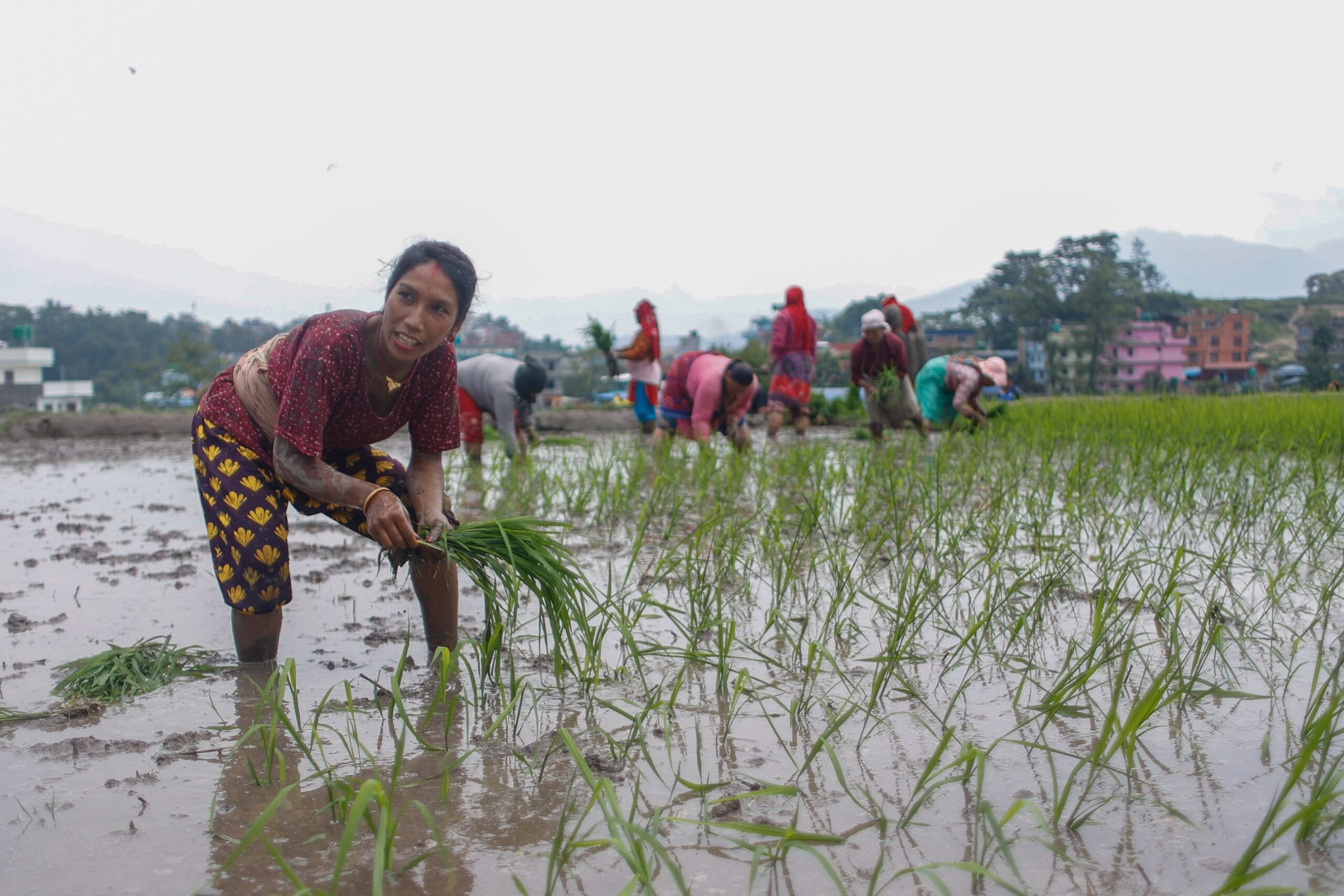
The Food Management and Trading Company in Mahendranagar has been unable to procure wheat from local farmers for five consecutive years due to low Minimum Support Prices (MSP). For the current year, the government fixed the wheat MSP at Rs 3,945 per quintal, which farmers claim does not cover their investment or account for rising fuel costs. Consequently, while a quota of 3,000 quintals was set last year, not a single quintal was purchased, leading the company to set no quota for the current year. Farmers in Kanchanpur reported that private mill owners are purchasing wheat at Rs 4,100 per quintal down from last year’s Rs 4,600 leaving them with significant financial losses compared to previous seasons.
Yambaling Hydropower Limited Distributes IPO via Lottery
The Initial Public Offering (IPO) of Yambaling Hydropower Limited was allotted on Wednesday at the office of its issue manager, Muktinath Capital. The company had issued 1,743,000 ordinary shares worth Rs 174.3 million from April 29 to May 5. A total of 2,982,498 individuals applied for over 32.4 million shares, making the issue heavily oversubscribed. After canceling 44,416 invalid applications, 174,300 successful applicants were allotted 10 shares each through a lottery system.
Gold Price Falls by Rs 700 in Domestic Market Today
Gold and silver prices saw a slight fluctuation in the local market on Wednesday compared to Tuesday, with gold dropping by Rs 700 per tola (11.66 grams) while silver increased by Rs 15. According to the Federation of Nepal Gold and Silver Dealers’ Association, the price of hallmark gold has been fixed at Rs 302,200 per tola, while silver is priced at Rs 5,710 per tola. On Tuesday, gold was traded at Rs 302,900 per tola and silver at Rs 5,695 per tola. In the international market, gold is being traded at USD 4,725 per ounce, while silver stands at USD 87 per ounce, according to international media reports.