Kathmandu
Tuesday, June 30, 2026





From public satirical jabs by the Acting Chief Justice to "shameful" accusations in the House of Representatives, the rift between the state’s key organs reaches a breaking point.
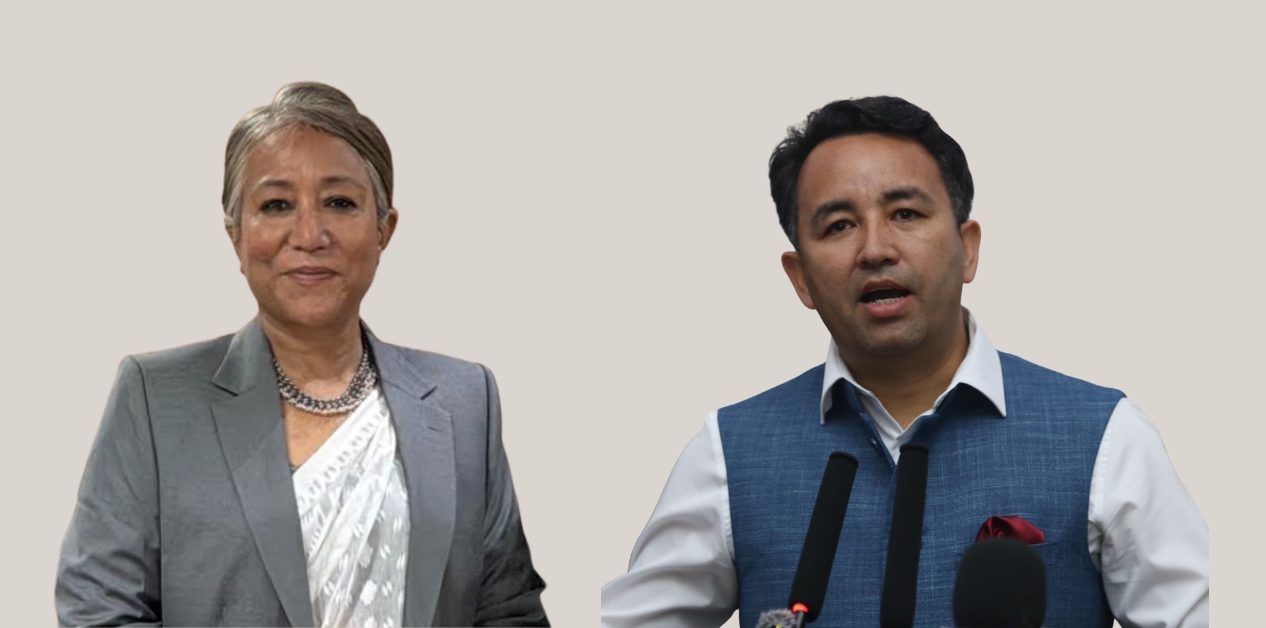
KATHMANDU: Bitterness has emerged between the executive and the judiciary after the Constitutional Council recommended a Chief Justice by bypassing seniority based on an ordinance. Following the Constitutional Council’s proposal of Justice Manoj Kumar Sharma for Chief Justice, comments regarding the judiciary and executive have begun surfacing from Parliament to public programs.
On May 12, during a meeting of the House of Representatives, Ganesh Parajuli, deputy leader of the Rastriya Swatantra Party parliamentary party, specifically targeted Acting Chief Justice Sapana Pradhan Malla, labeling her with a party “tag.” He commented that he felt embarrassed seeing the Acting Chief Justice attending various programs. “The Chief Justice (Acting) of the country is seen standing at a business house’s program behind a banner for Khukuri Rum . They have attended wedding feasts and challenged a two-thirds majority government from the streets,” Parajuli said.
Parajuli provided a justification regarding why the Constitutional Council proposed the Chief Justice. “Seeing the character shown recently by justices appointed through party quotas, which has polluted the judiciary, even shame itself is ashamed,” he said. “How can the Nepali people imagine clean justice when judges are made through party quotas? A former member of the Constituent Assembly is now the Acting Chief Justice.” He mentioned that the judiciary should always be under the shelter of the executive and legislature to maintain trust. “The judiciary is the shelter that protects the Nepali people. To reach a point where the Nepali people must forget that everyone has equal access to justice is a shameful matter,” he stated. “Justices have their own code of conduct. A Chief Justice should not go where there is a conflict of interest. At this time, I am embarrassed to look at the claimant for Chief Justice, who was appointed from your own party quota and is acting as the ACJ.”
He questioned the leader of the opposition in Parliament about what kind of justice delivery they imagined from the judiciary. He claimed there was “party-ization” in the flow of justice. “Common people could not get justice. Justice became limited only to the powerful class, the rich, and political individuals,” Parajuli said. Ain Mahar, Chief Whip of the CPN (UML), demanded the removal of words spoken about judges and the judiciary during the parliamentary session on May 13 regarding judicial work.
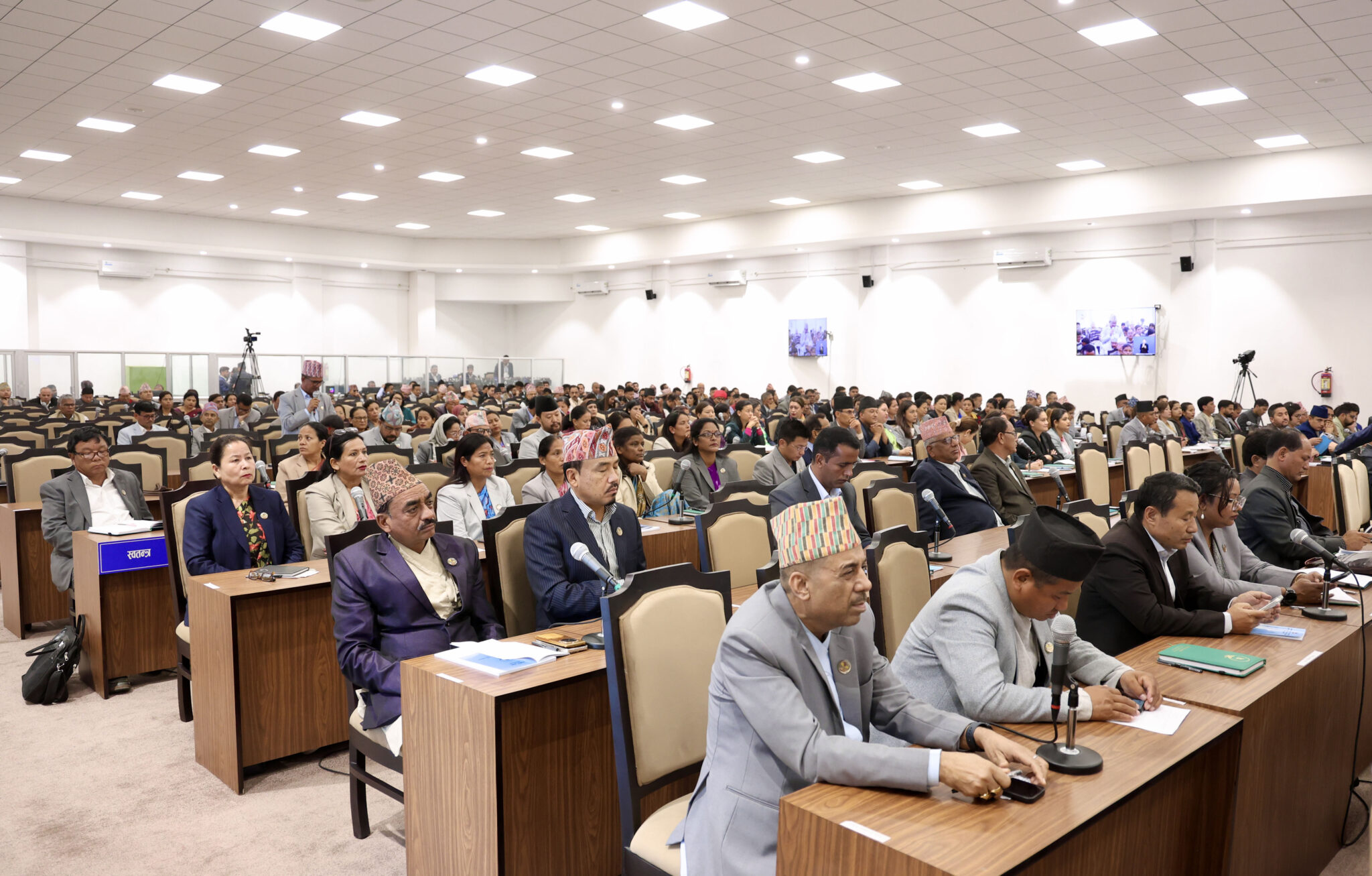
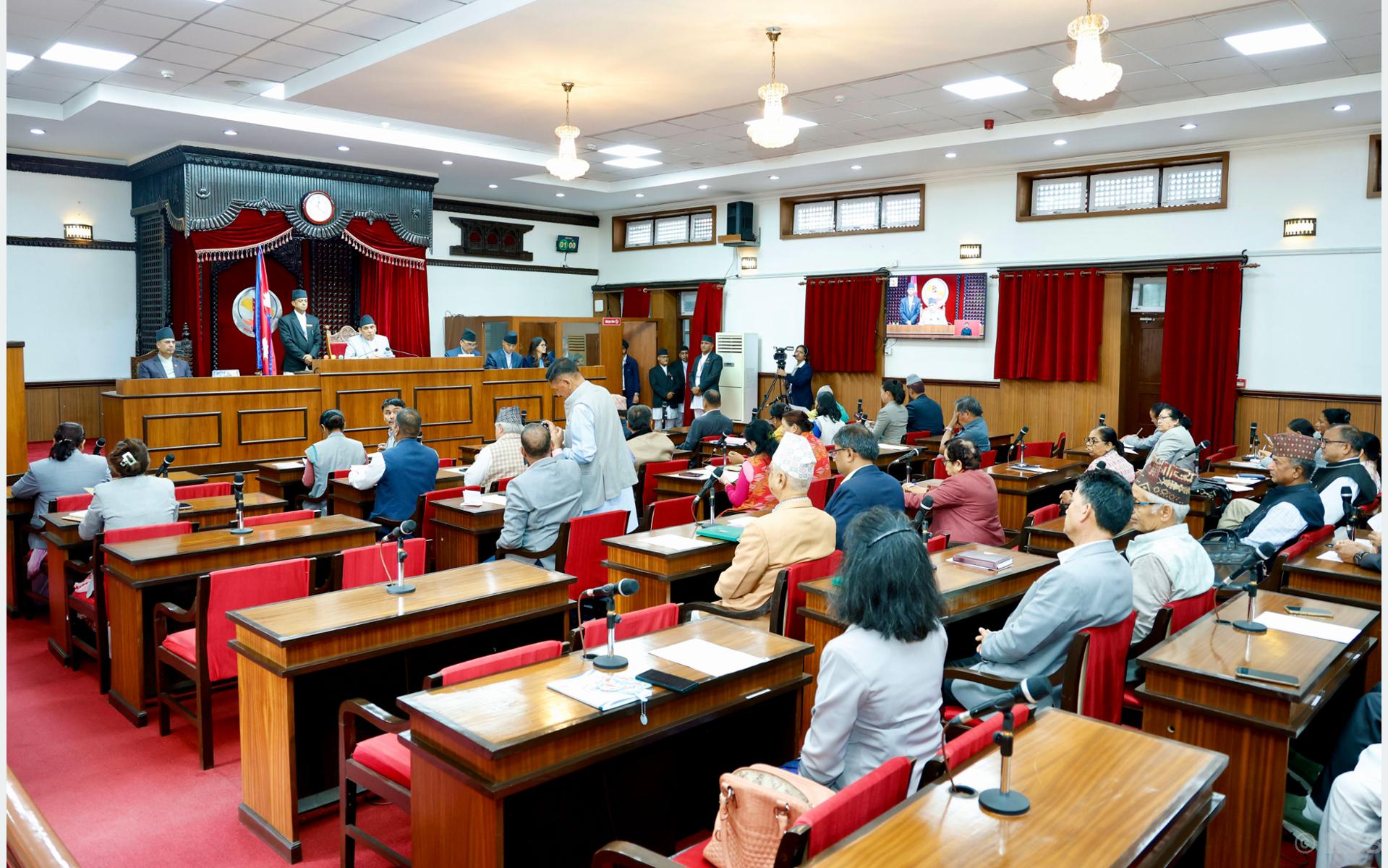
Parliament meeting. Photo: RSS
Article 105 of the Constitution prohibits discussion in Parliament regarding the judicial acts of a judge. “No discussion shall be held in either House of the Federal Parliament with respect to the conduct of a Judge in the course of performance of his or her duties and regarding the justice delivery on cases pending in any court of Nepal,” the Constitution states. “Provided that nothing in this Article shall be deemed to bar the expression of opinions about the conduct of a Judge during a discussion on a motion for impeachment.”
On May 9, Law Day is celebrated annually, where it is customary for the heads of the Executive, Judiciary, and Legislature to be present. Traditionally, the President, Prime Minister, Speaker, and Chairperson of the National Assembly attend. However, Prime Minister Balendra Shah did not attend this year’s Law Day program. During the event, Acting Chief Justice Sapana Pradhan Malla made a satirical remark toward the executive. “I want to say to all our judges—justice is not possible under fear or influence. Whether it is the fear of a two-thirds majority government or the fear of impeachment,” she said. “I call upon all judicial practitioners to move forward with indomitable courage, free from fear and terror. I myself fought a lifelong battle against injustice and discrimination; the fight that started as a legal practitioner is still ongoing.”
She remarked that interest-driven actions performed by killing the rule of law and constitutional traditions give a glimpse of autocracy. Furthermore, she commented that attempts were being made to make the judiciary a mask for protecting personal interests. She claimed that actions taken against the constitution in the intoxication of power cannot be called a revolution or change. “One cannot say that the tiger that eats one person won’t eat another,” Acting Chief Justice Malla had said. MP Parajuli responded in Parliament based on that statement.
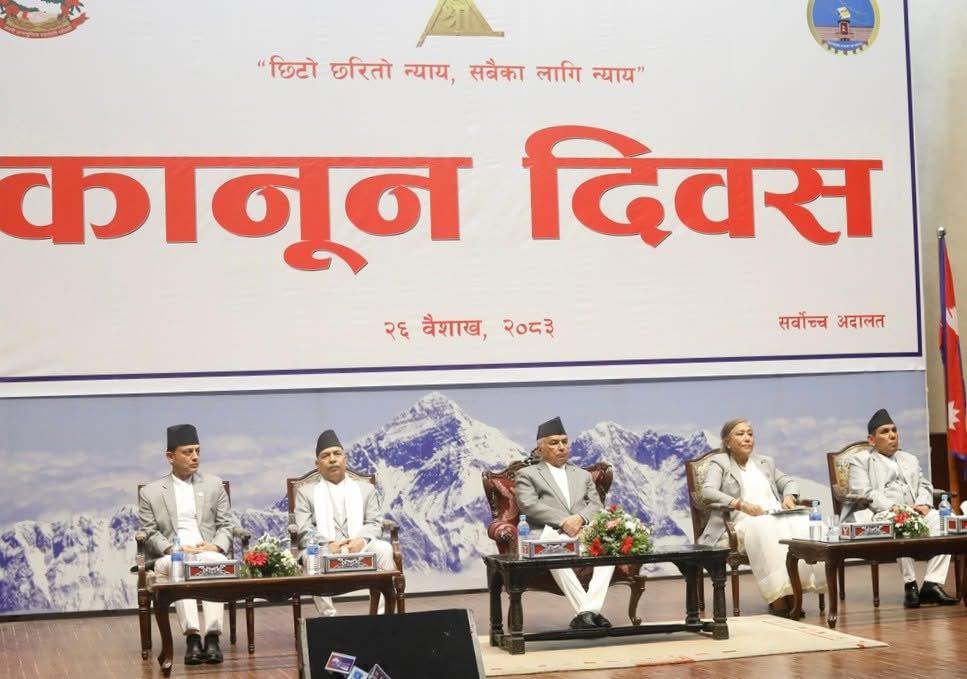
Program organized on Law Day on May 9, 2026
The Constitution provides separate powers to the Executive, Judiciary, and Legislature. According to the principle of separation of powers, everyone is given their own responsibilities and authorities. Checks and balances are considered complementary principles to the separation of powers. This principle was propounded because the state organs could not function properly even with a complete division of power. Under this, the legislature is given the power to make laws, the executive to implement laws, and the judiciary to interpret and decide whether the laws are being followed. Separation of powers helps establish the rule of law by preventing the abuse of power.
The Nepal Bar Association stated on Wednesday that its serious attention was drawn to MP Parajuli’s comments in the House of Representatives, including the phrase “the Acting Chief Justice challenged the two-thirds government from the streets.” The Bar concluded that the general understanding has become that a message was being sent that no one is allowed to speak against the “two-thirds” majority. “There is no dispute that this is the sowing and promotion of clear autocracy,” said a statement issued Wednesday by the Bar’s General Secretary, Kedar Prasad Koirala. Citing Supreme Court precedents, the Bar urged the Speaker to make arrangements and rulings ensuring that comments affecting the performance of the judiciary and judges are not made in parliamentary meetings.
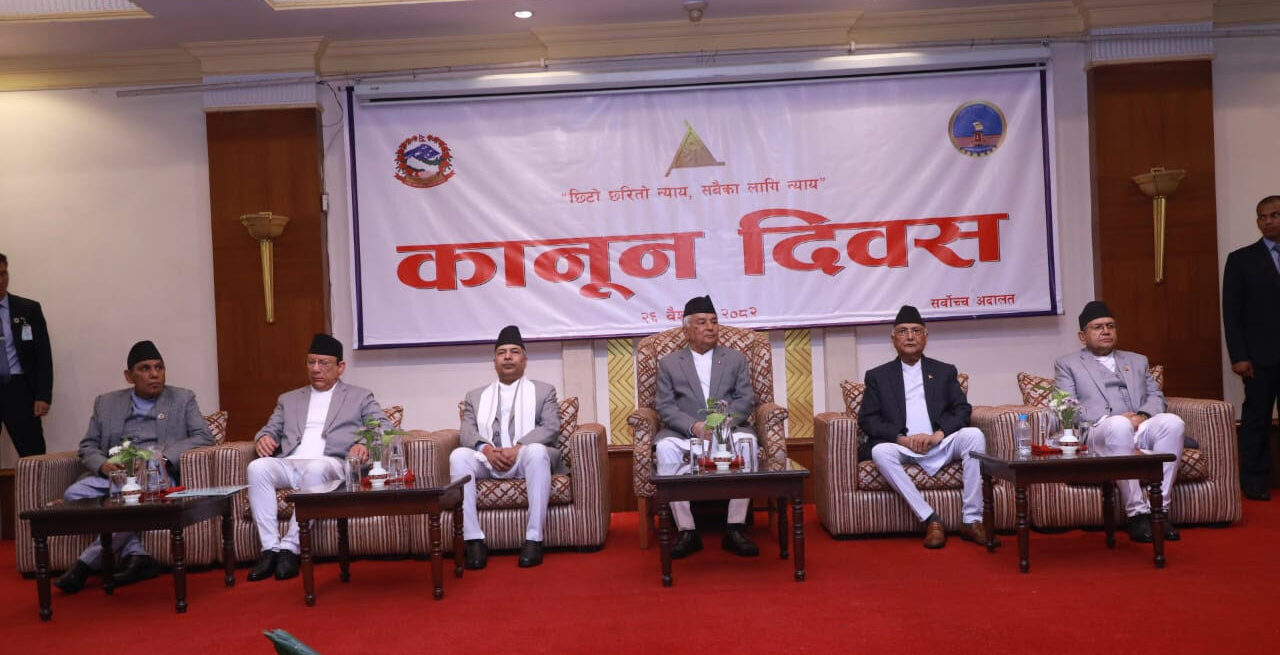
Law Day in 2026. Photo: Social media
Regarding this matter, Political Science Professor Krishna Pokharel says that because the Acting Chief Justice spoke at a public program, the MP responded in Parliament. He reminded that everyone has their own rights and limits. “In a parliamentary system, the executive is born from the womb of the legislature. The leader of the parliamentary party with a majority in the House of Representatives becomes the head of government. The voice of the opposition must also be heard,” he said. “The government can run the parliament according to its will. The parliament makes decisions as the executive desires.” Therefore, he argues that the concept of judicial independence is more effective than the separation of powers in the context of the judiciary.
He contends that the judiciary should not enter into matters within the parliament and there should be no debate or discussion about the judiciary in parliament.
Additionally, Professor Pokharel states that picking based on seniority among the six recommended by the Constitutional Council based on the Constitution is a tradition, not a law.
“It was not within the bounds of decorum for a judge to speak publicly. A judge’s verdict should speak, not their anger,” he said. “It was not necessary to speak about the judge in parliament. However, it was a reaction to an action.”