Kathmandu
Monday, June 29, 2026





Stakeholders warn of disproportionate burden on citizens if fines are increased without assessing infrastructure, income levels, and enforcement system
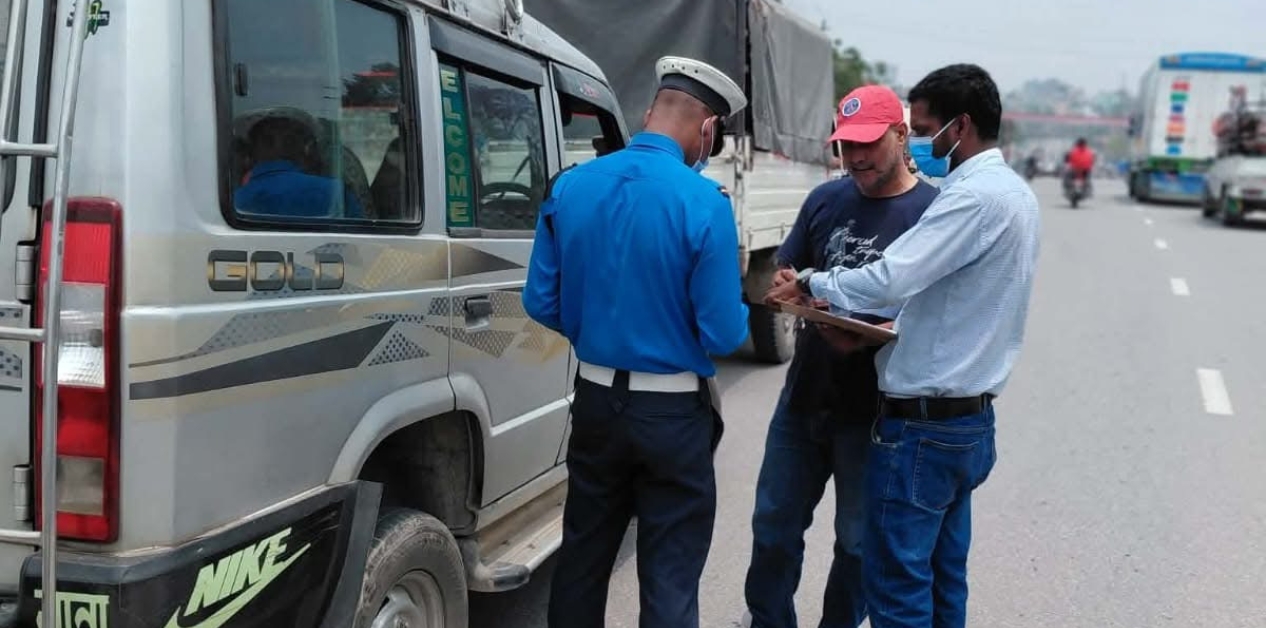
KATHMANDU: The Ministry of Infrastructure Development has advanced the ‘Vehicles and Transport Management Bill, 2025’, aimed at shifting the country’s transport sector into a new legal framework. The ministry has forwarded the draft bill with fresh amendments to the Ministry of Law, Justice and Parliamentary Affairs for legal consultation.
While the initial draft was prepared during the previous administration, the current Minister for Infrastructure Development, Sunil Lamsal, and his secretariat modified several provisions before seeking legal counsel. Once approved by the Law Ministry, the government plans to present the bill to the Council of Ministers before formally registering it in the Federal Parliament.
Although the bill has not yet been registered in parliament, its proposed penalty rates have sparked intense public debate. Critics argue that instead of improving road discipline, the bill drastically increases the risk of financial extortion for ordinary citizens. Under the current Motor Vehicle and Transport Management Act, 1992, most traffic violations incur a spot fine of Rs 500 to Rs 1,500. In stark contrast, the proposed bill introduces provisions that allow on-the-spot fines reaching up to Rs 100,000 for specific violations.
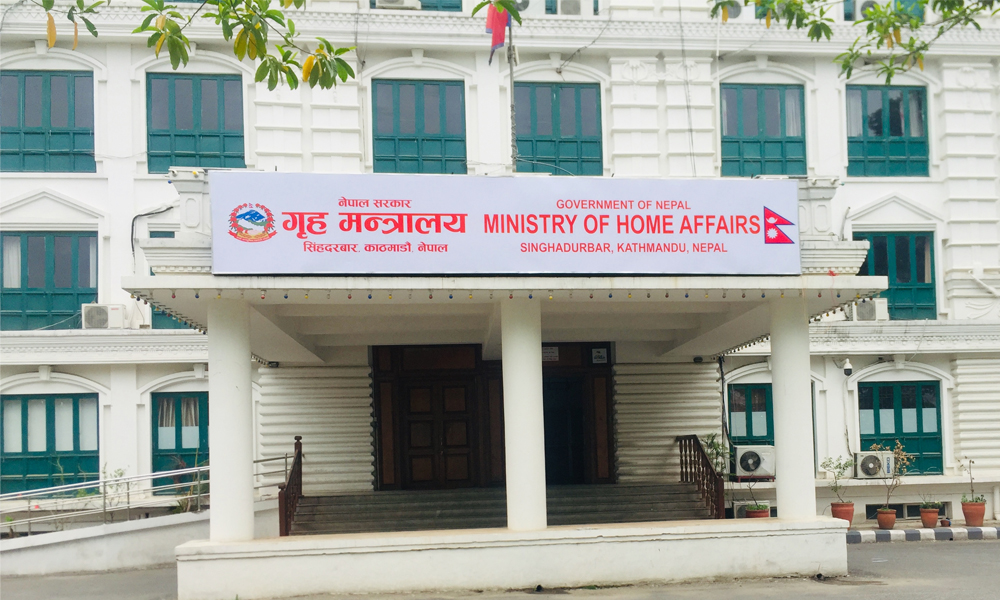
Dal Bahadur Adhikari, spokesperson for the Ministry of Law, confirmed that the draft is currently under review.
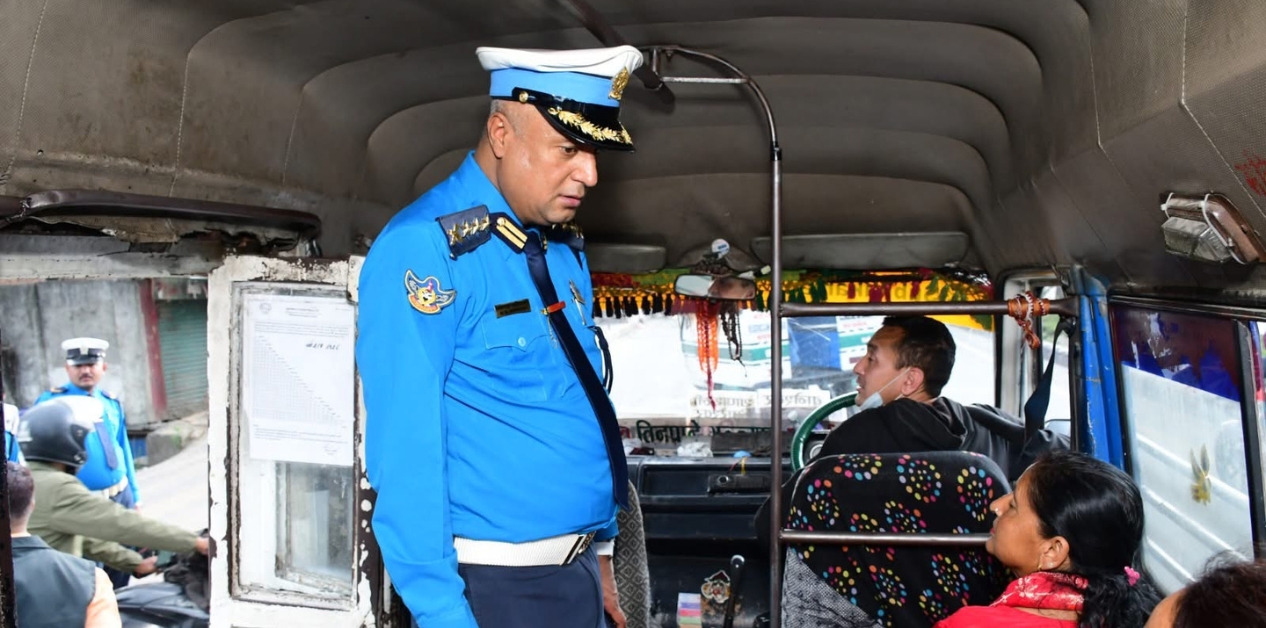
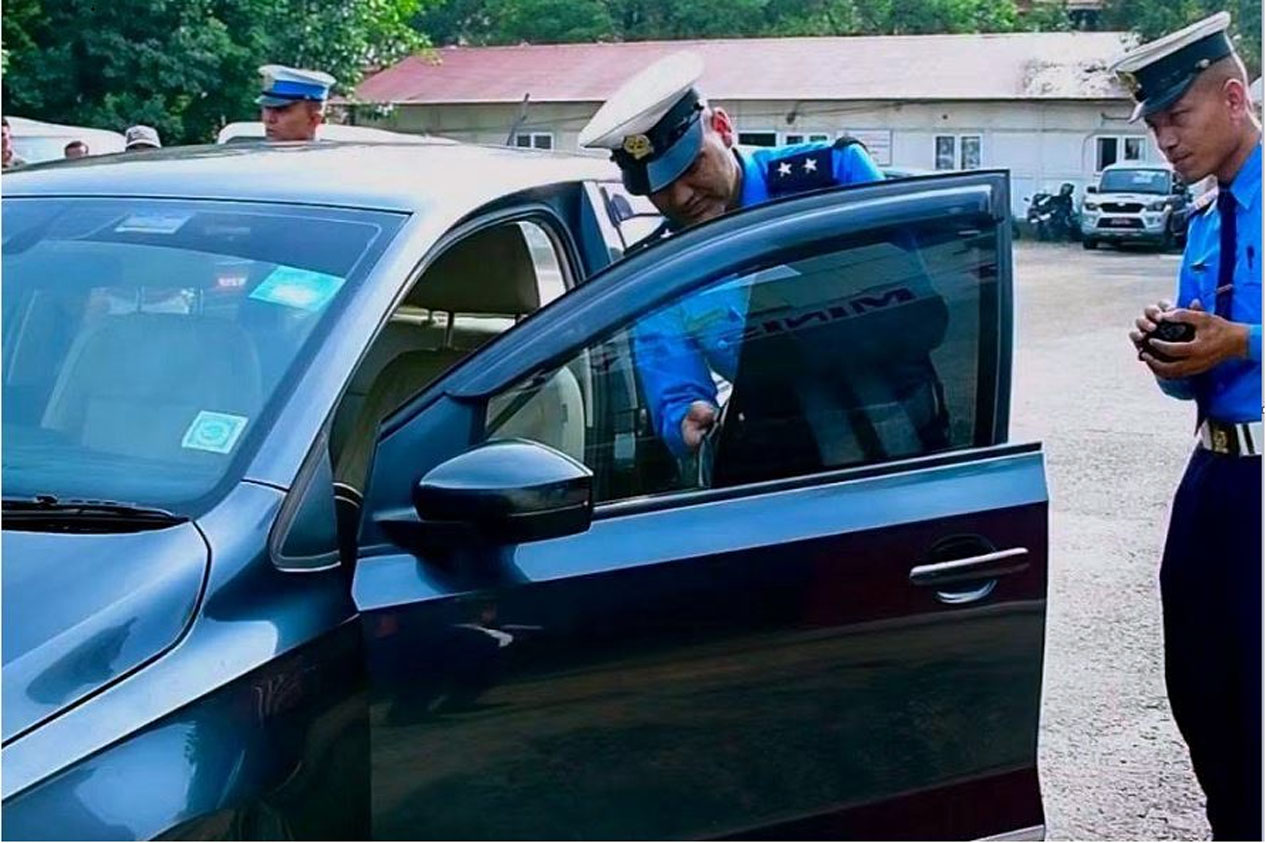
Traffic police checking vehicles.
“We have received the bill,” Adhikari stated. “We have requested additional documents regarding the legislative process, regulations, and feedback from the line ministry. The bill will move forward once those are received.”
The Ministry’s Information Officer, Gyanraj Lamsal, also confirmed the bill’s arrival at the Law Ministry but downplayed the public alarm. “I have been receiving numerous phone calls regarding this,” he said. “However, the rumors about excessively massive fines are exaggerated.”
Proposed fines reach up to Rs 100,000
The penalty section of the bill, which grants authorities the power to issue hefty “on-the-spot fines,” has drawn the most scrutiny. The proposed fines for various traffic violations include: Opaque/Tinted Windows: Driving a vehicle with non-transparent or heavily tinted glass that blocks the view inside from the exterior will attract the highest proposed fine of Rs 100,000.
Drunk Driving & speeding, two- and three-wheelers Rs 25,000, light/small vehicles Rs 35,000, medium and heavy vehicles Rs 50,000, one-way violations, sidewalk driving, & mobile use a flat fine of Rs 10,000 is proposed for driving on sidewalks, driving against a one-way rule, or using a mobile phone while driving. Vandalizing traffic signs damaging, altering, or removing traffic signs will incur a fine of Rs 5,000.
Overcharging/missing fare charts failing to display fare charts or overcharging passengers will result in a fine of Rs 2,000 for three-wheelers, Rs 5,000 for small vehicles, and Rs 10,000 for medium/heavy commercial vehicles. Jaywalking: Pedestrians crossing roads outside designated areas will face a fine of Rs 500.
Rationale behind the strict penalties
An official at the Ministry of Infrastructure Development justified the strict measures, pointing to deteriorating road discipline, rising traffic violations, and surging accident rates. According to the official, current fine amounts fail to act as a deterrent. The increased financial penalties are intentionally designed to compel a behavioral shift among drivers.
“A law is also like a political document; whoever leads the ministry tries to shape it according to their vision,” the official noted. “However, we must wait and see what final shape it takes once it passes through Parliament.”
“Is Punishment Only for the Public?” – Political and Social Backlash
The bill has faced fierce resistance even before entering parliament. Speaking during the emergency hour in the House of Representatives on June 28, Lawmaker Gyan Bahadur Shahi argued that the state must become accountable before penalizing citizens.
“If citizens can afford to pay up to a hundred thousand in fines, they should. But shouldn’t the state be responsible too?” Shahi questioned. “There should be reciprocal laws: if a pothole isn’t fixed within 24 hours, the state should pay a hundred thousand in fines. If a broken traffic light isn’t repaired, or if a license isn’t issued within a week of passing the trial, the respective government agencies must be fined.” Shahi stated that lawmakers would only support a bill that holds both citizens and contractors/state agencies equally accountable.
Social media platforms have echoed similar frustrations. Critics point out that mimicking foreign penalty systems is impractical given Nepal’s low average income, where many individuals ride second-hand motorcycles worth Rs 30,000 to Rs 50,000 bought on credit. Critics emphasize that traffic fines should be linked to road quality, public facilities, and enforcement capacity rather than blindly copying developed nations.
Internal dissent within the ruling party
Even members of the ruling Rastriya Swatantra Party (RSP) have voiced their disagreement. Former Senior Superintendent of Police (SSP) and RSP leader Jiban Shrestha stated that while violators must be penalized, fines must align with the economic reality of Nepalis and the gravity of the offense.
“The objective of a fine is to enforce rules and reduce accidents, not just collect state revenue,” Shrestha wrote on Facebook. He stressed that the state must simultaneously prioritize improving road infrastructure, parking management, driver awareness, and tech-driven surveillance. “Severe punishment alone does not guarantee a reduction in accidents. Effective execution and impartial legal treatment are equally vital.”
Infrastructure gap risks driver-police conflict
Experts warn that enforcing extreme fines without upgrading basic infrastructure could backfire, escalating tensions between citizens and traffic police. Nepal’s road infrastructure remains notoriously unorganized, lacking proper lane markings, functional traffic furniture, and signs.
Former Deputy Inspector General (DIG) of Nepal Police, Keshab Adhikari, warned that the current draft could invite logistical nightmares for on-field officers. “First build the infrastructure, provide the facilities, spread awareness, and install proper traffic furniture,” Adhikari stated. “Otherwise, a Rs fifty-thousand fine provision will only create severe hassles for the traffic police.”
Adhikari explained that even with the current thousand-rupee fines, drivers frequently argue with officers or attempt to flee checkpoints. If fines skyrocket, reckless drivers might abruptly make illegal U-turns upon spotting traffic police, risking fatal head-on collisions with oncoming vehicles. While Adhikari agreed that severe offenses like drunk driving and high-speed racing require strict punishment, he maintained that penalties must be balanced with a robust, fair, and technologically equipped road safety system.