Kathmandu
Monday, June 29, 2026





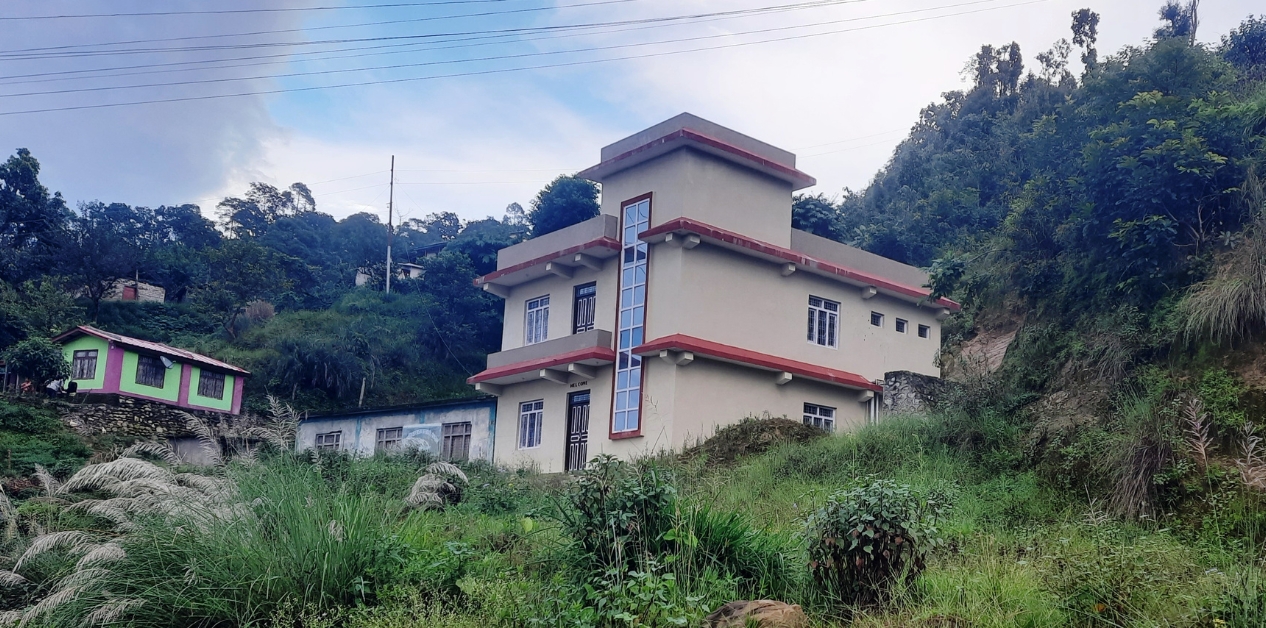
There is no certainty regarding the operation of the vegetable testing laboratories constructed six years ago in Kapurkot of Salyan and Harre of Surkhet.
SURKHET: News regarding excessive pesticide levels found in various market vegetables has become a regular occurrence. In the midst of this, how would citizens—forced to consume these pesticide-laced vegetables—feel upon learning that infrastructures built specifically for testing agricultural produce have been lying idle for years? It undoubtedly invites disappointment toward government inaction. This is precisely the case in Karnali Province.
Six years ago, the Karnali Province government constructed vegetable pesticide testing laboratory buildings in Kapurkot of Salyan and Harre of Surkhet. Built at a cost of NPR 15 million, these modern facilities have remained completely unused.
The buildings were constructed in the fiscal year 2018/19 following a proposal by the Ministry of Land Management, Agriculture, and Cooperatives. The primary objective was to test pesticide residues in agricultural produce imported from other provinces and India. However, due to the failure to manage human resources and procure equipment in a timely manner, both buildings have turned into white elephants.
The plan originated from the Karnali Province Government’s “Organic Province” concept introduced in 2018. The project was pushed forward by the then Agriculture Minister Bimala KC during the tenure of Chief Minister Mahendra Bahadur Shahi, with the initial budget heavily funneled into building construction.
While the operation of these laboratories was neglected in past policies, programs, and budgets, the province government has finally included it in the upcoming budget for the fiscal year 2026/27. However, the exact budget allocated for its operation remains unclear. The budget statement merely notes that funds have been allocated for operationalizing pesticide residue testing services, upgrading laboratories, and facilitating rapid analysis in Kapurkot (Salyan) and Harre (Surkhet).
Millions invested, zero return
According to the former Directorate of Agricultural Development in Surkhet, a non-governmental organization working in the agricultural sector originally built the first floor of the Kapurkot laboratory. The project then handed the building over to the District Agricultural Development Office. Later, the provincial government added another floor and a half to convert it into a laboratory.
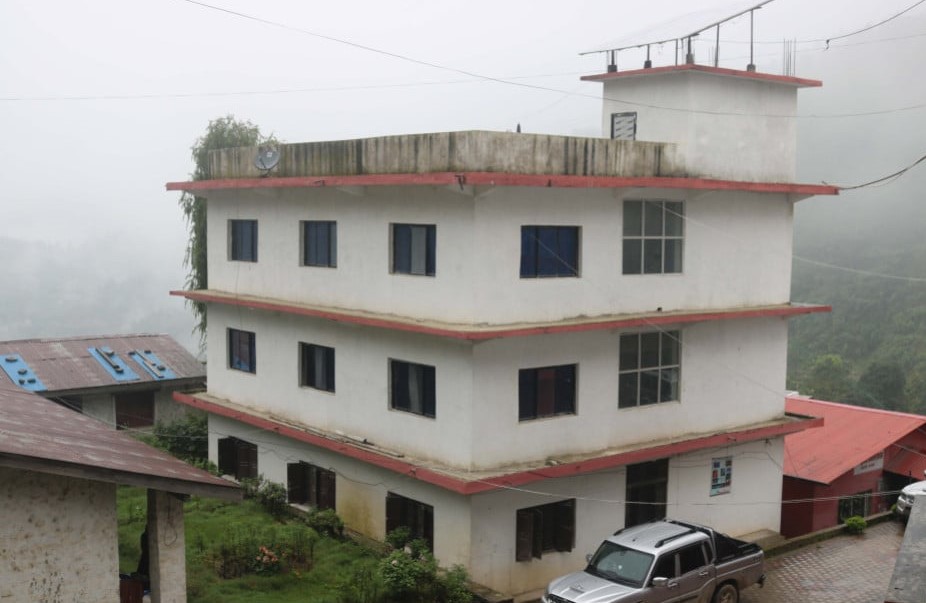
The unused pesticide laboratory building constructed in Kapurkot, Salyan. Photo: Social Media.
In Harre, Surkhet, the provincial government built a two-and-a-half-story building on land leased from a local agricultural group. The construction was overseen by the Directorate of Agricultural Development. An agreement was signed between the Directorate and the cooperative linked to the local agricultural group to pay an annual rent, with a clause to renew the lease every 15 years. Worryingly, even basic utilities like electricity and water pipelines are yet to be connected to the Harre building.
Furthermore, the Integrated Agricultural Laboratory Office has already purchased the required equipment for Rs 600 million. According to soil expert Mohan Acharya, the equipment was procured by transferring funds within the ministry in June 2025.
However, these expensive machines have been gathering dust at the Integrated Agricultural Laboratory for a year. The plan to transport and install them at the designated border checkpoints remains completely stalled. “The equipment was bought with a plan to install it by June 2025 and operationalize the labs from the current fiscal year. But because several crucial preparatory tasks were left incomplete, the plan failed,” Acharya stated.
Usha Adhikari, Information Officer at the laboratory, stated that the equipment will only be installed once operations are guaranteed. “If we install the equipment without running it, there is a high risk of damage. We have kept the procured machinery safe for now,” she said.
Delays in organization and management (O&M)
The Ministry of Land Management, Agriculture, and Cooperatives had conducted an Organization and Management (O&M) survey in the fiscal year 2022/23 to manage the necessary human resources for operating the laboratories and forwarded it to the Chief Minister’s Office. However, that O&M survey was not approved by the Council of Ministers. Following that, another survey was conducted and sent in the fiscal year 2023/24. That proposal was also not approved in a timely manner. Since then, the operation of the laboratories dropped off the priority list across all related sectors.
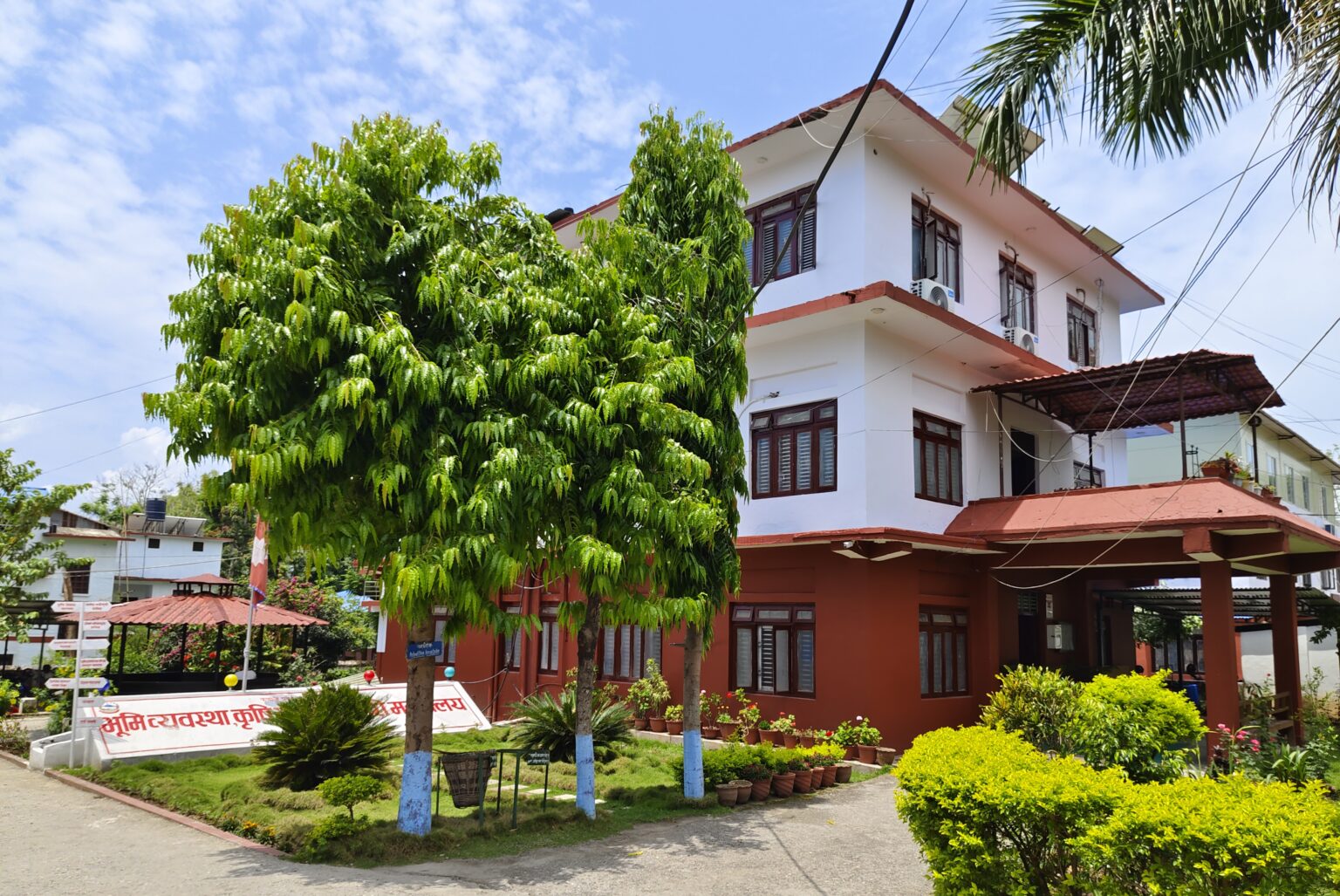
Ministry of Land Management, Agriculture, and Cooperatives, Karnali Province. Ministry’s Website
According to the ministry, an Organization and Management survey was initially conducted to station five staff members each, including technical personnel, for the Kapurkot and Harre laboratories, and was forwarded to the Office of the Chief Minister and Council of Ministers. Subsequently, the second O&M survey requested three employees for each lab. The final status of the laboratory operations and the O&M survey remains unresolved to this day. Nevertheless, the departmental ministry has stated that work regarding the O&M survey for this matter is currently underway.
Sunil Limbu, spokesperson for the ministry, claims that a detailed report regarding issues such as laboratory operations and the O&M survey will be prepared within mid-July of the current fiscal year. “We need to review the units to operationalize the two border laboratories and the nitrogen plant under the Directorate of Livestock Development here; we are currently working on the O&M for this,” he said.
Absence of holding centers spells further complications
Until the O&M survey is finalized, starting pesticide testing at Karnali’s border points will remain deeply complicated. The initial backup plan was to run the border labs using existing staff from the Integrated Agricultural Laboratory in Surkhet. However, that office itself is severely short-staffed, running with only nine employees—including the office chief—not all of whom are technical personnel.
Beyond staffing, the complete lack of ‘holding centers’ presents another logistical nightmare. Holding centers are vital to park transport trucks while their cargo undergoes pesticide testing. The government has yet to figure out where or when these holding centers will be built.
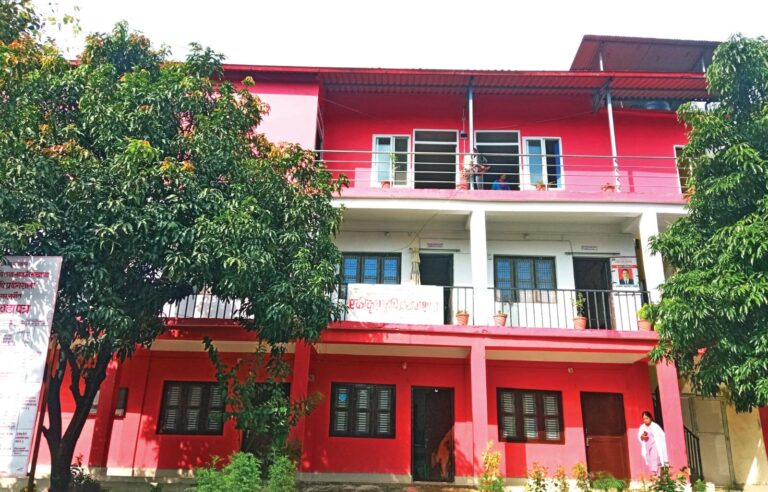
The Integrated Agricultural Laboratory Building of Karnali Province. Photo: Ministry Website.
“We have to plan everything—from when to clear the vehicles from their points of origin to where to park them once they arrive at the lab area. The government has not reached a conclusion on this yet,” said Director Chitra Rokaya, a former head of the Integrated Agricultural Laboratory. He estimates that running the pesticide laboratories at the Karnali border points will cost at least NPR 10 million annually.
Haphazard investment criticized
Good governance experts have heavily criticized the provincial government for erecting physical infrastructure without analyzing the long-term feasibility of the project. They view dumping state funds into structures that yield zero public return for years as an injustice to the citizens.
“Whenever a project is planned, its cost, operation, and sustainability must be analyzed. Before building the labs in Harre and Kapurkot, human resource management should have been locked in. Only then should building construction and equipment procurement have taken place, allowing immediate operations,” a good governance expert noted. “In a province where school children are forced to wait stranded by riverbanks because there are no bridges, the government chose to dump money into ambitious, unanalyzed projects.”
The expert added that constructing buildings and buying equipment without an operational plan strongly suggests a motive to benefit a specific interest group. “If these multi-million rupee machines rust and break down after being locked away for so long, will the government take responsibility? Can the state just dump budget like this thinking nobody will be punished?” he questioned.