Kathmandu
Monday, July 27, 2026





Once envisioned as a pioneering ombudsman mechanism to curb corruption across local units, the Madhesh Province Janlokpal Commission has instead triggered widespread public distrust due to a complete failure in resolving complaints and escalating procedural disputes
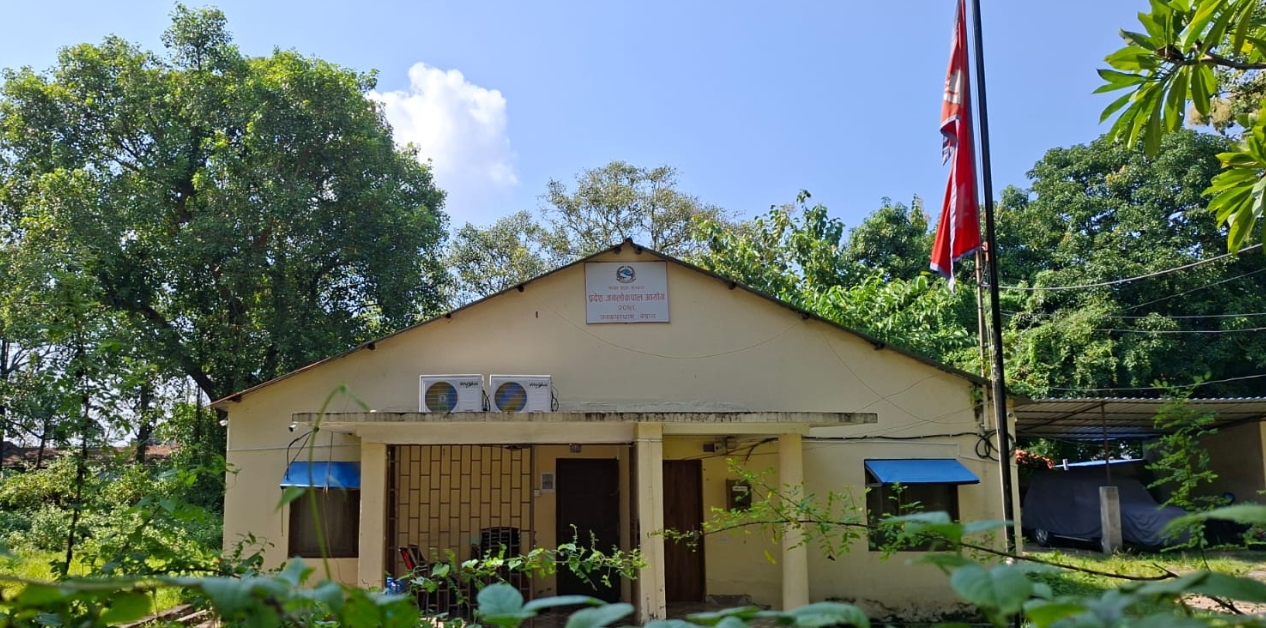
JANAKPURDHAM: The Madhesh Province Provincial Janlokpal Commission, a regional ombudsman body formed to ensure good governance, has been entangled in rules and regulations, human resource shortages, and appointment controversies.
The commission, formed under the Province Janalokpal Act, 2020, has the authority to investigate complaints regarding corruption, irregularities, or abuse of position committed by individuals holding public office. However, the necessary regulations could not be made while there is a shortage of human resources, including police, engineers, and law officers. The officials of the commission themselves state that they have been unable to perform result-oriented work in the absence of regulations and required staff.
The commission has been dragged into further controversy after it was revealed that an appointed member of the commission is an accused in a murder case. The opposition parties have been obstructing the province assembly, claiming that the appointment process was violated.
Authority on paper, obstruction in practice
With the objective of making the public affairs of Madhesh Province clean, impartial, transparent, and corruption-free, the Province Assembly of the then Province No. 2 had enacted the Province Janlokpal Act, 2020. The said Act was authenticated on September 8, 2020. The Province Janlokpal Commission was formed under Section 23 of the Act.
Out of the seven provinces, only Madhesh Province had formed such a commission. At the time of formation, it was presented as a mechanism to keep surveillance over the functioning of the province and local levels and to bring misconduct by public officials into the scope of action.
The Constitution of Nepal has given the main responsibility of corruption-related investigation to the Commission for the Investigation of Abuse of Authority.In such a situation, after the province created an institution of its own, questions were raised regarding its jurisdiction from the very beginning.
According to the Act, if a complaint is filed stating that a person holding public office has committed corruption, irregularities, or an offense under the Act, the commission can conduct a preliminary investigation. There is an arrangement where the commission can investigate even if a complaint is received regarding irregularities in a project or program conducted by a local level or any organized institution through the grant or assistance of the provincial government. The commission has been given the authority to monitor and inspect government offices of the province and local levels, view income-expenditure and audit reports, demand necessary documents, prepare recognizance, and conduct searches. However, despite having legal authority, the commission has not been able to use it effectively in practice.
The Constitution of Nepal has given the main responsibility of corruption-related investigation to the Commission for the Investigation of Abuse of Authority (CIAA). In such a situation, after the province created an institution of its own nature, questions were raised regarding its jurisdiction from the very beginning.
The former Chief Attorney and legal practitioner of Madhesh Province, Dipendra Jha, however, claims that the Janlokpal has not encroached upon the constitutional jurisdiction of the CIAA. According to him, the Janlokpal does not prosecute cases; it only investigates and makes recommendations to the CIAA. Jha says, “This has not encroached upon the constitutional jurisdiction of the CIAA.” However, as the Janlokpal has been unable to advance the investigation itself, a situation to recommend to the CIAA has also not been created.
Auditor General raised questions on effectiveness
The Eighth Report of the Auditor General regarding Madhesh Province, 2026, has given suggestions for improvement, stating that the work of most of the commissions of the province government has not appeared satisfactory.
According to the report, there is an arrangement where the Janlokpal Commission conducts a detailed investigation into irregularities and corruption committed by public officials, and if corruption is seen, sends a report along with the opinion and the original file to the Commission for the Investigation of Abuse of Authority. However, the Auditor General has pointed out that further clarity based on constitutional arrangements is required regarding the matter of conducting a detailed investigation into the irregularities and corruption of public officials.
While a budget of some Rs 49 million was allocated for the commission in a fiscal year, only around Rs 13.5 million has been spent.
According to the details received from the commission, 56 complaints including 14 from the current year and 42 responsibilities carried over from the past year remain to be settled. Among the complaints of the current year, there are complaints regarding corruption in scholarships, necessary action, irregularities, engaging retired employees in work, those requiring investigation and legal action, and province lawmaker development construction plans.
‘Complaints come, but there is no means to investigate’
The Chairman of the commission, Ram Sahaya Yadav, states that they have been unable to do result-oriented work due to the lack of regulations, police, and necessary employees. “Complaints arrive. Regulations are needed to investigate them, which is not there. On the other hand, there is a shortage of everything from police to necessary employees,” Yadav says, “In such a situation, work that gives results has not been able to take place.”
The responsibility of employee mobilization and making necessary regulations belongs to the Office of the Chief Minister and Council of Ministers. However, the officials of the commission state that the commission has been unable to be effective because the government changed repeatedly and a concrete plan did not come.
According to him, if a complaint regarding irregularities in road construction arrives, an engineer is required to investigate it. The commission does not have an engineer. If documents need to be taken into control or a raid needs to be conducted in an office, police are required, which is also not there. “If any road needs to be monitored, an engineer is required, we do not have one. In such a situation, how can work that gives results take place?” Yadav says. The Information Officer of the commission, Prasanna Raj Karna, also states that work has been unable to move forward due to the lack of regulations. According to him, the attention of the Office of the Chief Minister and Council of Ministers has been drawn to this matter by writing letters repeatedly.
The responsibility of employee mobilization and making necessary regulations belongs to the Office of the Chief Minister and Council of Ministers. However, the officials of the commission state that the commission has been unable to be effective because the government changed repeatedly and a concrete plan did not come.
Province Assembly obstructed due to appointment controversy
The commission, which has been facing allegations of being unable to work, has recently fallen into further controversy due to the appointment of office bearers.
On January 14, 2025, two members of the commission, Raj Kishor Sah and Shobha Mahato, resigned expressing dissatisfaction over the functioning of the commission. After that, Chief Minister Krishna Prasad Yadav appointed two members. However, those appointments have now fallen into controversy.
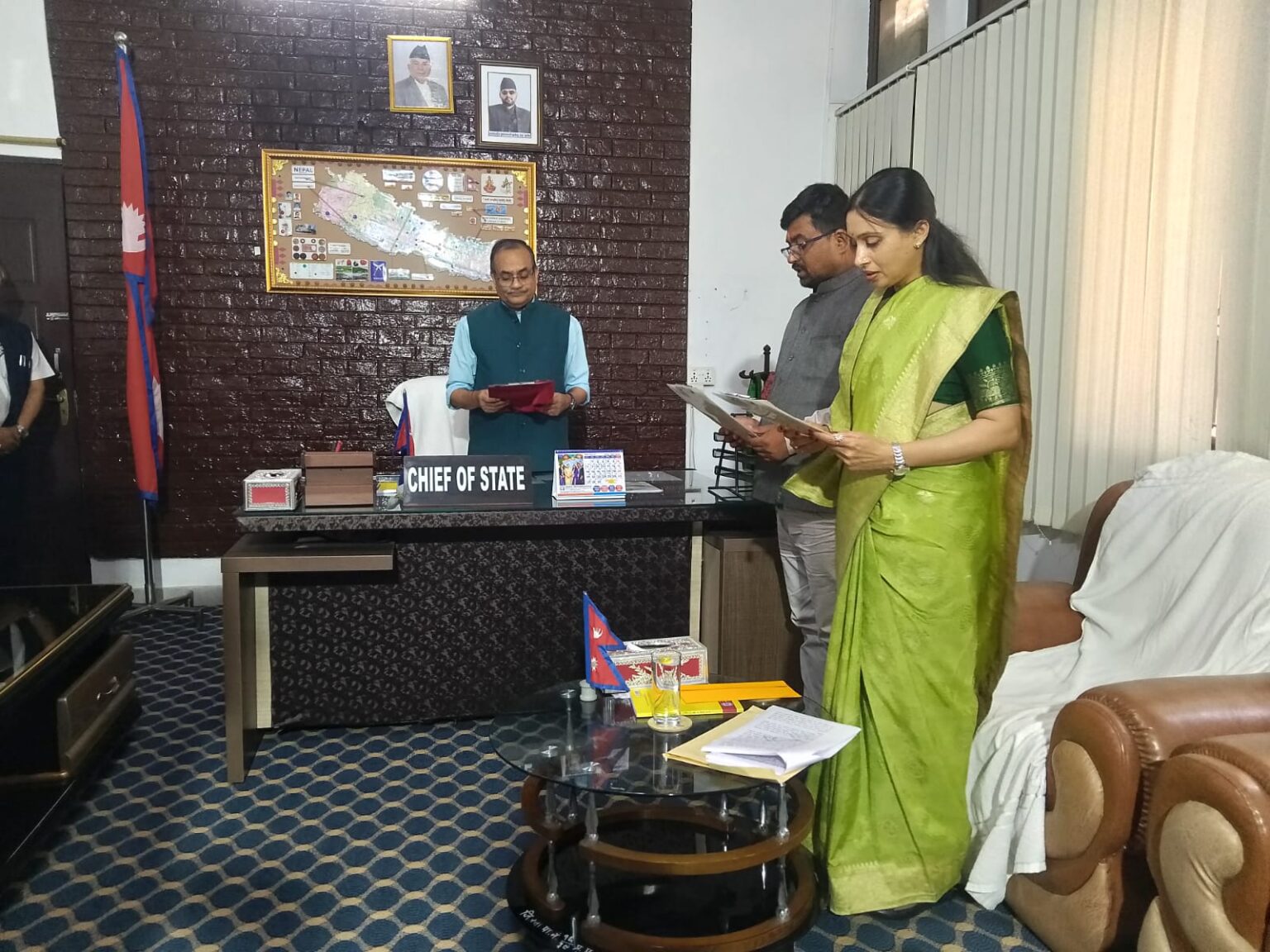
Two members appointed to the commission taking oath before the provincial chief
The opposition parties have been obstructing the Province Assembly meeting demanding to cancel the appointments, claiming that they were made against the procedure. Janata Samajbadi Party Nepal, Janamat Party, and Rashtriya Prajatantra Party have been obstructing the Province Assembly meeting. Since June 2, the Province Assembly meeting has become uncertain due to the obstruction of the opposition parties.
There is an arrangement where the Chief Minister, Leader of the Opposition, and the Speaker remain in the appointment committee of the commission. However, the opposition alleges that the appointment was made in a situation where the Speaker was absent from the meeting and there was confusion regarding the Leader of the Opposition.
The leader of the Janamat Party parliamentary party, Chandan Kumar Singh, says, “In a situation where our party has withdrawn support from the government and the government has been unable to receive a vote of confidence from the Province Assembly, it is clearly seen that the procedure was not met by making the appointment.”
Chief Minister Yadav, however, claims that the appointment took place legally. According to him, although there is an arrangement where the Chief Minister, Leader of the Opposition, and the Speaker remain in the appointment committee, after the Speaker did not come to the meeting, the recommendation was made in the presence of the Chief Minister and the Leader of the Opposition. He stated that at that time, the opposition party was CPN (UML), and the appointment was made by keeping the leader of the CPN (UML) parliamentary party, Saroj Kumar Yadav.
Member accused in homicide
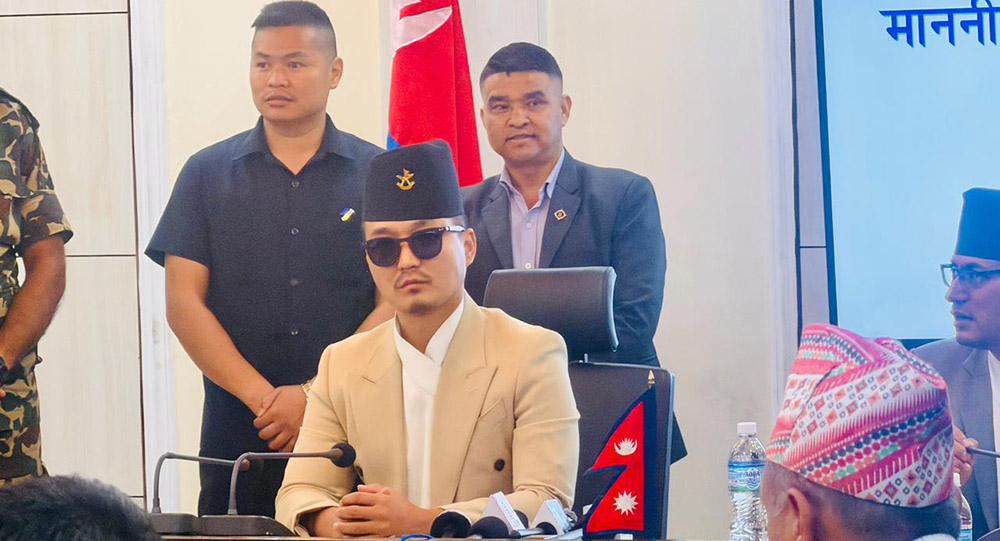
The controversy has intensified further after it was revealed that Sanjiv Kumar Jha, whom the Madhesh Province government appointed as a member of the Province Janlokpal Commission, is an accused in a murder case.
On May 26, Province Head Surendra Labh Karna had appointed Jha, residing in Ward No. 7 of Aurahi Municipality, Mahottari, and Kumari Sujata Bimal, residing in Ward No. 8 of the same municipality, as members of the Province Janlokpal Commission on the recommendation of the committee.
Jha, who was appointed as a member, is an accused who was released on a general date after staying in prison for trial on the charge of murdering the ward chairman of Ramgopalpur Municipality-2 of Mahottari, Mukesh Yadav.
On the morning of August 25, 2024, the motorcycle with number Lumbini 01-001 Pa 6362 ridden by ward chairman Yadav was found near a culvert located in Ward No. 8 of Bardibas Municipality on the Jaleshwar-Bardibas road section. After Yadav was found dead, leaders and workers of the then CPN (Maoist Centre) exerted pressure for an investigation, stating that the incident was suspicious.
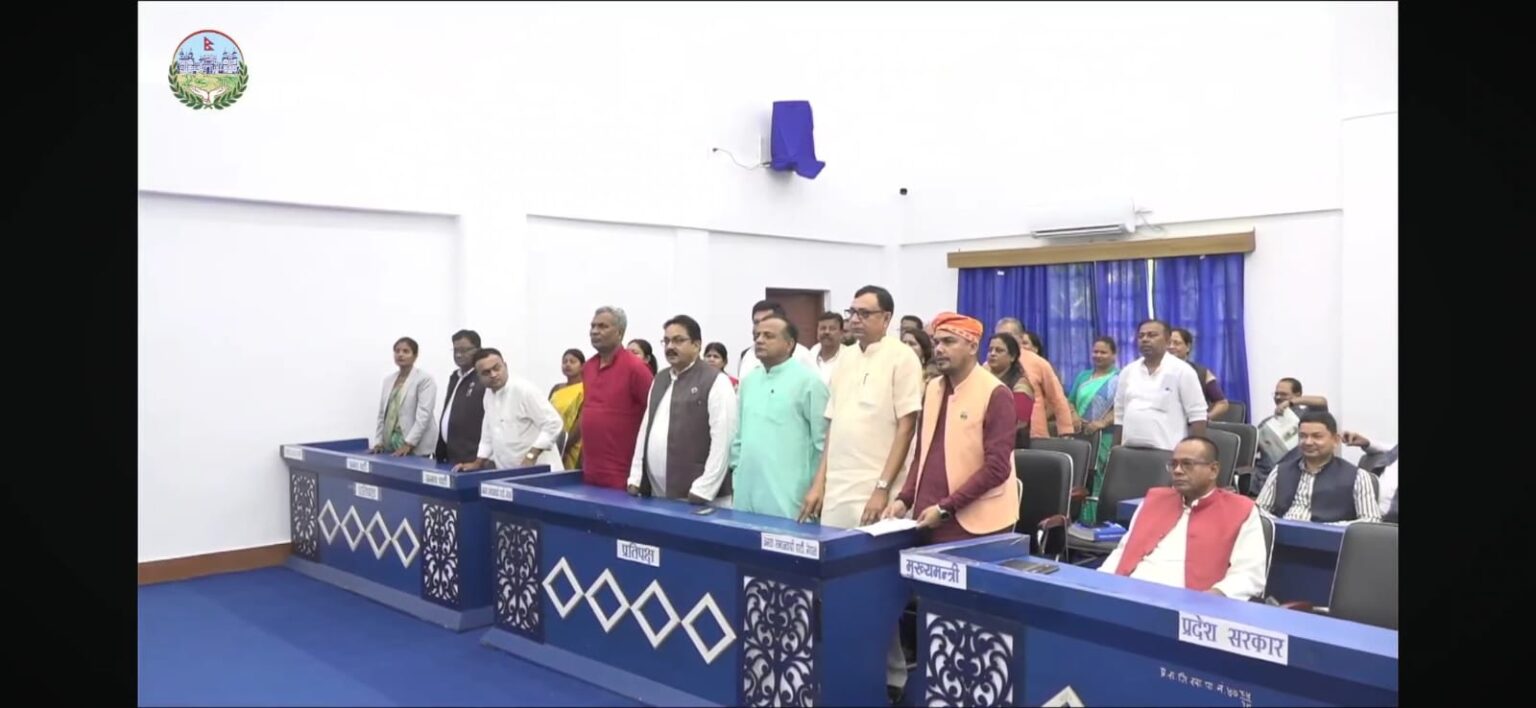
Opposition parties disrupt provincial assembly meeting in protest against appointment of commission officials
After an investigation involving the CIB, Jha and Dilip Mandal were arrested on the charge of murdering ward chairman Yadav. The District Police Office Mahottari had registered a case stating that Jha’s involvement was present. The Mahottari District Court had sent them to prison for trial. Jha is out after the High Court Janakpur released him on a general date. The case, however, is in an ongoing state.
There is an allegation that Jha was appointed as a member from the side of CPN (UML) and former Chief Minister Saroj Kumar Yadav. Former Chief Minister Yadav, however, claims that the Chief Minister recommended Jha because he appeared good among those who submitted applications for the member post.
According to the Act, there is an arrangement where for the Chairman or member of the commission, the person must be a Nepali citizen, have obtained a Master’s degree, achieved fame by working or teaching for at least 10 years in the field of justice, law, revenue, management, or public administration, or performed a leadership role for at least 10 years in the campaign against corruption, and be a person of high moral character. There is also an arrangement in the Act that the person must not be a member of any political party before being appointed.
Allegation of becoming a place to dump employees
The employee management in the commission is also not free from controversy. While there is a sanctioned post of 33 employees, only 16 individuals are currently working. An acting Joint Secretary, three Under Secretaries, three officers, one non-gazetted first-class officer, two drivers, and five office assistants are working in the commission.
Currently, Birendra Kumar Mishra is the Secretary of the commission. Although the government had sent him as the Secretary of the Ministry of Home Affairs, Communications and Law of Madhesh Province, he has now been given the responsibility of the Secretary of the commission.
Prior to this, Chudamani Phuyal, who held the post of Secretary at the Ministry of Social Welfare and Sports, was also given the responsibility as the acting Secretary in the commission. According to sources, after a dispute occurred with the minister of the ministry regarding work, he was sent to the commission from the Office of the Chief Minister and Council of Ministers.
Chief Minister Krishna Prasad Yadav, however, states that the government’s attention is currently toward budget formulation. According to him, after the budget formulation is completed, a decision will be made regarding reducing the number of ministries and commissions and which offices to keep on the basis of necessity. “After the budget, we will have a study conducted regarding the employees. Management work such as which commissions to keep and how many ministries to reduce will be done after that. For that, we will move forward by making necessary regulations,” Chief Minister Yadav says.
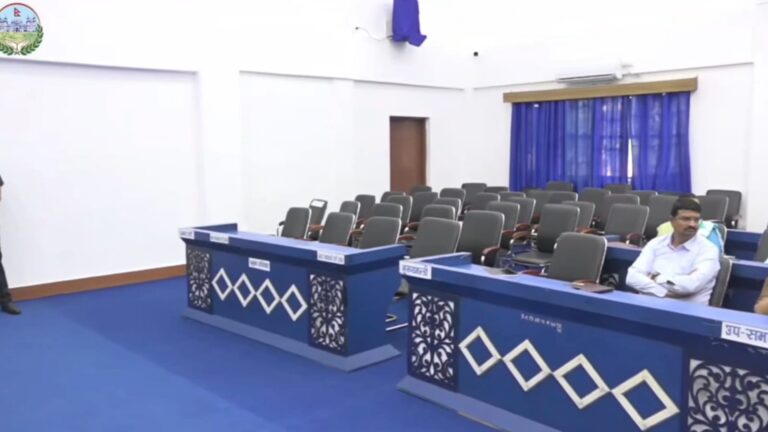
Opposition parties boycott provincial assembly meeting in protest of appointment of office bearers
A former member of the commission, Raj Kishor Sah, states that during three years of work, the government did not make regulations and did not even send the requested employees. According to him, those who filed complaints repeatedly placed inquiries about the complaints, but the commission had no answer at all. “There was no working environment at all. There was no room, there was no police, there was not even an employee,” Sah says, “How to work in scarcity? The responsibility is big, the working environment is not there. Rather than sitting there, drawing a salary, and taking abuse, we decided to go our own way.”
Another former member, Shobha Mahato, also states that the commission could not work effectively because the government ignored it. “We demanded regulations, we said employees were needed, but the government did nothing,” she says, “Apart from sending the budget, nothing was thought about the effectiveness of the commission. Therefore, seeing no rationale in staying in the commission, we went our own way.”
High perks, low results
A large amount of money is spent every year on the services and facilities of the Chairman and members of the commission. However, results have not appeared according to the expenditure.
In the Janlokpal Act, facilities equivalent to a Chief Judge of a High Court for the Chairman of the commission and equivalent to a Judge of a High Court for the members have been specified. According to this, the Chairman had been receiving a monthly salary of Rs 66,000 and the members a monthly salary of Rs 63,000. Vehicle facilities have been provided to all, the Chairman and members.
The Chairman has been given a monthly facility of 100 liters of diesel and the members a monthly facility of 80 liters of diesel. Besides that, a meeting allowance of Rs 2,500 per meeting has been specified. In the fiscal year 2023/24, the total budget of the commission was Rs 49 million. In that, only 19.88 percent was spent. In the fiscal year 2024/25, the total budget was Rs 47.6 million, out of which Rs 13.5 million has been spent.
There is an allegation that the appointment of the members of the commission has been taking place on the basis of political sharing from the very beginning. When appointed for the first time, the Chairman fell into the share of JSP, one member to the then Speaker, and another member to the share of CPN (Unified Socialist). There is an allegation that both members appointed now are in the quota of CPN (UML).
A leader of JSP Nepal and former minister, Sanjay Kumar Yadav, however, states that the work of the commissions could not be effective due to the province government itself. “If there is no law, it should be given by making a law; if there are no employees, employees should be given,” Yadav says, “But the government is currently making this a recruitment center by violating rules and laws, which is not appropriate.”
Declining trust
The former Chief Minister of Madhesh Province, Lalbabu Raut, states that the government under his leadership had formed the commission with good intentions. According to him, the commission was formed to lead the province on the path of good governance.
“To implement federalism, necessity of various bodies arises. Accordingly, the government under our leadership formed the commission,” Raut says, “But after the election, our government was removed, and the commission could not work. The responsibility to create an environment for the commission to work effectively belongs to the government itself.”
According to the Act, if evidence shows from the preliminary investigation that a public official has committed corruption in accordance with the prevailing law, and if there is a reason that evidence could be destroyed if not suspended immediately, the commission can write to the authoritative body for the immediate suspension of such a public servant.
If a Province Assembly member or a minister needs to be suspended, there is an arrangement where a recommendation must be made to the Speaker in the case of a Province Assembly member and to the Chief Minister in the case of a minister.
However, after the commission was unable to settle even the old complaints, new complaints have started to fall less often. A youth activist from Janakpurdham, Saroj Mishra, states that the trust of the locals toward the commission has declined. “Action has not taken place regarding the complaints filed earlier. Who will believe such a commission?” Mishra says, “The locals of the province do not have trust in the working style of the commission. Why would people give complaints now?”
The Janlokpal Commission, which was established five years ago as a new experiment of good governance in Madhesh Province, has now fallen into a circle of questions due to its own performance, legal preparation, human resource management, and appointment process. Due to the inability to have an effective hearing of the complaints that arrived in the commission, its objective of becoming a province-level surveillance mechanism against corruption appears incomplete.