Kathmandu
Sunday, June 14, 2026





Fifty-six tea processing factories in Ilam will shut down from June 15, followed by 30 more in Jhapa from June 17, as more than one million kilograms of tea remain stranded on both sides of the Nepal-India border, threatening the livelihoods of nearly 3,000 farmers at the peak of the harvest season.
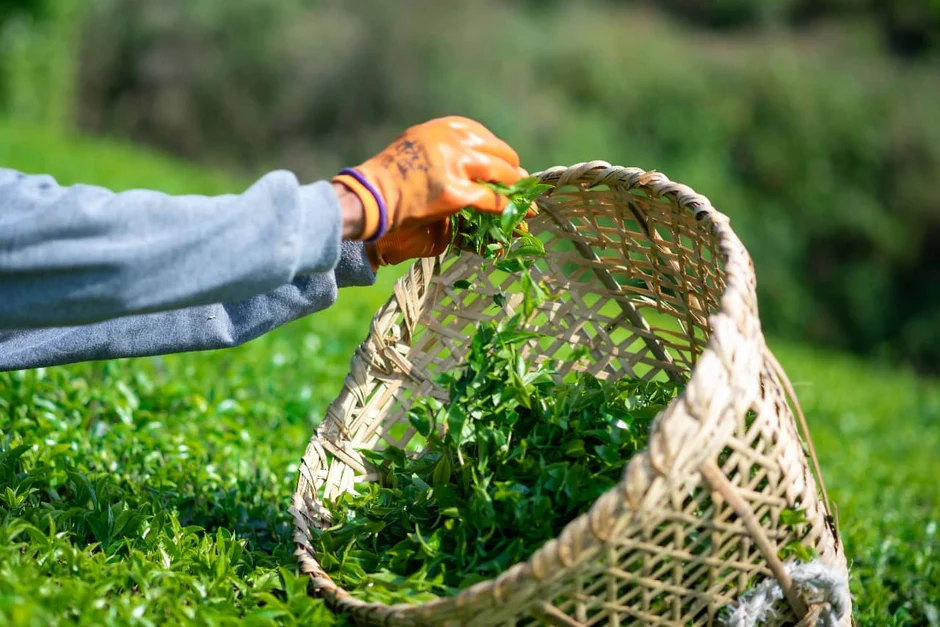
KATHMANDU: Nepal’s orthodox tea industry, built over more than a century in the eastern hills, earns the country roughly Rs 4.59 billion every year in foreign exchange and sustains the livelihoods of tens of thousands of farmers, workers, and traders.
But, since May 1, 2026, India’s Tea Board has enforced a new rule requiring every single truck carrying Nepali tea into India to undergo a separate mandatory laboratory test, with results taking over 20 days.
Tea already at Indian warehouses cannot be sold until tests clear, and failed consignments face destruction or return. The result is an industry in freefall: warehouses at capacity, farmers unpaid, and factory operators forced to announce a complete shutdown starting June 15.
Which factories are shutting down and who has formally announced the decision?
All 56 tea processing factories registered with the Suryodaya Orthodox Tea Producers Association Nepal, located in Suryodaya Municipality of Ilam district, have collectively announced they will cease operations from June 15, 2026.
Association made the announcement making it clear that the decision was not taken lightly but was forced upon the industry by circumstances entirely beyond its control. The factories had continued operating for weeks after the Indian restrictions took hold, absorbing losses and hoping that diplomatic efforts would produce a resolution before stockpiles became unmanageable. That hope has now run out.
Similarly, 30 tea processing factories in Jhapa have also decided to suspend operations.
With warehouses overflowing and no buyers on the horizon, running the factories means processing green leaves from farmers and adding to a mountain of finished tea that cannot move.
It would also mean accumulating further debt to farmers who have already supplied leaves and are waiting for payment.
The simultaneous closure of all 86 units is not a staggered response from individual businesses weighing their own circumstances. It is a collective action representing the near-total collapse of processing capacity in one of Nepal’s most important tea-producing regions, taken by an association that has exhausted every practical alternative.
What specific rule did India introduce and how does it differ from the previous arrangement?
India’s Tea Board introduced a Standard Operating Procedure on May 1, 2026 that made 100 percent laboratory testing mandatory for every individual consignment of tea entering India from Nepal.
Under the old system, testing a single truckload from a batch was treated as sufficient clearance for all vehicles carrying tea from that same lot, allowing up to ten trucks to pass on the basis of one test result. The new rule abolished that arrangement entirely.
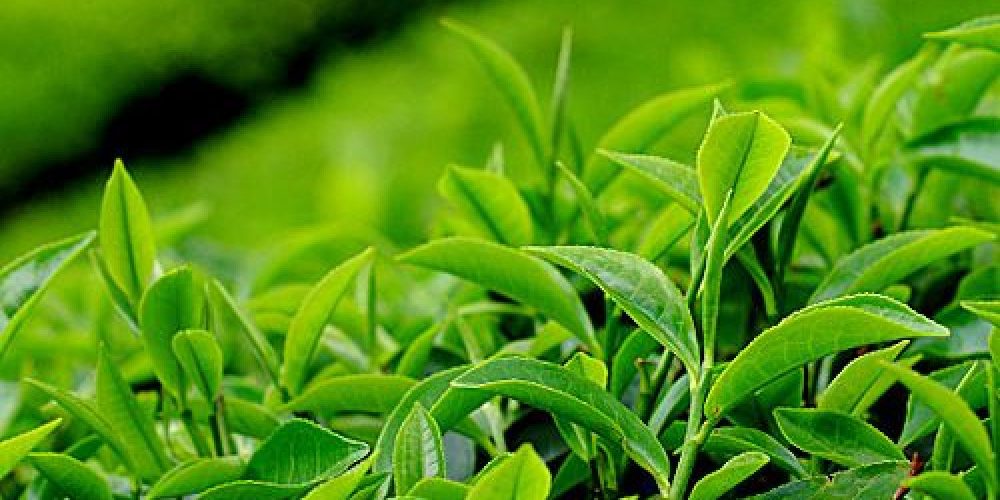
Every truck is now classified as a separate consignment, each requiring its own sampling, its own documentation submitted through the Tea Council portal, and its own laboratory analysis before any of that tea can be offered for sale. Indian importers were also required to pay a testing fee of Rs 11,120 plus applicable GST for each sample.
The samples from trucks crossing at Kakarvitta are sent to a central food laboratory in Kolkata, which operates at capacity and takes more than 20 days to return results. Until that report arrives, the tea remains locked in an Indian warehouse, inaccessible to buyers. If the result is negative, the entire consignment faces either destruction or the cost and logistics of being shipped back to Nepal.
The practical effect of this shift from selective to blanket testing has been to transform a manageable inspection process into a near-total blockade.
How did India explain its decision to impose these new testing requirements on Nepali tea?
The Tea Board of India presented the new Standard Operating Procedure as a quality control initiative aimed at preventing adulterated or substandard tea from entering the Indian market. Indian authorities framed the mandatory laboratory testing of every consignment as a necessary and proportionate step to tighten oversight of agricultural imports and protect the integrity of the Indian tea trade.
The policy was rooted in recommendations from an Indian parliamentary standing committee on commerce, which had raised concerns about the quality of tea arriving from neighbouring countries and argued that looser oversight was allowing low-grade products to enter Indian supply chains.
Protecting the reputation of Indian tea, including premium-branded varieties such as Darjeeling tea, has long been a sensitive political and commercial issue in India.
The Darjeeling Tea Association had, in earlier years, explicitly lobbied the Indian government to restrict Nepali tea imports on the grounds that they competed unfairly with geographically protected Indian varieties.
While Indian authorities have not publicly acknowledged any connection between these lobbying efforts and the 2026 SOP, Nepali exporters and officials have consistently argued that the new procedures go far beyond what genuine quality control would require.
They point out that the scale, cost, and timing of the measures, introduced at the height of Nepal’s first flush harvest season, suggest a protectionist intent disguised as a technical standard.
How much tea is currently stuck or stockpiled because of these disruptions?
The inventory crisis is severe and involves quantities on both sides of the Nepal-India border. Inside Nepal, the 56 factories affiliated with the Suryodaya Orthodox Tea Producers Association have accumulated more than 700,000 kilograms of finished processed tea in their warehouses. This is tea that has already been produced, packaged, and prepared for export but cannot leave because there is effectively no functioning market to receive it.
Storage facilities in Ilam have reached their absolute physical limits, meaning factories cannot accept additional green leaf from farmers even if they wanted to continue processing.
Across the border in India, a further 300,000 kilograms of Nepali tea that had already been shipped and reached Indian warehouses, primarily in Kolkata, remains frozen pending laboratory clearances that have either not been issued or have taken so long that the commercial window for selling them has passed.

Indian buyers, unwilling to commit to purchases when they cannot take possession of the tea or resell it until test results arrive, have suspended procurement entirely.
The combined stockpile of over one million kilograms sitting idle in a two-country supply chain logjam represents a substantial share of what would normally be a full season’s export volume, and it is growing larger every day that the restrictions remain in place.
Has this crisis happened before, or is the June 15 shutdown the first such breakdown?
The June 15 shutdown is the most dramatic consequence yet in a crisis that has unfolded across several escalating phases since early 2026. When the Standard Operating Procedure first came into force on May 1, it immediately halted Nepali tea exports. That initial disruption lasted approximately 21 days, during which producers protested, industry associations sought government intervention, and Nepal’s Foreign Ministry engaged with Indian counterparts through diplomatic channels.
Nepal’s acting ambassador to India, Dr Surendra Thapa, was directly involved in those negotiations. On May 20, India revised its approach, agreeing to conduct random sampling rather than testing every single vehicle, and exports resumed. The relief was short-lived.
Within about two weeks of that relaxation, Indian authorities began collecting fresh samples from trucks that had already reached Kolkata warehouses and dispatching them for laboratory analysis.
This renewed testing effectively froze purchases again, because Indian buyers could not take ownership of tea that was still under inspection.
Traders on both sides were left in uncertainty about what rules were actually in force. It is this pattern of restriction, partial reprieve, and renewed restriction that has exhausted the industry’s patience and pushed the Suryodaya association toward the collective shutdown announced for June 15. Association general secretary Gopal Kattel described the current phase as worse than any previous trade disruption, noting that even tea already physically present in India cannot find buyers.
How many farmers and workers will be directly affected when the factories stop running?
Within Suryodaya Municipality alone, approximately 2,995 farmers are directly engaged in growing tea. They cultivate the crop across 33,655 ropani of land, equivalent to roughly 1,712 hectares, and that land produces around 20 million kilograms of green tea leaves annually.
When all 56 factories shut down, every one of those farmers loses their only buyer for freshly harvested leaves. Tea farming does not allow for delay. Green leaves must be plucked and delivered to factories quickly. They cannot be stored on the bush waiting for a market to reopen without losing value or becoming unusable.
Farmers who have already supplied leaves to factories this season are waiting for payments that the factories now say they cannot make because they themselves have no income from sales.
Beyond the immediate farming community, the closures affect daily wage workers employed in factory processing units, transporters, packaging suppliers, and the local service economy that has grown around a tea-dominated municipality.
Zooming out further, tea cultivation across Nepal as a whole involves more than 15,000 farmers and employs around 60,000 people across estates, processing units, and related activities.
The Ilam and Jhapa shutdown represents a concentrated version of damage that could spread across the broader industry if the export blockade remains unresolved through the rest of the harvest season.
What is the total financial value of Nepal’s tea trade with India, and why does it matter so much?
Nepal’s processed tea exports generate around Rs 4.59 billion annually in foreign exchange earnings for the country. Of the more than seven million kilograms of orthodox tea Nepal produces for export each year, more than 90 percent goes to India. That single statistic captures the structural reality that defines and also endangers the industry: Nepal has built its entire tea export economy around one market, and when that market becomes inaccessible, there is no meaningful substitute.
Tea exports also declined by 19 percent in the first nine months of the current fiscal year, with total shipment volume falling by 22.2 percent to 10,124 tonnes, according to customs data, meaning the industry was already under financial strain before the May SOP made things dramatically worse. At the individual level, tea income is not supplementary for most of the nearly 3,000 farmers in Suryodaya Municipality.
It is the primary source of household earnings during the harvest cycle, and losing even one season’s income can push farming families into debt. At the national level, the tea sector contributes to Nepal’s foreign exchange reserves at a time when the government is working to expand export revenue and reduce dependence on remittances.
A prolonged shutdown of Ilam’s processing industry during peak harvest would represent a quantifiable loss not just to farmers and factory owners but to Nepal’s balance of payments.
What logistical problems are making the blockade even harder to resolve?
Several compounding practical problems have turned the Indian testing requirement into something far more disruptive than it might appear on paper. The Kakarvitta customs crossing in eastern Nepal, which is the main gateway for tea exports to India, simply does not have the physical infrastructure to accommodate large numbers of trucks waiting for weeks at a time.
Parking capacity at the border point is limited, and vehicles held for the duration of laboratory testing block movement and add to operational costs for transporters who cannot free their trucks for other work. Once samples are taken from arriving consignments, they are sent to a central food laboratory in Kolkata for analysis.
Kolkata is hundreds of kilometres from the border crossing, and the distance adds logistical complexity and time on top of whatever backlog the laboratory itself is managing.
Tea entrepreneurs described the overall situation as one where the route to market has effectively been sealed off, not through a formal ban but through bureaucratic procedures whose combined effect is the same.
The testing fee of Rs 11,120 plus GST per sample also increases per-unit export costs significantly, eroding the price competitiveness that Nepali tea depends on in the Indian market. Nepal’s tea is already priced in competition with Indian-grown varieties.
Additional costs per consignment, layered on top of extended holding periods and uncertainty over test outcomes, make it economically irrational for Indian buyers to continue purchasing while the system operates this way.
What happens to tea quality when it is held in warehouses for weeks awaiting clearance?
Orthodox tea, which forms the core of Nepal’s export product and commands premium prices precisely because of its distinctive aroma, body, and finish, is particularly vulnerable to degradation under warehouse storage conditions that were not designed for extended holding. Officials of Suryodaya Municipality, flagged this concern explicitly, warning that high-quality Nepali tea risks losing its defining characteristics while sitting in Indian warehouses awaiting laboratory clearances.
The problem is not hypothetical. Tea absorbs odours and moisture from its environment. Changes in temperature, even modest ones over extended periods, affect volatile aromatic compounds that give orthodox tea its character.
The 300,000 kilograms of Nepali tea currently in Indian warehouses under testing hold were produced during this year’s first flush, a harvest period valued precisely because first flush tea has a freshness and brightness that later flushes do not replicate.
Every week that tea sits unsold is a week during which those qualities diminish. If test results arrive late and the tea has degraded, buyers may reject it or offer significantly reduced prices, compounding the financial loss on top of the delay.
On the Nepal side, the 700,000 kilograms stockpiled in Ilam factories faces its own risks, as storage facilities were not built to hold finished tea in those quantities for indefinite periods, and improper storage conditions during monsoon season could accelerate spoilage.
What has the Nepali government done in response, and has it been enough?
Suryodaya Municipality formally wrote to Nepal’s Ministry of Foreign Affairs calling for immediate high-level diplomatic engagement with India to have the barriers dismantled. The municipality used specific language in its communication, describing the Tea Board of India’s procedures as a non-tariff barrier, which is a designation that carries weight under international trade frameworks and opens the possibility of formal dispute mechanisms if bilateral talks fail.
Nepal’s acting ambassador to India, Dr Surendra Thapa, was actively involved in the May negotiations that produced a temporary relaxation, an effort that Nepal’s Foreign Ministry presented as a successful resolution. That success proved illusory when testing resumed within two weeks.
Industry voices have called on the federal government to treat this as a matter of urgent national economic interest rather than a routine sector complaint. The government’s response so far has not matched the scale of the crisis.
The shutdown announcement for June 15 comes despite weeks of diplomatic engagement, suggesting that whatever channel has been used has not produced a durable agreement.
Producers are now asking for more than a temporary fix. They want a formal arrangement that gives them predictable, reliable access to the Indian market and removes the cycle of disruption, brief normalcy, and renewed restriction that has characterised 2026.
Why is Nepal so overwhelmingly dependent on India for tea exports, and are there realistic alternatives?
Nepal’s near-total dependence on India as a tea market is the product of geography, infrastructure, historical trade patterns, and the economics of agricultural export. India shares a long land border with Nepal, making it by far the cheapest and logistically simplest destination for bulk tea shipments.
The Kakarvitta crossing connects Ilam’s tea-growing hills to the Indian plains at relatively low transport cost. By contrast, exporting to Europe, Japan, or the United States requires containerised sea freight, longer lead times, and the kind of established buyer relationships that take years to build.
Nepal does market its tea internationally under the trademark Nepal Tea, Quality from the Himalayas, and the product has earned recognition in specialty markets abroad. However, third-country exports account for only around 11.4 percent of total orthodox tea exports, with organically certified varieties performing somewhat better at 21.63 percent reaching overseas markets.
Producers have begun exploring China as a potential alternative, and Chinese buyers have made visits to Ilam tea gardens in recent years. China grants zero tariffs on a large range of goods from least developed countries including Nepal, which creates a favourable trade framework.
But, the infrastructure for exporting northward through the mountains is far less developed than the southern trade corridor, and the volumes China could absorb in the near term would not compensate for the loss of Indian market access.
Diversification remains a long-term strategic goal rather than a near-term solution to the current crisis.
Is India’s testing policy specifically targeting Nepal, or does it apply equally to all tea-importing countries?
The Standard Operating Procedure that India’s Tea Board introduced on May 1, 2026 is framed as a general import regulation applicable to all tea entering India from any source. However, its practical consequences fall most heavily on Nepal because of the specific nature of the Nepal-India tea trade. Nepal exports tea by road in trucks crossing through Kakarvitta.
Each truck is now a separate testable consignment under the new rules. Countries that export tea to India by sea can ship in large containerised lots, and the per-unit testing burden is absorbed differently.
The land border crossing creates a volume of individual consignments that the mandatory testing regime hits with maximum friction.
India’s tea board has also specifically targeted tea imported into India for re-export after repackaging or rebranding, subjecting it to the older and stricter February 2026 SOP even after the May revision, which is a provision with particular relevance to trading practices in the Nepali tea market.
Beyond the procedural details, the broader political economy of Indian tea protection is relevant context. The Darjeeling Tea Association petitioned the Indian government years ago to restrict Nepali tea, citing competition concerns. Indian tea industry bodies have repeatedly raised alarms about what they describe as low-quality imports undermining domestic producers.
Nepal’s tea, which is grown in the same Himalayan foothills as Darjeeling and is sometimes marketed in similar premium segments, has long been viewed with suspicion by parts of the Indian tea establishment.
What are the long-term consequences for Nepal’s tea sector and the broader Nepal-India trade relationship if this crisis is not resolved quickly?
If the factory shutdowns in Ilam and Jhapa extend beyond a few weeks, the damage will compound in ways that cannot easily be reversed when the trade lane eventually reopens. Farmers who go an entire harvest season without income may not return to tea cultivation. Some may uproot bushes and switch to other crops.
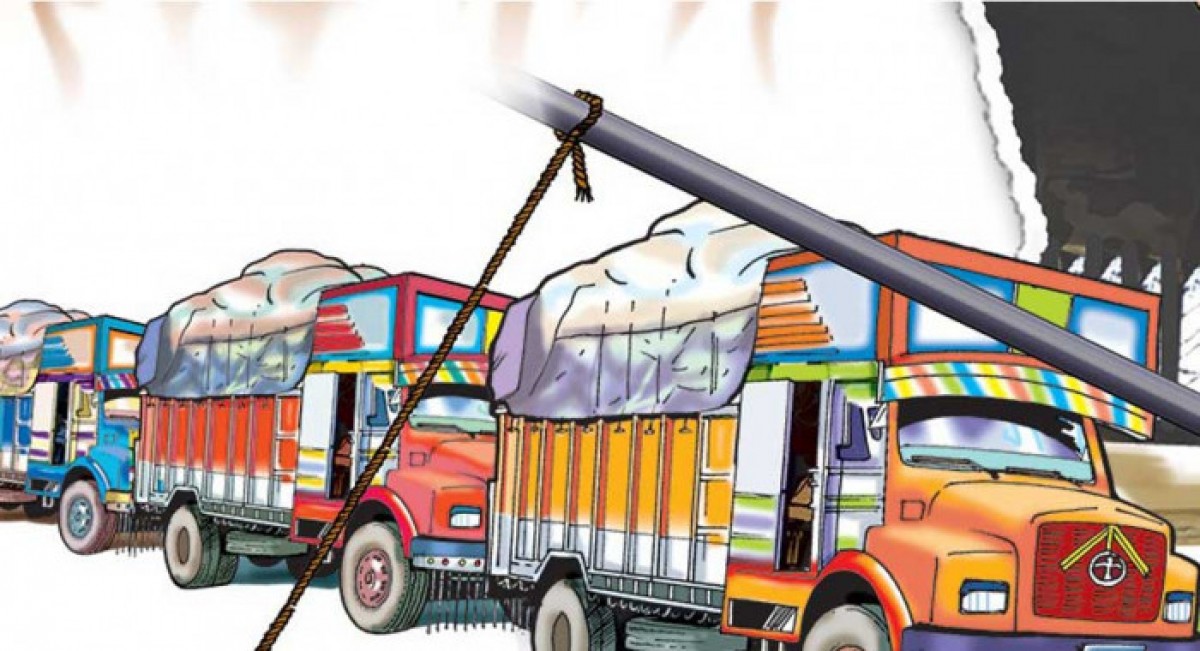
Representative file image depicting trade at Nepal-India border
Tea bushes take years to mature and produce export-quality leaves, meaning any contraction in cultivation area represents a long-term reduction in the sector’s productive capacity. Factory operators who cannot service debts accumulated during the shutdown may close permanently rather than restart operations.
Workers who leave the region in search of alternative income may not return. The seasonal rhythm of the tea industry means that disruptions during peak flush periods are disproportionately damaging compared to equivalent disruptions during slow periods, and the current crisis coincides with the first flush, which is the most valuable harvest window of the year.
At the level of Nepal-India relations, the tea crisis is part of a recurring pattern that raises deeper questions about the stability and fairness of the bilateral trade framework. Nepal is structurally dependent on Indian market access for a range of agricultural and manufactured exports, and the tea episode illustrates how regulatory decisions by Indian agencies can devastate Nepali industries without any formal trade barrier being imposed.
Producers and municipal officials have called for a durable diplomatic agreement that creates binding commitments on testing procedures rather than informal understandings that can be reversed within days.
Without that kind of stable framework, investment in expanding Nepal’s tea sector, whether in cultivation, processing technology, or quality certification, becomes extremely difficult to justify for anyone thinking about the long term.