Kathmandu
Sunday, June 28, 2026





Madhesh has witnessed a high number of road accidents over the past five years, resulting in thousands of deaths and injuries, with motorcycles involved in most crashes.
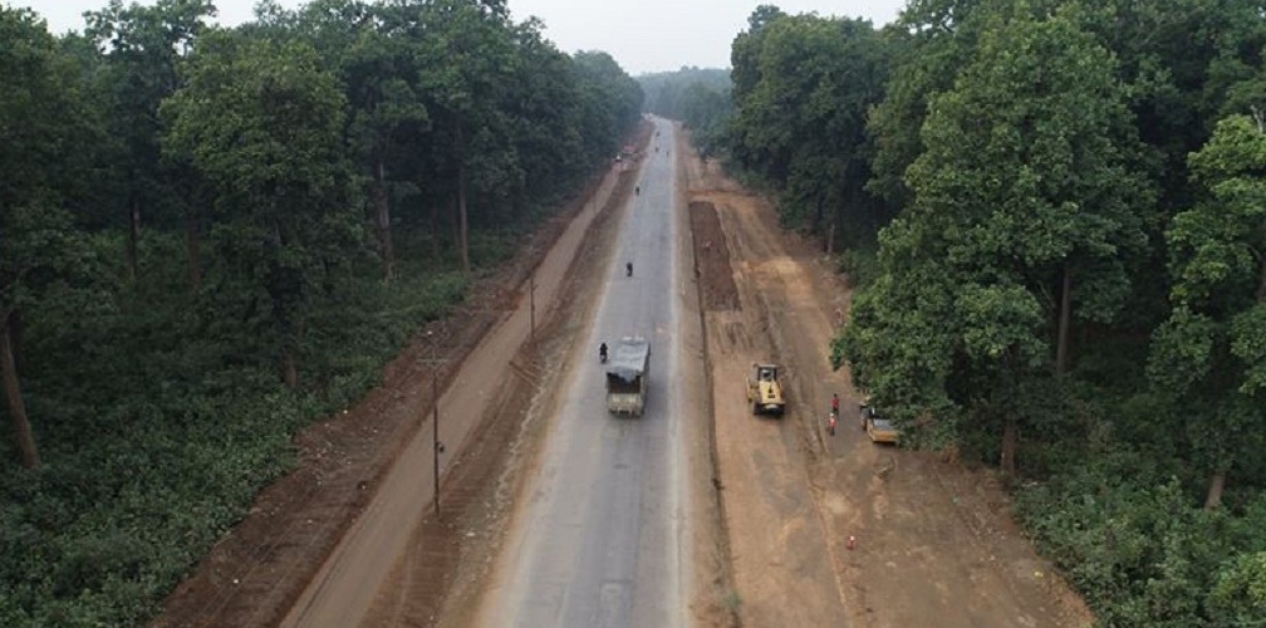
JANAKPURDHAM: Madhesh Province has recorded 29,183 road accidents over the last five fiscal years. During this period, 41,697 vehicles were involved in crashes, resulting in the loss of 2,748 lives.
According to police statistics, these incidents also left 10,866 individuals critically injured and 36,142 others with minor injuries. Among the crashed vehicles, motorcycles accounted for the highest volume. Out of the total vehicles involved in accidents, 28,027 were motorcycles, representing approximately 67% of the total pool.
In the fiscal year 2024/2025, Madhesh Province recorded 7,443 road accidents involving 10,679 vehicles, which led to 564 fatalities. That same year, 1,978 people suffered severe injuries, while 10,145 sustained minor injuries.
Similarly, 6,058 accidents occurred in the fiscal year 2023/2024, resulting in 530 deaths. In the fiscal year 2022/2023, 546 lives were lost across 5,988 accidents. The fiscal year 2021/2022 saw 585 fatalities from 5,711 accidents, while the fiscal year 2020/2021 registered 523 deaths out of 3,983 accidents.
Youth drivers at highest risk
A major share of road accidents in Madhesh is linked to young drivers. According to the Traffic Police Office, among the drivers involved in accidents, 39% belong to the 16–25 age group, 40% belong to the 25–40 age group, and 21% are above 40 years of age.
Sociologist Dr. Maharudra Jha states that a lack of parental supervision and awareness has contributed to the rise of risky driving behavior among youths. According to him, once some parents purchase expensive motorcycles or vehicles for their children, a trend emerges where youths form groups to speed and compete against one another.
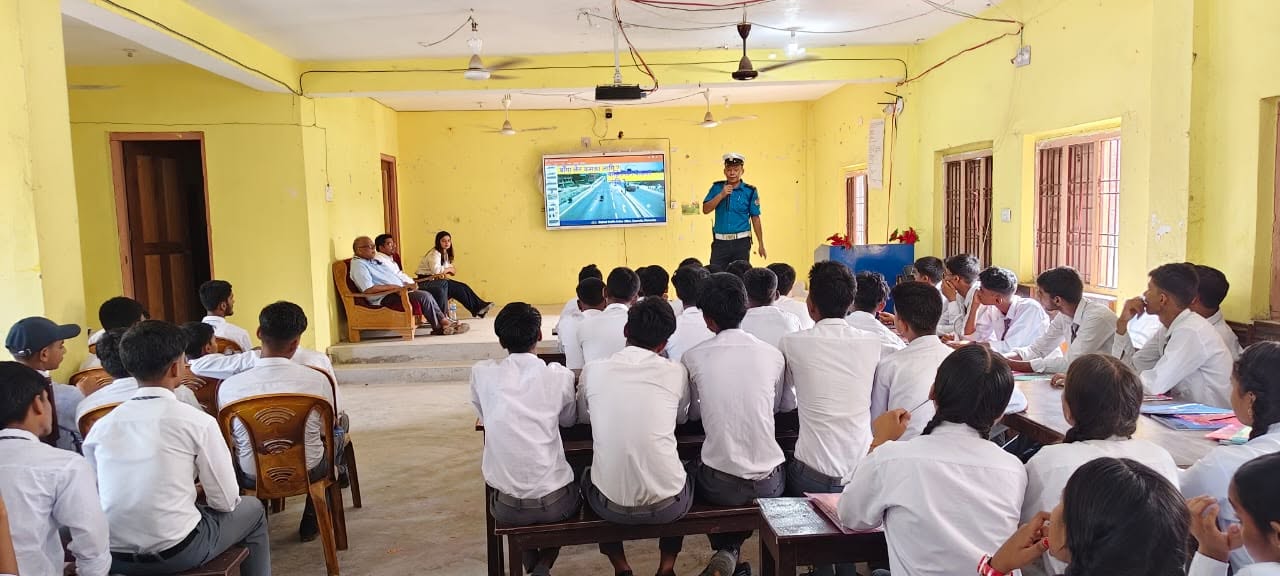
Traffic police raising awareness about road safety for students. Photo: Birendra Raman
“There is a mindset among youths that views speeding as an achievement,” Dr. Jha notes. “This has amplified the risk of accidents. Parents, schools, society, and traffic bodies must all take this seriously and spread awareness.”
Challenges of traffic volume
The density of vehicles has also turned into a significant road safety challenge in Madhesh. According to the Economic Survey published by the province’s Ministry of Finance, the total number of vehicles registered in the province in the fiscal year 2025/2026 stands at 59,069. Although total registrations decreased compared to the previous fiscal year, motorcycle registrations saw an upward trend. The survey shows that motorcycle registrations grew by 26.88% during this period, reaching 16,706 units.
Deputy Inspector General (DIG) Om Adhikari, the chief of the provincial police, explains that curbing accidents in Madhesh is highly challenging due to a growing population, an expanding fleet of vehicles, and a vast road network. He emphasizes that the efforts of traffic police alone are not sufficient to minimize accidents. “Coordination across all sectors is essential for traffic management,” Adhikari says. “It is difficult to reduce accidents without awareness campaigns, traffic police involvement in policymaking, and adequate budget allocations.”
‘Negligence remains the root cause’
The traffic police have concluded that driver negligence, high speeds, and weak compliance with traffic discipline have rendered the roads of Madhesh unsafe. According to their assessment, controlling accidents has become difficult due to poor road discipline, insufficient driver training, lack of regular inspections, weak coordination with local levels, and deficient road infrastructure.
According to the Madhesh Province Traffic Police Office in Pathalaiya, around 85% of accidents in Madhesh occur due to driver negligence. Key factors behind these accidents include speeding, driving under the influence (DUI), driving without a license, reckless overtaking, and violating traffic regulations. The office noted that most accidents take place during the evening and night hours, with the peak risk period observed between 6 pm and 11 pm.
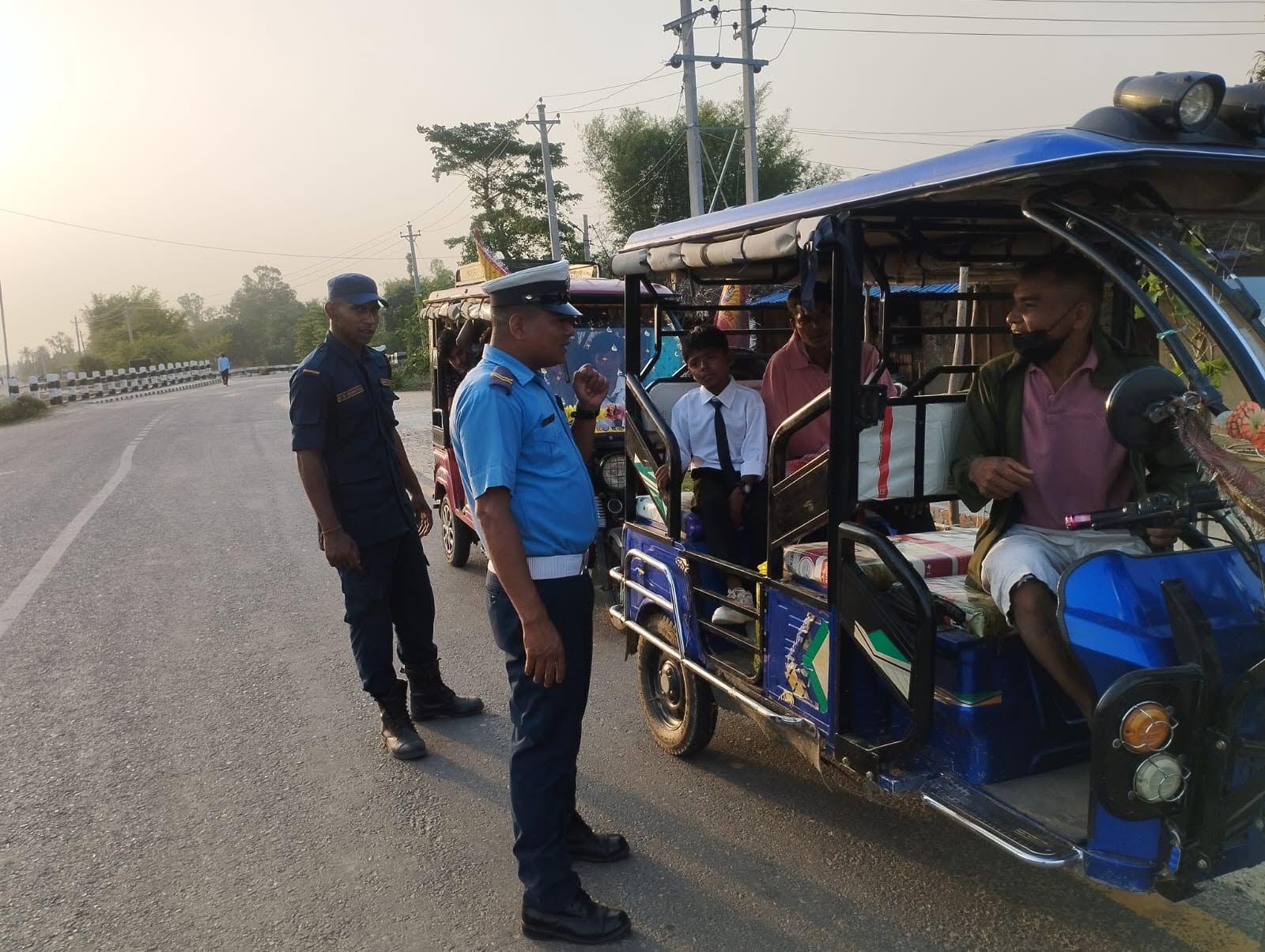
Traffic police telling drivers about road safety. Photo: Birendra Raman
To counter this, traffic police deployment in various districts of Madhesh exceeds their formally sanctioned positions. In Saptari, 49 traffic personnel are working against a sanctioned quota of 32; in Siraha, 62 against 30; in Dhanusha, 95 against 37; in Mahottari, 60 against 40; in Sarlahi, 45 against 31; in Rautahat, 54 against 30; in Bara, 64 against 27; and in Parsa, 61 personnel are serving against a sanctioned quota of 21. Conversely, the Nepal Police Highway Safety and Traffic Management Office in Pathalaiya, Bara, is understaffed, with only 35 personnel working against a sanctioned strength of 56.
Superintendent of Police (SP) Gyanendra Bahadur Basnet, chief of the Nepal Police Highway Safety and Traffic Management Office in Pathalaiya, points out that deploying traffic police alone cannot eliminate accidents. He believes that road safety cannot improve until drivers take personal responsibility.
“Accidents can be significantly reduced if drivers operate their vehicles seriously and adhere to regulations,” Basnet states. “Road safety is not the sole responsibility of the police; it is a shared duty of both drivers and citizens.”