Kathmandu
Monday, June 29, 2026





If the government's plan to withdraw lawsuits upon the payment of an additional one percent tax to settle old pending tax disputes proves effective, more than Rs 100 billion will be recovered.
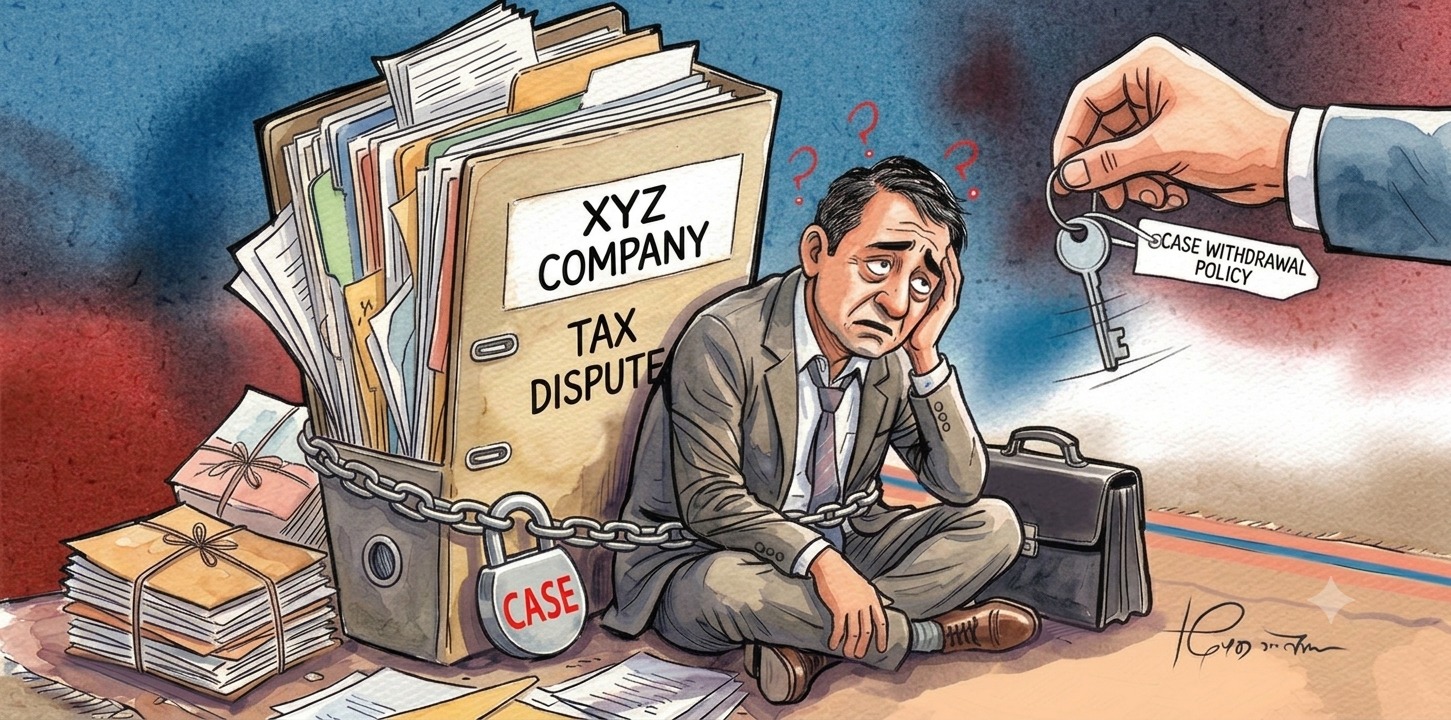
KATHMANDU: A lawsuit filed by Swastik Oil Industries Pvt. Ltd. against the Large Taxpayers Office regarding a dispute over unpaid income tax was listed on the Supreme Court’s daily cause list on June 23. However, the company submitted an application through its legal practitioner for an adjournment. The lawsuit concerning the company’s income tax dispute, which arose in the fiscal years 2020/21 and 2021/22, reached the Supreme Court via the Revenue Tribunal.
It was not just Swastik Oil; requests for adjournment were also made for an income tax dispute involving Saurabh Food Production and a Value Added Tax (VAT) dispute involving RMC Cement, both scheduled for a hearing on the same day. Hearings were also adjourned in cases filed against the Inland Revenue Department as well as those filed by the government itself. Out of 716 cases on the Supreme Court’s cause list on June 23, 2026, applications for adjournment were filed for 329 cases. Most of these cases were related to income tax, revenue evasion, and VAT.
The reason behind the trend of postponing hearings for tax dispute cases in court is the scheme introduced by the government regarding the withdrawal of lawsuits. On May 29, Finance Minister Swarnim Wagle introduced a new scheme in the budget for the upcoming fiscal year 2026/27 to resolve tax disputes. The government introduced this scheme as an opportunity to withdraw pending lawsuits against large businesses in any court, the Revenue Tribunal, or the Inland Revenue Department. Through this, the government ambitiously aims to collect over Rs 100 billion in tax currently stuck in pending litigation.
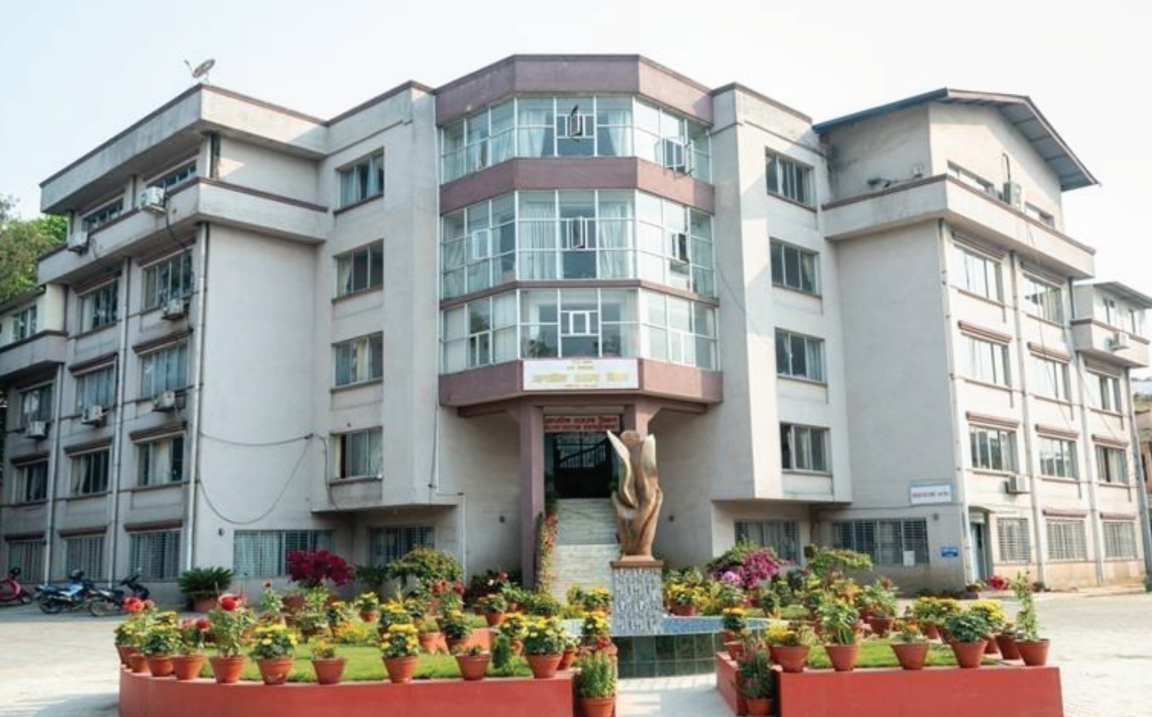
Inland Revenue Department Office. File Photo
The tax exemption provision announced in the budget has been incorporated into the Economic Bill, 2026. However, the bill does not clearly specify matters regarding cases that have already been decided by the courts. For businesses that are hesitant to pay taxes even after court verdicts, the bill provides an arrangement allowing them to pay an additional one percent on top of the initial fee determined by the respective tax office.
The government appears to plan to collect unpaid taxes under various pretexts, settle ongoing litigation, and integrate businesses into the tax system through a fresh approach. “To resolve pending tax disputes that have reached courts or judicial bodies from either the government or taxpayer sides, I have made arrangements to withdraw cases and waive fees, fines, additional charges, late fees, or interest, provided that an additional one percent is added to the assessed tax amount and paid within the specified deadline,” Finance Minister Wagle had said. Cases that are currently under administrative review at the department—due to dissatisfaction with tax assessments, amended tax assessments, or excise duty assessments made by the Inland Revenue Department or its subordinate offices until May 29, 2026—will also be withdrawn
Keshav Raghubanshi, Director and Information Officer of the Inland Revenue Department, states that around 1,350 cases are pending for administrative review at the department. By law, the Director General of the department must make decisions on these cases. If businesses are dissatisfied with the department’s decisions, they usually approach the Revenue Tribunal.
Raghubanshi mentions that these pending cases at the department involve disputed arrears of around Rs 118 billion. Taxpayers can conclude these cases by paying one percent more than that amount. Cases from as far back as FY 2006/07 remain under administrative review at the department. There is also an issue where some taxpayers file applications but subsequently fall out of contact. He argues that exact statistics are unavailable partly because some businessmen appeal to the Revenue Tribunal against the department’s decisions, and information about it is received only afterward.
The Revenue Tribunal has 544 cases pending as per statistics up to June 21, 2026. According to Birendra Basnet, Registrar of the Tribunal, cases involving income tax, VAT, customs, excise duty, and other fees including education and health services of various companies are registered. Companies and banks often approach the Revenue Tribunal under the pretext that the tax office did not grant tax exemptions on issues such as share issuance expenses deducted by the tax office, house rent, and employee uniforms.
Basnet explains that lawsuits are filed at the Tribunal claiming that excessive fines, interest, fees, and penalties were demanded from various companies, tax exemptions were not granted on employee allowances, or tax deductions were not made on vehicle facilities. If unsatisfied with the verdicts delivered by the Revenue Tribunal, the respective businessmen approach the Supreme Court with petitions for a review (permission to file an appeal). The Government of Nepal also moves the Supreme Court in most of the cases it loses.
Tax dispute cases are pending at the Supreme Court after receiving permission for judicial review. According to Arjun Prasad Koirala, Joint Secretary and Spokesperson of the Supreme Court, 3,078 cases related to tax and revenue are pending at the apex court.
In total, there are 4,932 pending tax-related cases: 1,350 under administrative review at the Inland Revenue Department, 544 at the Revenue Tribunal, and 3,038 at the Supreme Court.
Tax exemption provisions in the bill
The Economic Bill, 2026 was passed by a majority in the House of Representatives on June 28, 2026. After this bill is passed by the National Assembly, it will come into implementation from the upcoming mid-July 2026. Experts analyze that the one percent tax exemption scheme brought by the government through the bill is the cheapest one to date. Arrangements have been made so that the government can withdraw such lawsuits if an application is submitted to the department or the respective office within mid-January 2027 along with the deposit of the disputed tax amount and an additional amount equivalent to one percent of it.
Special provisions have been included in the ‘Economic Bill 2026’ to withdraw cases while focusing on revenue collection. The bill facilitates remedies even for appeals ranging from District Courts and the Revenue Tribunal to the Supreme Court, as well as cases where permission for review has been denied but reassessment of tax has not yet been carried out by the concerned office. It is arranged that fees, additional charges, fines, interest, and late fees will be waived upon submitting an application along with the deposited amount.
Section 40 of the bill contains special provisions regarding the waiver of interest and fees on income tax. It states that if a person earned taxable income in the past without obtaining a Permanent Account Number (PAN) and failed to deposit income tax, the fees and interest will be waived if they deposit the tax for two years. Such individuals must submit their income statements for FY 2022/23 to FY 2025/26 and pay by mid-January 2027. If they fail to comply with the tax exemption rules, the PAN will be automatically canceled, and all taxes, fees, and interest must be paid if it needs to be reactivated later.
Section 46 of the bill makes special provisions regarding the waiver of fees, additional charges, and fines upon withdrawing pending cases and depositing tax.
If a taxpayer withdraws pending cases under administrative review at the Inland Revenue Department or before any other judicial body due to dissatisfaction with tax assessments, amended tax assessments, or excise duty assessments made by the Inland Revenue Department or its subordinate offices as of May 29, 2026 pursuant to the Value Added Tax Act, 1996; Income Tax Act, 2002; and Excise Act, 2002, they must pay the VAT, income tax, and excise duty amount maintained by such assessment, plus an additional amount equivalent to one percent of it.
Taxpayers will be allowed to withdraw pending cases where permission to appeal or review has been granted or denied to the Supreme Court on behalf of the Inland Revenue Department or its offices.
Finance Minister Swarnim Wagle presenting the Economic Bill, 2026 in the Parliament meeting. Photo: RSS
Section 49 contains special provisions regarding the waiver of fines and interest on fees, charges, or taxes applicable under the annual Economic Act. Similarly, Section 50 provides for the withdrawal of lawsuits. In cases concerning income tax and VAT filed under the Revenue Leakage (Investigation and Control) Act, 1996 and currently pending in court, the government can waive fines and withdraw such lawsuits if the concerned individual deposits the claimed amount and an additional amount equivalent to one percent of the claimed amount, and files an application at the respective office within mid-January 2027.
Former Acting Auditor General Sukadev Khatri Bhattarai states that the government has given businesspersons an opportunity. According to him, arrangements have been made to grant businessmen immunity from litigation. “Past governments also used to bring tax-related schemes. Such a scheme is like an opportunity for large traders,” he says. “Because, for cases that are in court or have already been decided, the verdict might have ordered them to pay double the amount combining the principal claim and fines.”
It appears that matters already decided by the Revenue Tribunal and the Supreme Court will also be covered. Sections 40 and 41 of the bill provide arrangements that can cover all pending as well as decided cases.
Bhattarai mentions that this plan brought by the government provides an opportunity for everyone to take exemptions, except for telecommunication service providers. “If a tax of Rs 100,000 was assessed and they remained without paying it, they will now gain freedom from litigation by paying Rs 101,000,” he says. “Even if the court has passed a verdict, paying one percent on the initial tax assessment will suffice.” He adds that previous governments also granted tax exemptions, but traders were not particularly attracted. He notes that it becomes even easier for traders when courts do not deliver verdicts on time.
Will the arrears be recovered?
In its annual report for FY 2024/25, the Inland Revenue Department mentioned that tax collection was affected because cases could not be settled in judicial bodies. “Tax collection has been impacted as many cases remain to be settled in the Revenue Tribunal and other bodies,” the annual report stated. “Since there is a large amount of arrears, tasks to be performed by the department and offices for swift adjudication will be executed immediately, and necessary facilitation will be provided.”
The report mentions that the department has outstanding arrears of more than Rs 275 billion when counting interest up to July 16. This is the statement of arrears up to FY 2024/25. Looking at the breakdown by category, income tax arrears stand at Rs 219 billion, value-added tax at Rs 48 billion, excise duty at Rs 4 billion, and other arrears at Rs 3 billion.
Amrit Lamsal, Joint Secretary and Spokesperson of the Ministry of Finance, states that the one percent exemption policy was adopted because long-standing arrears remained to be collected. He mentions that there are no exact statistics on how many cases will be withdrawn and how much tax will be collected. “Receiving Rs 500,000 now vs. receiving Rs 1,000,000 five years later makes a difference; that is why this arrangement has been made,” he says. Tax-related cases are registered in the Revenue Tribunal, District, High, and Supreme Courts. Delays in court verdicts also lead to delays in depositing the designated tax. Businessmen also approach courts to create confusion and delay the process of paying taxes.
Information Officer Raghubanshi states that the Inland Revenue Department is preparing the procedures regarding which subject matters will be granted exemptions. He says exact details will be known only after the procedures are approved. He is confident that the scheme brought by the government will achieve 70 percent implementation. He adds, “Information regarding how many come forward to withdraw cases will be known only after the process begins. Exact details will emerge only after those with cases in quasi-judicial and judicial bodies submit their applications.”
Kedarnath Sharma, Chief Tax Administrator of the Large Taxpayers Office, states that work according to the scheme will commence after the Economic Bill is passed. Cases involving large taxpayers are pending at the Inland Revenue Department, the Revenue Tribunal, and the Supreme Court. According to statistics up to June 21, 2026, a total of 1,869 cases involving large taxpayers are registered and pending: 1,054 at the Inland Revenue Department, 277 at the Tribunal, and 538 at the Supreme Court.
Sharma states that arrangements will be made so that the concerned taxpayers can withdraw their cases from all three bodies. The process will move forward according to the procedures formulated by the Inland Revenue Department. “Once the procedures are issued, our taxpayers will be informed, and arrangements will be made so that they can apply for case withdrawal online,” he says.
According to Chartered Accountant (CA) Umesh Raj Pandey, this scheme brought by the government should be for this year only. “If the same thing is repeated next year, it will be wrong; it will be right if this year is the final one,” he says. “Because when such schemes come every year, it reduces tax compliance. For example, if I pay the VAT that I didn’t pay earlier now, it is enough to pay just the VAT amount and a one percent fine. If I had paid it beforehand, I would have incurred a loss.”
According to CA Pandey, theoretically, tax exemption plans provide encouragement to traders. For instance, during disasters like the COVID-19 pandemic and earthquakes, traders faced problems. However, he says this scheme is not particularly beneficial for honest traders who sell goods on credit and pay taxes in cash.
Pandey states that such plans to grant tax exemptions to traders were brought in the past as well but were not effective. “It seems to have been brought without an effectiveness study, whereas it should have been introduced after analyzing it. Previously, such schemes did not attract traders much. This time too, it does not seem it will be as effective as expected,” he says.
Advocate Raman Kumar Karna, who has been pleading cases for various companies regarding tax disputes, states that businessmen are excited by the government’s decision on tax exemptions. He notes that tax disputes are matters that can be resolved immediately, and it is better to participate in this rather than being entangled in court for a long time.
He mentions that although having cases in court benefits legal practitioners, he has advised individuals with pending tax disputes to withdraw their cases. Karna, who is also the Secretary of the Supreme Court Bar Association, says that businessmen now appear more inclined toward postponing hearings rather than scheduling them for pending cases. “But how many businessmen will be covered will be known only after the law achieves completeness. It appears that many cases falling within the criteria will be withdrawn,” he says.