Kathmandu
Tuesday, June 30, 2026





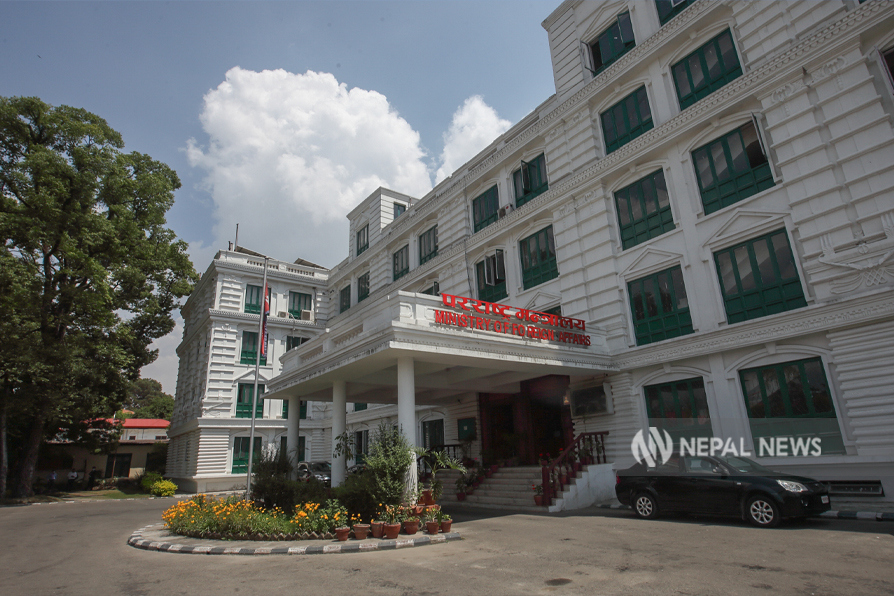
KATHMANDU: Nepal’s Prime Minister’s Secretariat has stepped back from its push to immediately terminate the government’s e-passport contracts with two German companies, agreeing instead to allow the project to continue until July 15, when the contractors are expected to begin printing the new electronic passports.
The decision followed a high-level meeting on Monday between Foreign Minister Shisir Khanal and Prime Ministerial advisers Asim Shah, Bibek Mishra, and Madhav Khanal at the Ministry of Foreign Affairs.
According to officials familiar with the discussions, the Prime Minister’s Secretariat had been pressing in recent days for the contracts to be canceled, arguing that the German firms would be unable to deliver the passport system on schedule. However, Foreign Minister Khanal maintained that terminating the contracts before the contractual deadline could expose Nepal to international arbitration and substantial financial liabilities.
Following the meeting, both sides agreed to allow the contractors to continue implementation until July 15, when the Department of Passports expects to begin printing the new e-passports.
“The Department of Passports and the German companies have assured us that the new e-passports will be ready by July 15. We should allow the process to continue until then. Only if they fail to deliver on time should we consider alternative options,” Khanal told local media after the meeting.
The latest development comes after Germany formally objected to corruption allegations leveled against the two companies awarded Nepal’s passport contract.
According to government sources, the German Foreign Ministry summoned Nepal’s Chargé d’Affaires in Berlin, Sagar Prasad Phuyal, to express strong concern over what it described as unsubstantiated allegations against the companies.
The diplomatic intervention intensified pressure on Nepal’s Foreign Ministry, with officials warning that prematurely terminating a lawfully awarded international contract could create significant legal, diplomatic and financial consequences.
German companies continue project
The passport project was awarded through two separate contracts. Under Package 1, Muehlbauer ID Services GmbH is responsible for passport pre-enrollment, enrollment and data management systems. Under Package 2, Veridos GmbH is responsible for passport personalization, quality control and packaging systems. Foreign Ministry officials say both companies remain committed to commencing passport production by July 15.
Foreign Minister Khanal reiterated his long-standing position that Nepal should not terminate the contracts before the agreed production deadline expires.
He warned that doing so could allow the companies to seek international arbitration, potentially exposing Nepal to millions of dollars in legal costs and compensation while damaging the country’s credibility among foreign investors.
According to officials present during Monday’s discussions, Khanal urged political leaders to focus on project delivery rather than intervening in the implementation process before contractual obligations could be assessed.
Officials at the Department of Passports said the Prime Minister’s Secretariat had previously instructed the department to terminate the German contracts by Monday, prompting the department to seek intervention from the Ministry of Foreign Affairs.
Following Monday’s meeting, officials said they were informed that the Secretariat would no longer directly intervene in the department’s day-to-day operations and that the department should instead concentrate on completing the remaining technical tests required before passport production begins.
“Our responsibility now is to demonstrate that the new system can successfully print the new e-passports by July 15,” a senior department official said.
CIAA case continues
The passport procurement remains under judicial scrutiny after Nepal’s Commission for the Investigation of Abuse of Authority (CIAA) filed corruption charges against Department of Passports officials and the two German companies over alleged irregularities during the procurement process.
Despite the high-profile case, the Special Court has released several defendants on bail, including former Department of Passports Director General Tirtha Raj Aryal on Rs 500,000 bail and current Director Sunil Kumar KC on Rs 400,000 bail.
Other officials and company representatives were also granted bail, while two Foreign Ministry officials were released without any bail requirement.
The Ministry of Foreign Affairs and the Department of Passports have maintained that the allegations remain unproven and emphasize that the ongoing implementation of the passport project itself is not part of the CIAA’s indictment.
The controversy has also reignited debate over Nepal’s previous passport supplier, French biometric company IDEMIA, which supplied Nepal’s passport technology for nearly 17 years.
Some procurement experts argue that canceling the German contracts could ultimately require Nepal to place additional orders with IDEMIA through a variation order, potentially reviving earlier concerns raised by the Office of the Auditor General regarding pricing.
The Auditor General previously questioned why an additional passport booklet order continued to be priced at USD 10.13 per booklet despite much of the technological infrastructure already having been installed. By comparison, officials say the combined bid submitted by Veridos and Muehlbauer is valued at approximately USD 8.70 per passport.
While some observers suggest the current dispute reflects broader commercial competition following IDEMIA’s loss of Nepal’s subsequent international tender, those allegations remain contested and have not been established by any court.
Test of Nepal’s procurement system
Government officials say the dispute has evolved beyond a corruption investigation into a broader constitutional, diplomatic and commercial issue.
Legal experts warn that any perception that Nepal is terminating an internationally awarded contract without sufficient contractual grounds could undermine investor confidence, expose the country to international legal disputes and weaken confidence in Nepal’s public procurement system.
With diplomatic pressure, ongoing court proceedings and competing commercial interests converging, the e-passport dispute is increasingly being viewed as a major test of Nepal’s commitment to the rule of law, institutional independence and transparent public procurement.
![Visually impaired protesters extend demonstration into ninth day [Photo feature]](https://english.nepalnews.com/wp-content/uploads/2026/06/Dristibihin-8.png)