Kathmandu
Tuesday, June 30, 2026





Madhesh government continues fragmented funding despite pledge
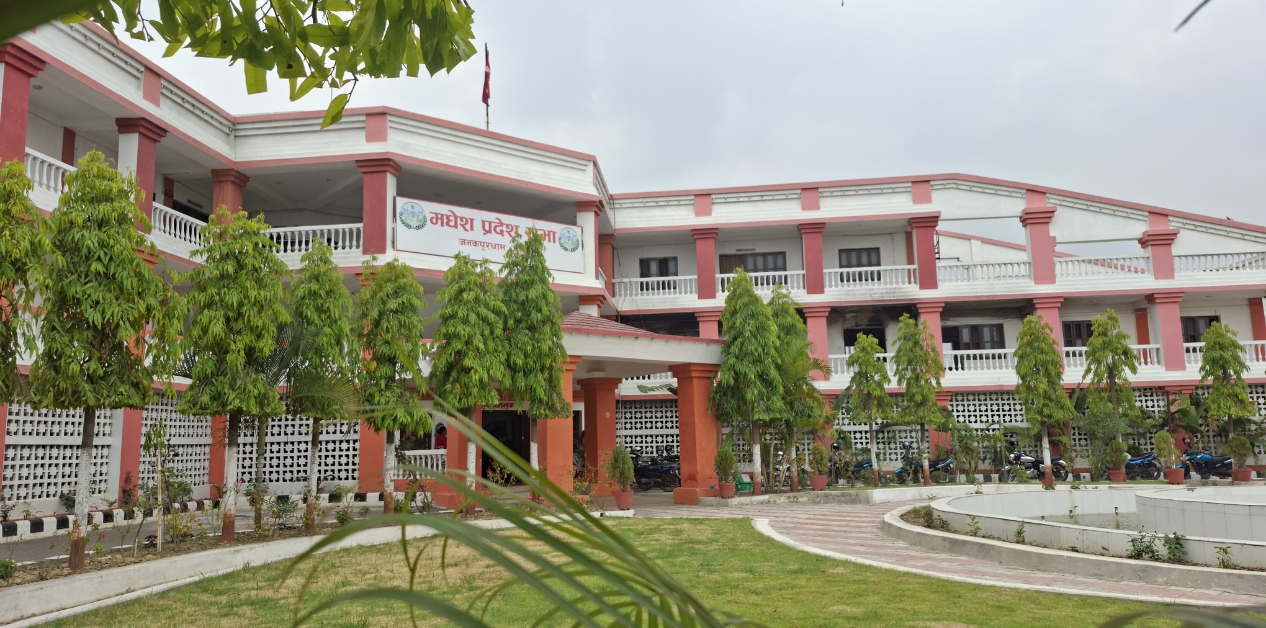
JANAKPURDHAM: Despite the Madhesh Province government’s formal declaration to discourage fragmented, small-scale budgetary allocations, its newly published Red Book reveals that the old practice of dispersing funds into minor projects continues under a new guise.
While presenting the budget on June 15, Finance Minister Yuba Raj Bhattarai announced policy measures to bar any project valued below Rs 10 million, halt new vehicle purchases, trim unproductive expenses, and prioritize capital formation. However, the published Red Book shows that the government’s commitment remains confined to paper.
To bypass public criticism over funding minor projects directly, the government has bundled multiple unrelated, small-scale community projects under single umbrellas to technically present them as projects valued at Rs. 10 million or more. Underneath these grand titles lie scattered expenditures for temples, mosques, graveyards, road blacktopping, compound walls, boring installations, and building maintenance.
The strategic bundling of distinct tasks across different local units, wards, and villages has been widely observed across several ministries Ministry of Industry, Commerce, and Tourism: A single Rs 10 million allocation covers multiple separate religious and community structures across Mahottari and Dhanusha. This includes upgrading a mosques in Jaleshwar, constructing a boundary wall for a graveyard in Janakpurdham-21, funding mosques in Loharpatti and Matihani, and upgrading an Idgah in Jaleshwar. Another Rs. 10 million title binds together the construction of the Sitaram Bibah Mandap Trust, the beautification of a temple in Bihar Kund (Janakpurdham-8), and the upgrading of a Salhesh temple in Nagarain.
Ministry of Irrigation and Water Supply’s department has grouped individual-centric underground boring installation works across various wards of Bateshwar Rural Municipality with power drill boring projects across Mithila, Chhireswarnath, and Nagarain municipalities under a single budgetary head.
Under Ministry of Physical Infrastructure Development disbursals are even more scattered. One Rs 10 million allocation combines road paving and retaining wall construction in Jaleshwar with unfinished school building construction, desk-bench procurement, and compound wall upgrades in Manarasiswa Municipality. Another package groups together construction of mosques buildings, drainage canals, and incomplete Idgah boundary walls.
Implementation roadblocks and political backlash
Manish Kumar Suman, spokesperson for the Janata Samajbadi Party, Nepal, states that placing projects of different geographies and different natures under a single heading of Rs 10 million creates both legal and practical problems during implementation. According to him, if a dispute arises in a single locality or project, there remains a risk that the budget for the entire heading will be halted.
“If there is a bridge worth Rs 10 million somewhere, that is fine. But if a bridge, a temple, and a public rest house (dharmashala) are all placed under the exact same heading, the work will not progress,” Suman says. “When implementing a budget, the practical aspect must also be considered. There is an increased risk that a budget allocated this way for cheap popularity will go unspent.”
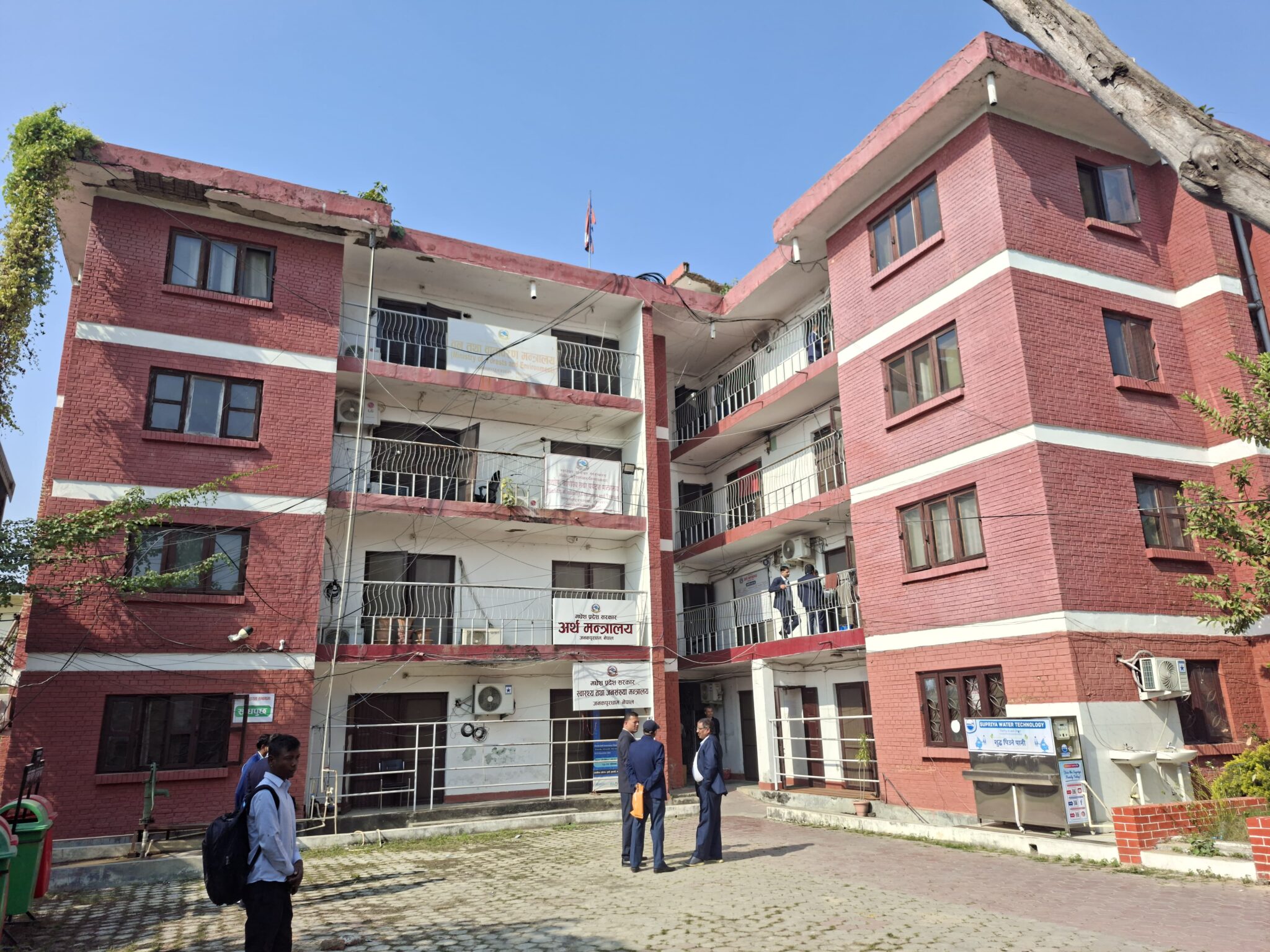
Madhesh Province Finance Ministry
Suman further pointed out that while the government claimed it would eliminate the corruption surrounding consumer committees by pushing projects through open competitive bidding, the lack of operational clarity on how multi-task packages will be auctioned makes the mechanism practically ambiguous.
Echoing these concerns, Chandan Singh, Parliamentary Party Leader of the Janamat Party, remarked that the stark mismatch between the government’s public promises and the ground reality inside the Red Book will make budget execution highly impractical.
Defending the budget layout, Finance Minister Yuba Raj Bhattarai claimed that this bundling is confined to only a few headings. He explained that the government had to club two or three existing multi-year works together to facilitate the completion of residual projects.
“The federal budget also follows a similar practice. Since several legacy projects required only minor funds to cross the finish line, we consolidated them into broader headings,” Minister Bhattarai argued. “As we are transitioning toward open competition for the first time, people might fear hitches. However, I don’t anticipate massive roadblocks. If issues arise, we will resolve them and move ahead.”