Kathmandu
Saturday, July 4, 2026





An energetic start has produced sweeping reforms across government. Whether they translate into better services, stronger institutions and sustained economic confidence remains the defining question.
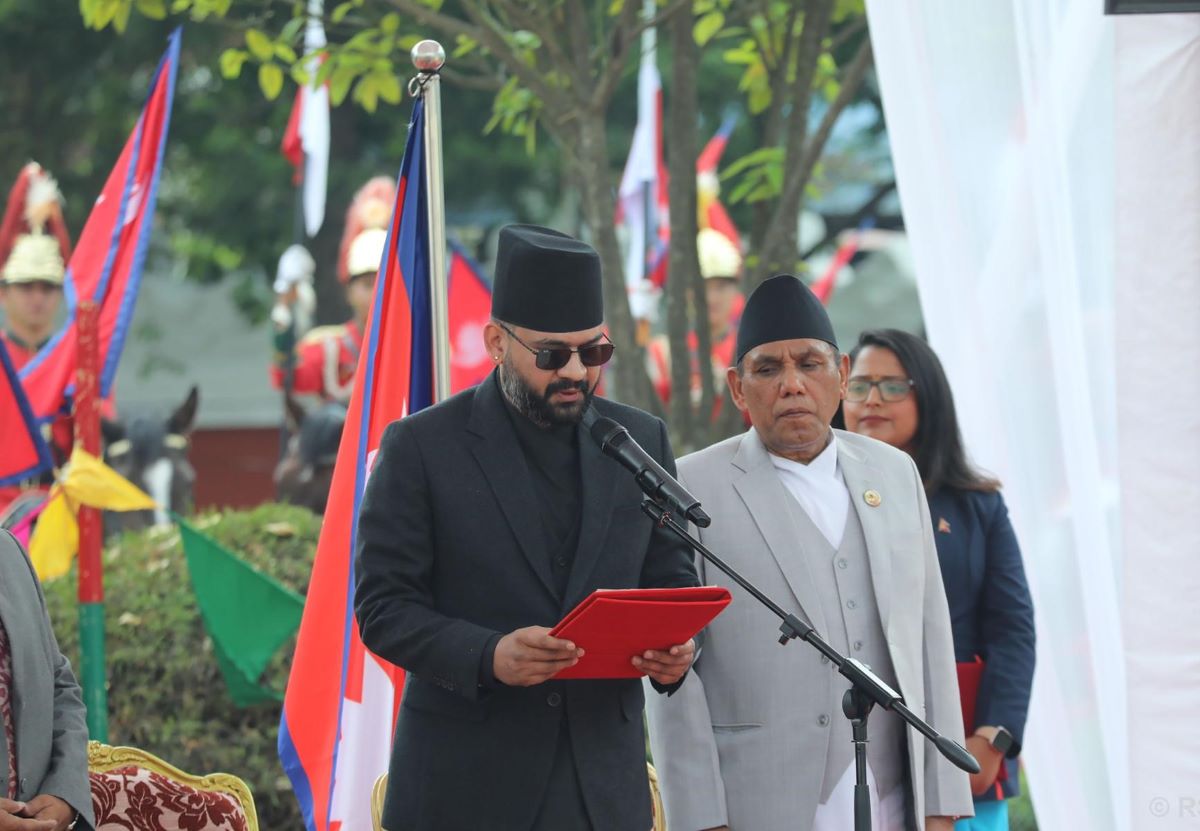
KATHMANDU: Prime Minister Balendra Shah has completed his first 100 days in office with an agenda centered on governance reform, anti-corruption and institutional accountability. Rather than presenting the milestone as a collection of isolated achievements, the government has framed it as the opening phase of a broader effort to restructure the state through a 100-point governance roadmap and a series of structural reforms intended to modernize public administration.
The administration has sought to project itself as reform-oriented despite tight fiscal constraints. Its strategy combines efforts to restore macroeconomic stability with institutional change, arguing that stronger governance is a prerequisite for sustainable economic transformation. The budget for fiscal year 2026/27 reflects this approach, prioritizing structural economic reforms, while parallel initiatives have focused on resolving long-standing land settlement issues and improving the efficiency of public administration.
One of the government’s most visible priorities has been the overhaul of public service delivery. Efforts to reduce bureaucratic delays, speed up passport issuance and driving license production, and improve citizen-facing services have been presented as early indicators of administrative reform. The broader objective is to rebuild public confidence in state institutions by making government services more responsive and accessible.
The government’s anti-corruption campaign has become the defining feature of its first 100 days. It has pledged zero tolerance for corruption, strengthened investigations into financial crimes and money laundering, and promised greater institutional accountability. Supporters argue that these measures represent the most serious attempt in decades to confront entrenched impunity and reverse years of administrative dysfunction.
Supporters also contend that the administration has introduced a different political culture, emphasizing transparency, accountability and institutional reform. They argue that restoring citizens’ confidence in the state will depend not only on prosecuting corruption but also on improving the quality of public services and creating a more predictable environment for private investment and economic activity.
Yet the government’s reform narrative is already encountering skepticism. Political analysts argue that while the administration has generated public expectations, its long-term credibility will depend less on rhetoric than on implementation. They warn that the government’s relationship with its political base must remain coherent, as any disconnect between party leadership and government risks undermining policy consistency and political stability.
The anti-corruption drive has attracted particular scrutiny. Analysts argue that high-profile arrests alone are unlikely to strengthen public trust if investigations fail to produce legally robust prosecutions. Several cases have already exposed weaknesses in evidence gathering and case preparation, reinforcing concerns that anti-corruption efforts must be institutionally rigorous rather than politically symbolic.
The next phase of the administration is therefore likely to be judged less by announcements than by measurable outcomes. Having placed governance reform at the centre of its political identity, the government now faces the more difficult challenge of translating institutional promises into sustained improvements in economic performance, public service delivery and the rule of law. Its first 100 days have established the direction of travel; the real test will be whether structural reform proves durable enough to outlast the political momentum that launched it.