Kathmandu
Tuesday, July 7, 2026





JANAKPURDHAM: Developing a culture of study, research, and intellectual pursuit within the parliament is considered a vital parameter for measuring the quality of democracy.
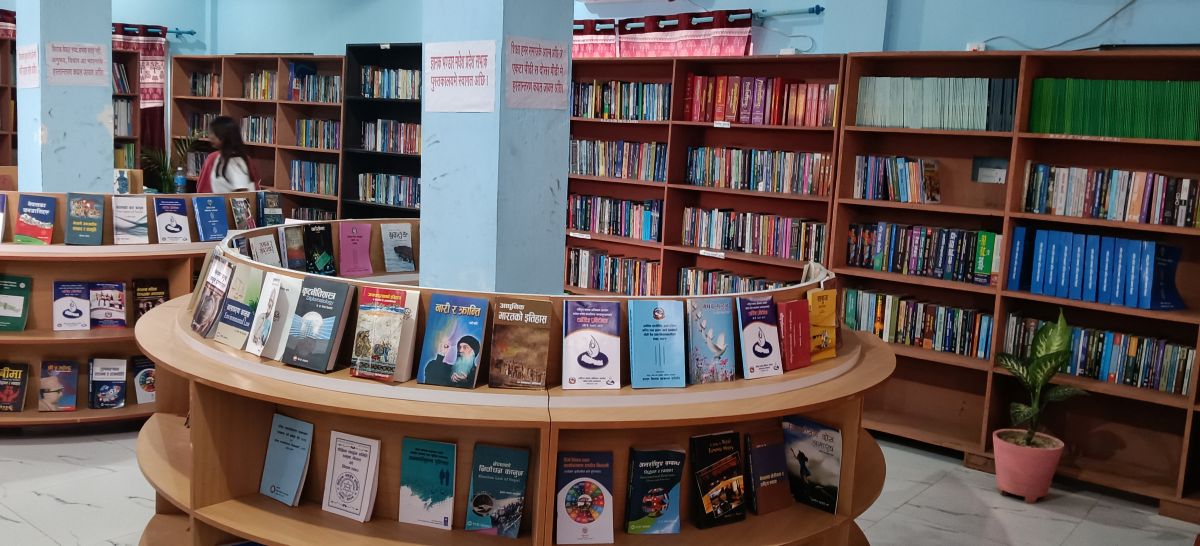
As an effort to turn this vision into practice, the library established within the Madhesh Provincial Assembly premises is viewed as a far-reaching and welcome achievement in the province’s parliamentary history.
A library is not just a room to store books; it is a convergence of ideas, a repository of experiences, and a center of knowledge that guides future decisions. Realizing the need for lawmakers to thoroughly study and form perspectives on bills, budgets, public policies, development plans, and issues of public concern presented in the assembly, this library was brought into operation within the Provincial Assembly Secretariat premises.
It is expected to provide lawmakers, staff, legal professionals, researchers, media personnel, and students with necessary reference materials from a single location.
Operating since June 18, the library houses books related to the Constitution of Nepal, federal and provincial laws, parliamentary procedure documents, public policy, economy, federalism, political history, sociology, agriculture, education, health, women and children’s rights, environment, local governance, international relations, and democratic practices.
Furthermore, there are plans to systematically collect the minutes of provincial assembly meetings, committee reports, bills, annual reports, and other important records over time, according to Basu Prasad Koirala, Secretary of the Provincial Assembly Secretariat. He states that this will also play a crucial role in preserving the institutional memory of the provincial assembly.
“The utility of this library will not be limited only to lawmakers,” he says. “We expect it to become an important study center for the staff of the Provincial Assembly Secretariat, university students, policy analysts, researchers, and media personnel as well.” He adds that the library can serve as an effective resource, particularly for preparing evidence-based news, research, and analytical pieces.
Before passing a bill, a serious study of its social, economic, legal, and administrative impacts is necessary. In developed democratic nations, a tradition has been established where lawmakers present their views in parliament only after studying facts, reports, and international practices obtained from libraries and research centers. Ram Ashish Yadav, Speaker of the Madhesh Provincial Assembly, states that the library will serve as a strong foundation toward institutionalizing that very practice in the Madhesh Provincial Assembly.
With the library operational, an environment will develop where lawmakers can prepare topically and debate with facts. “We expect the library to make the discussions within the parliament more mature, balanced, and result-oriented,” Speaker Yadav says. “There is a plan to connect the library with modern technology according to the demands of time.” Speaker Yadav notes that the plan includes fully implementing the concept of a digital library in the future by gradually converting books, archives, and reports into a digital system, and arranging for e-books, digital archives, online search systems, and electronic reference materials.
He believes that the library established within the assembly premises will serve as a shared center of knowledge for lawmakers, staff, media personnel, researchers, and anyone interested in studies. Informing that more than 500 books are currently available in the library, Speaker Yadav states that an e-library will be brought into operation in the near future.
He adds that the establishment of the library will enhance the institutional capacity of the provincial assembly and further strengthen studious, accountable, and visionary parliamentary practices.