Kathmandu
Friday, July 17, 2026






KATHMANDU: Nepal News presents today’s snapshot of Nepal’s economic activities. Get quick updates on major market movements, policy shifts, and financial developments shaping the economy of Nepal. Here are the key economic highlights for today:
NRB Collects Rs 50 Billion Via Deposit Collection Instrument
Nepal Rastra Bank (NRB) absorbed Rs 50 billion from the banking system on Friday to manage excess liquidity. The Monetary Management Department of Nepal Rastra Bank or NRB conducted the auction for the 90-day deposit collection instrument. Only licensed A, B, and C class financial institutions were eligible to participate in the competitive bidding, with the principal and interest repayments scheduled for October 15 this year. The auction prioritized lower interest rate proposals, and institutions failing to maintain sufficient balance for settlement face potential blacklisting.
Fiscal Year 2026/27 Budget Formally Takes Effect Today
The federal budget for the fiscal year 2026/27, totaling Rs 2.12 trillion, officially went into effect today, Friday. Originally presented by Finance Minister Swarnim Wagle on May 29 this year, this comprehensive financial framework prioritizes macroeconomic stability, structural reform, and infrastructure development. The total outlay allocates 59.8 percent (Rs 1.27 trillion) toward recurrent expenditure, 20.3 percent (Rs 431.10 billion) for capital projects, and 19.9 percent (Rs 422.24 billion) for financial management. With a 25.2 percent increase over the previous fiscal estimates, the government intends to catalyze economic productivity and enhance public service delivery through this strategic budgetary expansion.
NEPSE Up 79.74 Points, Turnover Reaches Rs 4.575 Billion
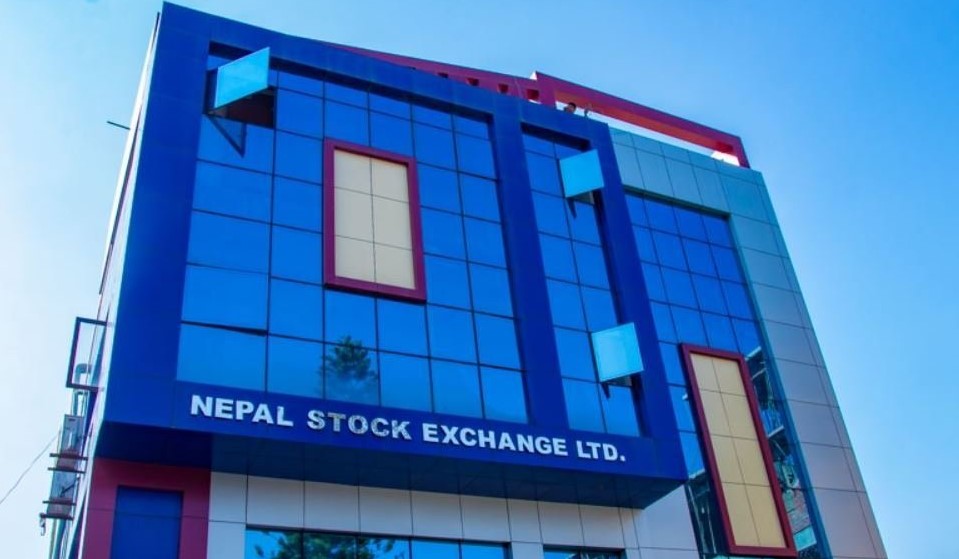
The Nepal Stock Exchange (NEPSE) index surged 79.74 points, or 3.06 percent, to close at 2,677.54 on Friday, by the Manufacturing and Processing sector at 4.60 percent. Shreenagar Agritech Industries Limited reached the positive circuit, while Ankhu Khola Hydropower Company led turnover with Rs 222.3 million. Conversely, Aatmanirbhar Laghubitta Bittiya Sanstha declined 15 percent on its trading debut. Corporate Development Bank and Reliance Spinning Mills also saw high activity, recording turnovers exceeding Rs 175 million and Rs 155 million, respectively.
PM Balen Pledges Support to Domestic Footwear Industry
Prime Minister Balendra Shah (Balen) pledged government support to bolster the domestic footwear industry on Friday, aiming to promote import substitution, expand exports, and create local jobs. During a meeting with the Footwear Manufacturers Association of Nepal (FMAN), the Prime Minister committed to inter-governmental coordination for skill-based manufacturing training and private-sector-led branding. The government will also refine oversight of imported raw materials to prioritize domestic production. FMAN representatives urged the government to curb cross-border smuggling, bring informal imports into the tax and VAT system, and enforce mandatory quality testing for international footwear products.
Govt. Collects Rs 50.10 Billion in Final 3 Days of FY 2025/26
The government collected approximately Rs 50.10 billion in revenue during the final three days of the fiscal year 2025/26, according to data from the Financial Comptroller General Office (FCGO). The collection breakdown for the period of July 14 to July 16, 2026, shows Rs 16.50 billion on July 14, a peak of Rs 21.17 billion on July 15, and Rs 12.43 billion on July 16. This end-of-year total represents a decline compared to the Rs 64 billion collected during the same three-day period in the previous year. The FCGO also noted that the annual revenue growth rate slowed to 5 percent, contrasting with the 17 percent average growth rate maintained between 2012 and 2022.
Capital Expenditure Hits Six-Year Low in Fiscal Year 2025/26
The Financial Comptroller General Office (FCGO) reported that Nepal’s capital expenditure for the fiscal year 2025/26 reached only 46.79 percent (Rs 190.84 billion) of the Rs 407.88 billion budget, a six-year low. Development spending was hampered by political instability, including leadership transitions under Sushila Karki and Balendra Shah. Conversely, current expenditure hit 88.4 percent (Rs 1.04 trillion), and financial management spending reached 92.56 percent. With total revenue collection at Rs 1.24 trillion, just 83.87 percent of the Rs 1.48 trillion target, the government continues to struggle with heavy recurrent costs, undermining essential infrastructure development.
Major Changes in Tax System and Monetary Policy from Today
A major economic shift began today, Friday, with the start of the new fiscal year 2026/27, activating a comprehensive overhaul of tax structures, public salaries, and monetary policies. The government doubled the entry-level 1 percent income tax threshold to Rs 1 million and reduced the maximum personal tax rate from 39 percent to 29 percent. Additionally, government salaries increased by 21 percent. Industrial import procedures were streamlined, with customs tiers reduced from 11 to 7, lowering raw material costs for 273 items and eliminating excise duties on 360 products. New levies include a 5 percent VAT on electricity exceeding 50 units, a 3 percent equity fee on private services, and a 0.5 percent skill promotion fee on gold and silver. The NRB targets inflation under 5.5 percent.
Govt. Supplies 561,493 Metric Tons of Chemical Fertilizer in Last FY
The Ministry of Agriculture and Livestock Development announced that the government successfully supplied 561,493.85 metric tons of chemical fertilizer by July 8, reaching nearly 94 percent of the annual target. For the previous fiscal year, a budget of Rs 28.821 billion was allocated. Total sales, including previous inventory, reached 518,278.55 metric tons, consisting of 307,016.60 metric tons of urea, 192,931.15 metric tons of DAP, and 18,330.80 metric tons of potash. As of the reported date, 92,592.35 metric tons remained in stock across national warehouses, with 288.75 metric tons currently in transit.
Sudurpashchim Plunges into Budget Vacuum, Rs 37.70 Billion Allocation Stalled
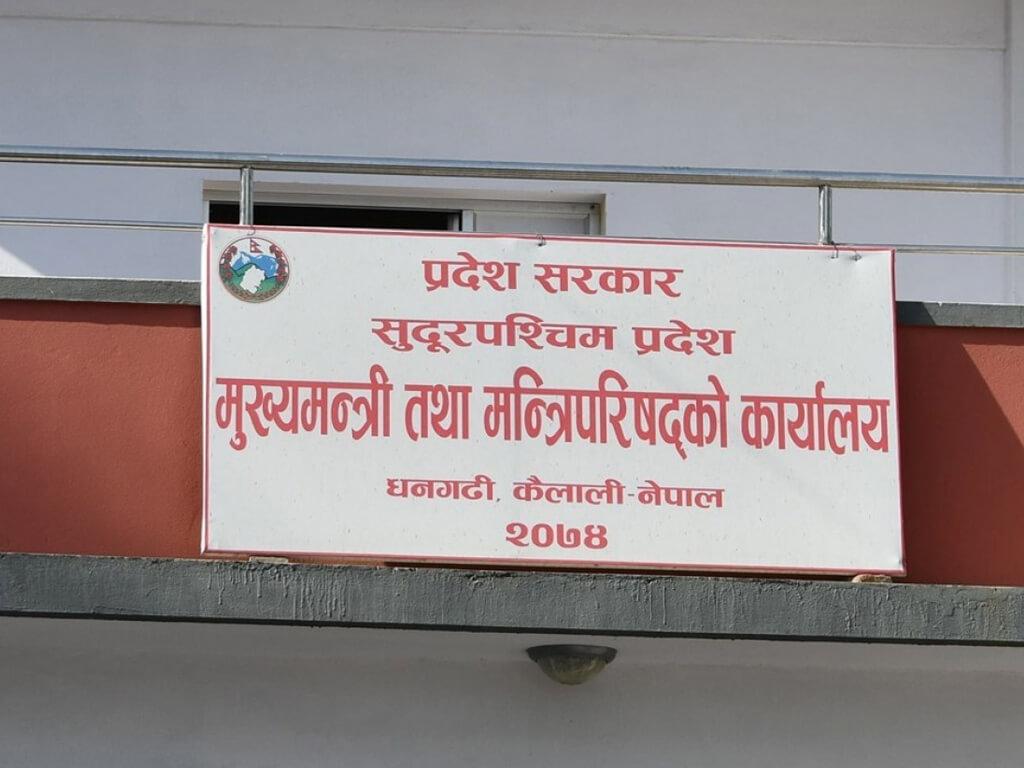
Sudurpashchim Province has entered a budget holiday with the start of the new fiscal year 2026/27 after the provincial assembly failed to pass the proposed Rs 37.70 billion budget. The government, led by Chief Minister Kamal Bahadur Shah, was reduced to a minority following the withdrawal of support by the CPN (UML) and could not even bring an advance budget via ordinance. While the Provincial Comptroller General’s Office confirmed that government expenditure is now completely halted, revenue collection will continue uninterrupted under last year’s laws. This marks a repeat of a similar political crisis from the fiscal year 2024/25, when the province faced a two-month budget vacuum until a second budget was eventually passed.
Transport Department Implements Online Revenue Payment System
The Department of Transport Management launched a fully digital revenue payment system effective today to enhance convenience for driving license applicants. Alongside the new online service platform for license issuance and renewal, the system allows service seekers to settle all required government fees directly through digital channels. Applicants can further streamline their documentation by utilizing the auto-fill feature via the National Identity Card or the Citizen App QR code. The Department of Transport Management has also established a dedicated official email channel for the public to report any technical grievances or payment-related inquiries.
Ministry Recovers Rs 467 Million Additional Industrial Rent Arrears
The Ministry of Industry, Commerce, and Supplies aggressively intensified the recovery of rent arrears from industries within government-owned industrial zones. Following a directive from Minister Gauri Yadav, the ministry collected Rs 566,092 on Thursday, bringing the total recovered amount to Rs 467.3 million. While power supply has been restored to five compliant industries, 21 companies remain without electricity. Notably, Continental Component and Services and Continental Services currently owe Rs 37.5 million and Rs 10.1 million, respectively.
Secretary of India’s Ministry Inspects Arun-III Hydropower Project
Ministry of Power of India Secretary Pankaj Agarwal visited Sankhuwasabha on Thursday to inspect the 900 megawatts Arun-III hydropower project. Accompanied by Indian Ambassador to Nepal Naveen Srivastava and Central Electricity Authority of India Chairman Ghanshyam Prasad, the delegation reviewed progress at the Pukhuwa powerhouse and Phyaksinda dam site. Agarwal praised the construction pace, urging the SJVN Arun-III Power Development Company to prioritize quality and sustainability. CEO Pankaj Chaudhary briefed the team on ongoing community development and environmental initiatives for the project.
Monsoon Inactivity Stalls Paddy Transplantation in Dhanusha
The Dhanusha district faces severe agricultural stagnation as the lack of timely rainfall has severely hampered paddy transplantation. With fields cracking due to dry conditions and irrigation facilities largely unavailable, farmers are witnessing their prepared seedlings turn yellow in the nursery beds. Local farmers, including Govinda Yadav, expressed concern that without significant rainfall within the next few days, the seedlings will be completely destroyed. Furthermore, relying on motor-pump irrigation has become financially unsustainable for most, as the rising costs of fuel and electricity, coupled with the fear of reduced crop yields, deepen the distress within the farming community.
Gold Traded at Rs 282,100; Silver at Rs 4,200
Gold and silver prices dropped significantly in the market today. According to the Federation of Nepal Gold and Silver Dealers’ Association, the price of gold plummeted by Rs 3,100 per tola (11.66 grams), bringing the trading price down to Rs 282,100 per tola. On Thursday, gold had traded at Rs 285,200 per tola. Similarly, silver prices also experienced a decline today. The Federation reported that the price of silver dropped by Rs 125 per tola, with the metal currently trading at Rs 4,200 per tola. On Thursday, silver was priced at Rs 4,325 per tola.