Kathmandu
Tuesday, July 21, 2026





Investigations into recent burglaries across Madhesh Province reveal that a rising number of arrested suspects are regular drug users who turn to petty theft to fund their immediate substance habits
DHANUSHA: Stepping into vacant houses, breaking open temple donation boxes, and selling stolen mobile phones, utensils, or other household goods cheaply to scrap shops have become a prominent trend among thieves. According to police, a significant portion of such burglaries across various districts of Madhesh Province is driven by an immediate need to secure quick cash for purchasing drugs.
Not all theft events are connected with drugs. However, while understanding the background of many adolescents and youths arrested in theft, police officials say they were found to be regular drug users. Madhusudan Neupane, Deputy Superintendent of Police and Spokesperson of the District Police Office Dhanusha, says, “Among those arrested in theft events, many individuals have been found to be drug users as well.”
According to Nabin Mallik, director of SPARSHA Nepal, a non-profit, community-focused NGO dedicated to health and human rights in Nepal, which has been working in the sector of drug control, youths trapped in addiction initially try to collect the necessary money to buy drugs from family and friends. “Initially, they ask for loans from friends or take money from the family in the name of various expenses,” Mallik says, “after stopping to get money in that manner, the risk of committing theft increases.”
He states that many users have been found to commit theft of goods from their own house for the first time. His statement is that taking mobile phones, utensils, clothes, and other easily sellable goods, they spend the amount derived from that to buy drugs. After the family starts knowing that goods are being lost, it increases surveillance.
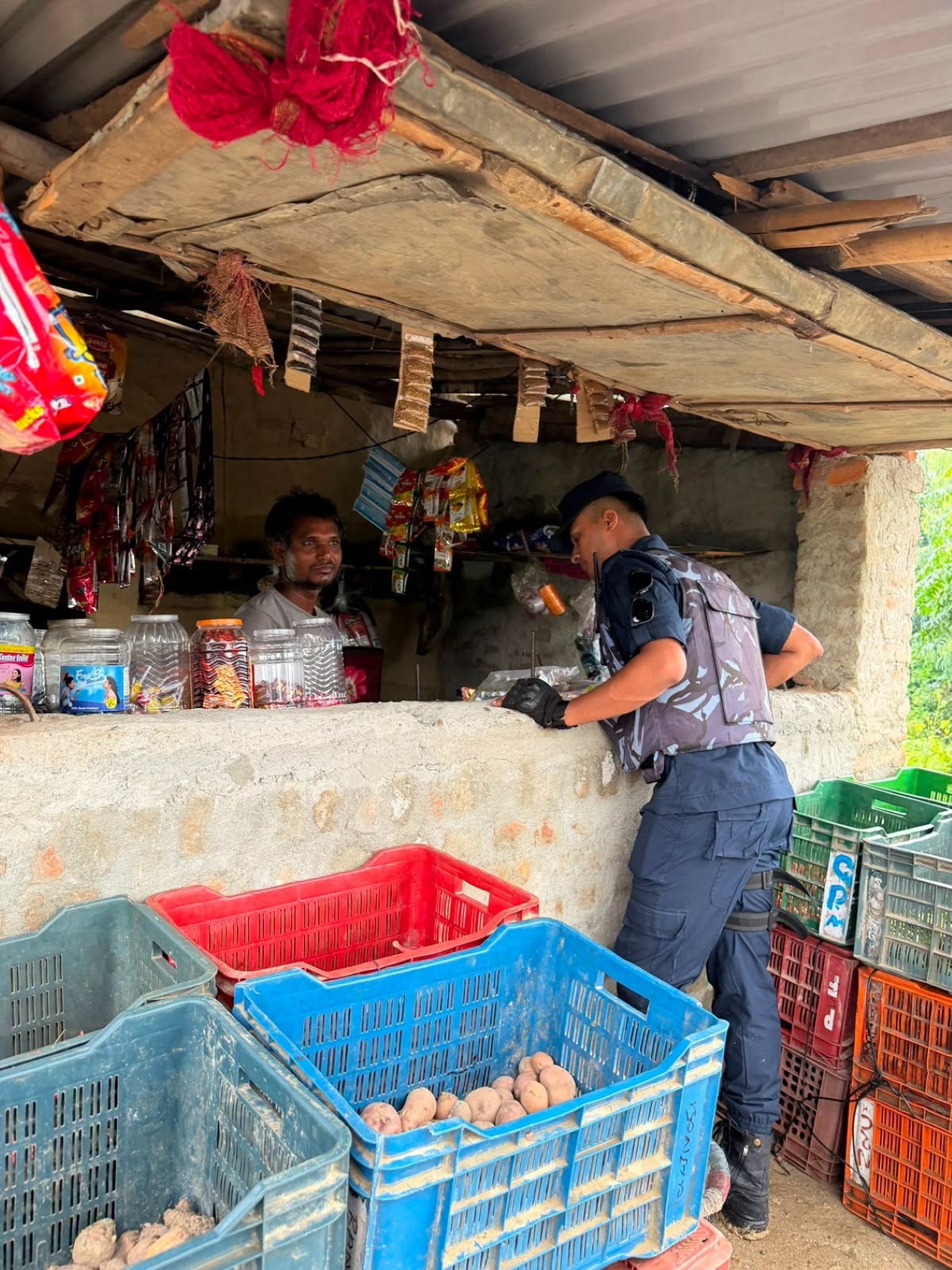
Security personnel pictured during a monitoring inspection around the border area of Sarlahi
Mallik states that after a situation comes where one cannot take money or goods from home, many users start eyeing the houses of neighbors. “In villages, taking advantage of the opportunity when family members have gone outside for labor or other work, events of taking goods inside the house have also been seen,” he says, “when the number of users increases, such social problems also increase.”
As dependency on drugs keeps increasing, users need money regularly. Stakeholders say that many adolescents and youths who do not have a legitimate earning pressure the family to collect that amount, ask with friends, or steal minor goods.
The police say that as addiction deepens, theft does not remain limited to accidental behavior only. Police officials say that an investigation also starts being made as to where to sell the goods, which house people do not reside in, and which object can be easily changed into cash.
Open border, easy transportation
The Nepal-India open border has connected the residents of Madhesh socially and economically. However, the police say that very easy movement has become a challenge for drug control.
Many banned medicines used in the form of drugs are found relatively easily in markets across the border. The statement of the police is that some youths go to India to consume such medicines and many bring them to Nepal by buying.
Neupane, spokesperson of the District Police Office Dhanusha, states that because of the open border, it has become difficult to stop drug transportation. Therefore, his statement is that drug control and awareness programs are being operated in border areas.
Activists say that apart from going across the border oneself and buying drugs, there are also individuals or groups who make them available in Nepal itself. According to them, such individuals or groups bring drugs from across the border taking money from the user.
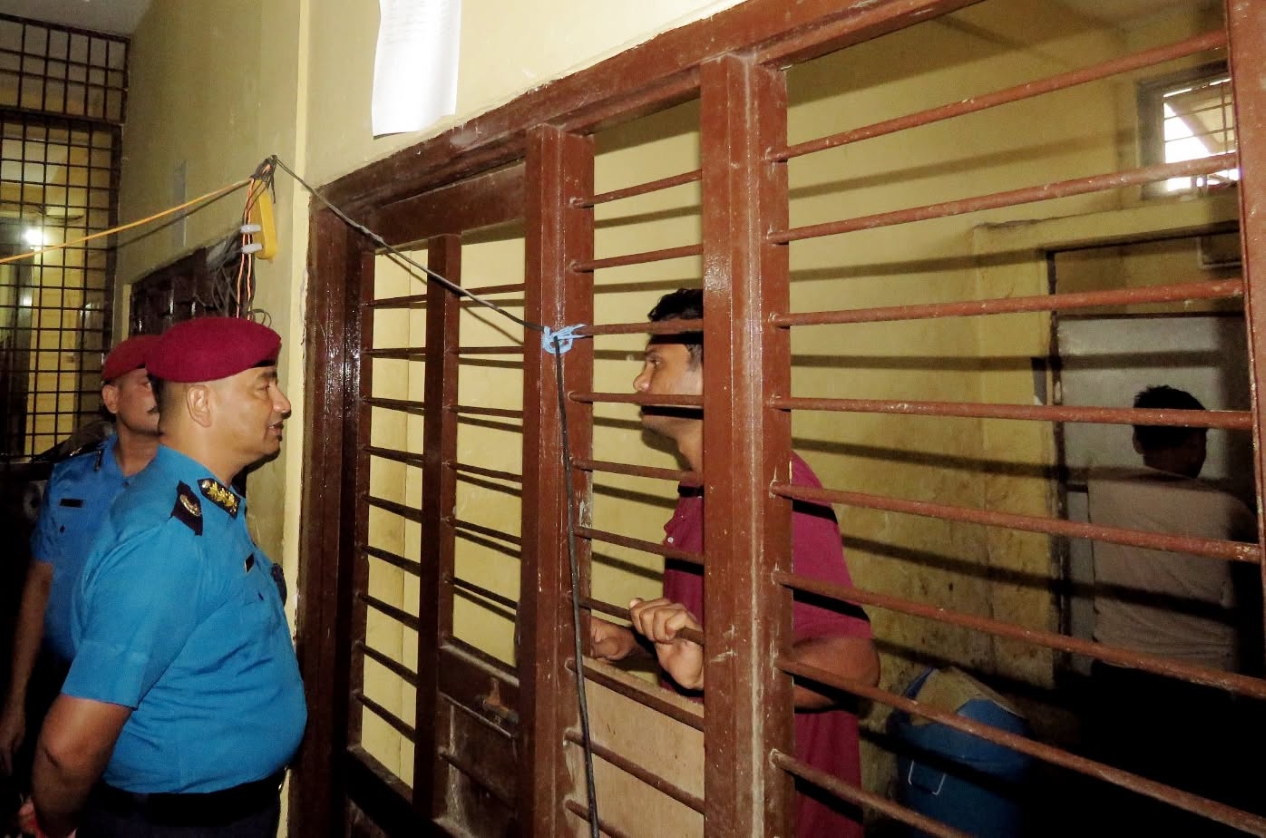
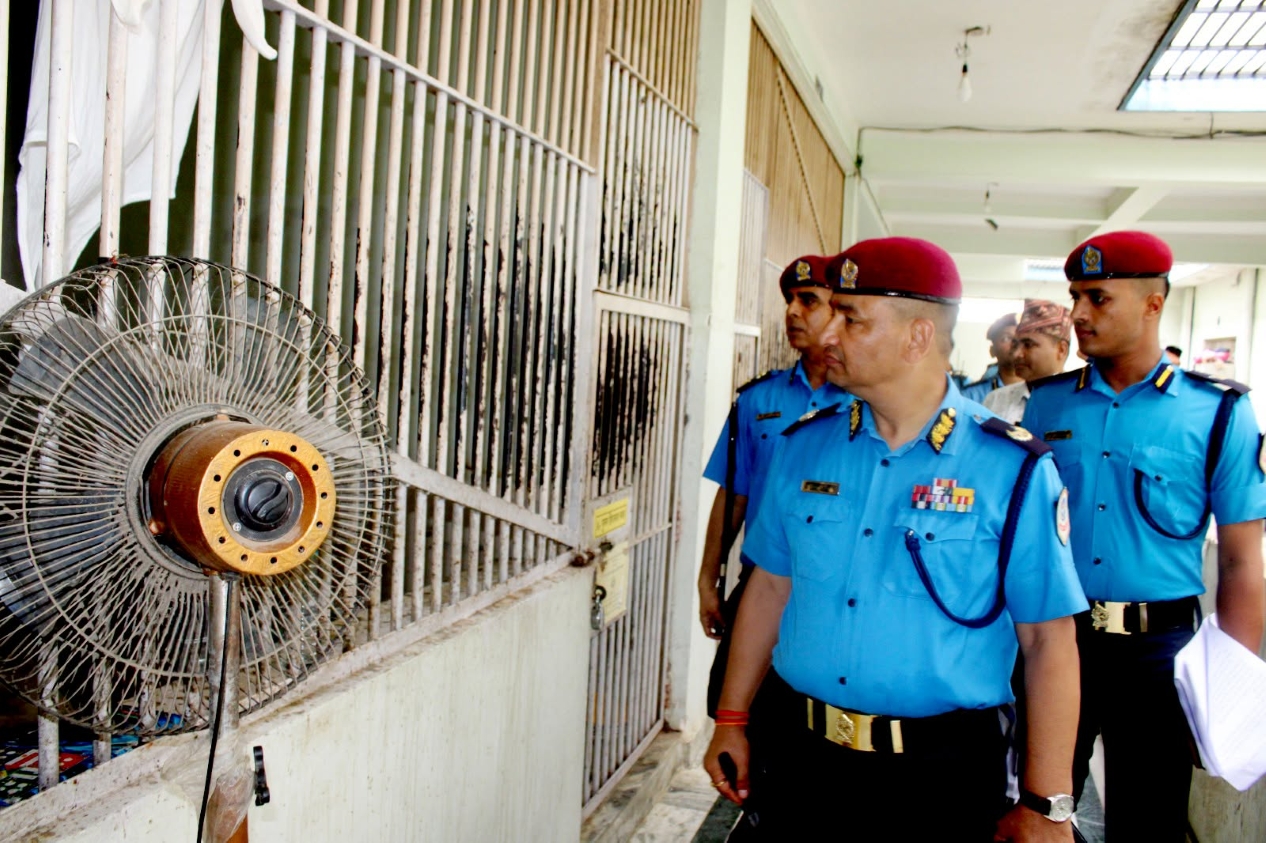
Madhesh Province Deputy Inspector General of Police Om Prasad Adhikari pictured while interacting with a detainee
When drugs reach the village, adolescents and youths of school and college age fall into risk. According to the police, among the users, the number in the 15 to 28-year age group is significant.
According to the statistics of the Madhesh Province Police, among drug users, about 14 percent are younger than 20 years. The police say there is a risk of starting drug use in adolescence itself under the influence of friends and later being pushed toward crime when being unable to bear the expense of that.
Fluctuations in theft events
According to details received from the police headquarters, in the fiscal year 2020/2021, at least 565 events of theft were registered in Madhesh Province.
In the fiscal year 2021/22, at least 665; in 2022/23, at least 705; in 2023/24, at least 554; and in 2024/25, at least 469 events have been registered. Until June 14 of the fiscal year 2025/26, some 519 events of theft have been registered.
However, police officials say that the registered events do not show the entire picture of theft.
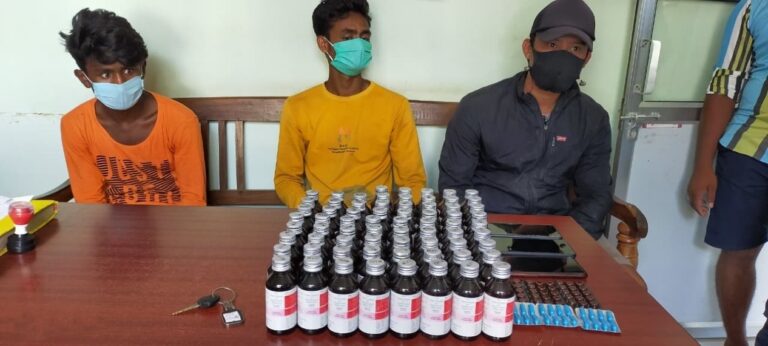
Teenagers arrested with drugs
According to Superintendent of Police Bishwaraj Khadka, who remained working in the District Police Office Dhanusha for a long time and is currently in the Police Headquarters, there is a tendency where, after the stolen goods are found, the victim takes back the goods but refuses to give a first information report. “After the victim does not give a first information report, it becomes difficult to advance the theft case,” Khadka says, “in many situations, a case has to be run on other offenses including indecent behavior.”
He states that because of this very reason, the exact number of individuals arrested for theft and connected with drug use does not come in police statistics.
According to Khadka, while understanding the health condition and background of many youths arrested in small and big events of theft, they are found to be regular users of drugs. “Their purpose is to sell the stolen goods cheaply and buy drugs,” he says, “it has been found that they steal donation boxes of temples, take goods after knowing no one is at home, and sell them in scrap.”
Family’s concern after the problem deepens
Activists say that in the initial stage of drug use, the family takes the change coming in behavior in a normal manner. Only after money starts being lost from home, goods are sold, or problems start occurring in the neighborhood does the family come to know about the addiction.
By that time, many youths have already reached police custody. The family keeps some in rehabilitation centers. However, stakeholders say that the number, quality, treatment method of rehabilitation centers, and social rehabilitation after treatment are challenging in themselves.
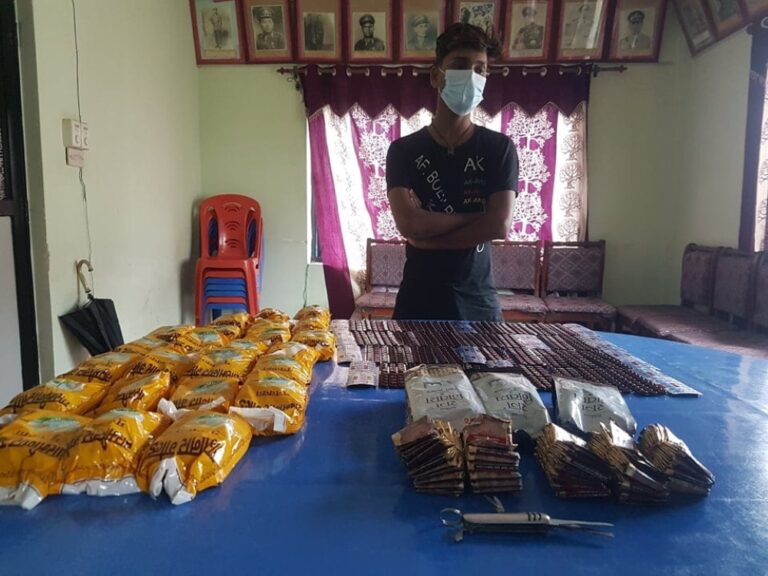
Youth arrested with illegal drugs
Phakira Mahato, the Minister for Home Affairs, Communications and Law of Madhesh Province, states that the provincial government is ready to provide necessary resources and means to the police for drug control.
“Through the establishment of rehabilitation centers and awareness programs, youths must be brought out from addiction,” Mahato says, “the government is ready to provide necessary resources, means, and budget to the police for control.”