Kathmandu
Wednesday, July 22, 2026





As tensions over the historic site deepen, preserving its heritage requires scientific excavation, rigorous historical research, and consensus rather than symbolic construction and competing historical claims.
KATHMANDU: For the past few weeks, a dispute surrounding the historic Bijaypur area has been escalating. What should have progressed toward healthy debate and a constructive solution has instead grown increasingly complex. If the involved parties lose patience and restraint, it will yield no positive outcome. Therefore, all stakeholders tied to this dispute must sit down together and find a timely solution. Otherwise, this issue risks escalating into a broader social conflict.
Bijaypur is a prominent historical site in Nepal. Historical accounts suggest that Bijaypur began to flourish after King Bijayanarayan shifted his royal seat to this location from Baratappa in Morang. In several old letters and genealogies, Bijayanarayan is referred to as the ‘King of Morang.’ History records that after he was displaced, the Sen rulers of Makawanpur were established as the kings of Bijaypur around the 16th century.
Historian Baburam Acharya noted that a tradition existed here of appointing Yaktungs—that is, Limbus—as Chautariya (Prime Minister) or chief minister. Historian Ramesh Dhungel has similarly mentioned that while the Sens were culturally the monarchs, administrative and political power in Bijaypur remained in the hands of the Limbu Hangs (chiefs).
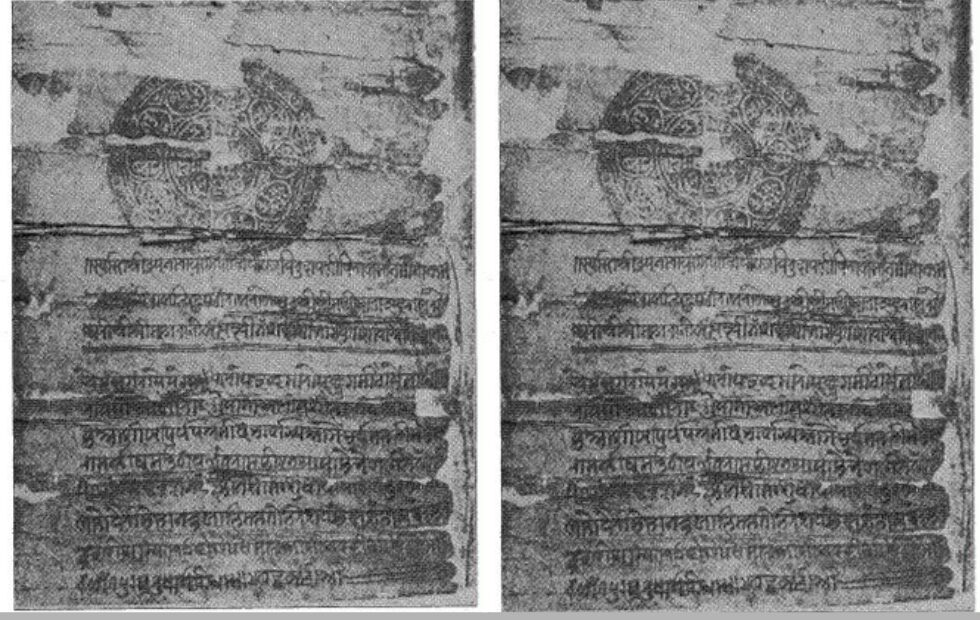
A royal seal (mohar) issued in 1706 AD by Queen Induvidhata Sen of Bijaypur. Photo source: Janak Lal Sharma
In the genealogy of the Putlunghang Dewans of the Yakkha community, Bijaypur’s chief ministers Chokha Rai, Bichitra Rai, Sirikanta Rai, Jaskarna Rai, and Buddhikarna Rai are listed as their ancestors. Similarly, the Tigela Khewa and Ningleku lineages of the Limbu community claim Bijaypur’s last chief minister, Buddhikarna Rai, as their forefather in their family genealogies.
A comparative and impartial study of available records, genealogies, and other evidence is needed to reach a conclusion regarding whose ancestors these historical figures truly are. More importantly, however, Bijaypur represents a shared historical heritage for the entire nation. A collaborative effort is essential for its preservation.
Currently, instead of an intellectual debate grounded in evidence and historical sources, a trend of posturing, aggression, and verbal abuse has emerged. If the bitterness visible on social media turns into a long-term conflict, the campaign to preserve Bijaypur itself will be undermined. Therefore, historians, archaeologists, local communities, concerned organizations, and the local government must lose no time in sitting down together to resolve the disputed issues.
Let’s gather archaeological relics
Dharan is one of Eastern Nepal’s most prominent cities due to its sports, art, literature, and tourism. Yet despite its profound historical significance, the local Bijaypur Palace area remains neglected and underappreciated.
At one time, bunker-style strongholds protected the Bijaypur area. Today, these have all been buried or encroached upon by unplanned settlements.
Dharane residents alone cannot be blamed for the failure to preserve the historic Bijaypur Palace complex. During the long-standing Panchayat system, no interest was shown in preserving Sen-era heritage. As a result, Sen-era palaces and forts fell into ruin. Makawanpurgadhi and Hariharpurgadhi remain in a fragile state, and even in Palpa—the core territory of the Sens—no meaningful initiatives were taken to preserve Sen-era heritage. Bijaypur suffered the exact same fate.
The state failed to develop a perspective that recognized the heritage of dynasties defeated by the Shah dynasty as part of the country’s collective historical legacy. Due to this bias, it is difficult today to find even intact ancient bricks from the Bijaypur Palace grounds.
During unchecked urban settlement, ancient bricks and stones from this site were repurposed to construct private homes and boundary walls. Immediate attention must now be focused on searching for, documenting, collecting, and protecting the remaining archaeological artifacts.
Halt new concrete structures
Curious trends periodically sweep across our country. Once a specific structure or concept becomes popular, a tendency emerges to replicate it without considering its necessity or utility. This pattern is evident everywhere, from view towers to various cultural installations.
In this vein, vast sums of money have been wasted on unproductive projects by erecting various symbols at intersections. A competitive rush is underway to install representations of the chindo (traditional vessel), silamsakma (cultural emblem), trishul (trident), and other symbols. The dispute in the Bijaypur area escalated further after a chindo and a trishul were installed there. Prior to this, a concrete Panchakanya temple had already been constructed.
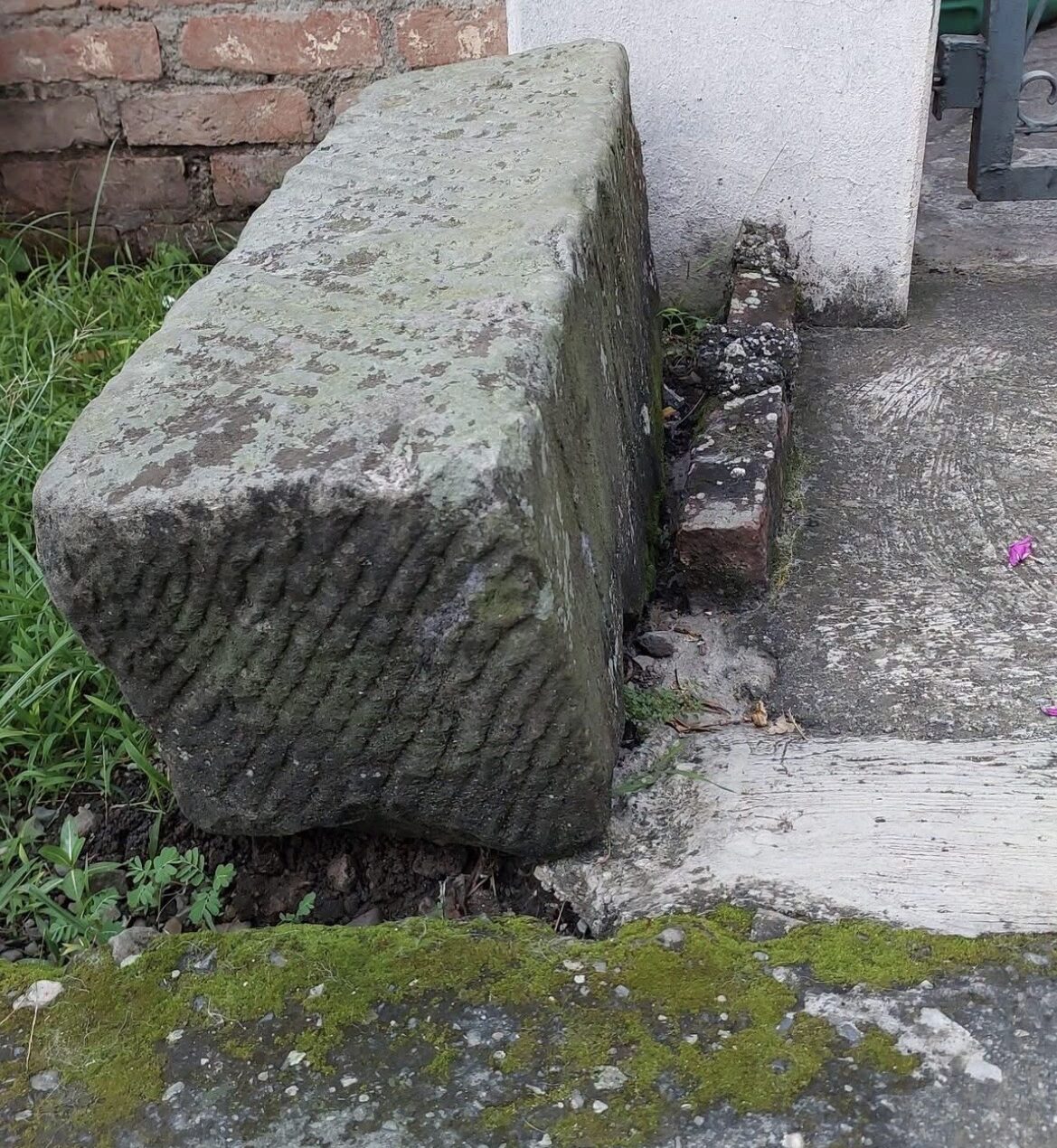
A carved stone discovered in the Bijaypur area. Photo source: Pradeep Menyangbo
An ancient, historically significant archaeological site like the Bijaypur Palace area does not require concrete chindos, silamsakmas, trishuls, or any other symbols. Nor is it appropriate to erect statues of any king, chief minister, or Chautariya there.
Destroying ancient structures to build new concrete monuments on a historical site is like the story of Kalidasa cutting down the very branch he was sitting on. What Bijaypur needs today is not the construction of new structures, but a scientific excavation of the old palace area, the preservation of its foundations and relics, and the documentation of its historical form. That would be a truly crucial and historic step.
Let’s build a museum
Archaeological and historical heritage sites are repositories of knowledge. Therefore, the primary duty is to protect them.
Previously, voices were raised to protect this historic and archaeological area by preventing the construction of a water tank in Bijaypur. Now, no new structures should be built in the name of any community, religion, or culture. New constructions ruin the authenticity of a historic site and heighten the risk of losing ancient artifacts.
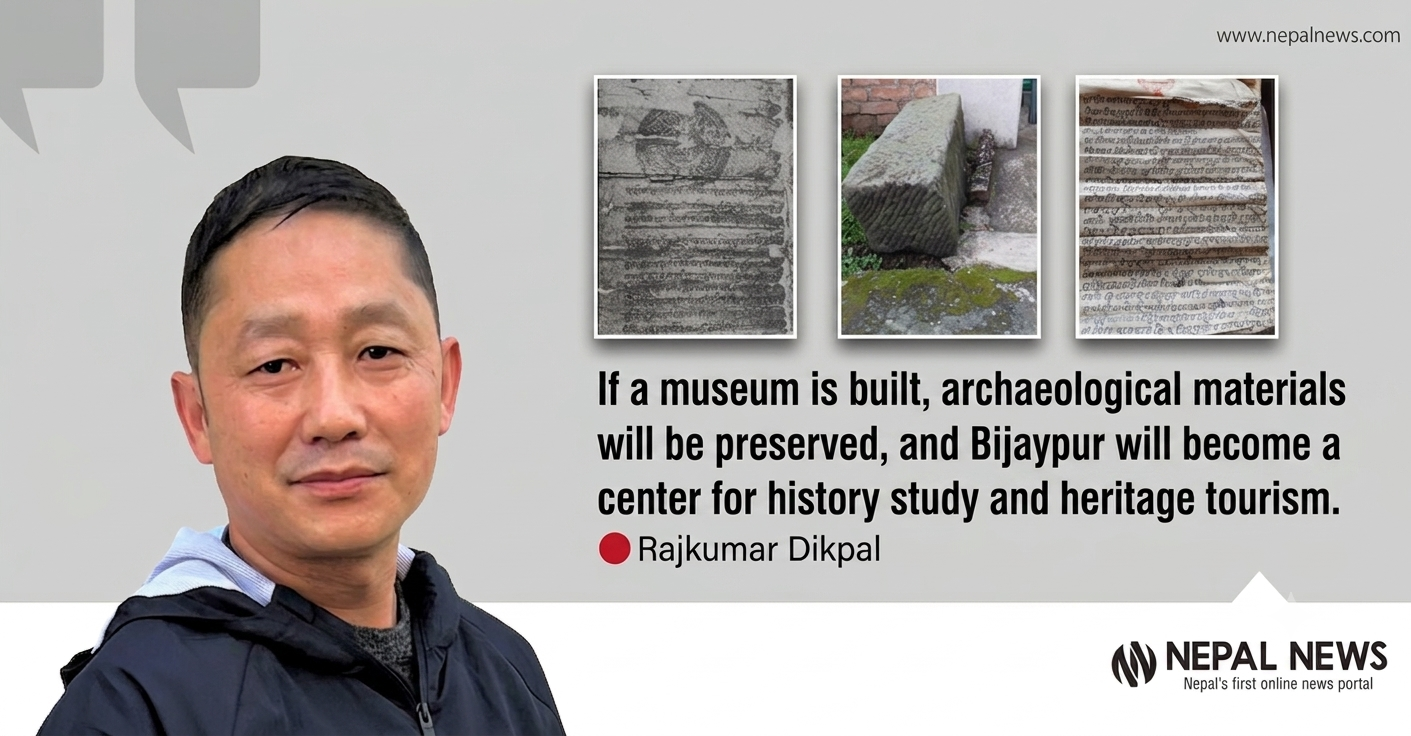
A scientific excavation must be conducted at the site identified as the palace complex. To preserve items recovered during excavation—such as historical letters, genealogies, coins, royal seals, weapons, bricks, stones, and other artifacts—a museum can be established a short distance away from the primary core area. Doing so will keep the history of Bijaypur alive.
Because a museum serves as a learning center, it can attract researchers, students, and tourists interested in history, archaeology, and heritage tourism to Bijaypur.
Let us write the history
Iman Singh Chemjong made a significant contribution by writing History of Bijaypur during the Kirat Period. The shortcomings and gaps in that work now need to be revised and refined on the basis of new evidence.
Historian Prof. Tek Bahadur Shrestha is understood to be researching the history of Bijaypur. New facts and analysis can be expected from him and other historians. Numerous historical letters concerning Bijaypur are available; building upon that foundation, new facts about Bijaypur’s history can be uncovered.
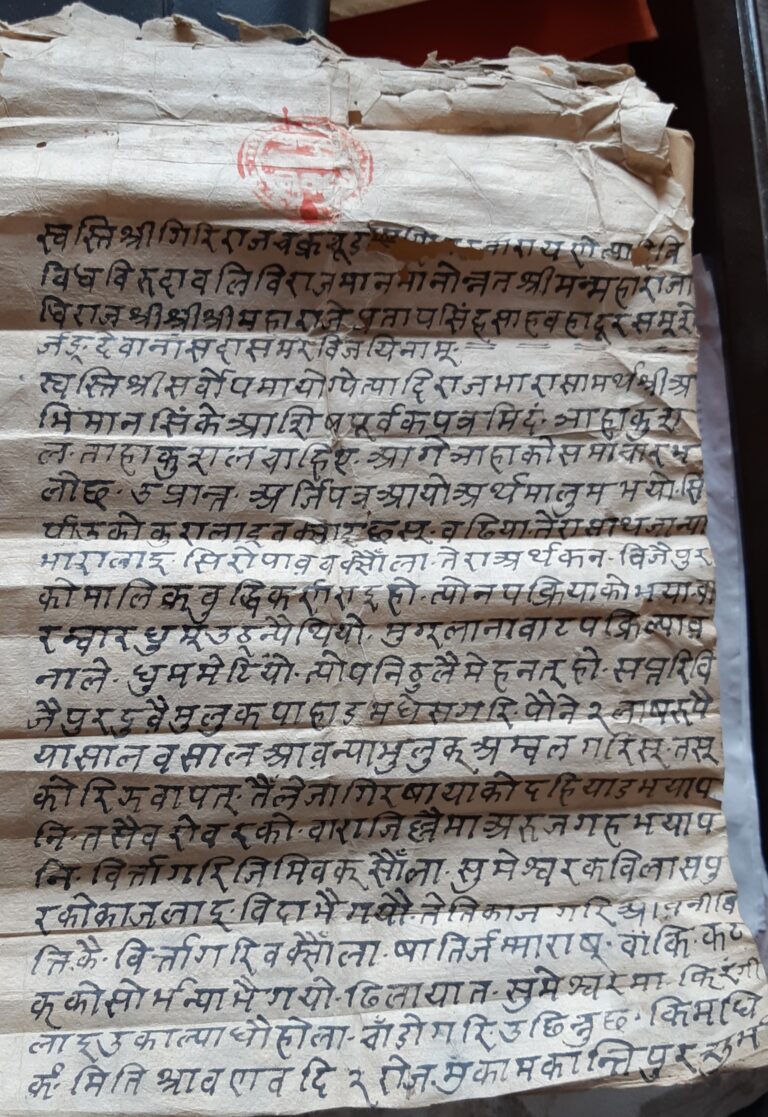
A letter written by King Pratap Singh Shah to Kaji Abhiman Singh Basnet after the killing of Bijaypur’s Chief Minister Buddhikarna Rai. Photo source: Niranjan Man Singh Basnet
Since the country transitioned to a federal structure, local governments have gained greater authority and autonomy than before. However, many local municipalities have concentrated their authority solely on constructing physical infrastructure—much of which is unproductive and disconnected from local needs. The Bijaypur Palace area falls within Dharan Sub-Metropolitan City, yet the sub-metropolitan leadership appears to have taken no initiative to commission a systematic history of the site.
A municipality’s responsibilities are not limited merely to constructing roads, buildings, entrance gates, and other physical structures. Researching, documenting, and preserving local history, language, culture, and intangible heritage must also be a top priority.
Therefore, let us resolve the dispute surrounding Bijaypur now. Raising or planting one’s own cultural symbols in Bijaypur does not elevate ethnic or communal pride. Being allowed or forbidden to do so should not be made a matter of community prestige. Its preservation is impossible through mutual conflict. Let us all unite to save Bijaypur, one of the nation’s most vital historic treasures.