Kathmandu
Thursday, July 23, 2026





Silence, stigma, and misunderstanding continue to fuel preventable deaths. Open conversations, responsible media coverage, and accessible mental health services can make the difference between life and death.
KATHMANDU: There are two types of people in the world. One group considers themselves immortal. They claim that the path they walk is the best and attempt to make their own ideas the standard for others. They speak in an arrogant tone, as if they were born on the moon and came to visit Earth. The other group, no matter how well or how much good they do, always sees themselves as guilty. They view themselves as inferior. Perhaps this self-loathing and constant despair ultimately leads them to the decision to end their lives.
Regardless of the background into which a person is born, everyone possesses a single brain. Within this brain reside happiness, sadness, pain, thoughts of self-destruction, or the desire to live forever. Throughout human history, stories of life and death have been written time and again. Some chose suicide despite being wealthy. Others endured disease, pain, and deprivation, yet fought through life until their last breath. However, in society, the history of those who commit suicide remains stigmatized in every era. It appears to be linked with fear, shame, and terror. Incidents of suicide are hidden; society marks them with stigma.
During my study of counseling psychology and in my subsequent work, I had the opportunity to hear, see, and understand the stories of those who lost their lives to suicide. These experiences repeated themselves during the supervision of psychosocial counselors. Yet one question always lingered: Why is a person ultimately willing to end their own life? Why does a point arrive where one no longer feels like living? Is it the result of an impulse, a feeling of running out of hope, or the influence of mental illness?
The answer is not simple. Various studies show that its causes are multidimensional. The outcome can be broken down and viewed through biological, psychological, social, and cultural perspectives. Some people struggle with stress and depression. Others experience the death of loved ones, illness, separation, chronic illness, or financial crises. Many have to go through social stigma, discrimination, and divorce. Somewhere I read, “A human is born an angel, but society later turns them into a toad.” Perhaps this statement attempts to convey the negative impact society has on individuals.
Studies indicate that more than 700,000 people die by suicide worldwide every year. From Aristotle to modern times, the core principle of positive psychology is that humans seek happiness and satisfaction. Similarly, according to Charles Darwin’s principle of self-preservation, the desire to live is innate, or one wishes to live for hundreds of years. Dr. Mark Leary’s work explains that individuals who choose the path of suicide do not primarily want to end their lives.
Through suicide, a person does not lose only themselves. They leave behind various dependents in pain. This impacts the individual as well as their family and society. Some studies show that a single suicide can directly affect up to 135 people. The survivors fall victim to grief, guilt, the pain of loss, social stigma, and shame. Every year on September 10, World Suicide Prevention Day is observed. In Nepal, data shows that an average of 18 people commit suicide daily.
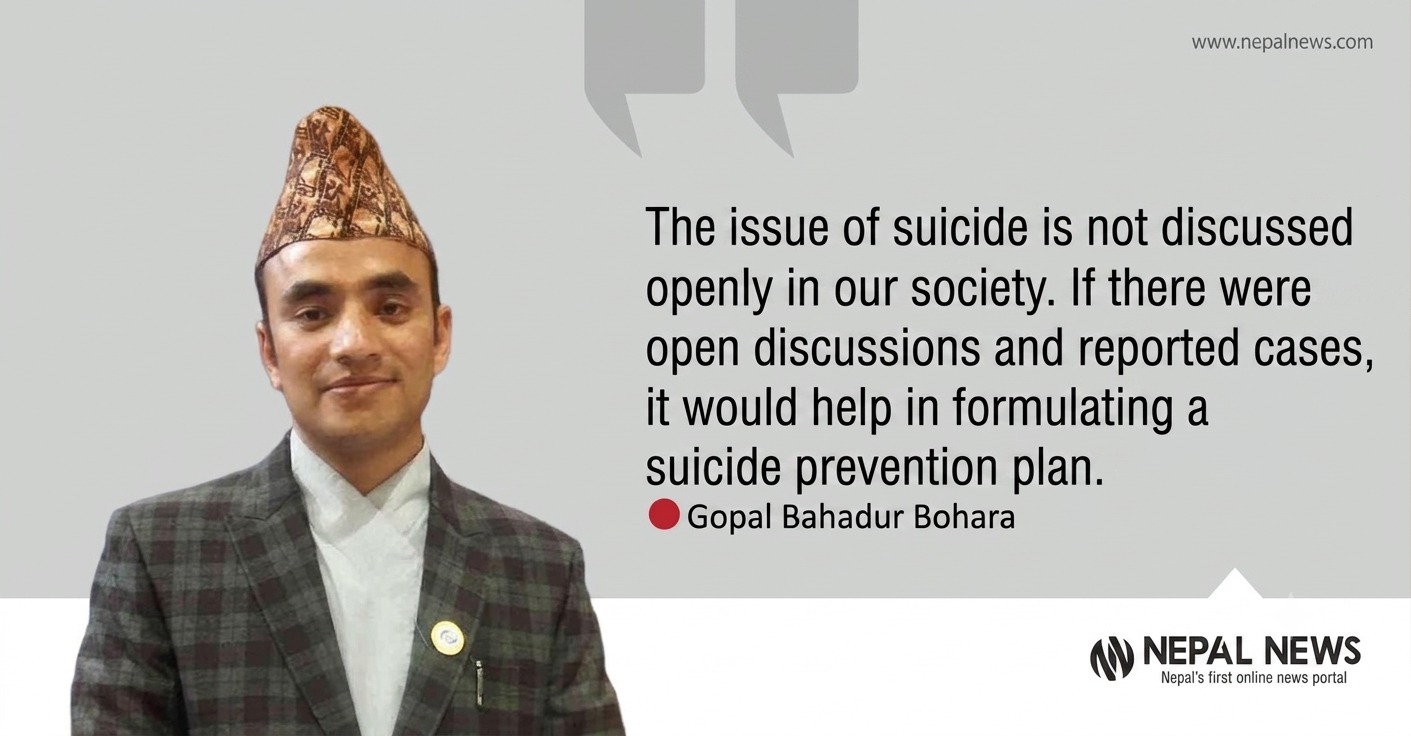
According to psychology, suicide is often not merely a desire to end life; people may choose the path of suicide due to unbearable mental and emotional pain, situational stress, mental or emotional illness, or after running out of hope. However, open discussions about suicide are rarely seen in our society. Having open discussions and proper reporting on this topic would help in planning suicide prevention strategies. For this, open dialogues should be conducted in communities, schools, workplaces, and everywhere.
The role of the media is also crucial in this regard. Instead of presenting suicide incidents sensationally, space should be given to stories of hope and success achieved in life. Furthermore, as recommended by the World Health Organization, priority should be given to reducing access to means that can be used for suicide, teaching life skills to young people, identifying individuals at risk early to connect them with treatment, and implementing effective policies and strategies.
Suicide prevention is everyone’s shared responsibility. Many lives can be saved if signs of suicide are identified early and necessary support and treatment are provided. If needed, one can contact the nearest health institution or seek help from psychosocial counselors, psychologists, and psychiatrists. Those experiencing mental stress can call the toll-free helpline 1166 for counseling.
(Bohara is a psychologist.)