Kathmandu
Thursday, July 23, 2026





The 69-year-old orthopedic surgeon and health reform campaigner accuses the Balen Shah government of ignoring a July 21 deadline and repeating a pattern of broken promises that has defined Nepal's health sector politics since 2012
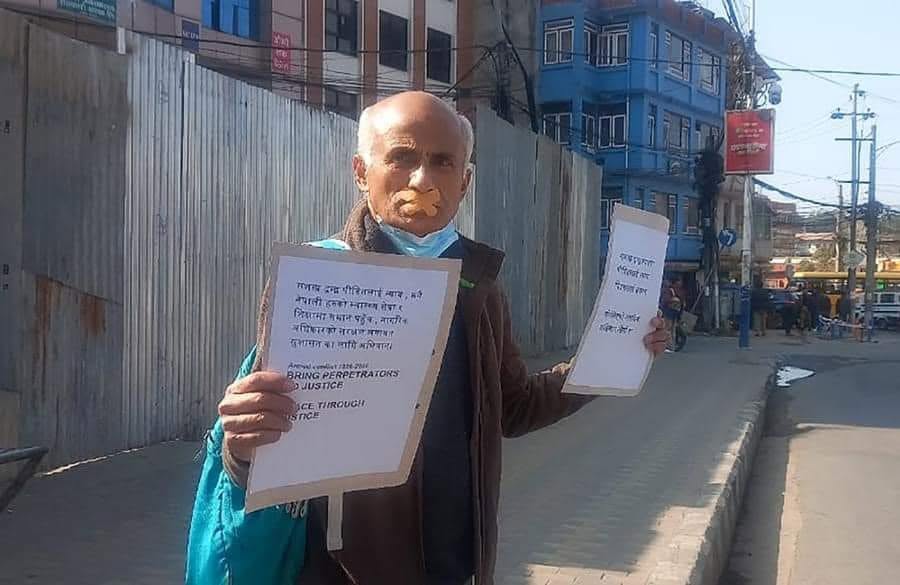
KATHMANDU: Senior orthopedic surgeon and lifelong healthcare reform campaigner Dr Govinda KC began his 24th fast-unto-death on Thursday (July 23) at the Krishna Temple Dharmashala (a pligrim rest house) in Dhangadhi, Kailali district. The protest follows the government’s failure to act on his demands despite his own extended deadline of July 21.
Dr KC has used fasting as his central tool of pressure since 2012, repeatedly forcing successive governments back to the negotiating table over the direction of Nepal’s medical education and health services.
Why is Dr Govinda KC restarting his hunger strike again and what triggered this specific fast?
The immediate trigger goes back to July 7, 2026, when the government appointed Devendra Khatri, a retired Major General of the Nepali Army, as vice-chairperson of the Medical Education Commission. Dr KC publicly objected within days, arguing that the appointment was made without an open application process and reflected a predetermined agenda favoring people connected to private medical college interests.
On July 17, he issued a formal three-point ultimatum giving the government until July 21 to reverse the appointment, withdraw proposals to cut scholarships and expand seats in private medical colleges without adequate infrastructure, and begin enforcing the non-profit provisions of the National Medical Education Act.
When the deadline passed without government action, Dr KC, who had already traveled through Kanchanpur and Kailali districts in the preceding days, launched his 24th fast at the Krishna Temple Dharmashala in Dhangadhi on the afternoon of July 23.
Who is Dr Govinda KC and why does a single individual’s protest carry so much weight in Nepal?
Dr Govinda KC is a senior orthopedic surgeon who spent decades as a professor at Tribhuvan University Teaching Hospital, part of Nepal’s Institute of Medicine, before retiring due to age restrictions in 2019. He built his reputation partly through humanitarian medical work in remote parts of Nepal and in international disaster zones including India, Pakistan, Myanmar, Haiti, and the Philippines, often self-financed without accepting money from non-governmental organizations.
Since 2012, he has emerged as Nepal’s most consistent and visible voice against the commercialization of medical education, repeatedly using extended hunger strikes to force government action.
His personal austerity, refusal to accept comforts even during his protests, and long record of confronting powerful political and business interests connected to private medical colleges have given him a moral authority that few other civic figures in Nepal command, making his fasts a recurring national event rather than a routine protest.
What exactly are Dr KC’s demands behind this 24th fast?
Dr. Govinda KC’s demands behind his 24th fast center on reforming medical education, halting commercialization in healthcare, improving rural service access, and demanding accountability for corruption and governance failures.
At the core of his demands is an immediate end to political patronage and conflict-of-interest appointments within health and regulatory bodies.
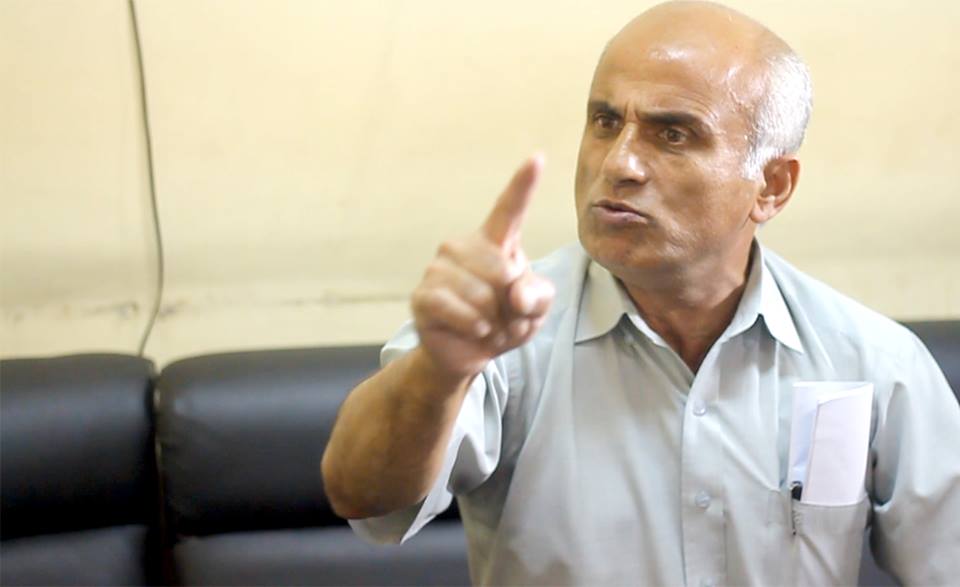
Dr Govinda KC. File photo
He is calling for the prompt cancellation of controversial leadership appointments—specifically at the Medical Education Commission and the Martyr Dasharath Chand University of Health Sciences—which he argues were made to serve private commercial interests.
To protect public medical training, Dr. KC demands that the government scrap plans to reduce student scholarship quotas while simultaneously blocking unmonitored seat increases in sub-standard private medical, dental, and nursing colleges. He further insists on the strict implementation of the National Medical Education Act, 2019, which mandates making medical education fully non-profit by 2028, alongside honoring all past written agreements signed between him and former governments.
Beyond core medical sector reforms, Dr. KC’s demands address regional equity and broader anti-corruption measures. He urges the state to rapidly prioritize health, education, and transportation infrastructure in Sudurpashchim and other neglected border regions so that citizens are no longer forced to rely on neighboring countries for basic care and livelihoods.
Finally, taking a strong stance on state accountability, he demands strict legal action against those responsible for the violence, murders, arson, and looting during the September 2025 protests, as well as an impartial, high-level investigation into all political corruption and financial crimes committed by officials since the restoration of democracy in 1990.
What happened with the appointment of Devendra Khatri that turned into the immediate flashpoint?
The Medical Education Commission is the regulatory body created under the 2019 act to oversee entrance examinations, college affiliation, and standards across Nepal’s medical education sector, making its leadership positions highly consequential for the direction of the entire industry.
When the government appointed Devendra Khatri, a retired Major General, as the commission’s vice-chairperson on July 7, Dr KC argued that the process bypassed calling for open applications and effectively pre-selected an individual whose background raised conflict-of-interest concerns rather than opening the post to qualified education or health sector professionals.
Dr KC has previously accused successive commissions and appointing authorities of allowing individuals connected to private medical college ownership or management to shape decisions that regulatory bodies are meant to oversee independently.
The Khatri appointment became, in his framing, another example of exactly the kind of politically convenient appointment his movement has spent over a decade trying to prevent.
What is the history of Dr KC’s earlier hunger strikes and what have they actually achieved?
Dr KC has staged fasts since his first protest in July 2012, with this year’s action marking his 24th. Over that period, his campaigns have produced tangible results, including pressure that led to the passage of the National Medical Education Act in January 2019 and the creation of the Medical Education Commission itself, both demands he had pushed for years earlier.
His 15th fast in 2018 ended with a nine-point agreement barring new medical colleges in Kathmandu Valley for a decade. His 20th fast in 2022 ended with a ten-point deal, and his 19th fast in 2020 ended after 28 days with an eight-point agreement following criticism that the government had shown indifference to his deteriorating health.
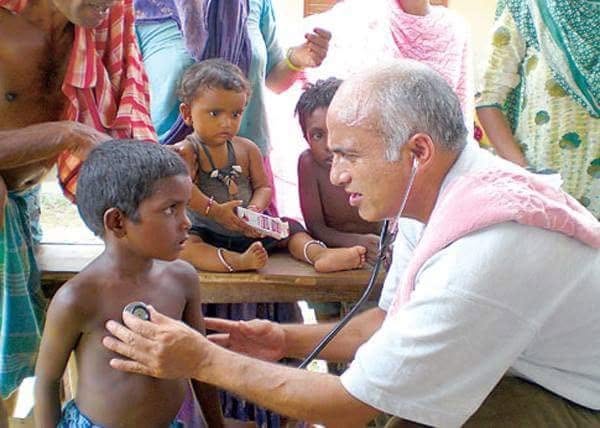
Dr. KC during a door-to-door health campaign in the remote Terai region of the country. File photo
However, a consistent pattern has emerged across nearly all of these episodes: agreements get signed under pressure, some provisions are implemented, but others lapse once public attention fades, prompting Dr KC to return to fasting again within months or years to demand the same commitments be honored.
What is the National Medical Education Act of 2018, and why is its implementation so contested?
The National Medical Education Act was passed by Nepal’s House of Representatives on January 25, 2019, following years of pressure from Dr KC’s movement and despite opposition objections that the final bill dropped several recommendations made by a technical committee led by former Tribhuvan University vice-chancellor Kedar Bhakta Mathema.
The act established the Medical Education Commission as an empowered regulator over medical college affiliation and standards, capped the number of colleges a university can affiliate with, and phased out certificate-level health programs. Crucially for the current dispute, the act also contains provisions intended to convert medical education into a fully non-profit sector, with a target date around 2028.
Dr KC argues successive governments have slow-walked this non-profit transition, allowing private investors, some of whom are politically connected lawmakers or businesspeople, to continue treating medical colleges as commercial ventures rather than moving toward the public service model the law envisions.
What controversies have surrounded Dr KC’s methods and this movement over the years?
Dr KC’s tactics have drawn both admiration and criticism. Supporters view his personal sacrifice, refusing food for weeks while showing no interest in personal gain, as a uniquely credible form of accountability in a political system otherwise dominated by transactional bargaining.
Critics, including some private medical college operators and certain politicians, argue that repeated indefinite fasting amounts to coercive pressure that bypasses normal legislative and administrative processes, forcing governments to negotiate under a health emergency rather than through deliberation.
There have also been specific flashpoints, including a 2020 episode when police forcibly took him to Kathmandu’s National Trauma Centre against his wishes upon landing from Nepalgunj, sparking public backlash over his treatment.
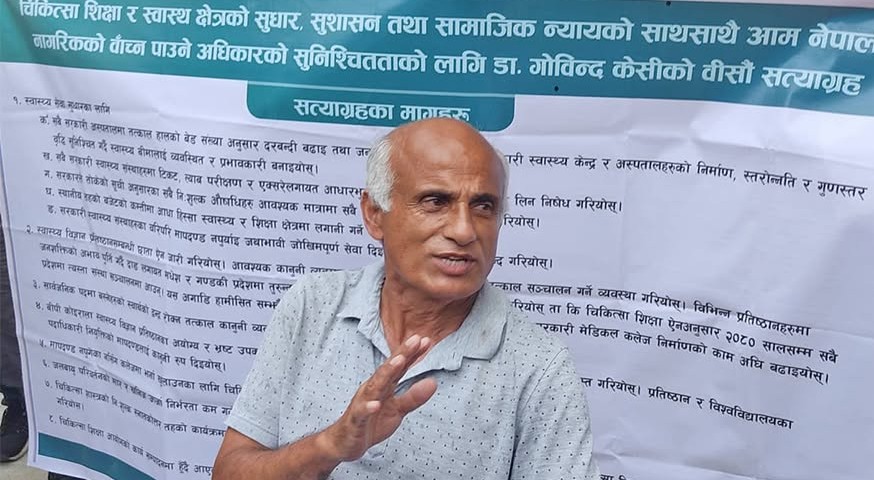
Dr. KC commences hunger strike in 2022 at the Krishna Mandir Dharamshala in Dhangadhi
Earlier, in 2015, then Prime Minister Sushil Koirala’s dismissive response to concerns about KC’s deteriorating health, reportedly replying “so what,” became a major point of public anger that intensified support for the movement rather than weakening it.
Why is it so difficult for successive governments to fully satisfy Dr KC’s demands?
Part of the difficulty lies in the deep entrenchment of private capital in Nepal’s medical education sector. In one especially stark December 2014 episode, 146 lawmakers, most from CPN (UML), were found to have signed a document defending a proposed medical college affiliation in which they held financial shares, illustrating how directly elected politicians can be personally invested in resisting reform.
Beyond individual conflicts of interest, converting a multi-billion rupee private medical education industry into a genuinely non-profit sector by any target date requires unwinding existing ownership structures, investment expectations, and employment arrangements built up over years, a process governments have been reluctant to force through quickly.
Additionally, Nepal’s frequent changes in government, with new coalitions and ministers regularly replacing predecessors, mean that agreements signed with one administration often lose political priority once a different government takes office, even when the underlying law remains unchanged on paper.
How have past and present governments typically reacted to Dr KC’s fasts?
The pattern across more than a decade has been fairly consistent, regardless of which party led the government. Administrations initially tend to delay engagement, sometimes dismissing the protest publicly, before escalating concern as Dr KC’s health visibly deteriorates and pressure from the public and medical community mounts.
Negotiating teams, often involving a coordinating minister, senior secretaries, and sometimes the prime minister directly, are then formed to reach a written agreement, frequently late at night after Dr KC’s condition becomes critical.
This sequence played out under governments led by figures from the Nepali Congress, the CPN (UML), and coalition arrangements involving multiple parties, remaining essentially unchanged from the 2014 fast against a politically appointed dean through the 2020 and 2022 fasts.
The Balen Shah government has now been criticized for ignoring a July 21 deadline, raising concerns that it may be repeating a pattern of broken promises that has defined Nepal’s health-sector politics since 2012.
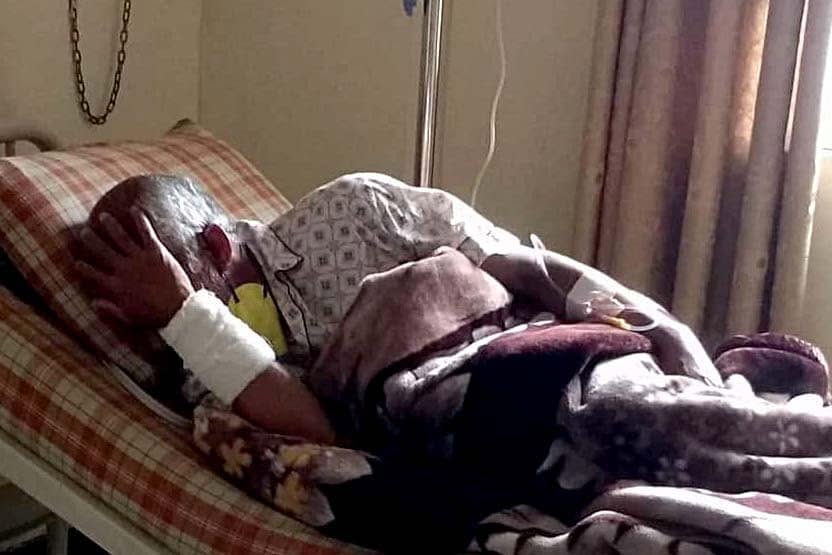
Dr. KC during his 19th hunger strike in 2020
The recurring criticism from health professionals and civil society has been that these agreements function as pressure valves to end an immediate crisis rather than as durable policy commitments that governments intend to fully carry out.
How has the current Balen Shah government responded so far to this latest crisis?
Balendra Shah, popularly known as Balen, became prime minister on March 27, 2026, after his Rastriya Swatantra Party won a landslide victory in the general election held in March, following the youth-led anti-corruption protests of 2025.
Friction between the Balen Shah government and Dr. KC had surfaced as early as April 2026. At the center of the dispute was a cabinet decision, initially passed on March 14, 2026, under interim Prime Minister Sushila Karki and later inherited by Shah’s administration, which granted candidate Ekata Shah a scholarship-backed MBBS seat despite missing the standard merit threshold. Dr. KC prepared to launch a protest over the decision, asserting that bypassing merit requirements compromised the integrity of the Medical Education Act.
The current standoff over the Medical Education Commission vice-chair appointment shows a similar dynamic continuing under this newer, ‘reform-branded’ administration, with Dr KC signaling through his ultimatum and subsequent fast that he does not view the change in government as having altered the underlying pattern of appointments and policy decisions he has spent years opposing.
What does this recurring conflict reveal about the state of Nepal’s health and medical education sector?
The repeated need for an individual doctor to risk his life through fasting merely to get existing laws enforced points to significant institutional weakness in Nepal’s health governance. Regulatory bodies meant to operate independently, such as the Medical Education Commission, appear vulnerable to appointments influenced by political or business considerations rather than technical merit, undermining public confidence in their oversight function.
The persistence of demands around basic issues, such as one government medical college per province or the availability of free essential medicines, more than a decade after Dr KC first raised them, suggests that Nepal’s public health infrastructure has expanded unevenly, leaving significant gaps that private, often costly, providers have filled instead.
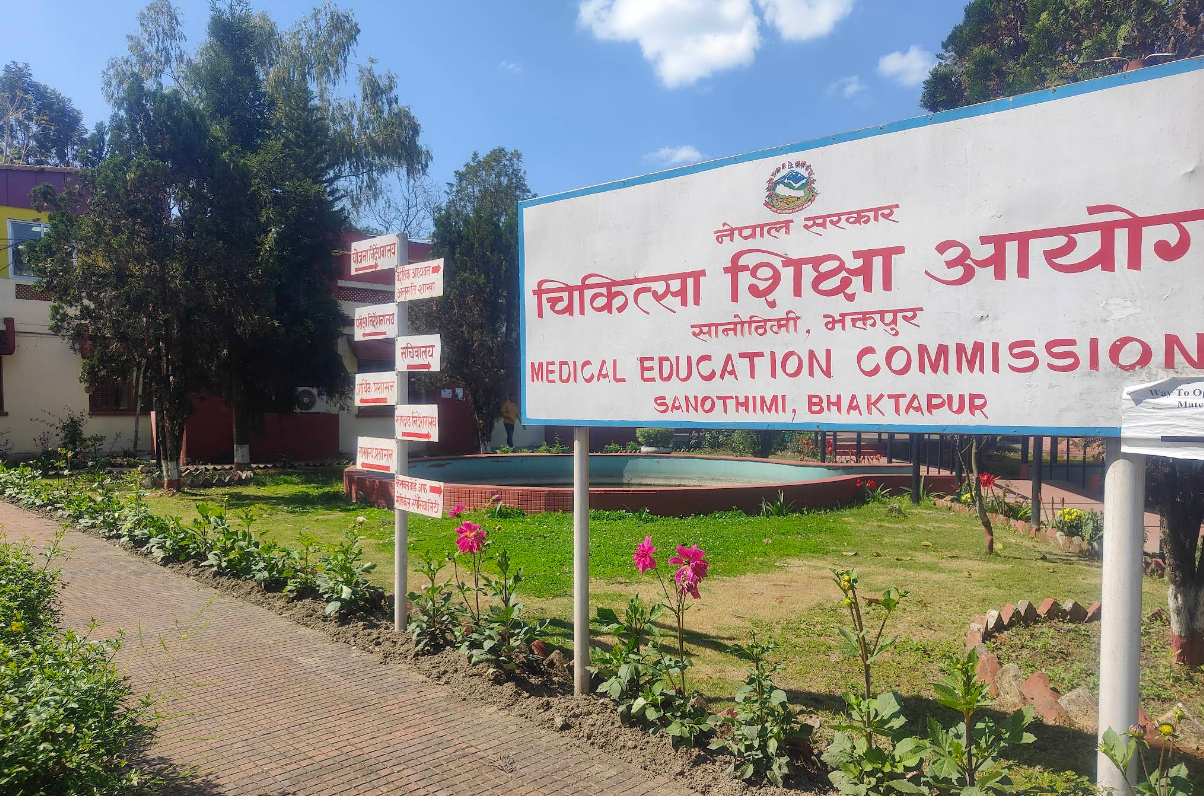
Medical Education Commission. File photo
The dependence on a single high-profile hunger strike to periodically force policy attention also suggests that Nepal’s ordinary parliamentary, judicial, and bureaucratic channels have not proven reliable enough on their own to hold governments accountable to their own laws and prior commitments.
What role do private medical colleges and political interests play in this recurring conflict?
Private medical, dental, and nursing colleges have expanded substantially in Nepal since the 1990s, often filling capacity gaps that government institutions could not meet, but this expansion has also created a powerful commercial lobby with direct financial stakes in maintaining looser regulation, higher student fees, and continued seat expansion.
The 2014 episode involving 146 lawmakers who held shares in a proposed medical college affiliation remains the clearest documented example of how deeply intertwined private investment and political power can become in this sector.
Dr KC’s central argument is that as long as sitting parliamentarians, retired officials, or politically connected individuals hold ownership stakes or influence appointments to bodies like the Medical Education Commission, genuine independent regulation becomes structurally difficult, since the very people meant to enforce standards may have personal financial incentives pointing in the opposite direction, a dynamic he says explains why supposedly settled reforms keep resurfacing as fresh disputes.
What are the risks to Dr KC’s health at this stage of the protest, given his age and history?
Dr KC is 69 years old, and his medical bulletins during past fasts have documented serious physiological deterioration within just two to three weeks of fasting, including critically low blood sugar and electrolyte levels, reduced white blood cell counts that raise infection risk, and diminished lung function in previous episodes.
During his 19th fast in 2020, doctors reported he required intensive care attention that he initially refused, and his 28-day fast that year drew explicit public criticism over the government’s slow response to his declining condition.
Given his advancing age compared to earlier fasts in his fifties and sixties, medical professionals monitoring him this time are likely to face an even narrower safety margin before irreversible organ damage or life-threatening complications could occur, a concern that has historically been a major factor pushing governments toward faster negotiated settlements once his condition becomes public knowledge through hospital bulletins.
What changes would Nepal’s health sector see if all of Dr KC’s current demands were fully implemented?
If the government reversed the contested Medical Education Commission and Dasharath Chand University appointments, medical education regulation would shift toward individuals selected through open, merit-based processes rather than direct political appointment, potentially restoring public confidence in the commission’s independence.
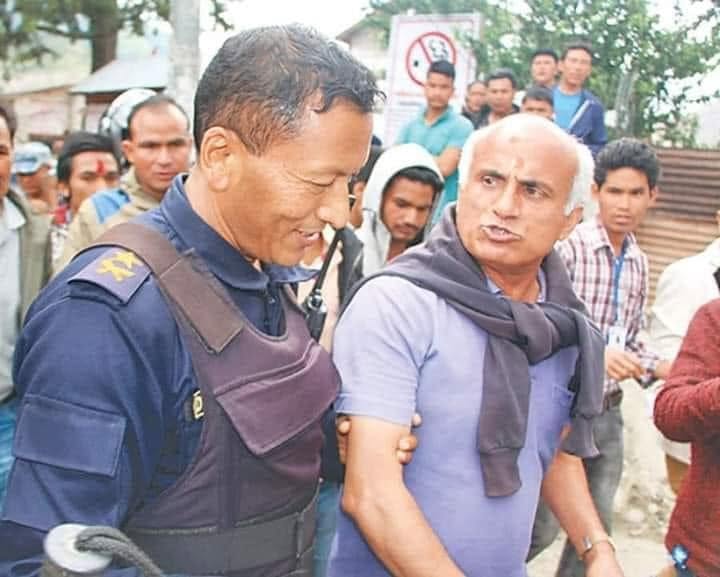
Dr. Govinda KC detained by police in 2020
Withdrawing proposals to cut scholarships while expanding private college seats would slow the growth of for-profit medical training capacity until infrastructure and faculty standards are verified, likely easing concerns about under-qualified graduates entering Nepal’s health workforce.
Most significantly, genuine implementation of the non-profit transition mandated by the 2019 act by 2028 would represent a structural transformation of an industry currently built substantially on private investment and tuition revenue, potentially lowering costs for medical students, reducing the commercial pressures that critics say degrade training quality, and aligning Nepal’s system more closely with the state-backed or non-profit models Dr KC frequently cites in wealthier countries.
What has the reaction been from the medical community and civil society this time around?
Historically, Dr KC’s fasts have triggered visible solidarity from Nepal’s medical profession, including relay hunger strikes organized by the Nepal Medical Association during his 16th fast in 2019, mass doctor resignations during his fourth fast in 2014, and viral social media campaigns such as the hashtag associated with his 2015 fast that generated thousands of posts of public support within days.
Civil society groups, students, and even musicians have previously lent visible backing to his campaigns, framing them as a fight against entrenched corruption rather than a narrow technical dispute over appointments.
Given the pattern of previous fasts, medical professionals and civic groups in Kailali and beyond are likely to organize similar expressions of support in the coming days, particularly if Dr KC’s health begins to visibly deteriorate as it has in nearly every prior extended fast, which has historically been the point at which public pressure on the government intensifies most sharply.
What happens next and what should readers watch for in the coming days?
Based on the pattern of Dr KC’s previous 23 fasts, the most likely near-term developments include a government delegation traveling to Dhangadhi or requesting Dr KC be brought to Kathmandu for negotiations, periodic medical bulletins documenting his physical condition as the fast continues, and eventual talks aimed at producing a written multi-point agreement, though the exact number of days before that happens has varied enormously across past episodes, from as few as three days to as many as 28.
Readers should watch specifically for whether the Balen Shah government moves to reverse the Devendra Khatri appointment, whether any interim commitments are offered regarding the non-profit transition timeline, and whether Dr KC’s health deteriorates to a point requiring hospitalization, since that has historically been the trigger for the fastest government responses.
The durability of any eventual agreement will only become clear well after this fast ends, given that the core grievance behind this 24th protest is precisely the government’s failure to implement past agreements.