Kathmandu
Tuesday, July 28, 2026





The party will replace ward, municipal, and constituency presidents accused of obstructing active membership updates, signaling a tougher stance against the Deuba-Koirala faction while raising fresh uncertainty over the timing of its general convention.
KATHMANDU: Nepali Congress is set to remove Ward, Municipal, and House of Representatives Regional Presidents from their responsibilities if they obstruct the updating, renewal, and distribution of active membership.
The party decided to bypass the relevant presidents where the membership process has been halted, appoint alternative leadership, and advance the work under the direct supervision of the central office. With this decision, the dispute between the establishment group and the Deuba-Koirala faction—which began after the special general convention—has now formally reached the level of disciplinary action.
A meeting of the Central Active Membership Management Committee held on Monday, July 27, decided to seek alternatives to the presidents of House of Representatives electoral regions and subordinate committees who do not cooperate in updating active membership. General Secretary Pradip Paudel coordinates the committee.
“In the case of levels where active membership could not be updated in the digital system due to non-cooperation from the House of Representatives regional and subordinate presidents, alternative arrangements for the presidents will be made to update active membership,” the committee’s decision states.
Although the committee terms it an “alternative arrangement,” it effectively means removing the serving presidents and advancing the membership process through another individual.
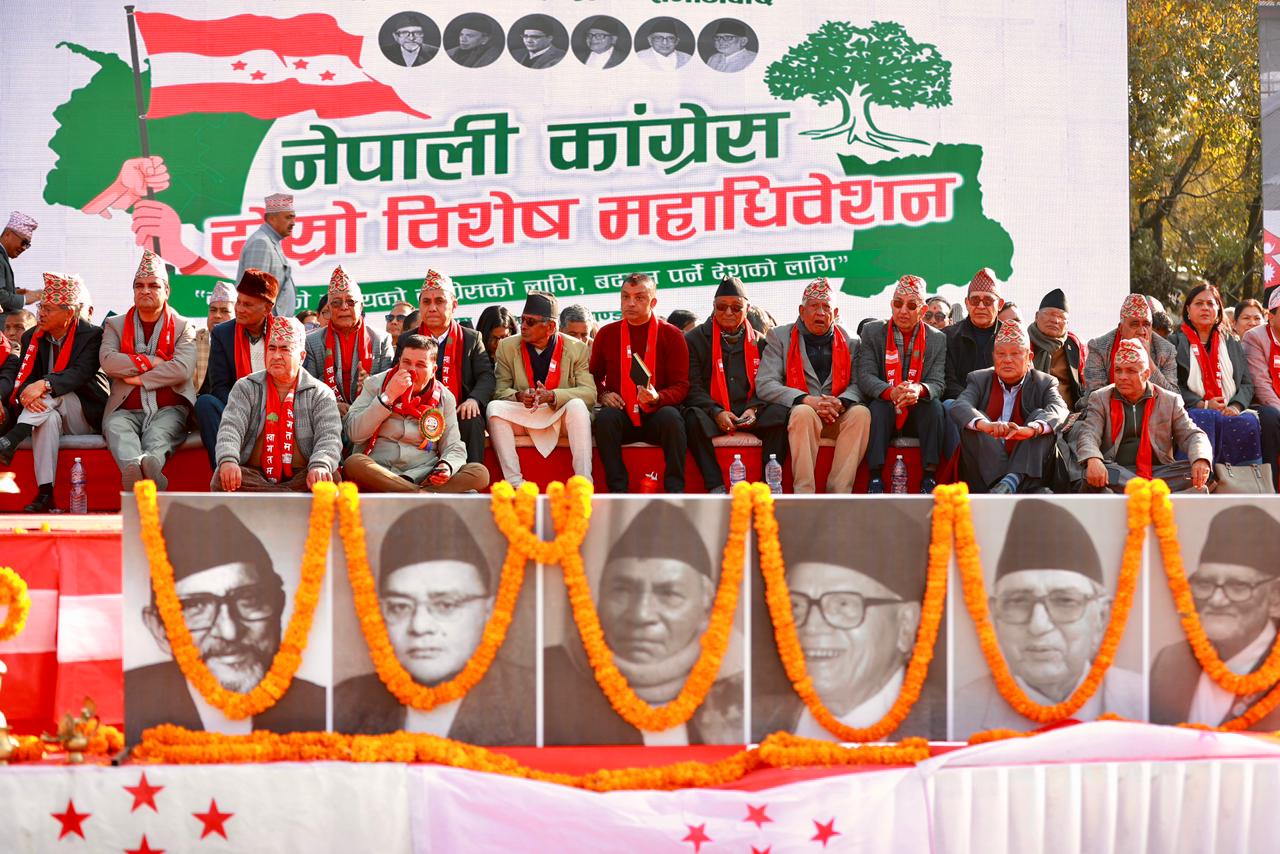
Nepali Congress Special General Convention. Photo: Nepal Photo Library
This provision will also apply to local presidents who fail to approve applications for new active memberships. In such places, another president will be designated based on the recommendation of a central representative, and unapproved new membership forms will be submitted to the Central Working Committee.
According to General Secretary Paudel, the authority to give final approval to membership updates lies with the House of Representatives Regional Presidents. The primary responsibility for renewal and distribution of new membership rests with the Ward and Municipal Presidents.
Paudel claims that out of 165 House of Representatives electoral constituencies nationwide, the membership process has been affected in only three regions. Similarly, he states that problems have surfaced in at most 10 out of 753 municipalities and about 100 out of 6,743 wards. “In such locations, the decision was made to deploy new presidents to initiate the membership updates, renewals, and new distributions required for the 15th General Convention,” Paudel says.
Authority shifted from local levels to the center
Congress began updating, renewing, and distributing active membership targeted for the 15th General Convention on May 16. The party has published a schedule to hold the 15th General Convention from October 2 to October 5.
However, after the membership dispute remained unresolved even after four extensions, Congress closed the update system available at the local levels on July 22. Anyone wishing to update their membership must now physically go to the central office.
Previously, membership could be updated directly from the ward, municipality, and House of Representatives electoral regions. Citing a lack of expected progress at the local levels, the leadership transferred this authority to the central office. As a result, the local committees’ control over the membership process has weakened, paving the way for the central office to directly run the preparations for the general convention.
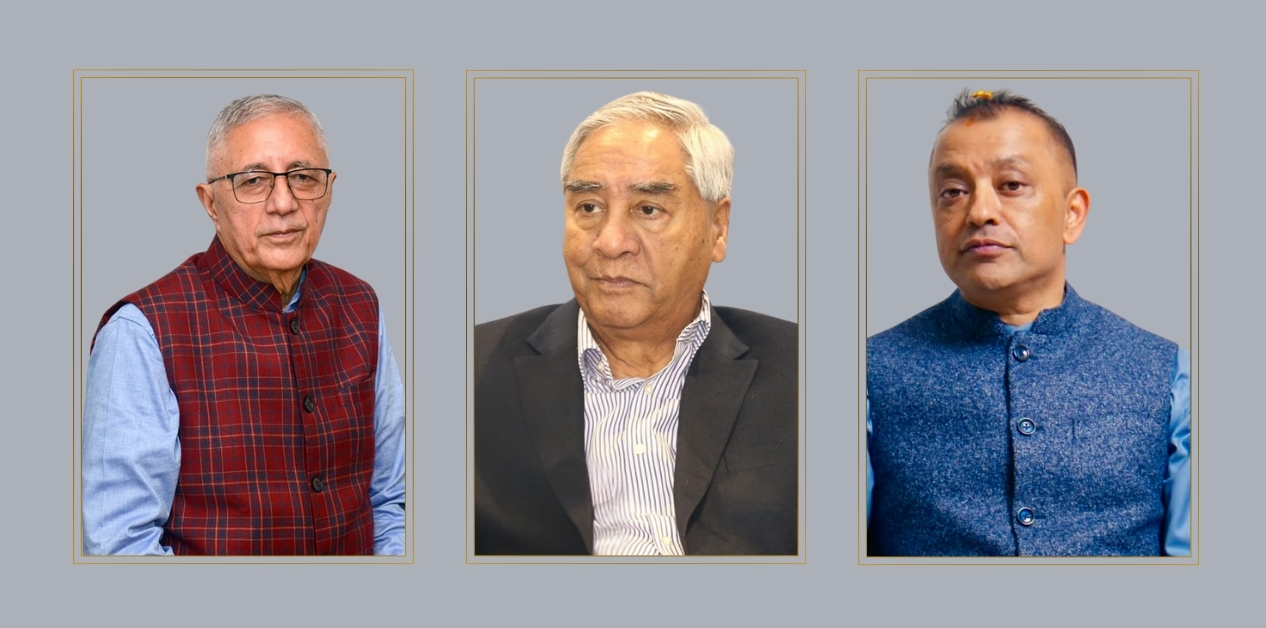
Following the special general convention, a new Central Working Committee was formed under the leadership of President Gagan Thapa. However, ward, municipal, regional, and provincial committees remain under the leadership of officials elected from the 14th General Convention. These lower-tier committees are heavily influenced by former President Sher Bahadur Deuba and senior leader Shekhar Koirala.
The special general convention of Congress took place on January 11, in Kathmandu. That convention dissolved the Central Working Committee led by Deuba and elected a new committee under Thapa’s leadership. However, because lower-level structures were left unchanged, a clash between the central office and local committees over membership updates has emerged.
According to General Secretary Paudel, no fixed deadline has been set for updating membership through the central office. “Members who wish to update their status can visit the central office at any time,” he says. “The doors will not be closed for anyone who states they wish to remain a member of Congress.”
Signals of postponed ward conventions
With the membership dispute dragging on, the published schedule for the general convention appears likely to be affected. The party had announced a timeline to begin ward conventions on August 18.
However, General Secretary Paudel admits that holding ward conventions on the designated date is unlikely since the update process remains incomplete. “The August 18 ward convention is already affected. Holding the ward convention on that day does not seem possible,” he says. “No specific timeframe has been fixed for updating. Ward conventions may be postponed.”
While updating existing members can now only be done through the central office, opportunities remain open at the ward and House of Representatives regional levels for new membership applications.
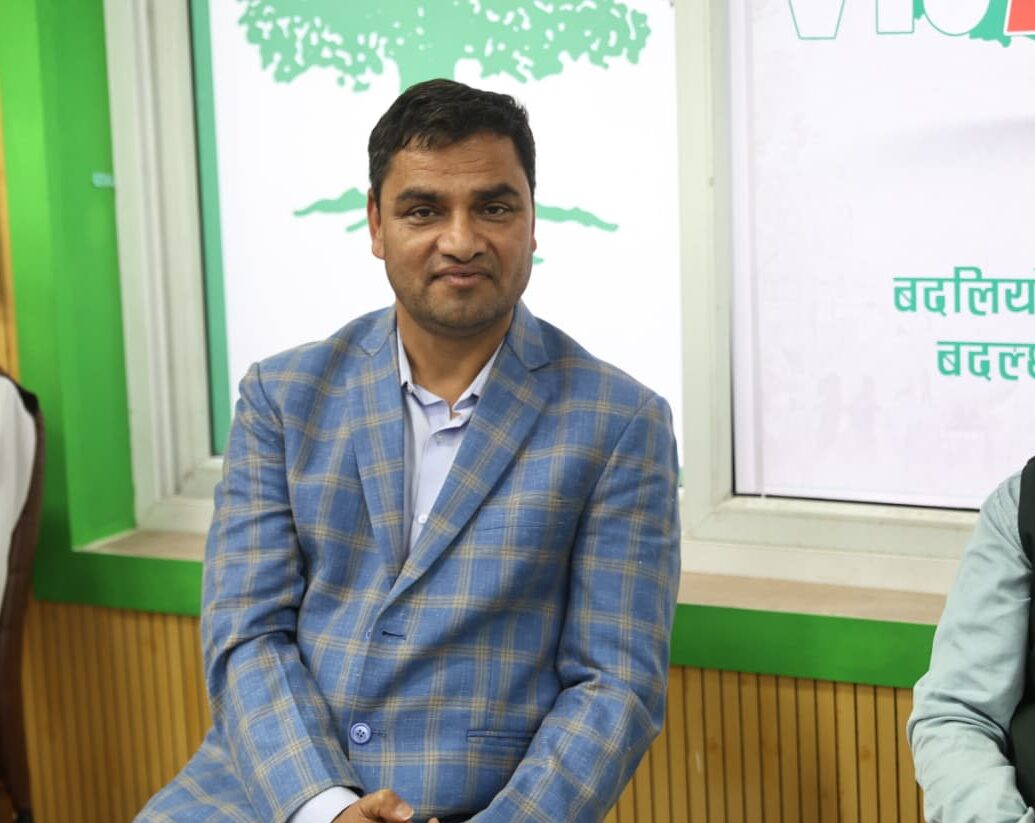
General Secretary Pradip Paudel. Photo: Nepal Photo Library
New members can apply directly through their Ward President or self-apply via the online system. The final deadline to approve membership applications currently on ‘hold’ in the Ward President’s portal is set for July 30.
Acting Chief Secretary Krishna Dulal states that municipal and House of Representatives electoral regional committees must settle applications approved and forwarded by subordinate levels within three days of receipt.
For fraternal and well-wisher organizations, as well as high-Himalayan and remote hill districts with weak internet access, updating for omitted members will be conducted from the central office via Excel forms. “Such update forms must be submitted to the center by July 31” Dulal says.
92 percent claim, numbers kept secret
Congress has not yet publicly released details regarding how many members have completed renewal and updates, nor how many new members have joined. Although General Secretary Paudel claimed that 92 percent of the membership-related work is complete, he declined to state the exact figure. “Do not focus on the numbers,” he says.
Congress had previously stated it would publish membership numbers on July 23, or the following day. However, true to form, the details have not been made public. It is estimated that there are approximately 800,000 active members in Congress. Because the membership figures remain undisclosed, the leadership’s claim of 92 percent completion cannot be independently verified.
Pressure on Deuba-Koirala faction
The decision to remove local presidents who obstruct membership updates is viewed as a move to increase pressure on former President Deuba and leader Koirala’s faction.
On the occasion of the 44th memorial day of founding leader B.P. Koirala on July 22, leader Shekhar Koirala commented that authoritarianism had begun in the party. “Authoritarianism has started in the party, and that is acceptable to no one,” he said.
A few days after his statement, Congress formally unveiled a strategy to discipline leaders who obstruct the membership process. Even before this, Congress had unannouncedly stripped some ward, municipal, and regional presidents of their duties. The party has already removed Dev Raj Tamang, regional president of Morang-6—which happens to be Shekhar Koirala’s electoral constituency—from his responsibilities.
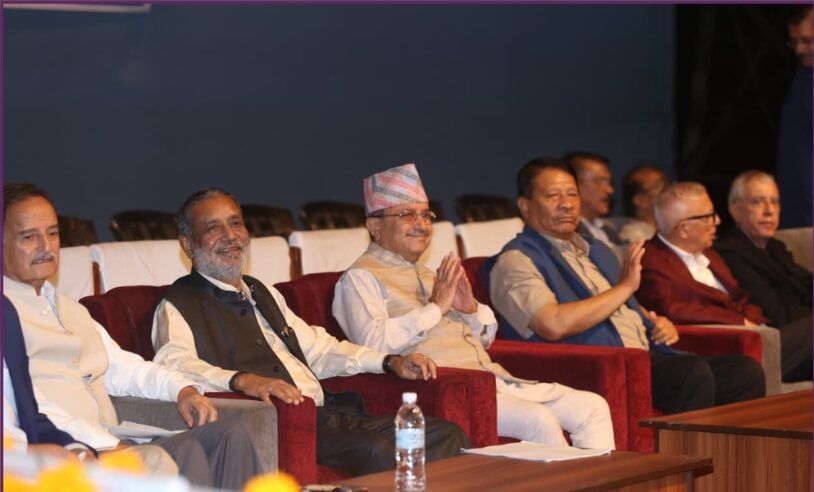
Program organized by the Deuba-Shekhar faction on the 44th memorial day of B.P. Koirala.
The Deuba and Koirala groups, who did not participate in the special general convention, still have not taken part in the active membership update process. Both groups share identical stances on the membership dispute. They demand that renewals conducted after the 14th General Convention be treated as equivalent to updates, that updates should not be made a mandatory prerequisite for maintaining membership, and that there must be an adjustment between structures elected from the special general convention and the 14th General Convention.
Furthermore, they insist on respectable representation in the Election Committee, Discipline Committee, and Active Membership Management Committee.
Recently, the Deuba-Koirala faction showed some flexibility on these demands and put forward a new proposal to form a political mechanism for a fair general convention. However, President Thapa’s side has shown no interest in engaging in formal talks on these issues.
Pressure toward a split
With no signs of resolving the active membership dispute, the Deuba group has openly moved toward preparing for a party split. The group has called a national gathering on August 14. Leaders of the Deuba faction state that preparations are underway to determine their future political direction and initiate the formal process of establishing a new party at this gathering.
As the Deuba group began internal preparations to announce a new party, Koirala did not offer direct opposition. When the national gathering was announced, Koirala remained silent while present at the Nepal Academy, leading party members to infer that he stands alongside the Deuba group.
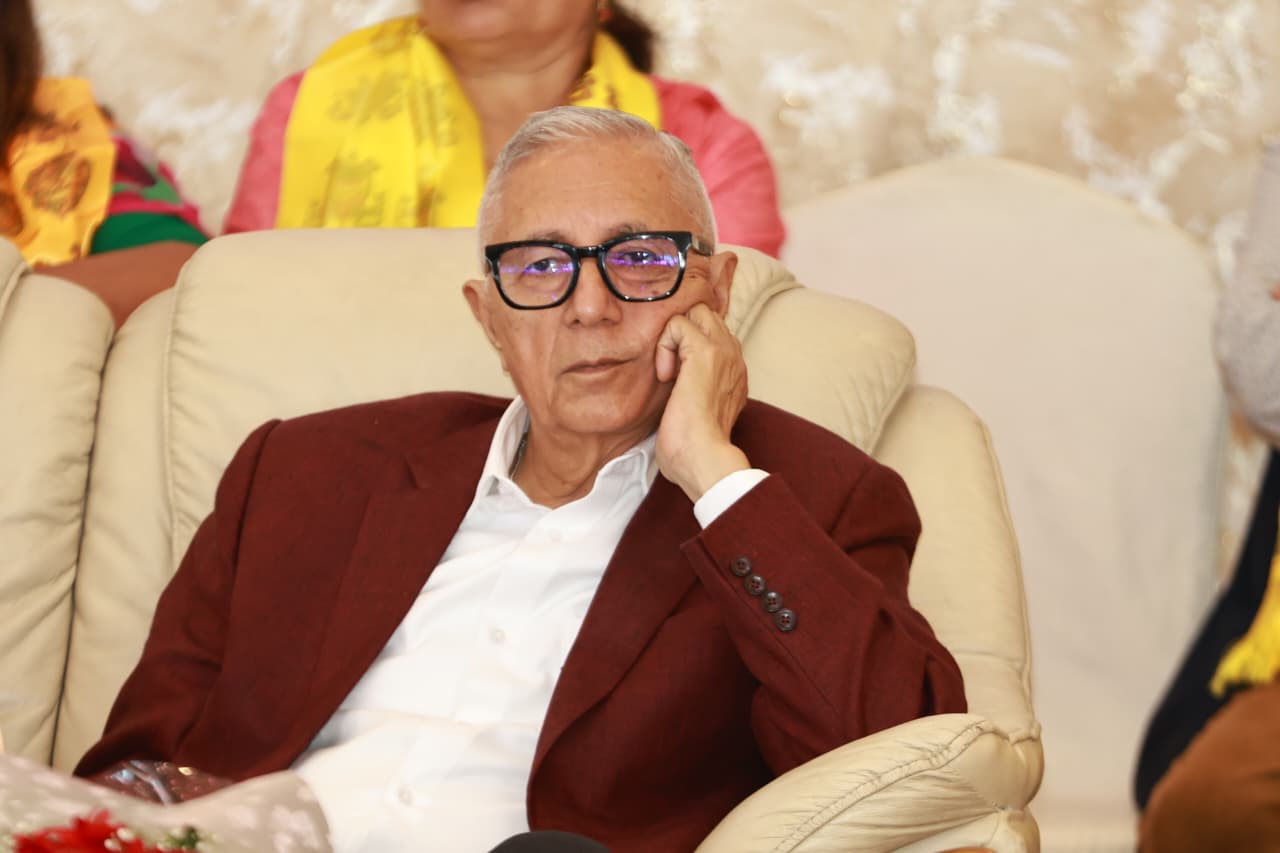
Congress leader Shekhar Koirala. Photo: Nepal Photo Library
Following Koirala’s role, President Thapa held a separate meeting with him on July 23. Neither side has publicly disclosed the contents of their discussion. Koirala subsequently left for Biratnagar and has not appeared particularly active in public political events.
According to leader Min Bishwakarma, a close confidant of Deuba, Thapa has not conversed with other senior leaders of the rival faction since then. However, on July 26, 2026, Thapa met with Congress-aligned local representatives led by Bhim Dhungana, President of the Municipal Association of Nepal.
To pressure the leadership for party unity, local representatives under Dhungana’s leadership launched a “pressure campaign.” The campaign plans to organize a national gathering on August 1. “Apart from Shekhar Daa and local representatives, I am not aware of the President meeting any other leaders,” says Bishwakarma.
While the establishment group has made public its formal strategy to discipline leaders who obstruct the membership process, the Koirala group has offered no reaction.
Meanwhile, the Deuba faction stated that the dispute within Congress has passed the point where it can be resolved merely by taking action against local presidents. Prakash Sharan Mahat, a leader from that group, remarks, “The problem in the party is already evident, so what can one really say about this now?”