Kathmandu
Tuesday, July 14, 2026





Can Nepal’s new prime minister redefine foreign access-and rebalance the republic’s fragile geopolitics?
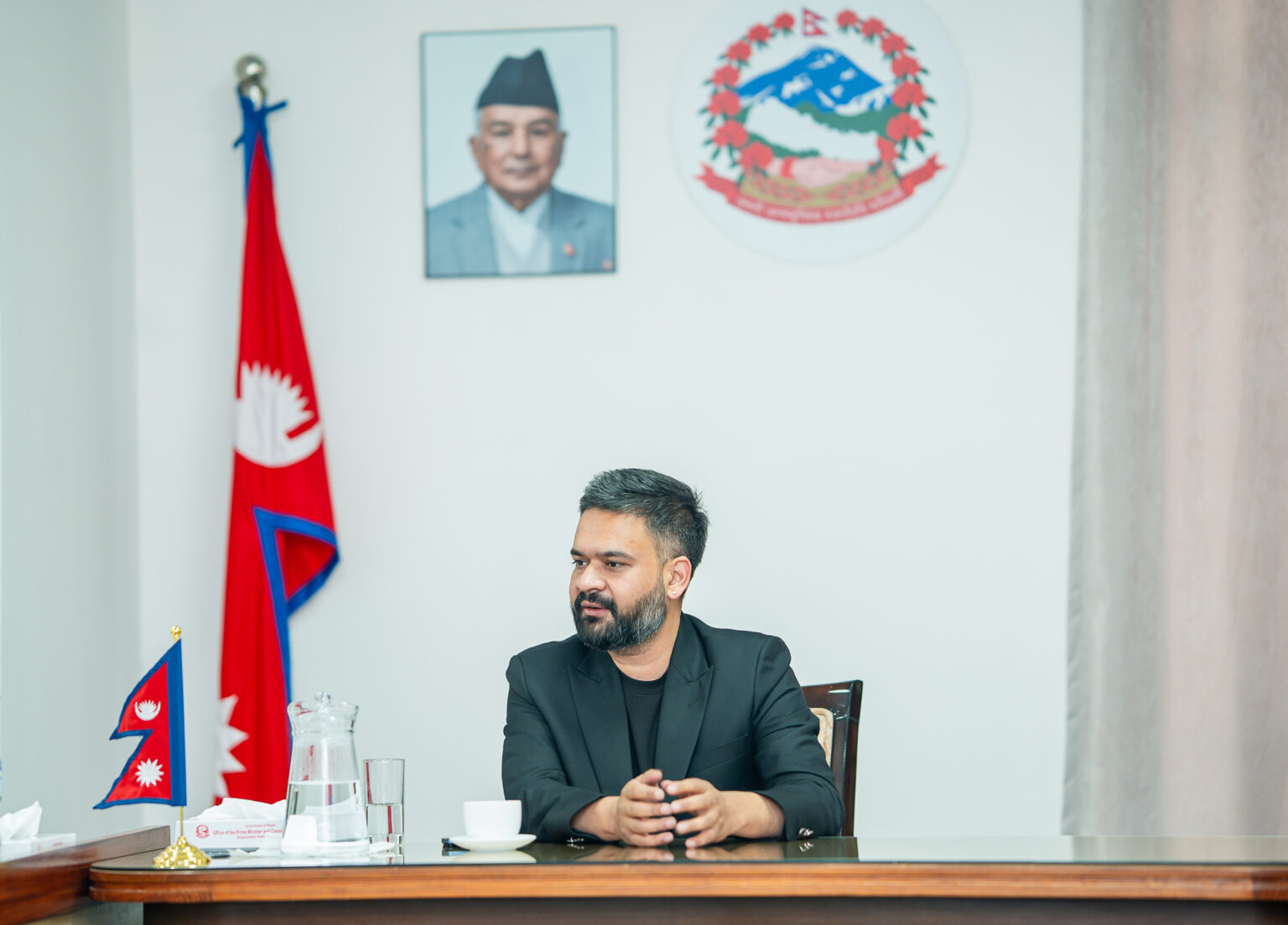
KATHMANDU: Nepal’s newest prime minister, Balendra (Balen) Shah, has chosen an unconventional opening act in foreign policy. Rather than summoning ambassadors one by one for the customary procession of congratulatory visits and private audience, Shah has invited the diplomatic corps en masse to Singha Durbar for a collective briefing on Nepal’s political direction.
At first glance, the move may appear procedural. In reality, it is anything but. In Kathmandu’s rarefied diplomatic ecosystem-where symbolic gestures often carry strategic weight-the decision amounts to a deliberate repudiation of long-entrenched political practice. It signals an attempt not merely to alter protocol, but to redraw the boundaries of foreign access to Nepal’s highest office.
For decades, Nepal’s diplomacy has been marred by excessive access, informality and institutional weakness. Foreign ambassadors, particularly from powerful countries have often enjoyed unusually intimate access to the prime minister’s residence at Baluwatar. The scramble among diplomats to secure the first meeting with a newly appointed prime minister became a ritual unto itself-an awkward spectacle that projected dependency rather than sovereignty. In many cases, ambassadors were seen not merely as observers of Nepal’s politics but as active participants in it.
PM Shah’s collective meeting is designed to break that pattern. His message is straightforward: Nepal’s diplomacy will be institutional, not personalised; structured, not improvised. Routine diplomatic concerns should pass through the foreign ministry, not directly through the prime minister’s private residence or office. Access to the head of government, in this vision, is to be reserved for matters of strategic importance. That may seem obvious in mature democracies. In Nepal, it is quietly revolutionary.
Ending the era of informal influence
The deeper significance of Shah’s move lies in what it implicitly rejects: the long and controversial history of foreign involvement in Nepal’s domestic politics.
No external actor has loomed larger in this regard than India. For much of Nepal’s modern political history, New Delhi has been perceived-fairly or otherwise-as an active force in deep engagement, government formation, coalition engineering and leadership transitions in Kathmandu. Indian ambassadors were frequently accused of exercising influence beyond diplomatic convention, feeding nationalist resentment within Nepal even as successive governments continued to court Indian favour.
China, once more restrained, has in recent years become increasingly assertive. During the Nepal Communist Party government, then-Chinese ambassador Hou Yanqi was publicly reported to have engaged in efforts to reconcile factional disputes between KP Sharma Oli and Pushpa Kamal Dahal. Her activism reflected a broader shift in Beijing’s diplomacy-from passive engagement to active political management in strategically sensitive states.
The memory of such interventions has fed a growing consensus among Nepal’s political and bureaucratic class that diplomatic boundaries have become dangerously blurred. PM Shah appears determined to restore them.
By refusing individual ambassadorial audiences and insisting on equal treatment through collective engagement, he is attempting to depersonalise diplomacy and reduce opportunities for informal lobbying, favour-seeking and perceived interference. The symbolism is potent: no ambassador will be privileged over another; no bilateral relationship will be theatrically elevated through preferential access.
A “Nepal First” foreign policy?
Those close to PM Shah describe his worldview as guided by three principles: economic diplomacy, strategic balance and “Nepal First” sovereignty.
Such rhetoric is not new in Nepali politics. Almost every government has pledged an “independent” foreign policy. Few have delivered one.
What distinguishes PM Shah’s approach-at least rhetorically-is his attempt to align diplomatic process with strategic doctrine. His administration reportedly believes the prime minister should not function as Nepal’s chief receptionist for foreign envoys. Instead, diplomacy should flow through institutions: the foreign minister, the foreign secretary and the bureaucracy. That is how capable states protect coherence, continuity and professionalism.
Whether Nepal’s institutions are yet strong enough to sustain such a model is another matter.
Still, the logic behind the shift is sound. Nepal’s foreign policy has too often been reactive, personality-driven and vulnerable to political turnover. Every new coalition recalibrates external alignments. Every prime minister sends mixed signals. The result has been chronic inconsistency-fueling suspicion abroad and confusion at home. A more disciplined diplomatic structure could reduce this volatility.
The geopolitical reality behind the symbolism
Yet no amount of procedural reform can obscure Nepal’s fundamental strategic dilemma: it remains trapped between two increasingly competitive powers.
Country founder Prithvi Narayan Shah’s famous dictum that Nepal is “a yam between two boulders” endures because it remains true. Geography has not changed. If anything, its geopolitical consequences have intensified.
China’s rise has transformed the Himalayan region from a peripheral frontier into a zone of strategic competition. Beijing’s expanding footprint in Nepal-through infrastructure, trade, digital connectivity and political engagement-offers Kathmandu long-sought alternatives to overdependence on India. But it also introduces strategic complications.
India views Nepal not simply as a neighbour but as part of its immediate security perimeter or a stratagic buffer. The Himalayas serve as a natural buffer, and any significant Chinese presence in Nepal is interpreted through that lens. Infrastructure projects, telecommunications contracts and connectivity corridors are assessed not merely economically but strategically.
This is the core constraint of Nepalese diplomacy: what China may frame as economic cooperation, India often reads as geopolitical encroachment. PM Shah’s balancing act, therefore, will require more than nationalist rhetoric. It demands disciplined strategic calibration.
From transit state to strategic actor
If PM Shah’s diplomatic doctrine is to amount to more than symbolism, it must ultimately serve a broader economic and strategic vision.
Nepal’s greatest foreign-policy vulnerability is not geography itself but underdevelopment. Poor states have limited strategic autonomy because dependence breeds leverage. A country reliant on external aid, remittances and foreign transit routes will always struggle to negotiate from strength.
The answer lies in economic statecraft. Nepal must convert its location from geopolitical liability into commercial advantage-positioning itself as a connector rather than merely a buffer. Hydropower exports, digital services, tourism, logistics, energy trade and cross-border infrastructure all offer pathways to enhanced strategic relevance.
But economic diplomacy requires institutional competence that Nepal has historically lacked. Policy inconsistency, bureaucratic inertia and political instability have repeatedly undermined external partnerships and investor confidence. Without domestic reform, foreign-policy ambition remains performative.
The limits of diplomatic theatre
There is, however, reason for caution. Symbolic disruptions are easier than systemic transformation. Refusing individual meetings with ambassadors may generate headlines and nationalist applause, but diplomatic protocol alone will not alter regional power realities. If not followed by coherent policy, administrative professionalism and sustained strategic discipline, the gesture risks becoming another fleeting performance in Nepal’s cycle of political theatrics.
Indeed, some foreign diplomats may privately interpret the move less as institutional reform than as performative nationalism-especially if exceptions later emerge for powerful capitals behind closed doors.
Consistency will therefore be crucial. If PM Shah truly intends to institutionalise diplomatic access, he must apply the principle universally and durably, not selectively or temporarily.
A test of statecraft
Nepal’s geopolitical challenge has never been simply to survive between India and China. It has been to do so with strategic dignity.
That requires understanding a difficult truth: small states do not preserve sovereignty merely by proclaiming it. They preserve it through competence, consistency and credible institutions.
PM Shah’s diplomatic reset is thus best understood not as a final solution, but as an opening test. It asks whether Nepal can begin behaving less like a vulnerable client state and more like a self-respecting sovereign one.
The answer will depend not on this week’s meeting with ambassadors, but on what follows it. If PM Shah can pair symbolic independence with institutional reform, strategic coherence and economic modernization, his approach may mark the beginning of a more mature Nepali diplomacy.
If not, it will join the long list of Kathmandu’s performative resets-briefly applauded, quickly forgotten. Nepal’s strategic predicament is permanent. But weakness is not.
For a country long accustomed to being shaped by larger powers, the real challenge is no longer understanding the geopolitical game. It is learning, finally, to play it well.