Kathmandu
Sunday, June 14, 2026





KATHMANDU: Since early Sunday morning, a short video clip from Nepal’s far-western district of Kailali has dominated social media feeds, triggered public outrage, and thrust the government into an uncomfortable spotlight.
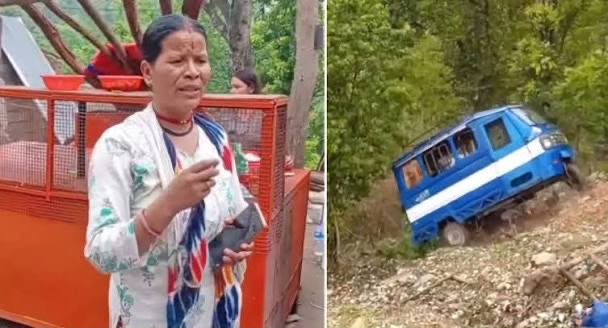
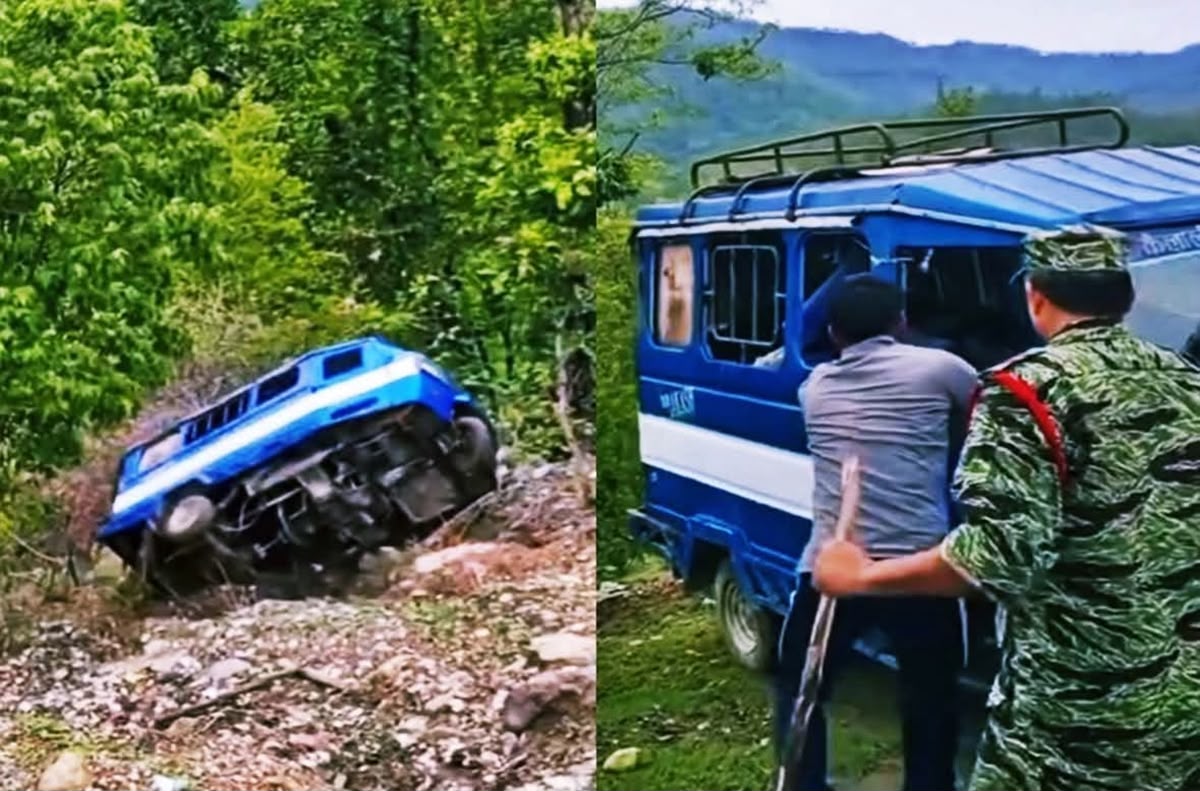
A video that has gone viral on social media appears to show employees of the Dhangadhi Divisional Forest Office pushing a blue tempo off a roadside cliff. In the footage, a group of people, including at least one individual in a forest-service uniform, can be seen shoving the vehicle over the edge. The owner’s family paints the incident as an arbitrary act of state power.
Dhanadevi Dhami, wife of tempo operator Ghanshyam Dhami, says the vehicle was regularly driven between their home and a roadside location where they occasionally operated a small shop. She alleges that forest officials had previously clashed with her husband over the removal of the roadside structure.
According to her account, when she learned of a confrontation, she rushed to the site to salvage goods stored inside the vehicle-including bottled water, instant noodles, biscuits, and eggs. She claims that despite pleading with officials to allow her to remove the items and take the vehicle home, the tempo was pushed off the cliff.
The footage, which appears to show a group of forest officials pushing a blue three-wheeled tempo off a roadside cliff, spread rapidly across Facebook, TikTok, X, and YouTube, drawing millions of views, thousands of angry comments, and growing demands for accountability. Throughout the day, the incident became one of Nepal’s most discussed online topics, with critics accusing state authorities of abusing their power against ordinary citizens.
As public anger intensified, pressure mounted on the government to respond. By evening, following directives from the Ministry of Home Affairs, police moved to investigate the incident and detained ten individuals for questioning. Authorities insist the investigation remains ongoing and that no final conclusion has yet been reached. Nevertheless, the viral video has already evolved from a local dispute into a national debate about state power, property rights, and the conduct of public officials.
At the centre of the controversy is a simple but fiercely contested question: Was a privately owned vehicle deliberately thrown off a cliff by government employees?
According to Deputy Superintendent of Police (DSP) Hira Singh Mahara of the Malakheti Area Police Office, the arrests were made as part of an ongoing investigation. Authorities say the case remains unresolved, and discussions between the two sides are currently underway at the Kailali District Administration Office.
For many viewers, however, the symbolism was immediate and powerful. The image of uniformed officials surrounding a vehicle before it plunged into a ravine resonated far beyond Kailali. In a country where public trust in institutions remains fragile, the footage quickly came to represent something larger-a perceived confrontation between state authority and an ordinary family’s livelihood.
What happened on that roadside in Kailali is now the subject of a police investigation. But regardless of the outcome, the video’s extraordinary reach has already transformed a local enforcement dispute into a national conversation about accountability, governance, and the limits of state power.

More than a tempo
The dispute is not about a single vehicle. It highlights a recurring governance dilemma in Nepal: the collision between state enforcement and public trust.
If the vehicle was deliberately destroyed despite being privately owned and roadworthy, the incident raises serious questions about proportionality, due process, and abuse of authority. Government agencies cannot simply destroy private property without following clear legal procedures.
The deeper issue is not merely whether the tempo was pushed or fell. It is why such confrontations repeatedly escalate into public spectacles. Across Nepal, disputes over public land, forest encroachment, roadside businesses, and enforcement actions often occur in a legal grey zone where documentation is weak, communication is poor, and trust in authorities is limited.
The video has become powerful because it symbolizes something larger: many citizens see it as a story of the state versus a poor family, while authorities view it as a story of enforcing public ownership against illegal occupation. The final investigation will determine which interpretation is closer to the truth.