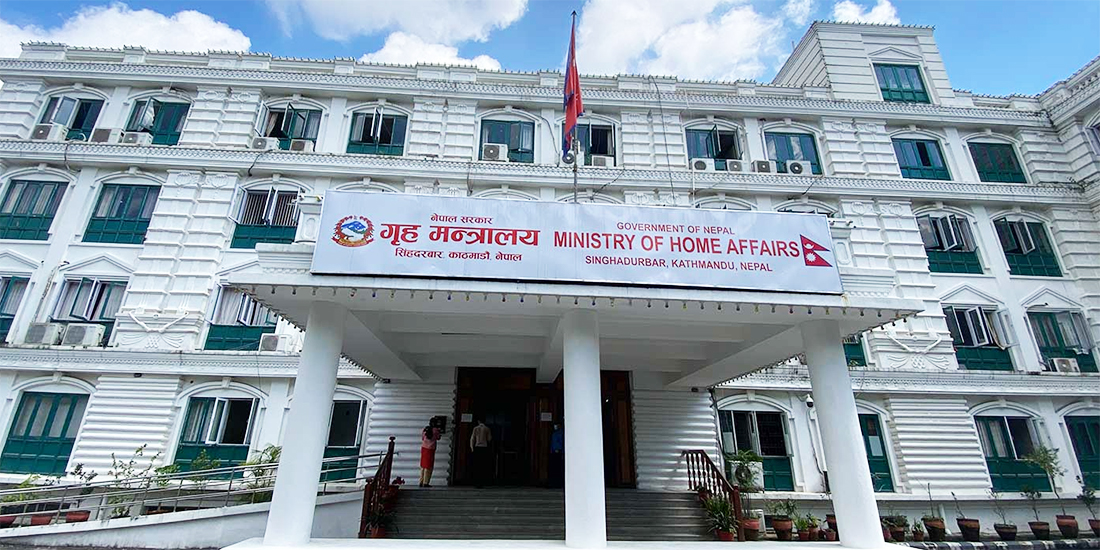
Kathmandu
Sunday, June 14, 2026





Nepal Rastra Bank’s latest supervision report shows a banking sector expanding in assets and deposits, but facing rising non-performing loans, governance weaknesses, and credit risk concerns flagged across all 20 commercial banks.

KATHMANDU: Nepal Rastra Bank’s Bank Supervision Department (BSD) has released its annual Bank Supervision Report covering fiscal year 2024/25. The report reviews the condition of Nepal’s commercial banking sector and identifies key risks, governance lapses, and supervisory challenges observed during inspections across all 20 commercial banks in the country.
Nepal’s commercial banking sector comprises 20 licensed banks holding 83.87 percent of the total assets of the country’s entire banking system. Nepal Rastra Bank, through its Bank Supervision Department, oversees these institutions using a risk-based framework combining on-site inspections and continuous off-site monitoring.
The annual Bank Supervision Report for fiscal year 2024/25, released in June 2026, documents how these banks performed financially, what problems supervisors found during inspections, and what challenges the regulator faces going forward.
NRB’s annual supervision report finds commercial banks posting record deposits and asset growth in fiscal year 2024/25, but non-performing loans have climbed to 4.44 percent and inspectors found serious governance, audit, and risk management failures across the system.
How large is Nepal’s commercial banking sector now, and what does the FY 2024/25 data show about its overall growth?
Nepal’s 20 commercial banks ended FY 2024/25 with total assets of Rs. 7,756.23 billion, a growth of 12.45 percent over the previous year’s figure of Rs. 6,897.80 billion. Total deposits reached Rs. 6,541.65 billion, rising 13.63 percent from Rs. 5,756.81 billion in FY 2023/24.
Loans and advances, including interbank lending and staff facilities, grew 10.49 percent to Rs. 4,963.15 billion. State-owned banks, which include Rastriya Banijya Bank Limited, Nepal Bank Limited, and Agricultural Development Bank Limited, saw their assets grow faster at 15.93 percent compared to 11.74 percent for private banks.
The combined capital fund of the sector grew 7.14 percent to Rs. 764.68 billion. These numbers confirm the sector’s expansion in absolute scale, but the report consistently notes that balance sheet growth has not been accompanied by proportionate improvements in asset quality or risk management.
Where does the money in these banks come from, and how are deposits structured?
Customer deposits remain the primary funding source for commercial banks, accounting for 83.08 percent of total liabilities. Within the deposit base, fixed deposits are the largest category, covering 47.59 percent of total deposits, while saving deposits account for 36.56 percent.
In FY 2024/25, current deposits grew the fastest at 38.04 percent to reach Rs. 508.97 billion, and saving deposits also surged 36.49 percent to Rs. 2,391.43 billion. Fixed deposits, by contrast, actually contracted by 2.04 percent to Rs. 3,112.94 billion during the year.
The total deposit-to-GDP ratio climbed steadily from 96.61 percent in FY 2020/21 to 105.51 percent in FY 2024/25, reflecting deepening financial intermediation in the economy. Share capital and reserves are the second and third largest sources of funding, representing 4.97 percent and 4.51 percent of total liabilities respectively.
How are banks deploying these deposits, and which sectors receive the most credit?
Loans and advances to customers form the largest component of bank assets at 59.82 percent of total assets, or Rs. 4,639.59 billion. Looking at sector-wise lending, consumable loans have now become the largest category at 19.36 percent of total loans, edging ahead of wholesalers and retailers at 19.06 percent.
Power, gas, and water projects received 8.71 percent of total lending, up from 7.99 percent the previous year, reflecting growing credit to the energy sector. Agriculture, forestry, and beverage production-related lending stood at 6.44 percent. In terms of collateral, 88.58 percent of all loans are backed by property, which underscores the sector’s heavy dependence on real estate as security.
Term loans account for 36.59 percent of the product mix, followed by demand and other working capital loans at 16.18 percent and cash credit at 11.79 percent.
How bad is the non-performing loan problem, and how has it changed over the past few years?
The NPL situation has deteriorated sharply over the past three years. Total non-performing loans of commercial banks reached Rs. 220.33 billion in FY 2024/25, a 22.40 percent increase from Rs. 180.01 billion the previous year. The NPL ratio rose to 4.44 percent from 3.76 percent in FY 2023/24, continuing a trend that began from a low of 1.20 percent in FY 2021/22.
Private banks are driving most of this deterioration, with non-state-owned banks recording a 26.31 percent increase in NPLs to Rs. 191.63 billion. State-owned banks, by contrast, saw a modest 1.48 percent increase in their NPL stock to Rs. 28.71 billion.
The report attributes rising NPLs to a combination of macroeconomic disruptions, sector-specific downturns, aggressive lending in earlier years, and weaknesses in corporate governance. The credit-to-deposit ratio has also compressed from 86.43 percent in FY 2021/22 to 75.02 percent in FY 2024/25, reflecting caution in fresh lending.
Are banks earning enough to remain profitable despite the rising bad loans?
Total net profit of commercial banks grew 5.90 percent to Rs. 52.82 billion in FY 2024/25 from Rs. 49.87 billion the previous year. However, this aggregate figure conceals divergence between state-owned and private banks.
State-owned banks recorded a 76.08 percent jump in net profit, largely because of Agricultural Development Bank Limited, while net profit at private banks declined by 2.75 percent. Total interest income, the main driver of bank earnings, fell 15.67 percent during the year, reflecting lower lending rates and the compressed interest spread. The interest spread itself narrowed from 3.98 percent to 3.66 percent in FY 2024/25.
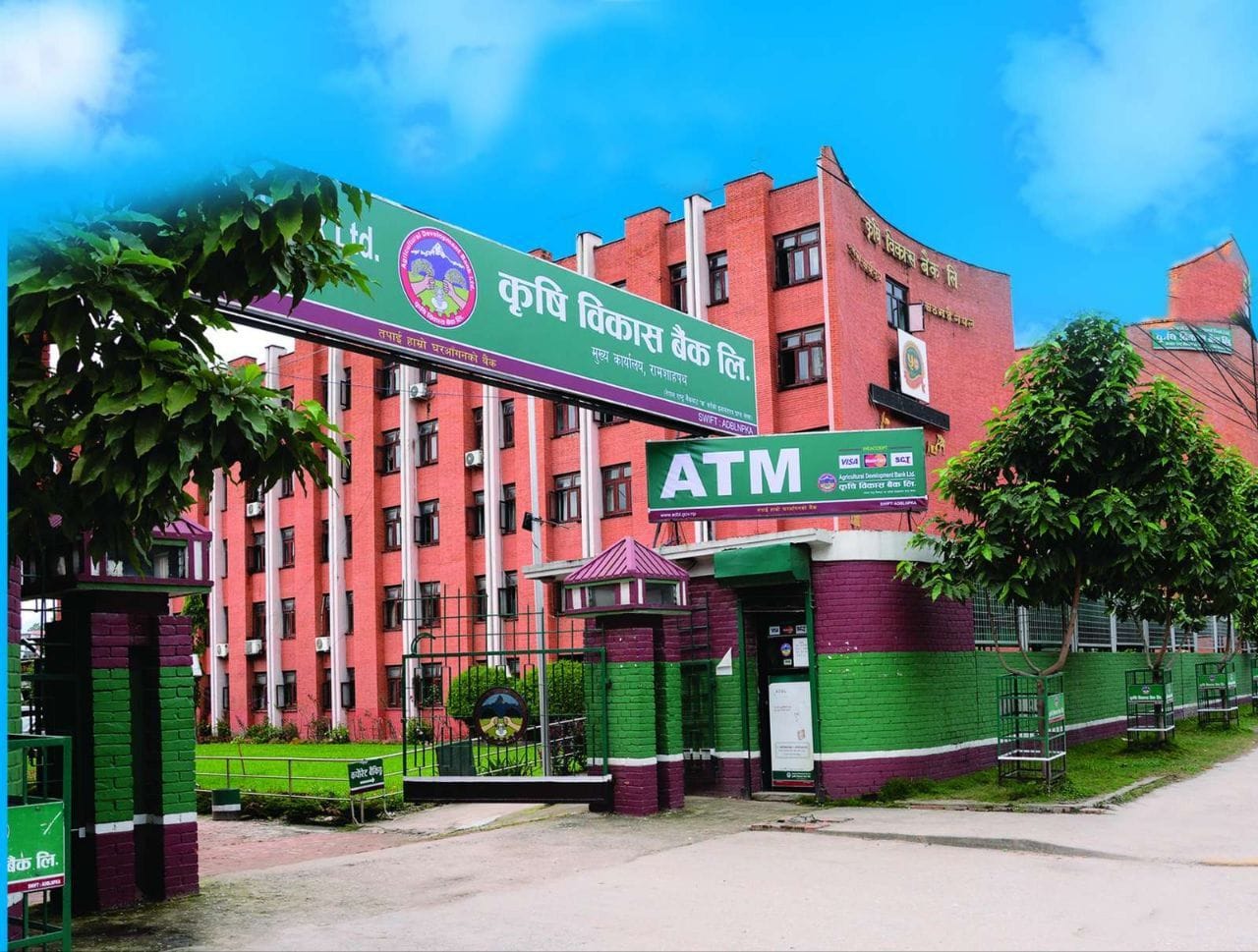
Agricultural Development Bank Limited
Operating profit, however, increased 9.93 percent, suggesting banks managed costs better even as income from loans contracted. NIC Asia Bank Limited reported a net loss of Rs. 3.86 billion during the year, standing out as the most distressed among private banks in terms of bottom-line performance.
How is the liquidity position of commercial banks, and is there cause for concern?
Liquidity has been building across the system. Total liquid assets of commercial banks grew from Rs. 1,854.29 billion to Rs. 2,293.84 billion in FY 2024/25. The liquid asset-to-deposit ratio rose from 32.21 percent to 35.07 percent, and the liquid asset-to-total asset ratio increased from 26.89 percent to 28.16 percent.
The net liquidity ratio stood at 35.07 percent and the statutory liquidity ratio at 30.13 percent, both well above regulatory minimums. Despite this system-wide comfort, inspectors found that individual banks were not managing liquidity well at the institutional level.
Asset-liability committee meetings were found to be largely focused on reviewing regulatory ratios rather than conducting strategic liquidity planning.
Contingency funding plans at several banks were outdated, lacked adequate stress scenarios such as pandemics or reputational crises triggered by social media, and had not been activated even when trigger conditions such as deposit concentration breaches had already occurred.
What were the most serious governance failures found during on-site inspections?
Supervisors documented multiple governance failures across one or more banks during FY 2024/25. Director appointments were made through board decisions and ratified later by the annual general meeting rather than being directly elected by shareholders.
Some boards were handling more than 100 agenda items in single meetings, making meaningful discussion of risk indicators or stress test results practically impossible.
Chief executive remuneration contracts included unauthorized perks such as multiple security guards and domestic servants, and compensation clauses for shortened tenures that violated prevailing regulations.
Key executive positions including assistant general manager and deputy general manager levels were left vacant beyond the three-month regulatory limit.
Several banks had not appointed an independent director or a female director as mandated by the Bank and Financial Institutions Act and the Company Act respectively. Banks also failed to pay guarantee claim beneficiaries within the required seven working days.
What specific problems did inspectors find in how banks manage credit risk?
Credit risk management weaknesses were among the most detailed observations in the report. Supervisors found banks classifying loans incorrectly, including failure to classify accounts under auction as loss-category loans, and not grouping related party loans for single obligor limit monitoring.
Banks were disbursing loans to firms with negative net tangible assets, financing beyond drawing power, and accepting shares of financial institutions with NPLs above five percent as margin lending security. Loan rollover practices were documented, where fresh disbursements were made to the same borrowers near quarter-ends to close or adjust overdue accounts, masking actual asset quality.
Restructuring and rescheduling of loans were being done without adequately reassessing borrower viability or obtaining going-concern evaluations. Banks were also pricing loans to high-volume clients at base rate without charging risk premiums based on creditworthiness, and structuring repayments on a ballooning basis without evidence of repayment capacity.
What did inspectors find about the state of internal audit functions in commercial banks?
The audit function across several banks was found to be critically understaffed, over-dependent on temporary personnel such as semi-chartered accountancy trainees, and structurally compromised. The head of internal audit in some banks was being evaluated by the chief executive and assessed against business targets, directly undermining audit independence.
Audit committee governance was weakened by the presence of the board chairman and other directors as invitees to committee meetings. Annual audit plans were prepared in lump-sum without detailed periodic scheduling or defined criteria for assigning audit days to different branches and risk categories. Mandatory information security audits and audits of overseas representative offices had not been conducted.
Thousands of audit observations remained unresolved due to staff shortages, and audit tracking software in some banks allowed modification of findings without maintaining an audit trail. Internal audit manuals had not been updated to reflect evolving technology and operational risks.
What is the digital banking picture, and how has it changed over the year?
Digital banking continued to expand. Mobile banking users in commercial banks reached 23.79 million by mid-July 2025, up from 21.14 million the previous year. Internet banking users grew from 1.33 million to 1.60 million.
The total number of ATMs increased from 4,801 to 4,878, and debit card holders rose from 11.76 million to 12.37 million. Credit card users grew from 287,365 to 315,138 and prepaid card holders from 178,216 to 245,992.
However, branchless banking centres continued to contract, falling from 1,112 to 816, and branchless banking customers declined from 301,589 to 277,680, suggesting agent-based delivery channels are losing relevance as mobile penetration deepens.
The report notes that digital expansion is bringing new operational risks, particularly around cybersecurity and third-party technology dependency, which global regulators including the Basel Committee have begun addressing through new principles for third-party risk management.
How are banks distributed geographically, and is access equitable across provinces?
The 20 commercial banks operated a total of 5,099 branches as of mid-July 2025, up from 5,056 the previous year. NIC Asia Bank Limited had the largest network with 476 branches, followed by Global IME Bank Limited with 422 and Rastriya Banijya Bank Limited with 370.

Corporate office of NIC Asia Bank in Kamaladi. Photo: Bikram Rai/ Nepal News
Geographic concentration, however, remains a concern. Bagmati Province, which includes Kathmandu, accounts for 1,843 of the 5,099 commercial bank branches, or 36.14 percent of the total. Koshi Province and Lumbini Province come next with 763 and 748 branches respectively.
Karnali Province, the most geographically remote, has only 217 commercial bank branches, representing just 4.26 percent of the total. Population per branch for class A, B, and C institutions stood at 4,472 as of mid-July 2025, and including microfinance institutions the figure drops to 2,530, showing that microfinance networks are compensating for the limited commercial bank reach in underserved areas.
What global and regional supervisory trends has NRB identified as relevant to Nepal?
A: The report surveys international developments that are shaping supervision globally. The Basel Committee on Banking Supervision released new principles in 2025 for managing third-party service provider risk, recognizing banks’ growing dependence on technology vendors and cloud infrastructure.
The committee has also published a voluntary framework for climate-related financial risk disclosure. At the regional level, India’s Reserve Bank has established an Advanced Supervisory Analytics Group using artificial intelligence and machine learning for early warning detection, fraud identification, and asset quality prediction.
Pakistan’s State Bank has established a dedicated cyber risk management department and has strengthened its crisis resolution framework. Bhutan’s Royal Monetary Authority transitioned from compliance-based to risk-based supervision in FY 2024/25. Bangladesh Bank restructured its entire supervisory architecture into 17 specialized units.
In Nepal’s own national context, NRB has implemented a framework for domestic systemically important banks, introduced guidance on interest income recognition under NFRS 9, and updated its corporate social responsibility guidelines for banks.
What are the biggest challenges NRB itself faces going forward?
The report identifies ten specific challenges. Banks are engaging in regulatory arbitrage by misclassifying high-risk loans into lower-risk categories such as the regulatory retail portfolio or residential property buckets, inflating their capital adequacy ratios, and NRB needs to move beyond checklist supervision to catch these practices.
The independence of chief risk officers and internal audit heads is compromised by CEO-driven performance evaluations, and fixing this requires structural changes to governance standards. Loan end-use verification remains inadequate, with evidence of funds being diverted to director-linked accounts shortly after disbursement.
Supervisory data quality in the information system is poor, with missing permanent account numbers, duplicate customer identifiers, and inconsistent borrower names making single-obligor-limit monitoring unreliable. Many banks still run ATM booths on Windows 7 and lack integrated management information systems.
Internal audit departments are understaffed with no mandatory staffing ratio enforced. Asset-liability committees remain focused on reporting rather than genuine strategic risk management. Vault security and physical operational hygiene are inconsistent across branch networks.
And the integration of artificial intelligence into supervisory tools requires investment in data infrastructure, skilled personnel, and model validation capacity that Nepal has not yet fully developed.