Kathmandu
Saturday, July 25, 2026





With debt nearing half of GDP, economists warn of mounting fiscal pressure as borrowing accelerates and repayment costs eat into development spending
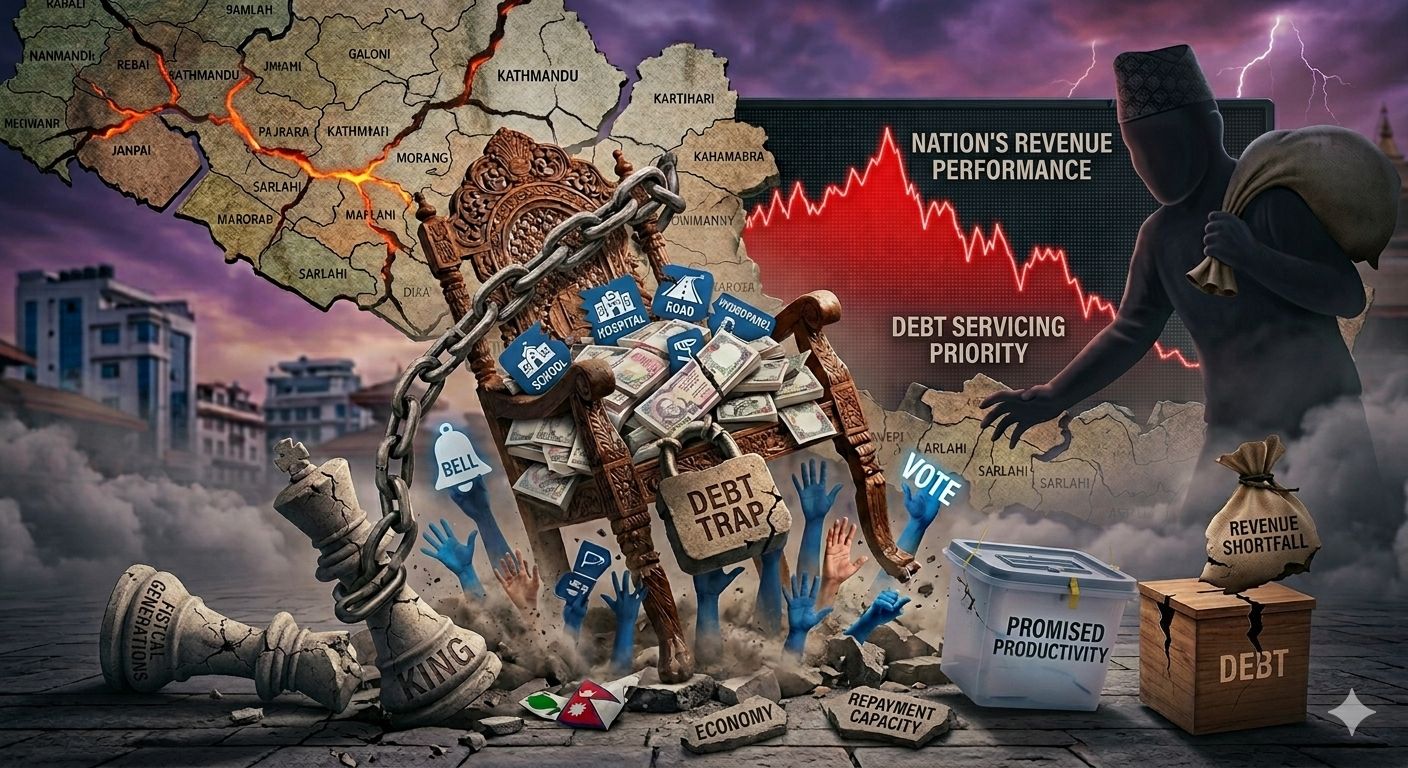
KATHMANDU: Nepal’s public debt has crossed Rs 2.93 trillion as of mid-April 2026, reaching Rs 2.934 trillion by the end of the third quarter of fiscal year 2025/26 (mid-July 2025 to mid-April 2026).
According to the Public Debt Management Office, this represents a sharp increase of over Rs 259 billion since the start of the fiscal year. Domestic debt stands at Rs 1.388 trillion while external debt is Rs 1.546 trillion, with the total now equivalent to 48.04% of GDP.
Heavy new borrowing, exchange rate losses on foreign debt, and substantial debt servicing costs have raised alarms about long-term sustainability, especially as revenue collection struggles to cover even routine government expenses.
What is the current level of Nepal’s public debt as of mid-April 2026?
As of the end of the third quarter of fiscal year 2025/26 (mid-April 2026), Nepal’s total public debt stands at Rs 2.934 trillion. This precise figure comes from the Public Debt Management Office.
At the beginning of the fiscal year in mid-July 2025, the debt stood at Rs 2.674 trillion. The nine-month rise of approximately Rs 260 billion includes fresh borrowings and the impact of currency fluctuations on external loans.
This rapid growth reflects the government’s increasing dependence on debt financing amid weak revenue performance and ongoing fiscal deficits. Much of the new borrowing is being used not only for development projects but also to repay maturing old debts, creating a potential cycle of debt rollover.
Economists caution that continued reliance on borrowing without sufficient productive returns could limit future fiscal flexibility and crowd out spending on critical areas such as education, healthcare, and infrastructure.
How is Nepal’s public debt divided between domestic and external components?
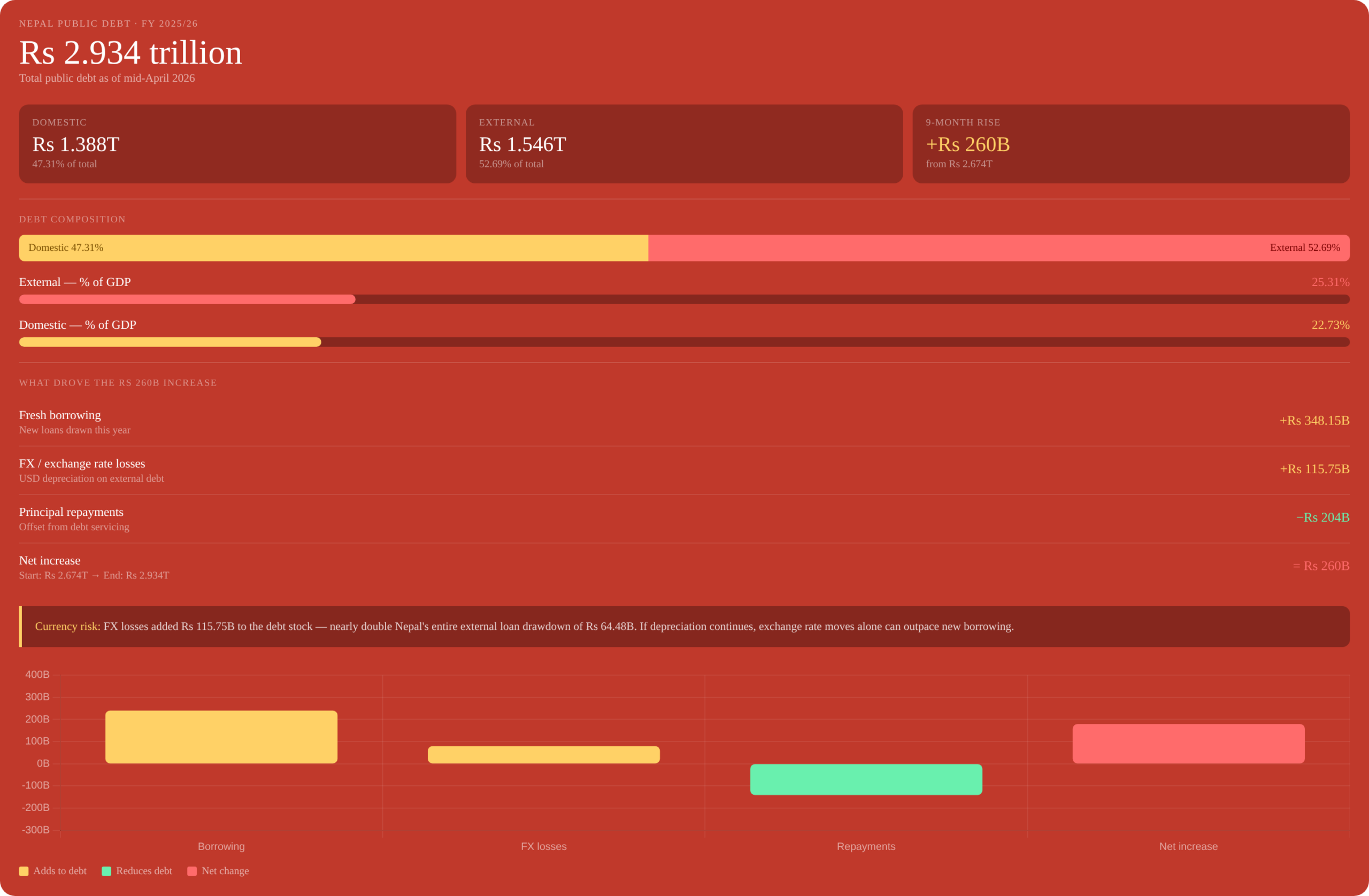
Nepal’s public debt is split nearly evenly, with external (foreign) debt slightly higher. Domestic debt totals Rs 1.388 trillion, accounting for 47.31% of total debt and 22.73% of GDP. External debt stands at Rs 1.546 trillion, representing 52.69% of total debt and 25.31% of GDP.
External borrowings are primarily from international donors and multilateral institutions, often denominated in foreign currencies such as the US dollar. Domestic debt is raised through government securities sold in the local market.
The slight dominance of external debt exposes Nepal to exchange rate volatility and global interest rate changes. Although there has been a policy push toward greater domestic borrowing to reduce external vulnerability, the current composition still carries significant currency risk.
This balance highlights the dual strategy of financing while underscoring the need for careful management of foreign exchange exposure.
By how much has Nepal’s public debt increased in the first nine months of fiscal year 2025/26?
In the first nine months of fiscal year 2025/26, Nepal’s public debt rose by approximately Rs 260 billion, from Rs 2.674 trillion at the start of the year to Rs 2.934 trillion by mid-April 2026.
Fresh borrowing totaled Rs 348.15 billion during this period, with exchange rate losses on external debt adding another Rs 115.75 billion. The net increase occurred even after making principal repayments on existing loans. This pace of growth indicates strong pressure on the budget, as revenue shortfalls force the government to borrow more heavily for both capital spending and debt servicing.
The daily average increase is substantial and exceeds recent historical trends. If this momentum continues, the debt-to-GDP ratio could climb further, potentially affecting investor confidence and raising future borrowing costs. Sustained increases risk limiting the government’s ability to respond to economic shocks or invest in growth-oriented projects.
What effect has the depreciation of the Nepalese rupee had on the external debt?
The weakening of the Nepalese rupee against major foreign currencies has added a significant extra burden to Nepal’s external debt. In the first nine months of fiscal year 2025/26, exchange rate fluctuations increased the local-currency value of external debt by Rs 115.75 billion without any new borrowing.
External debt, now at Rs 1.546 trillion, is largely denominated in US dollars and other foreign currencies, so rupee depreciation directly inflates the repayment amount in Rs terms.
This valuation loss accounts for a notable share of the overall debt rise and highlights Nepal’s vulnerability to currency movements driven by import dependence and external economic factors.
Without stronger export earnings or effective hedging tools, such exchange losses could become a recurring challenge, further squeezing fiscal resources and diverting funds away from development priorities.
What is the per capita public debt burden on Nepali citizens?
Nepal’s total public debt of Rs 2.934 trillion, when divided by the latest census population of approximately 29.16 million, results in a per capita debt burden of roughly Rs 100,600 per person as of mid-April 2026.
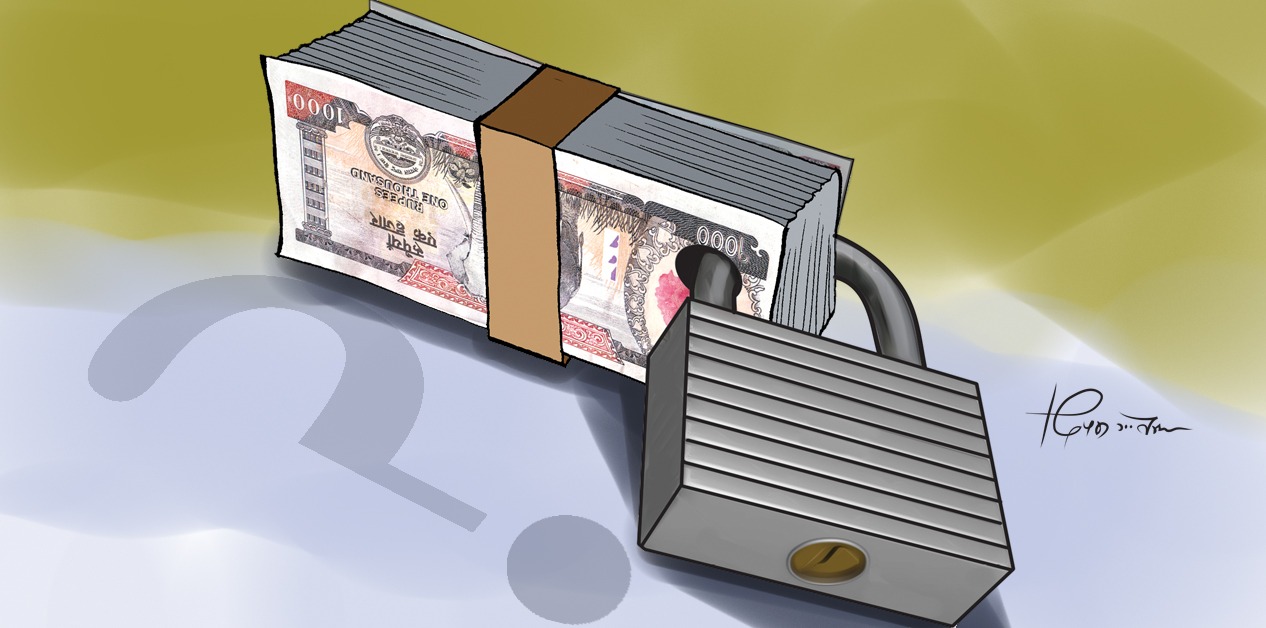
This figure has risen steadily in recent years due to accelerated borrowing. While this is not a direct personal liability, it represents each citizen’s notional share of the national debt. The burden is noteworthy given Nepal’s income levels and the fact that a considerable portion of borrowed funds has gone into projects with delayed or lower-than-expected returns.
This per capita measure raises questions of inter-generational fairness: current borrowing may constrain future generations’ access to public services. To mitigate this, debt must increasingly finance high-return investments that generate sufficient revenue for repayment without requiring endless new loans.
What share of Nepal’s GDP does the current public debt represent?
Nepal’s public debt now equals 48.04% of GDP. Of this, domestic debt accounts for 22.73% of GDP and external debt for 25.31%. Although this ratio remains moderate by some international standards for developing countries, the rapid climb in recent years—from around 38% seven years ago—signals growing concern.
The increase stems from higher absolute borrowing combined with relatively slower GDP growth. At nearly half of GDP, debt servicing consumes a rising portion of government revenue, leaving less room for new productive spending. Continued high ratios could crowd out private sector credit and raise the cost of future borrowing.
Nepal’s situation is made more challenging by modest revenue mobilization, making the 48.04% figure riskier than it might appear. Prudent management and stronger economic growth are essential to keep this ratio sustainable.
How much new debt has the government raised so far this fiscal year against its annual target?
The government set an annual target of Rs 595 billion in new public debt for fiscal year 2025/26 but had mobilized Rs 348.15 billion (58.45% of the target) by mid-April 2026.
Domestic borrowing reached Rs 283.66 billion (78.36% of its sub-target), while external borrowing was only Rs 64.48 billion (27.60% of its target). The stronger performance in domestic markets shows ready absorption capacity locally, but slower external disbursements reflect delays in project implementation and donor approvals.
This imbalance has led to greater reliance on internal borrowing, which may compete with private sector credit needs. Although the government remains on track for domestic targets, meeting the full-year goal will require accelerating external loan drawdowns.
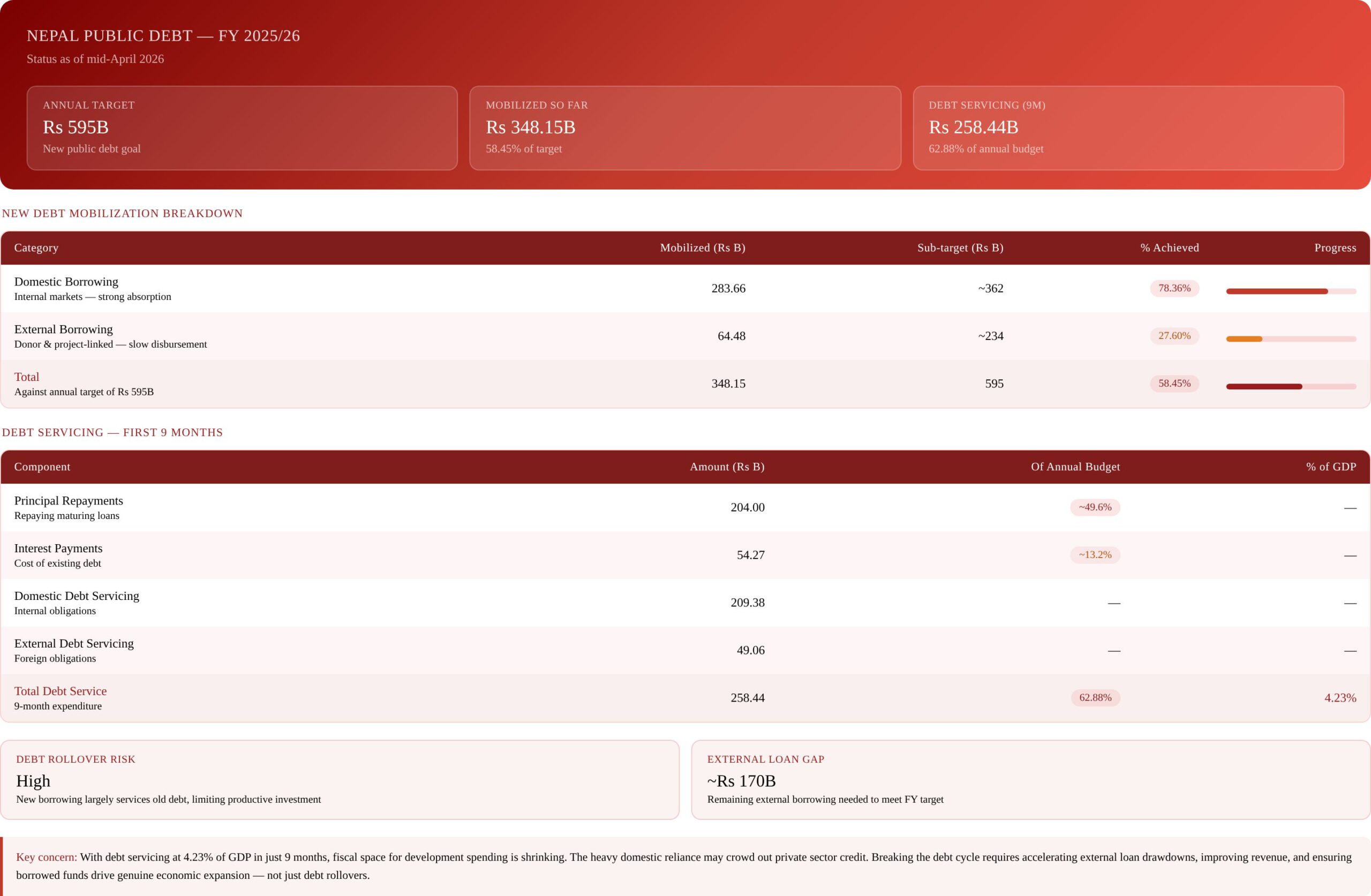
Heavy borrowing to finance revenue gaps risks perpetuating a pattern where new debt is largely used to service older obligations rather than driving genuine economic expansion.
How much has Nepal spent on debt servicing (principal and interest) in the first nine months?
In the first nine months of fiscal year 2025/26, the government spent Rs 258.44 billion on public debt servicing, which is 62.88% of the annual budgeted amount. This comprises Rs 204 billion in principal repayments and Rs 54.27 billion in interest payments.
Domestic debt servicing totaled around Rs 209.38 billion, while external servicing was Rs 49.06 billion. Debt service expenditure alone equaled 4.23% of GDP in this period. The large outlay demonstrates a concerning “debt rollover” dynamic, where fresh borrowings help repay maturing loans.
Experts often refer to this as a debt cycle or quagmire. With debt service costs rising annually, fiscal space for development programs is shrinking, which may eventually force reductions in social spending or higher taxation. Breaking this cycle requires better revenue performance and more productive use of borrowed funds.
How does the current public debt level compare with seven years ago?
Seven years ago, at the end of fiscal year 2019/20, Nepal’s public debt was Rs 1.433 trillion—roughly half the current Rs 2.934 trillion. The debt-to-GDP ratio has risen from 38.05% to 48.04% over this period. The near-doubling reflects increased public spending, reduced foreign grants, and persistent shortfalls in revenue collection.
While some borrowing supported infrastructure and post-pandemic recovery, many large projects have delivered lower returns than anticipated. This comparison shows a clear acceleration in debt growth driven by structural issues rather than one-off events. If unchecked, the debt could approach or exceed 50-60% of GDP in the coming years, heightening sustainability risks.
The seven-year trend serves as a clear warning that reforms in revenue collection, expenditure discipline, and project selection are urgently needed to prevent a more severe debt overhang.
What concerns have Nepali economists expressed about the rising public debt?
Prominent economists view Nepal’s debt situation as a worrying “debt cycle.” They emphasize that debt should primarily finance capital formation and productivity growth, yet a significant portion currently supports recurrent or low-return spending.
Economists note that many national pride projects are nearing completion; faster implementation could start generating revenue to ease debt pressure. They highlight weak revenue mobilization—where taxes barely cover current expenditure—as the main driver forcing repeated borrowing. They warn that without directing loans toward clearly productive, high-return projects,
Nepal risks a classic debt trap where servicing costs increasingly crowd out essential public services. The High-Level Economic Reform Commission has similarly cautioned that poor debt utilization could trap the country in a “debt web,” eroding fiscal sovereignty over time.
What major recommendations has the National Natural Resources and Fiscal Commission provided on internal debt?
The National Natural Resources and Fiscal Commission has recommended a strict ban on using internal (domestic) debt for current or administrative expenditure.
For the upcoming fiscal year, it set the federal internal borrowing ceiling at 5.5% of GDP and urged that all such loans be directed exclusively toward projects that create employment, deliver long-term benefits, and contribute to capital formation.
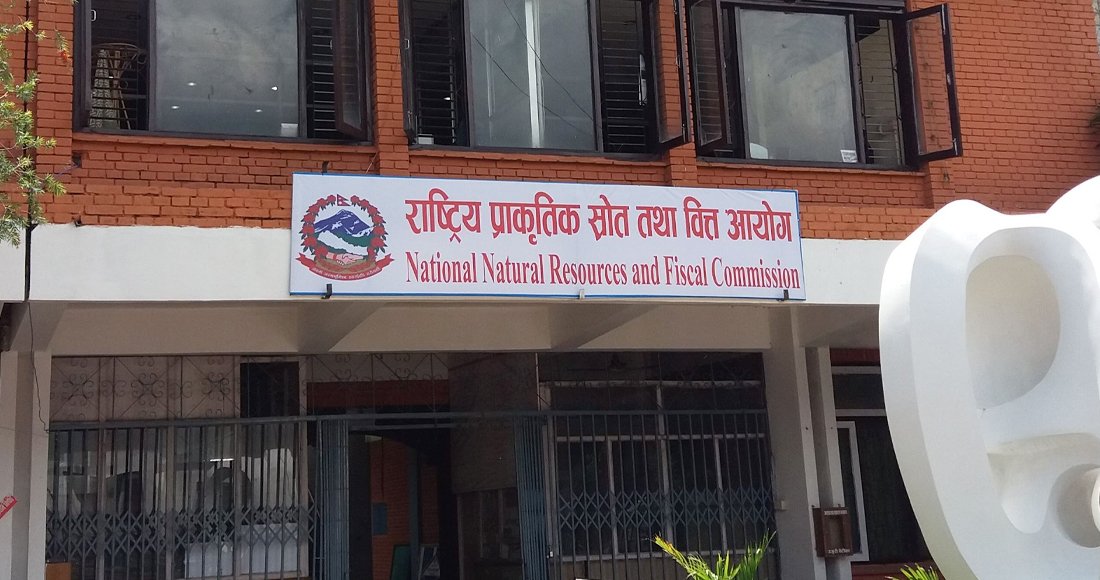
Office of NNRFC. File photo
The Commission calls for rigorous cost-benefit analysis, net present value evaluation, and ensuring the internal rate of return exceeds the cost of capital. It also advocates project-specific borrowing—clearly identifying programs at the time of issuance—and mandatory reporting in economic surveys.
An integrated electronic tracking system across all government levels, with Commission access, is also proposed. These steps aim to transform domestic debt into a genuine investment tool rather than a substitute for revenue, addressing the current trend where much new borrowing merely repays old debt.
What measures should the government adopt for more sustainable public debt management?
To achieve sustainable debt management, the government should focus on revenue-enhancing reforms, enforce strict project-specific borrowing, and channel funds only into high-return, productive sectors. Completing ongoing national pride projects on time will help generate revenue streams for internal debt servicing.
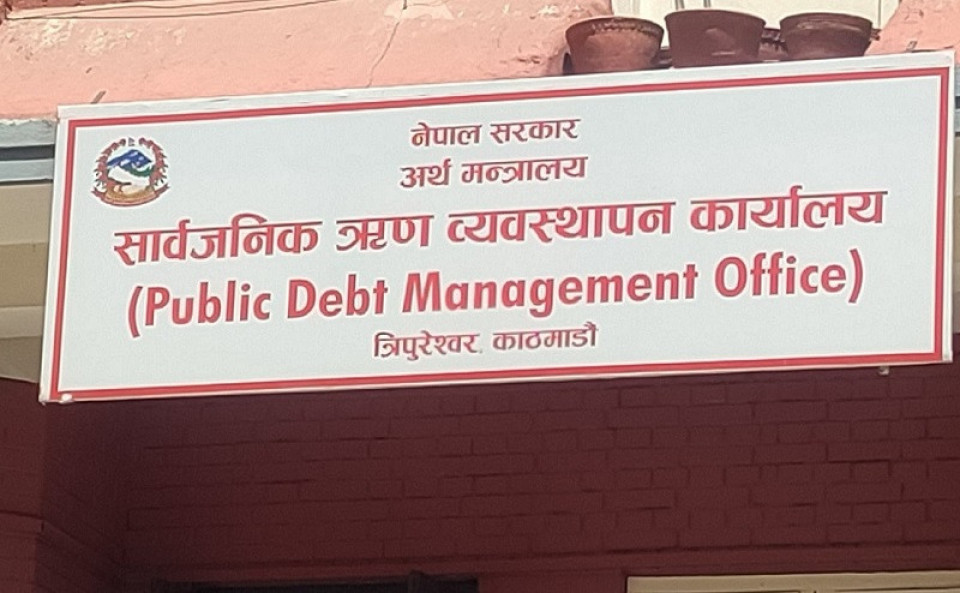
Office of PDMO. File photo
Experts recommend moving away from general borrowing toward earmarked loans with clear, measurable outcomes. Strengthening tax administration, widening the tax base, and controlling non-productive recurrent spending are critical to reduce borrowing needs.
Establishing a comprehensive, real-time debt database covering federal, provincial, and local levels would boost transparency. Mitigating currency risks through better hedging and favorable external loan terms is also important.
The ultimate goal should be keeping debt service within prudent limits relative to GDP and revenue, thereby restoring fiscal space for inclusive growth and reducing long-term vulnerability. Without these reforms, the present trajectory could lead to prolonged fiscal strain.