Kathmandu
Sunday, June 14, 2026






KATHMANDU: Nepal News presents today’s snapshot of Nepal’s economic activities. Get quick updates on major market movements, policy shifts, and financial developments shaping the economy of Nepal. Here are the key economic highlights for today:
Govt. Signs $40 Million Digital Transformation Loan with ADB
The government and the Asian Development Bank (ADB) signed a concessional loan agreement worth USD 40 million today for the Nepal Digital Transformation Project. This project is the first in South Asia to use a co-financing framework between the ADB and the World Bank, with the latter already pledging USD 50 million. The initiative aims to strengthen national cyber security infrastructure and modernize digital public service delivery. The agreement was signed by Finance Secretary Dr. Ghanshyam Upadhyay and ADB Country Director Arnaud Cauchois, aligning with the government’s 100-day good governance plan and the 16th five-year plan.
NEPSE Gains 7.73 Points as Turnover Hits Rs 4.74 Billion
The Nepal Stock Exchange (NEPSE) edged up by 7.73 points on Monday to close at 2,796.43, a 0.27 percent rise. The Sensitive Index also increased by 1.64 points to 469.72. A total of 10.92 million shares of 351 companies were traded through 81,006 transactions, generating a turnover of Rs 4.748 billion. Market sentiment was positive, with 157 companies gaining, 102 declining, and 10 remaining unchanged. Eight sector indices advanced, led by the development bank and manufacturing, while five sectors declined. Three companies hit the positive circuit breaker, recording a 15 percent rise in share prices during the session.
Ministry Projects Slow Economic Growth of 3.5%
The Ministry of Finance has projected that Nepal’s economy will expand by only 3.5% in the current fiscal year 2025/26. The ministry noted that this growth is significantly slower than that of neighboring countries and remains unstable. Over the last decade, the average annual growth rate has been 4.2%, fluctuating between a minimum contraction of 2.4% and a maximum expansion of 9%. In the previous fiscal year 2024/25, the economy grew by 4.61%, indicating a recent deceleration in overall economic activity.
Govt. Collects Rs 1.319 Billion in First Month
The Rastriya Swatantra Party-led government, which took office on March 27 following the March 5 election, has collected Rs 1.319 billion in revenue during its first month. This represents an increase of Rs 23.21 billion compared to the same period last year. Despite the growth, economists argue it is too early to label this a “reform signal,” noting that the rise is influenced by a stronger US dollar and increased import activity. The government has recently implemented mandatory customs duties on items valued over Rs 100 to curb revenue leakage.
Foreign Loans Account for 81.1% of External Aid
The Ministry of Finance has reported a significant shift in the structure of foreign assistance, with loans increasingly replacing grants over the last decade. In the fiscal year 2024/25, loans comprised 81.1% of external aid, while grants fell to just 18.9%. This is a sharp contrast to the fiscal year 2014/15, when the loan-to-grant ratio was 57.4% to 42.6%. Additionally, the overall volume of foreign aid is declining; it occupied an average of 21.5% of the total budget over the last 10 years but is limited to 14.6% for the current 2025/26 period.
Ministry Launches Revolving Fund to Refund Cooperative Savings
The Ministry of Land Management, Cooperatives, and Poverty Alleviation has implemented a new manual to refund savings to victims of troubled cooperatives through a newly established Revolving Fund. The fund will prioritize “small savers” with deposits up to Rs 500,000, as well as senior citizens over 60, single women, and people with disabilities. Capital for the fund will be sourced from government grants, the sale of cooperative assets, and recoveries from responsible directors. Savers must submit formal claims with citizenship certificates and deposit records, after which funds will be transferred directly to their bank accounts based on balances held before the cooperatives were declared “troubled.”
Finance Minister Targets $3,000 Per Capita Income Within 7 Years
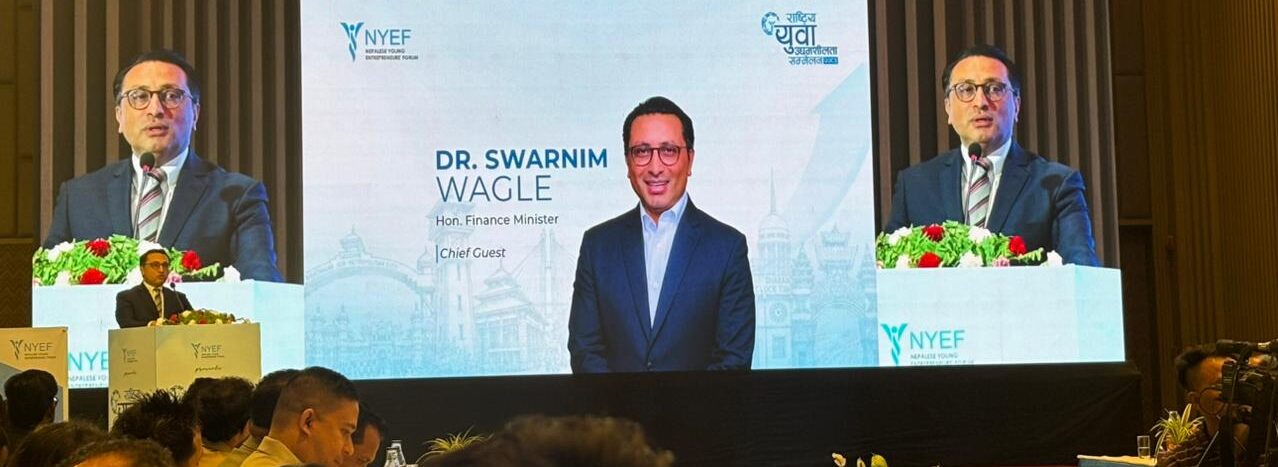
Finance Minister Dr. Swarnim Wagle released a “Position Paper” today, outlining a roadmap to achieve an average economic growth of 7% and a per capita income exceeding USD 3,000 within the next five to seven years. The document aims to expand the Nepali economy toward a USD 100 billion valuation, transitioning the nation into a respectable middle-income country. The plan also includes increasing the total installed electricity capacity to 15,000 megawatts within five years and completing all current National Pride Projects within two years to stimulate private investment and job creation.
Faces 12.6 Percent Unemployment Rate Amid Migration Surge
According to the Fourth Nepal Living Standards Survey, the unemployment rate in Nepal has reached 12.6%, leading to a heavy reliance on foreign employment. Over the past decade, the number of workers seeking labor permits has grown by an annual average of 28.6%. In the previous fiscal year 2024/25, a total of 839,000 workers received permits. In the current fiscal year up to March 26, at least 557,000 individuals have already processed permits. While remittances provide short-term poverty relief, the government warns of long-term risks, including the depletion of human capital and a shortage of skilled labor within the country.
Dhanusha Leads in Labor Permits with 28,582 Migrants
Data from the Department of Foreign Employment reveals that Dhanusha district recorded the highest number of migrant workers, with 28,582 individuals obtaining labor permits in the first nine months of the current fiscal year. Jhapa followed as the second-highest, with Morang and Mahottari ranking third and fourth with 23,354 and 20,172 migrants respectively. Other districts with significant numbers include Siraha at 19,824 and Sarlahi at 19,372, highlighting a concentrated trend of foreign employment seeking within the Madhesh and Koshi provinces.
Rasuwagadhi Border Records Rs 31.3 Billion in Imports
The Rasuwagadhi border point has facilitated the import of goods worth Rs 31.3 billion during the first nine months (July 17, 2025, to April 13, 2026) of the fiscal year 2025/26. The Raswa Customs Office in Timure collected Rs 6.42 billion in revenue from these imports, which primarily included electric vehicles, garment rolls, and construction materials for the Kathmandu-Terai Fast Track. In contrast, exports to China reached approximately Rs 650 million, featuring items like bamboo stools, noodles, and traditional handicrafts. Despite a temporary closure following the July 8, 2025, floods that swept away the Miteri Bridge, operations fully resumed on January 1, 2026.
Investment Board Nepal Launches One-Stop Service Portal
The Investment Board Nepal (IBN) has officially operationalized a digital one-stop service center through the ‘ossc.ibn.gov.np’ portal to streamline processes for investors. The system integrates 14 government agencies, including the Department of Customs, the Office of the Company Registrar, and Nepal Rastra Bank, to provide coordinated services for company registration, tax filing, and labor permits. This automation aims to eliminate the need for physical visits by facilitating land acquisition, environmental study approvals, and visa processing online. The initiative is a key component of the current government’s 100-day governance reform plan to enhance the investment climate for both domestic and foreign stakeholders.
Smartphone Imports Reach Record Rs 33.82 Billion
During the first nine months (July 17, 2025, to April 13, 2026) of the fiscal year 2025/26, the country exported Rs 33.82 billion for smartphone imports, marking a decade-high record. Additionally, Rs 722.2 million was spent on feature phones. Officials attribute the rise in legal imports to stricter government enforcement of the mobile device management system and a shift in consumer interest toward new digital content creation. China remains the largest supplier, accounting for Rs 25.65 billion of the total, followed by India at Rs 7.59 billion.
Government Unveils Strategy to Produce 24,500 Megawatts by 2036
The government has officially released the Energy Consumption Growth and Export Strategy, 2026, aiming to generate a total of 24,500 megawatts of electricity by the fiscal year 2035/36 through combined investments from the government, public, and private sectors. The comprehensive plan prioritizes the completion of the 1,200 megawatts Budhigandaki Storage Project by the fiscal year 2024/25 and the 670 megawatts Dudh Koshi Storage Project by the fiscal year 2034/35. Additionally, the strategy incorporates 1,000 megawatts of solar power by the fiscal year 2028/29 and the construction of 14 domestic and 10 cross-border transmission lines to facilitate regional energy trade.
Contractors Demand Price Adjustment as Material Costs Rise 120%
Construction entrepreneurs are calling for a “construction holiday” and urgent price adjustments, citing a 40% to 120% spike in the cost of raw materials. In Kailali and Dadeldhura, contractors claim the industry is facing a crisis as the price of bricks rose from Rs 11 by mid-February to Rs 14.5 by mid-April. While hardware associations report a 20% to 25% increase in cement and iron rods, items like plastic and copper have surged by up to 80%. Rising fuel prices have also more than doubled the cost of transporting a truck of cement from Rs 20,000 to Rs 45,000.
Dodhara Chandani Dry Port Construction Progresses with Rs 2.4 Billion
Construction of the Dodhara Chandani Dry Port in Kanchanpur is moving rapidly, with current physical progress exceeding 8%. An Indian company, Compt Construction, is executing the project under a Rs 2.4 billion contract funded by the government of India. The project, which involves building administrative blocks, warehouses, and quarantine facilities on 25.3 hectares of land, is expected to be completed within 24 months. To support the port, an 8-kilometer, 6-lane access road has already been completed from Gaddachauki to the Malaria stream.
New Concrete Bridges Render 100 Suspension Bridges Obsolete
The expansion of the road network and the construction of motorable bridges have left over 100 suspension bridges unused across the Baglung district. In Kathekhola Rural Municipality, the recent completion of a motorable bridge at Dudiyaghat cost Rs 36.2 million, effectively displacing a nearby steel suspension bridge built only seven years ago. Similarly, a Rs 33.1 million bridge in Lama Bagar has rendered its adjacent pedestrian bridge obsolete. Local authorities are now planning to relocate these functional but bypassed suspension bridges to remote areas where trail crossings are still desperately needed, as many existing structures along the Mid-Hill Highway continue to deteriorate from disuse.
Construction Begins on 65-Megawatt Myagdi Khola Project
Construction has officially commenced on the 65-megawatt Myagdi Khola Hydropower Project in Bagara, Dhaulagiri Rural Municipality-4. Developed by Hydro Village with an estimated cost of Rs 13 billion, or Rs 200 million per megawatt, the project aims to start power generation by mid-April 2028. The infrastructure includes a 3,600-meter main tunnel and an underground powerhouse. To facilitate the use of explosives for tunnel excavation, an Army base camp is being established in Bhaisikharka, while a 132 kV transmission line will eventually connect the plant to the national grid at the Dandakhet substation.
E-Pension Service Launched for Civil Servants in Jumla
For the first time in the Himalayan district of Jumla, the federal government has implemented an E-Pension service for permanent civil servants. Initiated by the Ministry of Finance, the digital system allows retirees to receive their authorization letters, accumulated leave pay, and medical expenses from a single point within the district. The first recipient of this service was an agriculture officer from the Agriculture Development Office in Chandanath Municipality. This transition to digital service delivery eliminates the previous necessity for retirees to travel to Kathmandu, saving significant time and travel costs for former government employees in the remote region.
Pokhara City Hall to Undergo Rs 290 Million Reconstruction
The Pokhara Metropolitan City, in partnership with the Town Development Fund, has reached an agreement to reconstruct the 42-year-old Pokhara City Hall with an investment of Rs 290 million. The project includes the construction of an underground parking lot and exhibition hall at the current garden site, alongside a new canteen and a smaller assembly hall. Upgrades will feature digital LED screens to replace traditional banners and modernized seating and kitchen facilities. Once completed, the metropolitan city plans to utilize the revenue generated from hall bookings to manage operational costs and recoup the initial investment.
Lemon Prices Surge to Rs 450 Per Kilogram at Kalimati Market
The price of lemons has spiked significantly at the Kalimati Fruit and Vegetable Market due to a sharp decline in supply. While the Kalimati Fruit and Vegetable Market Development Committee recorded an average wholesale price of Rs 375 per kilogram on Monday, some traders report costs reaching as high as Rs 450 per kilogram. This represents a substantial increase from the Rs 230 average recorded just one month ago. Since domestic production accounts for only 10% of the total demand, the market remains 90% dependent on imports from India, where rising prices have directly impacted the domestic market.
Chitwan Farmers Forced to Sell Vegetables at Rs 5 Per Kilogram
Farmers in Chitwan are facing severe financial distress as the market price for vegetables like beans, cucumbers, and gourds has plummeted to Rs 5 per kilogram. In areas like Bharatpur Metropolitan City-25, growers managing up to 81271.51 square meters of land are leaving crops to rot in the fields because the market price does not even cover the cost of labor for harvesting them. While farmers receive as little as Rs 5 to Rs 10 per kilogram, consumers are reportedly paying between Rs 70 and Rs 80 per kilogram. This vast price gap has prompted local producers to form a struggle committee to protest the influence of middlemen.
Snow Rivers Limited to Launch IPO for General Public on May 12
Snow Rivers Limited is scheduled to issue its Initial Public Offering (IPO) for the general public starting May 12. This second-phase issuance follows the completed allotment of shares to project-affected locals and Nepali citizens employed abroad. The company received approval to issue 1,875,000 units of shares, representing 20% of its Rs 937.5 million issued capital. For the general public, 778,125 units are available at a face value of Rs 100, totaling Rs 77.8 million. Investors can apply for a minimum of 10 units and a maximum of 1,000 units until May 15.
Gold and Silver Prices Rise on Monday
Gold prices in the market increased on Monday, rising by Rs 1,300 per tola (11.66 grams). According to the Federation of Nepal Gold and Silver Dealers’ Association, the price of gold has been fixed at Rs 300,500 per tola. On Sunday, gold was traded at Rs 299,200 per tola. Similarly, silver prices also went up on Monday by Rs 50 per tola, reaching Rs 5,045 per tola, the federation reported. On Sunday, silver was traded at Rs 4,995 per tola. In the international market, gold is currently being traded at USD 4,724.31 per ounce, while silver stands at USD 76.44 per ounce.