Kathmandu
Monday, July 27, 2026





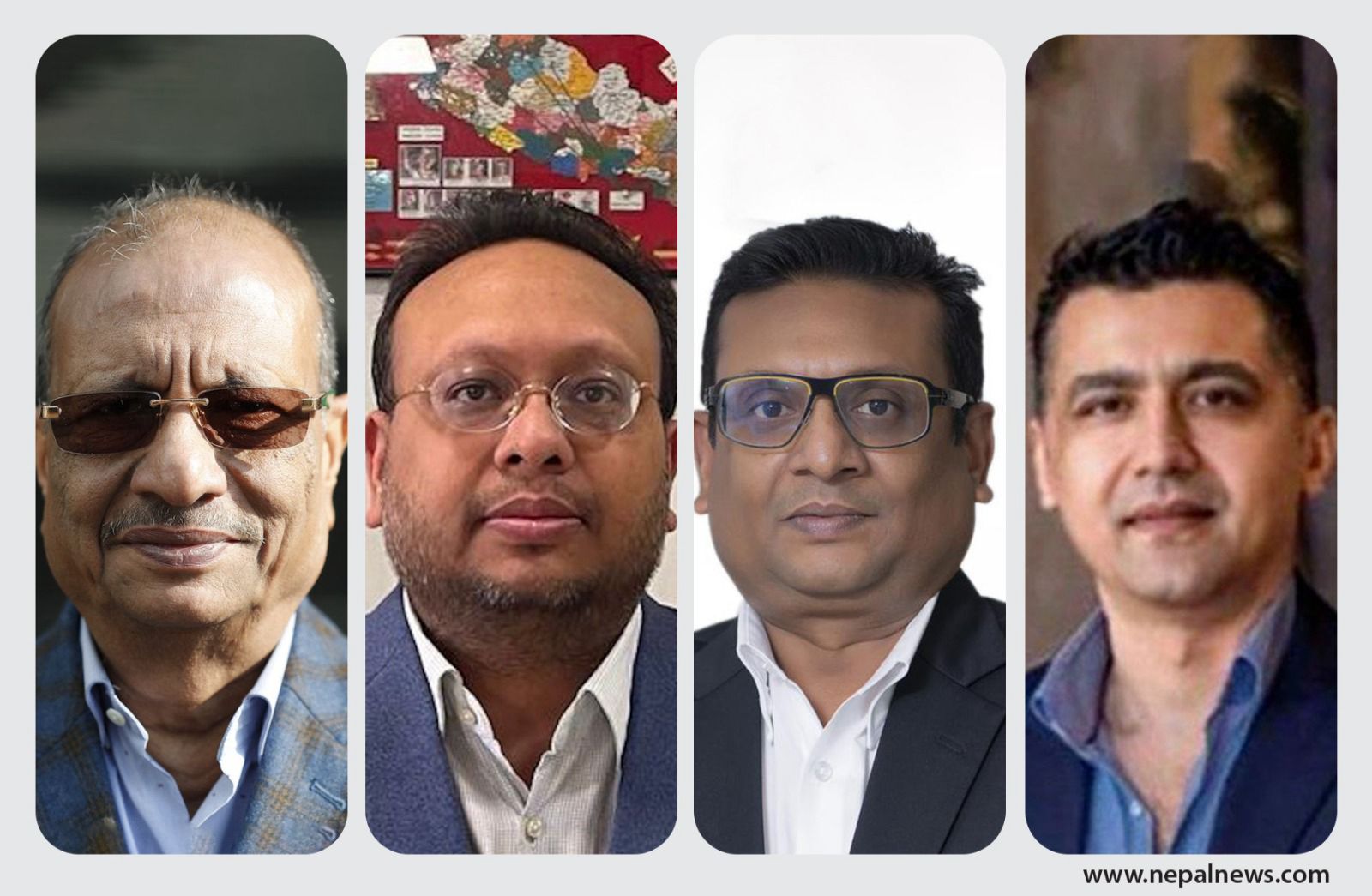
KATHMANDU: In a move that has sent ripples through Nepal’s business community, Shankar Agrawal of Shankar Group and Deepak Bhatta of Infinity Holdings-partners at the commanding heights of business-have been taken into custody by the Department of Money Laundering Investigation. Between them, their businesses employ more than 20,000 people and contribute billions of rupees annually to state revenues, underpinned by loan exposures exceeding Rs100bn.
The move come despite months of cooperation with investigators and no evident risk of flight or evidence tampering, raising questions about proportionality. For many in the private sector, the episode signals not merely enforcement, but escalation-an unusually forceful assertion of state power against some of the country’s most prominent businessman and industrialist.
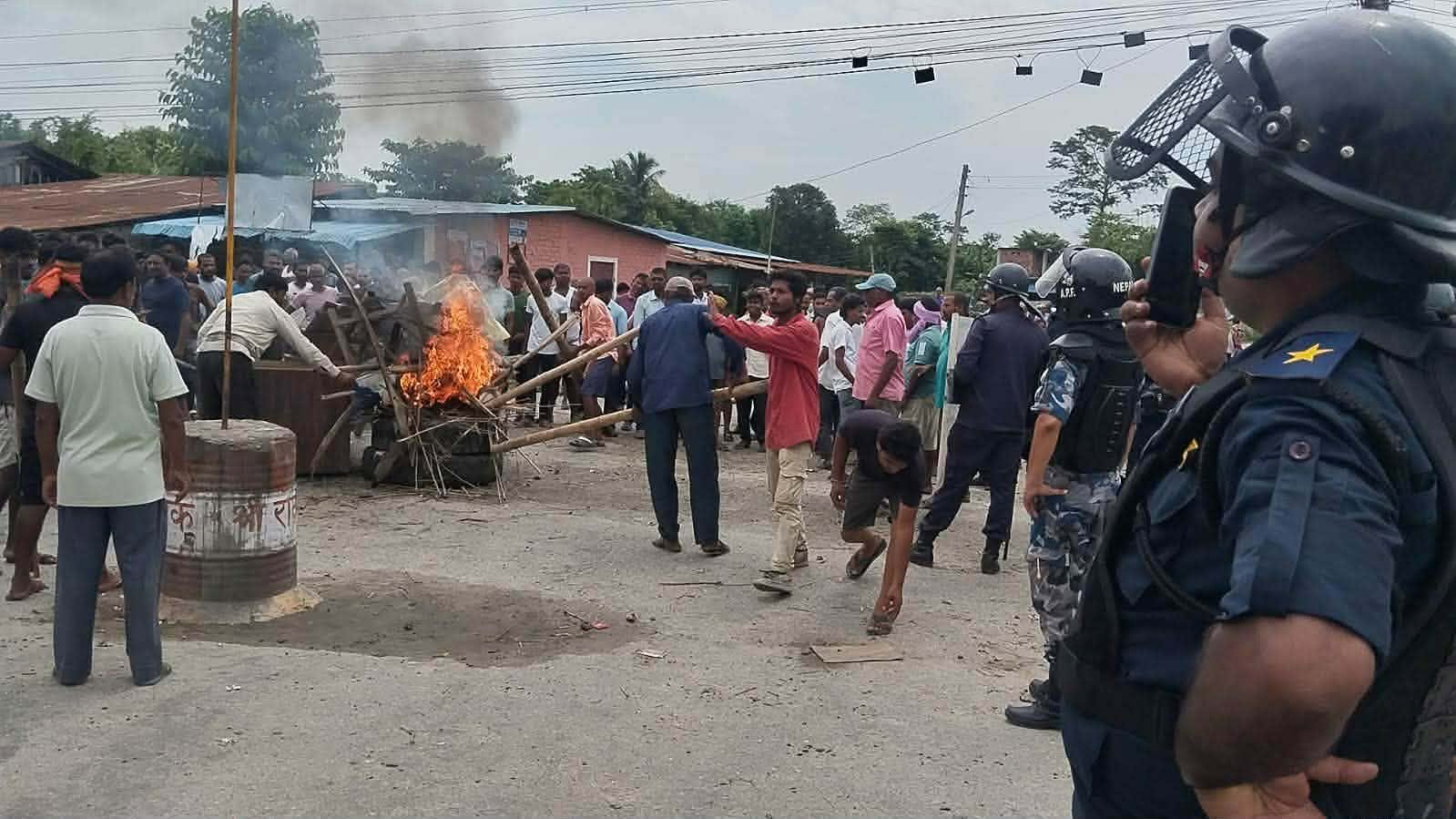
The timing is delicate. Their flagship investment, the Hilton hotel, was damaged during Gen-Z unrest on September 09, 2025, underscoring the fragility of large-scale private capital in a volatile political climate. Now, with both men in custody, concerns are mounting that the government’s approach-whether driven by due process, political pressure or corporate rivalry-may deepen unease across the business landscape.
Executives and investors alike worry about the precedent. In an economy where growth depends heavily on a handful of conglomerates, aggressive legal action against leading figures can have a chilling effect, dampening risk appetite and delaying investment decisions. Allegations of misinformation, corporate infighting and shifting narratives have further clouded the picture, leaving the line between accountability and overreach increasingly blurred.
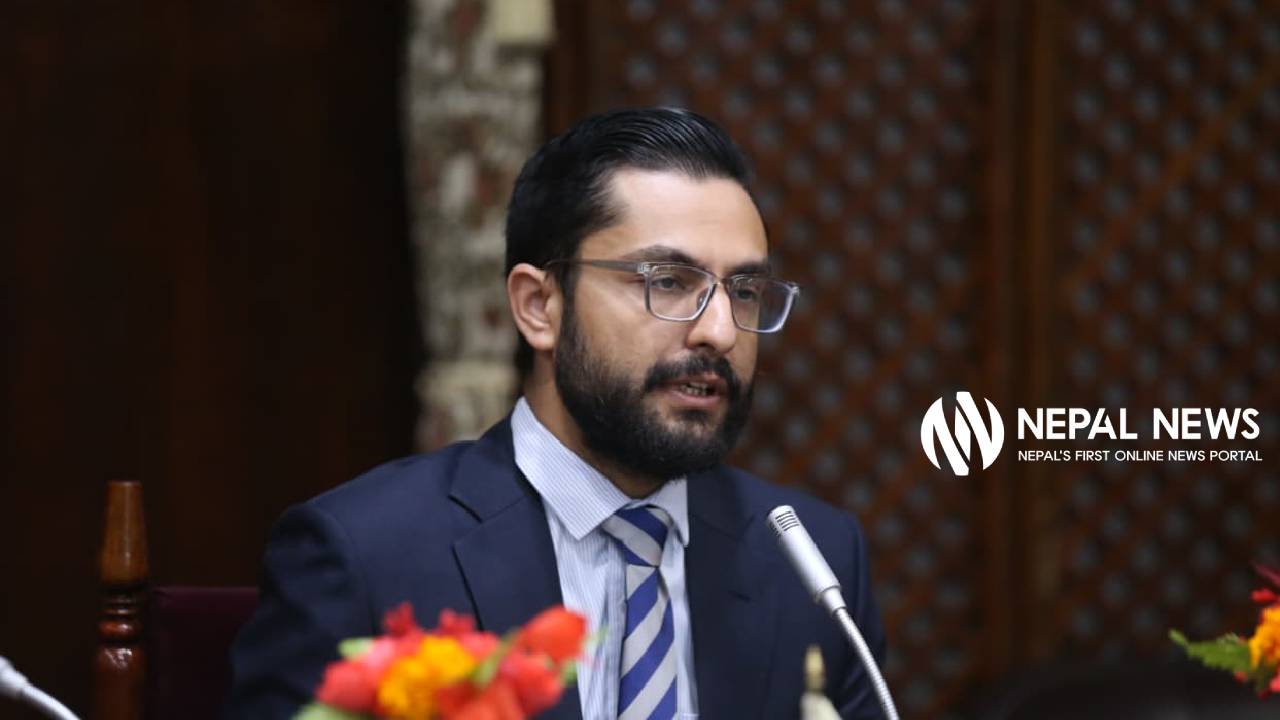
“The decision to place major industrialists under investigation in behind bars is unnecessary and risks sending shockwaves through Nepal’s economy,” said analyst and investor Arun Kumar Subedi with Nepal News. “These are not small actors-they represent the country’s largest corporate houses, with the biggest loan portfolios in the banking system in Nepal. Their operations underpin investment flows, tax revenues, employment, and the stability of entire supply chains” he added.
Subedi said “If such industries and business are disrupted or forced to shut down even in temporary time, the consequences will cascade across sectors-from thousands of job losses and declining bank recoveries to reduced government revenue and investor confidence. At a time when businesses are already struggling to repay loans, such actions could deepen financial stress and trigger a wider economic crisis. This is not just a legal or political issue; it is a systemic economic risk. Frankly, it is a deeply damaging move that could undermine overall economic performance and long-term growth.”
If confidence falters, the consequences will extend beyond any single firm. In Nepal, where capital is scarce and trust even scarcer, the perception of instability can travel faster than policy assurances. What is at stake is not just the fate of two tycoons, but the credibility of the country’s investment climate itself.
For a few years now, Deepak Bhatta has stood out as one of Nepal’s most assertive new-generation tycoons. As chairman of Infinity Holdings, he has stitched together a sprawling portfolio that stretches from hydropower and insurance to reinsurance, microfinance, travel, education, FMCG, cement industries to steels-an unusually rapid diversification even by the standards of Nepal’s conglomerate-heavy economy.
When business meets the state
For Deepak Bhatta, scrutiny has come not in a single wave, but in overlapping tides. Over the years, the chairman of Infinity Holdings has found himself the subject of multiple investigations-by financial regulators, tax offices, police units and revenue authorities-often simultaneously, and often without conclusion.
The pressure intensified after September 9, 2025, when Gen-Z-led protests set ablaze his flagship investment, the Hilton hotel. The episode came at a moment of political transition, when uncertainty had already slowed parts of his business expansion. It also marked a turning point: a new government, eager to demonstrate anti-money-laundering, began to focus more intently and personally on Bhatta.
The political context mattered. His long-time rival, Kul Man Ghising, entered Sushila Karki led intern government with an unusually wide power, overseeing key ministries spanning energy, infrastructure and urban development. Another rival, Rameshore Khanal, took charge of the finance ministry. Within weeks, senior figures in the home and law ministries were, by Mr Bhatta’s account, pressing law-enforcement agencies to act against him. Police, however, repeatedly declined to proceed, citing insufficient evidence. Requests to search his home and offices were also refused for lack of legal grounds for many months.

Denied a decisive move through policing, the state turned instead to investigation by accumulation. The finance minister Rameshower Khanel coordinated a web of inquiries: the Department of Money Laundering Investigation, the Central Investigation Bureau of Nepal Police, inland revenue department, revenue investigation department and the central bank all opened parallel probes to single man. Over several months, these agencies examined transactions, corporate structures and capital flows. Yet, despite the breadth of scrutiny, no conclusive evidence of wrongdoing or money laundering emerged.
Much of the inquiry traced back to alerts from the Financial Intelligence Unit of Nepal Rastra Bank. Such alerts are routine, generated weekly to flag suspicious transactions. In Bhatta’s case, however, the trigger was unusual: a transaction dating back four years was revived and re-examined after earlier reviews had cleared it. The move coincided with strained relations between Mr Bhatta and then-governor Maha Prasad Adhikari, whose tenure was itself marked by controversy, including a government probe into alleged leaks of sensitive information. In Nepal’s tightly interwoven nexus of politics, bureaucracy and business, personal rivalries can easily blur into institutional action.
At the centre of the case lay a Rs450m transfer in 2021 into Mr Bhatta’s account at Siddhartha Bank, originating from Jagadamba Steels. A total of Rs450m was transferred into Bhatta’s personal account over four days, from June 27 to 30, 2021. Regulators also questioned transactions through overdraft facilities linked to Infinity Holdings, as well as a sharp rise in the firm’s paid-up capital-from Rs30m to Rs480m within a year. Bhatta has maintained that all transactions were legitimate, duly taxed and, where relevant, reversed with interest. Previous reviews by multiple agencies had, he notes, already granted him a clean bill of health and verified of land related business between them.
Bhatta argued that the renewed investigations are less about finance than about timing. Had there been genuine concern, he says, inquiries could have been launched when the transactions first occurred. Instead, they resurfaced amid political change and intensifying corporate rivalries-suggesting, in his view, a campaign designed to harass rather than to prove.
The case took a further twist when investigators began examining activity in his share market account. According to emerging findings, his demat account has been misused by a brokerage firm ( Bhrikuti Stock Broking-Broker No. 55) with which he had a margin-lending agreement. Trades were allegedly executed without his consent, and system logins traced to unfamiliar IP addresses from his office. If substantiated, such details would complicate the narrative, shifting attention from alleged financial misconduct to potential malpractice within the brokerage system itself.
Despite his cooperation with investigators, Bhatta was eventually ordered to appear before the Central Investigation Bureau, where he presented himself voluntarily but built the narrative of arrested from his office. The inquiry now appears to be evolving, with authorities reassessing earlier assumptions in light of new technical evidence.
For now, the outcome remains uncertain. What is clearer is the broader pattern: in Nepal’s emerging corporate order, success invites not only competition but also scrutiny-sometimes institutional, sometimes political, and often both at once. Whether Bhatta is a symbol of overreach or a casualty of it may ultimately depend less on the facts already examined than on those still to come.
Corporate clash: Bhatta vs. the old guard
Deepak Bhatta rise in Nepali business has been swift, and not without friction. Bhatta’s expansionist strategy-marked by aggressive deal-making and an appetite for regulated sectors-has begun to unsettle older business houses. What was once quiet competition has edged towards open corporate rivalry.
Before the race for Nepal’s new stock exchange license began, Deepak Bhatta had already squared off with the IME Group–Vishal Group alliance over reinsurance. The incumbents moved first, seeking to dominate the private-sector reinsurance market. Undeterred, Mr Bhatta teamed up with major business groups in Nepal including Shankar Group, Infinity Holdings, Golchha Group, Lucky Group, Ramesh Corp, Shiv Shakti Group among others turning the contest into a corporate showdown. When the Insurance Committee issued a 21-day notice soliciting applications-a procedural first-four firms entered the fray, but the real drama was the duel between IME-Vishal’s Annapurna Reinsurance and Bhatta-Shankar’s Himalaya Reinsurance. By June 2021, Himalaya had won the license, with Shankar Group holding the largest stake at roughly 30 percent. Nepal’s first private reinsurance company was born, a testament to how ambition, alliances, and strategic audacity can overturn entrenched business hierarchies.
Tensions have sharpened in more intense corporate war particular over two fronts. The first is his group’s push into the licensing process for a new stock exchange in September 2022. The second is his attempted entry into mainstream banking, notably through Pakistan’s Habib Bank share (14,006,230 units of shares worth more than Rs 1.05 billion) from Himalayan Bank in 2025.
Both attempts ultimately faltered, undone by intense corporate rivalry and a multiple obstacles. Yet these setbacks have done little to temper Deepak Bhatta’s ambitions. If anything, they appear to have reinforced his resolve, as he continues to broaden Infinity Holdings’ footprint across an ever wider range of sectors.
Corporate rivalries with established conglomerates such as IME Group and Vishal Group have intensified, as these groups move to defend their turf. What is emerging is less a series of isolated disputes than a broader contest over who will shape the next phase of Nepal’s corporate landscape.
Bhatta’s ascent
Deepak Bhatta began his career not in boardrooms, but on the margins. Born into a non-business family, he started small-painting and framing contracts for government offices. During Nepal’s insurgency, he became a supplier for the police, providing security supplies and other necessary gears. From these modest business beginnings, he gradually moved into consulting for foreign companies in Nepal’s hydropower sector, bridging international firms and local authorities.
Bhatta leveraged these connections to diversify aggressively. From tourism and real estate to the education and capital markets, his ventures expanded in scope and scale. In hydropower, he was a disruptor. Challenging established players at that time like the ICITC-led Dineshlal and Sureshlal Shrestha groups, Bhatta carved a foothold in Nepal’s lucrative water resources, sometimes turning contentious projects into corporate battlegrounds.
He played a pivotal role as a consultant connecting international investors with Nepal Electricity Authority.
His fingerprints can be found in contracts for foreign firms constructing key transmission lines between Hetauda, Bharatpur, Bardaghat, and Inaruwa. Yet, Bhatta contends that bureaucratic pushback and internal politics often sought to tarnish his reputation, even as he quietly facilitated major deals various countries companies in Nepal’s energy sector.