Kathmandu
Tuesday, July 14, 2026





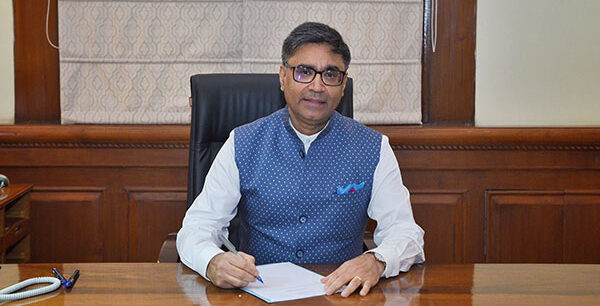
KATHMANDU: The planned two-day visit of Indian Foreign Secretary Vikram Misri to Nepal, scheduled for May 11, has been postponed for the time being, according to high-level government sources.
The visit was expected to take place in the context of strengthening engagement with Nepal’s new political leadership under the Balen Shah-led government and to give renewed momentum to bilateral relations.
However, New Delhi has informed Kathmandu that the visit has been deferred due to prior commitments of the Foreign Secretary. The Indian side has not provided further details.
The postponement comes at a time when Nepal and India have exchanged fresh diplomatic positions over the sensitive Lipulekh-Kalapani-Limpiyadhura boundary issue.
India has rejected Nepal’s territorial claim over Lipulekh, stating through its Ministry of External Affairs spokesperson Randhir Jaiswal that the Lipulekh Pass has been a traditional route for the Kailash Mansarovar pilgrimage since 1954 and has been in continuous use for decades.
India dismissed Nepal’s claim as lacking historical basis but reiterated that all outstanding boundary issues can be resolved through dialogue.
In response, the Government of Nepal reaffirmed its position that Limpiyadhura, Lipulekh, and Kalapani lie within Nepali territory as defined by the 1816 Sugauli Treaty.
The Ministry of Foreign Affairs said it has already conveyed formal diplomatic notes to both India and China regarding the reported use of the Lipulekh route for the pilgrimage.
Kathmandu also reiterated its long-standing objection to infrastructure development and cross-border activities in the disputed area, while emphasizing that boundary issues should be resolved through diplomatic means based on historical treaties, maps, and evidence.
The developments highlight continued sensitivity in Nepal–India relations, even as both sides publicly express commitment to dialogue.