Kathmandu
Sunday, June 14, 2026





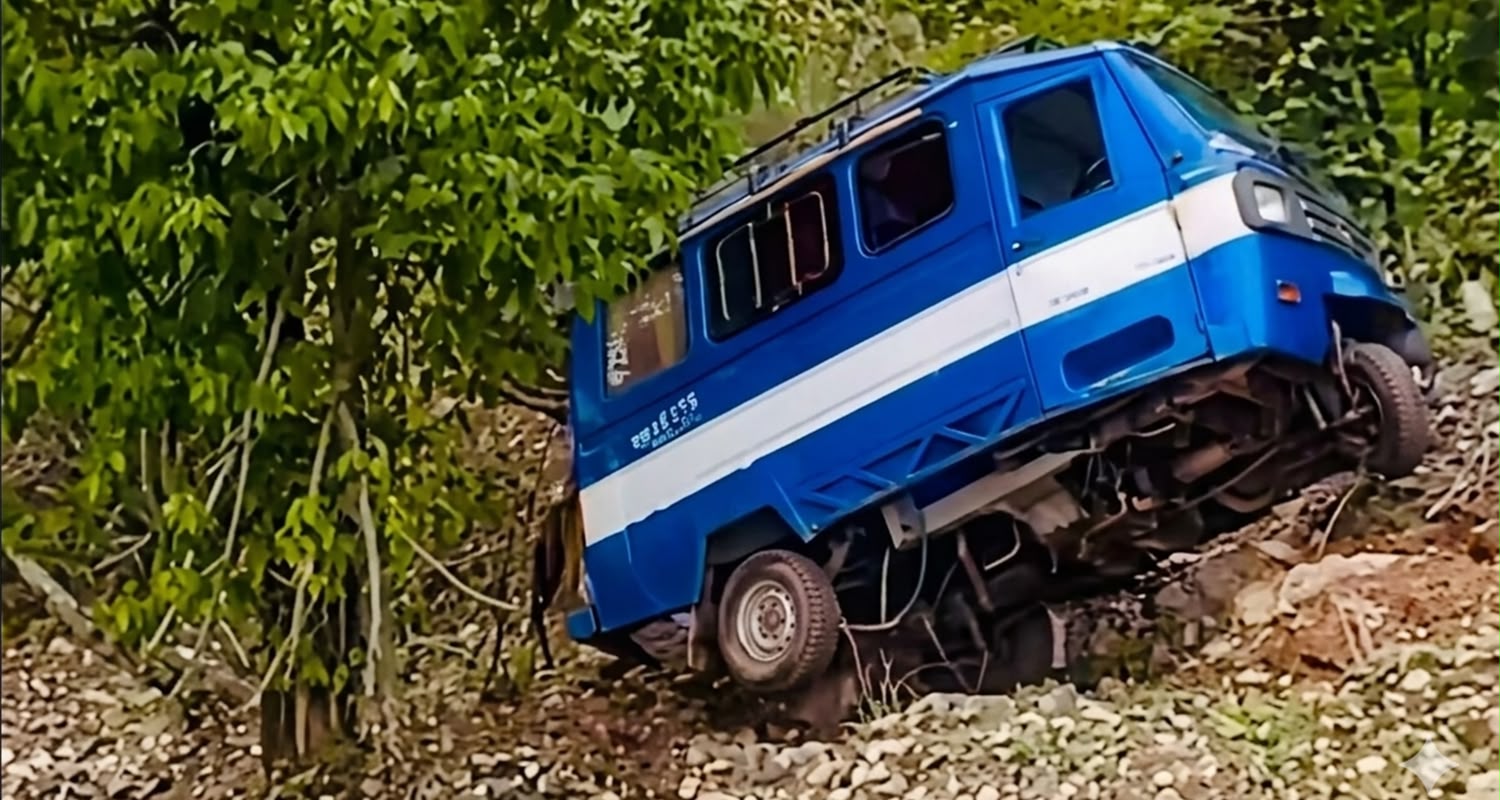
KATHMANDU: A video circulated across Nepali social media on June 12 showing forest officials pushing what appeared to be a three-wheeled vehicle over a cliff edge in Kailali district. The images spread rapidly, drawing widespread anger from ordinary citizens, local politicians and rights advocates who saw the footage as evidence of state high-handedness. The Division Forest Office Kailali has disputed the characterisation, issuing a clarification stating that the object was not a functioning vehicle but a stationary iron frame being used as a makeshift shop stall in a protected forest area. Police subsequently took ten forest employees into custody for questioning. The episode has opened a broader conversation about how anti-encroachment operations are conducted and where the limits of official authority lie.
Where exactly did this incident take place, and what was happening at the time?
The incident occurred in Gaibandhe, Ward 4 of Godawari Municipality in Kailali district, situated in Nepal’s Sudurpaschim Province. The area lies within a section of the Chure forest belt, which is classified as an ecologically sensitive zone running along the foothills of the Siwalik range.
Forest officials from the Division Forest Office Kailali were conducting an anti-encroachment drive along the Bhimdatta Highway corridor in the area. These operations had been going on periodically because the Godawari region, which serves as the provincial capital of Sudurpaschim Province, has seen sustained encroachment on government and community forest land, particularly since the area gained administrative importance.
The video was recorded on Friday (June 12) and began circulating widely within hours, reaching audiences far beyond Kailali and sparking commentary across Facebook, TikTok and other platforms.
What does the video actually show, and why did it cause such outrage?
The video appears to show a group of individuals, identified subsequently as forest staff and associated personnel, pushing a three-wheeled tempo-style vehicle off the edge of a steep slope, sending it tumbling down a hillside. To most viewers, the sight of what looked like a vehicle being deliberately destroyed by government officials during an encroachment clearance drive was jarring.
In a country where ordinary citizens already carry deep anxieties about state overreach and the disproportionate use of authority against the poor and marginalised, the visual landed with considerable force. Social media users widely interpreted the act as an extreme and unnecessary use of force, with many asking why a government operation to remove encroachments required destroying someone’s property rather than seizing it or having it legally disposed of.
The footage triggered emotional reactions precisely because the visual told a story of helplessness: a small vehicle, typically associated with working-class livelihoods, sent crashing down a cliff at the hands of uniformed authority.
What has the forest office said in its defence?
The Division Forest Office Kailali issued a press release shortly after the video went viral, disputing the narrative that had taken hold on social media. According to the office, the object pushed off the slope was not a roadworthy or functioning vehicle. It described the item as a non-operational metal frame, lacking wheels and an engine, which had been brought to the site by a local resident named Ghanshyam Dhami and installed as the skeleton of a small shop stall.
The office said this structure was part of a pattern of illegal occupation in the Gaimare Chure forest area, where individuals had for years been setting up makeshift shops and stalls on encroached government land. The office further stated that it had issued a notice to Dhami a month earlier to remove the frame, that ten other such structures had been cleared by then, but that Dhami had refused to comply.
Officials said that when they attempted to push the metal frame away from the encroached area during the Friday operation, the steep terrain caused it to roll uncontrollably and fall down the cliff face. The office said this was accidental, not intentional, and asked the public not to share misleading versions of the incident.
Is the forest office’s account credible, and what has the investigation revealed so far?
The forest office’s clarification introduced details that were not visible from the video alone, including the claim that the object had no wheels or engine. These are factual assertions that the police investigation would need to verify. However, the office’s account has been met with considerable scepticism from the public and from local politicians.
Critics have pointed out that even if the object was a non-functional frame rather than a working vehicle, the manner in which it was handled still raises questions about proportionality and procedure. An investigation into these events is ongoing. The Kailali District Police Office and the Area Police Office Malakheti jointly took ten forest employees into custody for questioning within days of the incident.
Those detained included personnel ranging from forest guards to higher-ranking officers, suggesting authorities are examining the chain of command behind the operation, not merely the individuals who physically handled the object on the day.
What is the background to forest encroachment in this part of Kailali?
The Godawari area of Kailali has a documented history of encroachment on forest land, one that predates this incident by years. When Godawari was declared the provincial capital of Sudurpaschim Province, the region experienced rapid and unplanned development pressure.
Large tracts of Chure forest land, community forests and government property in the areas around Godawari Municipality were seized illegally by individuals setting up shops, residences and other structures. Multiple reports over the years have noted that this encroachment continued with what locals described as political cover, and that brokers were reportedly buying and selling encroached forest plots.
The Division Forest Office had cleared illegal structures from the Gaimare area multiple times, only for new structures to appear again shortly afterward. It is within this context of recurring defiance that the Friday operation took place. That history does not settle the question of whether officials acted appropriately, but it does provide necessary background for understanding why the anti-encroachment drives were occurring and why emotions on both sides of the issue run high.
Who specifically has been held accountable so far?
As of the latest reports available, the Kailali District Police Office confirmed that ten forest employees had been taken into custody for questioning. The group included staff at different levels, from forest guards up to more senior officers. DSP Yogendra Timilsina, the information officer at the Kailali District Police Office, publicly confirmed the detentions.
The police said the individuals were being questioned in relation to the incident at Gaibandhe and that a public prosecutor had been brought in to advise on next steps. Whether the questioning resulted in formal charges or administrative action has not been confirmed in available reports.
No security personnel from other agencies have been publicly identified as being involved in this particular operation, though the broader anti-encroachment drives in the region typically involve coordination between forest officials and law enforcement.
What do critics say about the way such anti-encroachment operations are typically carried out in Nepal?
Critics and rights advocates in Nepal have long argued that anti-encroachment operations disproportionately target small, poor and often politically unconnected individuals while larger and more politically significant encroachments go untouched.
The observation is not new. In areas like Godawari, it has been noted repeatedly that some of the most extensive encroachments were connected to politically influential figures, and yet clearance operations have tended to focus on smaller shacks, stalls and marginal settlers. The Kailali incident fed directly into this narrative.
Even if the object cleared was a derelict metal frame as the office claims, the force of the public reaction reflected accumulated frustration over years of selectively applied enforcement. A government that is seen to be rough with the small and lenient with the powerful struggles to build legitimacy for its conservation mandate.
What was the reaction of lawmakers and local politicians?
Local lawmakers and politicians expressed alarm at the video. The locals and lawmakers criticised the conduct displayed in the footage, and that authorities confirmed the vehicle had been removed as part of the anti-encroachment drive.
Several political voices called for accountability and demanded that the investigation be transparent. In Nepal’s parliamentary culture, incidents captured on video and amplified by social media often generate faster political response than written complaints or formal petitions.
The tempo incident was no exception. The public pressure created through viral circulation of the footage played a direct role in accelerating the police response of detaining the staff involved.
Has forest encroachment in the Chure zone been an issue before this incident?
Extensively so. The Chure range, stretching across Nepal’s southern foothills, is one of the most environmentally fragile zones in the country. It is the source of groundwater for the plains below and plays a critical role in regulating river systems and preventing floods and landslides.
Nepal’s government has declared the Chure a priority conservation area, and successive administrations have launched programmes, including the President Chure-Terai-Madhesh Conservation Programme, specifically aimed at halting degradation.
Despite these initiatives, encroachment, timber smuggling and illegal construction in Chure forests have continued at scale. Kailali, identified as one of the highest-risk districts for forest fires and ecological loss, has been at the centre of many of these concerns.
The Gaibandhe area where this incident occurred sits within this broader contested landscape.
Why does a video from a remote part of far-western Nepal generate such national attention?
Several factors converge to give such videos national reach in Nepal’s current media environment. Social media penetration has expanded rapidly, and content from remote areas now travels to Kathmandu timelines within hours of being recorded.
More importantly, the image of uniformed state officials treating citizens’ property with apparent contempt resonates across the country because it speaks to a universal anxiety about the relationship between the citizen and the state. Nepal’s history includes plenty of documented episodes of heavy-handed enforcement, forced evictions and arbitrary destruction of property by government agencies.
When a video appears to capture that pattern on camera, it becomes a proxy for a much larger conversation that people across the country want to have. The tempo video was, on one level, about a metal frame in Kailali. On another level, it was about whether Nepal’s institutions treat the rights of ordinary people seriously.
What broader questions does this episode raise about how conservation enforcement is conducted?
The incident raises pointed questions about proportionality, documentation and due process in anti-encroachment operations. Even where encroachment is genuine and persistent, legal procedures exist in Nepal for the removal of illegal structures, seizure of materials and prosecution of those responsible. These procedures require proper notice, documentation and in some cases judicial oversight.
When operations bypass these steps, even with legitimate conservation goals in mind, they become vulnerable to the kind of criticism this incident generated. Conservation cannot be sustainably enforced through acts that public opinion will read as high-handed or destructive.
Forest officials need community trust to do their jobs over the long term, and that trust is difficult to rebuild once footage of officials destroying property goes viral.
The episode has prompted calls not just for individual accountability but for clearer operational guidelines governing how encroachment removals are conducted, what happens to materials and structures cleared from forest areas, and what training forest personnel receive on proportionate use of authority.
What happens next in the investigation?
Police questioning of the ten detained forest employees was underway as of the latest available reports. A public prosecutor was involved, suggesting that the possibility of criminal charges had not been ruled out.
The Kailali District Police Office, along with the Malakheti Area Police Office, were handling the matter jointly. Whether the inquiry would result in prosecutions, departmental action, or both remains to be seen.
Meanwhile, the Division Forest Office’s position that the object was scrap material and that the fall was accidental will be tested against the video evidence and witness accounts gathered during the investigation.
Beyond the immediate legal question, civil society groups and media outlets are watching to see whether officials at higher levels of the forestry administration take institutional responsibility for how the operation was sanctioned and supervised.
What does this episode tell us about the state of state-citizen relations in Nepal?
It tells us that trust remains the central problem. Nepal has institutions, laws and even relatively progressive conservation frameworks on paper. What it has struggled to build is a culture of enforcement that ordinary citizens believe is applied fairly, proportionately and with genuine respect for their rights.
This incident, whether or not the full facts ultimately vindicate the forest office’s account, has done damage to that trust in Kailali and beyond. The government’s conservation agenda is not wrong. Nepal’s forests are under serious threat and enforcement action is necessary.
But enforcement that photographs badly, that appears to prioritise spectacle over procedure, and that reaches for dramatic gestures when quieter legal tools exist, undermines the very legitimacy it depends on.
Nepal needs both conservation and credibility. Right now, the tempo video has put both in question.