Kathmandu
Wednesday, July 1, 2026





With fatalities exceeding floods and landslides in some years, lightning has emerged as one of Nepal's most lethal weather hazards. This explainer explores the causes, consequences, and the reforms experts are calling for
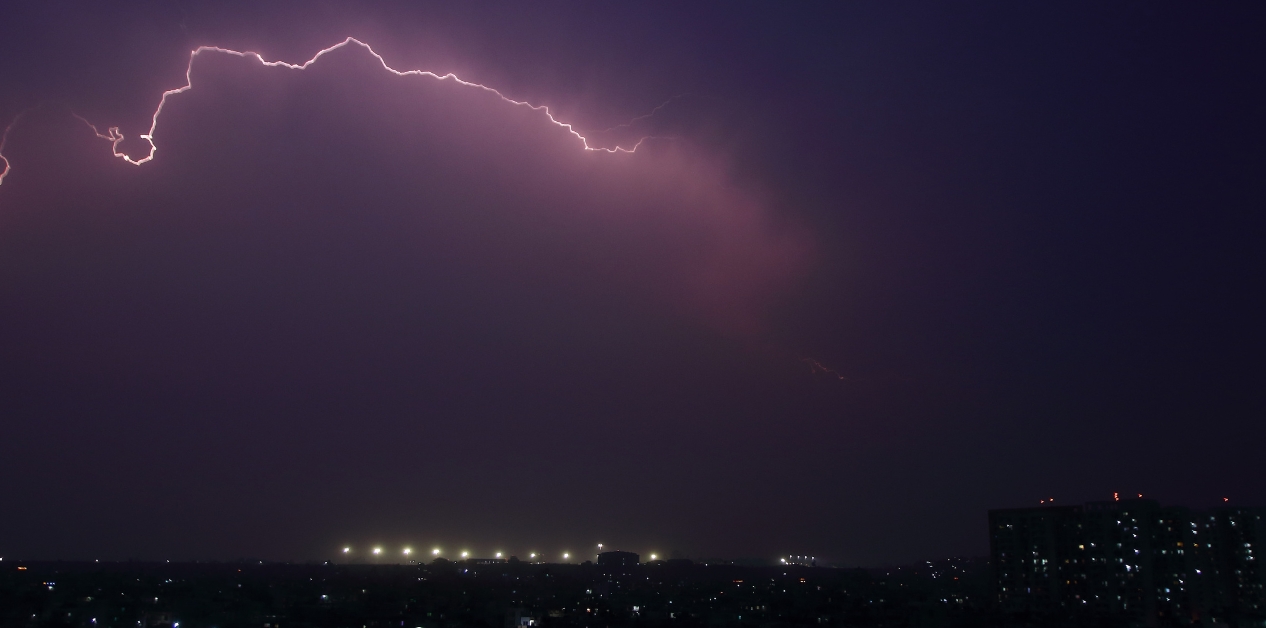
KATHMANDU: Lightning strikes have claimed the lives of nine hundred sixty-four Nepalis over the twelve-year period spanning 2014 through 2025, translating to an average of eighty deaths per year, making electrical discharge from thunderstorms the second-deadliest natural hazard category in Nepal after earthquakes.
In certain years, lightning mortality has exceeded deaths from flooding and landslides combined. The most recent documented data from July 2025 showed that over a single three-month period spanning mid-April to mid-July, lightning strikes killed twenty-six Nepalis while floods claimed thirteen and landslides six, a hierarchy that inverts public perception shaped by media coverage of visible disasters like major floods and earthquakes.
The National Disaster Risk Reduction and Management Authority’s disaster portal documents over 3,200 lightning incidents across the country since 2014, resulting in approximately 3,180 injuries alongside the fatalities.
Economic losses from lightning damage to physical infrastructure and livestock have accumulated to approximately Rs 115.6 million over the twelve-year span, averaging Rs 9.6 million annually in direct property loss. Yet despite these figures, Nepal has no national lightning safety policy, no comprehensive early warning system, and no dedicated legislative framework. The country’s response to this recurring hazard remains fragmented, reactive, and largely absent.
The geographic and temporal patterns of lightning in Nepal are demonstrable and scientifically mapped. Districts along Nepal’s southern border experience the highest frequency of lightning occurrence and the highest death tolls. Makwanpur district, which sits in the mid-hill zone of Bagmati Province southwest of Kathmandu, recorded 168 lightning strikes over the twelve-year measurement period, the highest of any district, with sixty-eight deaths and two hundred sixty-seven injuries.
Morang, Udayapur, and Jhapa in the eastern Terai follow with forty, thirty-eight, and twenty-nine deaths respectively. Districts in the high Himalayan zones experience lightning events infrequently and consequently generate minimal fatality counts. The temporal clustering is even more pronounced than the spatial pattern.
Lightning strikes concentrate overwhelmingly in the pre-monsoon period spanning March through May and the early monsoon months of June and early July. During this four-to-five-month window, the atmosphere becomes exceptionally unstable. Warm, moist air from the Indian Ocean collides with the barrier effect of Nepal’s topography, creating vigorous updrafts and the electrostatic conditions favoring lightning formation.
A scientific study analyzing data from the Vaisala Global Lightning Dataset network detected more than one million lightning strokes across Nepal annually from 2016 through 2020, with the highest concentrations occurring over the Chure and Mahabharat mid-hill ranges where topographic lifting is most pronounced.
Why does Nepal experience lightning strike frequencies among the highest in South Asia, and how does climate change amplify this risk?
Nepal’s geography positions it within what atmospheric scientists term a lightning-favorable zone. The country spans from the Himalayan crest at elevations exceeding eight thousand meters down to the Terai plains at under three hundred meters within horizontal distances of just one hundred fifty to two hundred kilometers.
This extreme relief forces moist air parcels rising from the plains to ascend rapidly, expand, cool adiabatically, and condense into towering cumulus and cumulonimbus clouds. These deep clouds are the engine of lightning production. The greater the vertical depth of the cloud, the stronger the electrostatic separation between cloud layers, and the more likely sustained electrical discharge.
Additionally, Nepal’s location within the pre-monsoon and monsoon wind patterns places it in a zone where moisture convergence is spatially concentrated. The Indian Ocean provides abundant atmospheric water vapor. When that air stream encounters Nepal’s terrain, the lifting and forced ascent are dramatic. The Chure Hills, the pre-Himalayan mountains rising one thousand to two thousand meters along Nepal’s southern border, experience particularly vigorous lifting and consequently the highest lightning frequencies.
Modeling and observational studies have established that lightning occurrence rates in mountainous terrain can be three to five times higher than in adjacent plains regions. This amplification reflects the thermodynamic and dynamic effects of topography on cloud development.
Climate change contributes to lightning risk through multiple mechanisms. Warmer atmospheric temperatures increase the capacity of air masses to hold water vapor. Additionally, warmer surface temperatures increase evaporation from oceans and land, adding moisture to the atmosphere.
The combination means that when warm, moist air encounters lifting mechanisms like Nepal’s topography, the available energy in thunderstorms increases. Model simulations by climate research groups suggest that global lightning frequency will increase by several percent for each degree Celsius of warming, a phenomenon consistent with observations that thunderstorm intensity has increased in recent decades across many regions. For Nepal, located in a zone already experiencing above-global-average warming, the implications are significant.
The Department of Hydrology and Meteorology has documented that springtime and early summer temperatures have risen measurably over recent decades. These higher temperatures will likely drive more vigorous pre-monsoon convection and correspondingly more lightning activity. Simultaneously, the timing of lightning seasons could shift.
If pre-monsoon warming occurs earlier, lightning may begin clustering in February-March rather than March-May. If monsoon onset timing remains on its current schedule or shifts, this could create windows of even more concentrated lightning activity as the monsoon system collides with already-warm atmospheric conditions.
The implication is that lightning risk in Nepal, currently among the highest in South Asia, will likely increase rather than remain stable over the coming decades.
Which districts and regions face the greatest lightning mortality risk, and why do vulnerability patterns not correlate directly with lightning frequency?
Makwanpur district, which experienced one hundred sixty-eight lightning incidents over 2014-2025, might be presumed to carry mortality risk proportional to that high frequency. Indeed, it recorded sixty-eight deaths, the highest total of any district. However, when normalized for population size, Makwanpur’s fatality rate of sixty-eight deaths divided by approximately four hundred thirty thousand inhabitants yields a rate of approximately fifteen-point-eight deaths per hundred thousand people over twelve years, or approximately 1.3 deaths per hundred thousand annually.
This exceeds most other districts in Nepal but does not represent the absolute highest per-capita rate. Researchers analyzing the data have documented that districts with the highest lightning stroke densities do not always coincide with districts showing the highest fatality rates per million people. This disconnect reflects the influence of factors beyond lightning frequency: population density patterns, settlement location relative to high-lightning-occurrence zones, occupational exposure, housing typology, and access to medical care.
Morang district, which recorded only forty deaths despite recording close to 14 percent of the deaths nationally, has much higher per-capita mortality risk than many districts with lower absolute death counts. This reflects Morang’s substantial rural population, significant agricultural sector where outdoor exposure during thunderstorms is occupational reality, and scattered settlement patterns that complicate rapid casualty evacuation to medical facilities.
The geographic analysis reveals a pronounced clustering of deaths in mid-hill districts along the north-south axis running from the Chure foothills northward into the Mahabharat range. Makwanpur (68 deaths), Udayapur (38), Morang (40), Jhapa (29), and Baglung (27) emerge as among the deadliest districts.
The common thread is that these districts have significant populations inhabiting the mid-hill terrain where both lightning occurrence is highest and population density is sufficient to ensure numerous individuals are exposed. By contrast, densely populated urban areas like Kathmandu, which experience significant lightning during the monsoon, have lower fatality counts because infrastructure is more robust and response systems more developed.
Rural populations in remote hill districts, which face both higher exposure and more constrained emergency response systems, face the highest risk per capita. Occupational exposure compounds mortality risk. Agricultural workers harvesting crops or tending livestock during pre-monsoon and monsoon afternoons when thunderstorms form with rapidity face direct exposure. Herders grazing animals in open mid-hill zones far from shelter face sustained exposure.
Construction workers and road laborers working on exposed hill terrain during the monsoon season are at elevated risk. Porters and traders traversing high-altitude passes during monsoon months when weather is most unstable face significant hazard. These occupational groups, disproportionately represented among Nepal’s economically vulnerable populations, account for a substantial share of the annual lightning fatality toll.
What are the documented circumstances and injury patterns in Nepal’s lightning incidents?
Analysis of incident reports from the disaster portal and field investigations reveals that the majority of lightning deaths in Nepal occur outdoors. Roughly sixty-five to seventy percent of fatalities involve individuals caught in the open or in temporary structures offering no lightning protection when thunderstorms develop. The pre-monsoon pattern shows particularly high exposure.
In March, April, and May, afternoon thunderstorms develop with short lead times. Agricultural workers working in fields may not have access to shelters. Herders with grazing livestock in open terrain are at immediate risk. Individuals traveling on exposed hilltop terrain or mountain passes face direct exposure. Some deaths occur when individuals seek shelter inadequately.
A tree struck by lightning passes that current into the root system and up into any organisms touching the trunk or branches. Sheltering under a tree is particularly dangerous during lightning storms. Other incidents involve individuals in open structures lacking grounding.
A traditional thatched hut offers no electrical protection and may concentrate current flow. Approximately fifteen to twenty percent of lightning fatalities in Nepal involve individuals in or around houses or farm structures that have been struck.
The injury pattern varies from direct strikes, where current enters the body and passes through to ground, to side flashes where current jumps from struck objects to nearby people, to ground current effects where current flowing through soil affects individuals standing in contact with the ground.
Medical investigations of survivors document that cardiac arrhythmias and respiratory system damage are common effects of lightning contact. Many survivors suffer neurological effects including memory loss, cognitive changes, and altered personality characteristics that persist months or years after the incident. Secondary injuries from falls, explosions of struck structures, and fires account for additional casualty.
A comprehensive accounting of nonfatal injuries from lightning in Nepal is difficult because many injuries go unreported. The 3,180 documented injuries from 2014-2025 likely undercount actual injury frequency. A person struck by lightning who survives but experiences significant neurological damage may not file an official report. Rural populations may not report incidents if they occur in remote areas and the victim survives.
How does occupational exposure concentrate lightning risk among specific vulnerable populations?
Nepal’s agricultural sector, which employs roughly forty percent of the national labor force, concentrates workers outdoors during precisely the months when lightning risk peaks. The pre-monsoon period spanning March through May corresponds with several critical agricultural windows. Harvesting of winter wheat and barley occurs in March and April.
Preparation of fields for monsoon crop planting, including tillage and soil amendment, occurs in April and May. These activities position workers in open fields with no access to shelter exactly during the period of maximum thunderstorm development. A farmer working alone in a field when a thunderstorm develops unexpectedly faces immediate mortal risk. The distance to shelter, which might be a farmhouse a half-kilometer away, means that the individual cannot quickly reach safety.
In some cases, farmers see thunderstorms forming and seek shelter in nearby trees, making the situation more dangerous. In other cases, the speed of storm development means that shelter is reached only seconds before lightning strike becomes highly probable.
Occupational groups including herders, porters, construction workers, and agricultural laborers on work sites similarly face sustained exposure. A herder managing goats or sheep on mid-hill pastures during the pre-monsoon months is positioned precisely where lightning risk is highest.
The occupation involves long hours outdoors in dispersed terrain where visibility of approaching storms is limited by topography. A porter carrying goods over high-altitude mountain passes during monsoon months contends with dense clouds that make storms difficult to predict. Construction work on unfinished structures or exposed terrain during the pre-monsoon and monsoon seasons exposes workers to strike risk.
The outdoor nature of this work, combined with the occupational need to work despite weather, creates elevated hazard. By contrast, workers employed in urban-based occupations with access to fortified buildings experience minimal lightning risk. The occupational structure of Nepal’s economy, which remains disproportionately rural and agricultural, explains a significant portion of the national lightning mortality burden.
What are the medical consequences of lightning strikes, and why do survivors sometimes experience long-term disability?
Direct electrical injury from lightning contact produces immediate, severe physiological effects. When electrical current passes through the human body, it can induce cardiac fibrillation, ventricular tachycardia, or asystole. If the strike involves the head, brain tissue exposure to the current produces cellular damage. If the strike path passes through the spine, spinal cord damage can result in paralysis. Burns from the arc flash and from ignition of clothing add thermal injury.
However, lightning’s effects extend beyond immediate injury. Neurological consequences affect many survivors months or years after the incident. A person struck by lightning may survive the acute event with minimal apparent injury but develop cognitive changes, memory deficits, concentration difficulty, and personality alterations weeks later. These effects are hypothesized to result from subtle brain tissue damage from the current or from thermal effects not immediately apparent.
Some studies suggest that up to fifty percent of lightning strike survivors report cognitive or personality changes persisting years after the event. The disability burden from these neurological sequelae is substantial. An individual whose memory or cognitive function is significantly impaired may be unable to return to occupational work. Personality changes can strain family relationships. The psychological impacts of having survived a lightning strike, experiencing the trauma of the event and its consequences, can contribute to depression or anxiety.
Nepal’s health system provides minimal specialized follow-up care for lightning strike survivors. Most rural patients struck by lightning who survive the acute event receive no long-term medical evaluation or rehabilitation. The chronic disability burden persists uncounted.
What is the current state of lightning early warning capability in Nepal, and why is it so limited?
Lightning early warning is fundamentally different from flood or rainfall early warning. Floods propagate through river systems with velocity that permits hours or days of lead time. Rainfall prediction, while imperfect, can often identify storm probability areas a few hours in advance.
Lightning, by contrast, emerges from localized convective clouds that develop and organize within minutes. A cell of air might be rising and forming a cloud at one moment and lightning-capable within fifteen to twenty minutes. Current weather radar technology and satellite systems can identify conditions favorable for lightning formation, but cannot pinpoint which specific location will experience a strike.
The Global Lightning Network, which detects actual lightning strokes in real-time by sensing the electromagnetic pulse from each strike, provides data after the fact. Lightning is occurring now and can be detected, but this does not help individuals who are in danger to evacuate before the strike reaches them. Nepal has no lightning detection network of its own. The country does not participate operationally in real-time lightning detection networks.
Some international data are available but require significant infrastructure and expertise to interpret and distribute. The Department of Hydrology and Meteorology operates weather radar and monitoring systems, but these are not specifically configured for lightning warning. The most advanced lightning early warning system that exists in Nepal has been installed in Raksirang Rural Municipality of Makwanpur district with support from an international non-governmental organization.
The system, established in April 2025, comprises one main sensor capable of detecting electrical charge buildup in the atmosphere and nine sirens positioned throughout the municipality. The system can issue warnings approximately sixteen minutes before lightning strikes when it detects electrical charge changes in the atmosphere. When charges are detected, sirens activate to alert communities within a sixteen-kilometer radius. Community response to the sirens involves moving indoors or to structures offering electrical grounding.
The system has been operational for approximately sixteen months and represents the only permanent lightning early warning installation in Nepal. Community feedback indicates that residents have successfully used the siren warnings to avoid exposure and that the system has prevented casualties. However, sixteen sirens serving one rural municipality represents a minute fraction of the coverage needed across Nepal’s lightning-vulnerable districts.
What policy reforms and infrastructure investments would most effectively reduce Nepal’s lightning mortality?
The most comprehensive policy response would involve developing a National Lightning Safety Policy that establishes standards for lightning protection infrastructure, occupational exposure management, and emergency response. Such a policy would designate responsibility for various protective measures across government agencies, private institutions, and individuals.
It would establish building codes for new construction that include lightning grounding systems. It would specify occupational standards for outdoor workers during high-lightning-risk periods, including mandatory shelter access, work schedule adjustments during thunderstorm season, and personal protective equipment. It would direct investment in lightning early warning systems and public education.
The policy would recognize lightning as a significant public health and occupational safety concern rather than treating it as an inevitable event. Implementation would require sustained governmental commitment and funding allocation, which remains absent. Infrastructure investment in lightning detection and early warning networks would expand the model developed in Makwanpur to cover multiple high-risk districts.
Establishing a network of forty to fifty lightning sensors distributed across the Chure and Mahabharat mid-hill ranges would provide detections covering most of Nepal’s highest-risk zones. Complementary investment in siren networks and SMS alert systems would extend warning reach to vulnerable populations. Cost analysis for such a system suggests capital requirements of approximately Rs 50-80 million with annual operational expenses of Rs 8-15 million.
For comparison, Nepal’s disaster-related losses from lightning in recent years have exceeded this level multiple times over, making the infrastructure investment economically justified on loss-reduction grounds alone. Occupational standards and training would involve requiring all agricultural, construction, and outdoor labor organizations to institute lightning safety protocols.
These protocols would include training workers to recognize thunderstorm development, identify shelter locations, maintain safe distances from trees and tall structures, and know to assume a crouched position rather than lying flat when caught outdoors without access to a shelter.
Community-level training in first aid for lightning strike victims, particularly CPR for individuals suffering cardiac arrest, would increase survival rates when strikes occur. Many lightning deaths in Nepal are preventable through immediate CPR. Community health workers trained to recognize cardiac arrest and initiated CPR would save lives.
Medical system strengthening to provide appropriate specialized care for lightning strike survivors would improve outcomes. Rural health posts require training in lightning strike management, recognition of neurological effects, and referral pathways for patients needing specialized neurology and rehabilitation services.
What characteristics of Nepal’s housing stock increase lightning fatality risk, and how can retrofitting contribute to risk reduction?
Nepal’s traditional construction typology, which remains dominant in rural areas, offers virtually no lightning protection. Stone or earthen walls with thatched roofs provide no electrical grounding. Metal roofing materials, increasingly common in rural areas, present a particular hazard. Metal corrugated roofing conducts lightning current readily, but if the structure lacks proper grounding that conducts current safely into the earth, the current may arc through the structure to occupants.
A person standing inside a metal-roofed structure during a lightning strike may suffer contact injury from arcing current or from ground current flowing through the structure. Concrete block structures with reinforced concrete roofs, increasingly common in urban and peri-urban areas, offer better protection because the reinforced concrete can conduct current. However, if the reinforcement is not properly bonded to a grounding system, current may still arc and create internal hazards.
Modern construction codes specify that electrical grounding systems be installed in all structures, with copper or other conductive materials running from the roof exterior down the exterior wall to earth electrodes buried around the structure’s foundation. This ensures that any lightning current entering the structure is conducted safely to ground without passing through the building interior where people are located.
Retrofitting existing structures with proper grounding systems is technically straightforward but requires capital investment. The cost of installing grounding on a single house is approximately Rs 10,000-20,000. For rural households with annual incomes of Rs 200,000-400,000, this represents a significant capital commitment. Government subsidy programs providing partial cost coverage could accelerate retrofitting of vulnerable households.
Schools and health facilities, which serve as shelter locations during thunderstorms, should be prioritized for grounding installation. A school roof provides shelter, but if the school building lacks grounding, students and teachers sheltering in the building during lightning storms face risk. Prioritizing grounding installation in public buildings serving as designated monsoon shelters would protect concentrated populations.
How does lightning interact with flooding and landslide hazards to create compound disaster scenarios?
Lightning, flooding, and landsliding are typically analyzed as independent natural hazard categories, but they interact and compound in field conditions. Pre-monsoon thunderstorms that produce lightning also generate intense rainfall over short durations. The same storm system that creates electrical discharge from cloud-to-ground lightning also dumps fifty to one hundred millimeters of rainfall in localized areas within one to two hours. This rainfall triggers both flooding and landsliding.
A hillslope saturated by the intense rainfall becomes unstable and fails as a landslide, which in turn can dam a river valley, creating temporary ponding. The temporary dam may fail catastrophically, releasing a surge of water. Lightning strikes on hillsides may ignite fires in vegetation, particularly in dry pre-monsoon conditions. A burned slope becomes more susceptible to post-fire debris flows. The 2015 Gorkha earthquake triggered hundreds of landslides, which blocked rivers and created temporary lakes. When these natural dams failed, they released outburst floods.
A similar compound sequence can occur during extreme pre-monsoon storms. The interaction amplifies societal vulnerability beyond the sum of the individual hazards. A community facing landslide risk during a major thunderstorm also contends with concurrent lightning hazard and flood hazard.
Emergency response systems become overwhelmed. Communications infrastructure damaged by wind and lightning complicates information flow. Transportation routes blocked by landslide debris prevent arrival of rescue teams. The compound scenario in remote areas can be catastrophic. Individual hazard preparedness that addresses each hazard in isolation may be inadequate for compound scenarios.
What role do international climate and weather prediction services play in providing advance warning of lightning-favorable conditions?
The European Centre for Medium-Range Weather Forecasts, the US National Centers for Environmental Prediction, and other global weather prediction agencies generate medium-range forecasts of atmospheric instability indices, including the Showalter Index, K Index, and Lifted Index, which indicate the probability and intensity of thunderstorm development. These forecasts extend three to seven days into the future.
The Department of Hydrology and Meteorology in Nepal receives and incorporates output from these global forecast systems into its own local weather predictions. On days when global forecasts indicate elevated thunderstorm probability for Nepal, the DHM’s meteorological division can issue public forecasts indicating thunderstorm risk and advising caution. However, the forecast specificity remains coarse. A forecast indicating elevated thunderstorm probability for all of eastern Nepal is far less useful than a forecast predicting thunderstorms affecting specific districts at specific hours.
The spatial and temporal resolution of global models, while improving, remains insufficient for precise lightning risk prediction. Additionally, public communication of thunderstorm forecasts in Nepal reaches primarily urban populations with smartphone or internet access.
Rural populations dependent on radio broadcasts or word-of-mouth receive imprecise or delayed information. The disconnect between forecasting capability and actual warning reach creates a gap. The ability to predict that a thunderstorm-prone situation will develop in a region does not automatically translate into protective action at community level.