Kathmandu
Sunday, July 26, 2026





Nepal’s student visa rejection rate hits 81% as global denials peak, DV-2026 issuances remain frozen, and deportations cross 800 amid tighter US scrutiny
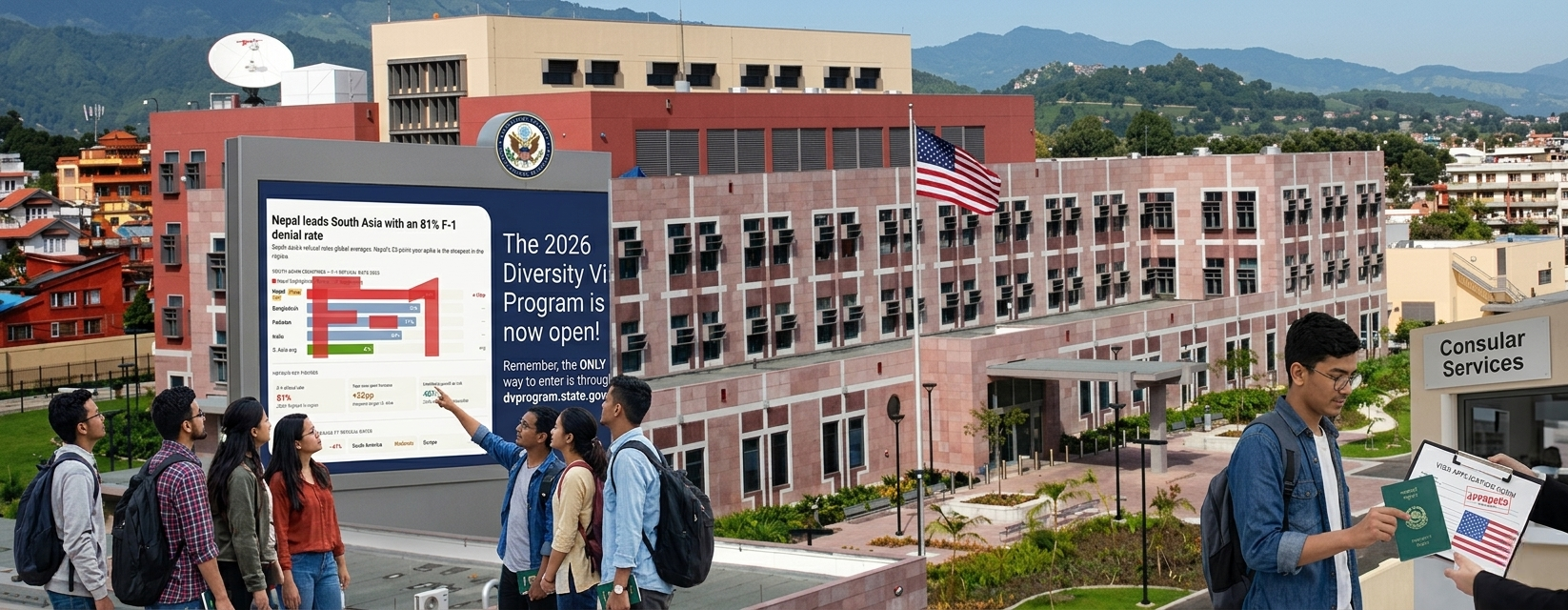
KATHMANDU: As of April 16, 2026, US F-1 student visa refusals hit a decade-high global rate of 35% in fiscal year 2025, according to a report released earlier this month, with denials structurally concentrated in South Asia and Africa.
Nepal recorded an 81% refusal rate for F-1 applications in 2025—up sharply from 59% the year before—despite its strong growth as a source country. The Diversity Visa (DV-2026) program remains paused for issuances since December 2025, even as the April Visa Bulletin set Nepal’s cutoff at 10,000 (with June advancing it to 11,000).
Nepal had 3,933 selectees. Deportations of Nepali nationals have exceeded 800 since early 2025, including a 48-person charter flight on April 7. New DV-2027 rules effective April 10 require a valid passport upload.
The latest developments reflect intensified scrutiny on intent, security, and public safety, reshaping pathways for Nepali students, workers, and families amid broader visa issuance declines.
What do the most recent 2025 F-1 student visa denial statistics reveal for Nepali applicants?
The US Department of State data, updated in early April 2026, confirms Nepal’s F-1 refusal rate reached 81% in fiscal year 2025, a significant jump from 59% in 2024.
This places Nepal among the highest-refusal nations in South Asia, where patterns show denials driven more by regional trends than individual qualifications. Despite Nepal ranking as the sixth-largest growth market for US higher education with a 48% enrollment increase in 2024-25, the spike contributed to a nationwide 36% drop in new international student arrivals.
Consular officers at posts including Kathmandu frequently apply Section 214(b) presumptions, questioning ties to Nepal amid economic pressures and perceived post-study intentions. This rate contrasts sharply with Europe’s low single-digit refusals and underscores how high-volume South Asian applicants face heightened barriers.
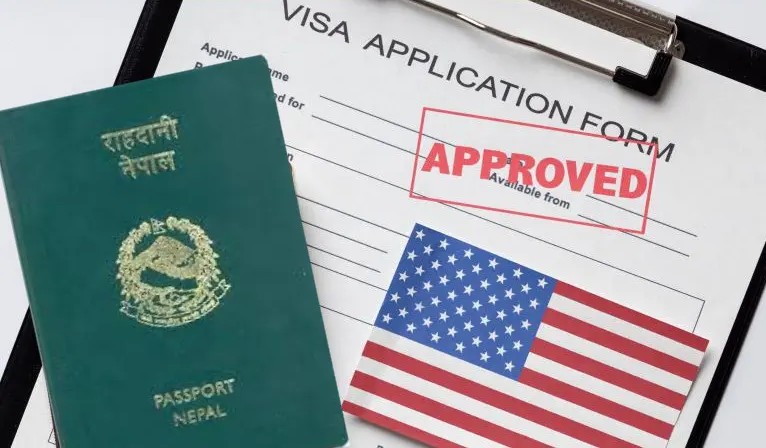
Representational image of US visa
For Nepali students, repeated applications after denial often see success rates fall below 20% without major new supporting evidence.
The data highlights the importance of robust documentation and interview preparation tailored to consular expectations, as even strong academic profiles from emerging markets encounter systemic challenges.
The figures signal ongoing tightening that could further impact Nepal’s youth seeking US education unless policy adjustments prioritize merit alongside security.
How have decade-long F-1 denial trends for Nepalis evolved relative to worldwide patterns through 2025?
From 2015 to 2025, worldwide F-1 denial rates rose gradually from 23% to the 2025 peak of 35%, with a brief stabilization mid-decade before the latest surge.
Nepal’s experience shows steeper escalation: lower rates in the early 2010s gave way to consistent increases post-2020, culminating in the 81% figure last year. This mirrors entrenched disparities in South Asia and Africa, where refusals now exceed 60-70% in multiple countries, unlike stable low rates in Europe or parts of South America.
Nepal’s rapid enrollment growth prior to 2025 amplified visibility to these shifts, reversing gains and redirecting talent flows. The Shorelight report, drawing on ten years of data released in April 2026, notes these are not temporary fluctuations but structural issues persisting across administrations.
For Nepalis, this means cumulative barriers have delayed careers for thousands, affecting remittances and skill development back home while US institutions lose diverse contributions. The pattern emphasizes nationality-linked outcomes over pure merit in high-demand regions.
Prospective applicants benefit from reviewing historical trends to anticipate stricter reviews and build stronger temporary-intent cases. Without reforms, such disparities risk long-term effects on global student mobility and US competitiveness in attracting talent from Nepal’s youthful population.
What are the main grounds for F-1 refusals specifically affecting Nepali applicants?
Section 214(b) presumes immigrant intent for most non-immigrant visas, requiring Nepali F-1 applicants to overcome this with clear evidence of strong home ties and temporary plans.
In 2025’s high-denial environment, officers commonly cite insufficient Nepali connections—such as limited property, family businesses, or professional networks—exacerbated by Nepal’s youth unemployment and economic factors. Financial proofs often fall short if they do not fully demonstrate coverage of all costs without unauthorized US work, even with valid I-20s and affidavits.
Vague post-graduation intentions, particularly around OPT, raise concerns about long-term stay plans. Enhanced vetting of social media and travel records has added layers, flagging any inconsistencies that undermine credibility.
Nepal’s 81% rate reflects these combined pressures at the Kathmandu post amid volume increases. To counter, applicants should assemble detailed portfolios including Nepali employment offers, family interdependence affidavits, property records, and statements tying US studies to specific local contributions like infrastructure or technology sectors.
Consistent interview responses focusing on short-term goals and return motivations are crucial. Preparation addressing these elements directly can differentiate files in a landscape where regional patterns heavily influence outcomes, though decisions remain individualized.
In what ways has the current US administration influenced visa volumes and denial rates since January 2025?
Since January 2025, non-immigrant visa issuances dropped about 11% in the first eight months compared to 2024, with student categories seeing sharper impacts from security-focused policies, expanded social media screening, and processing adjustments.
For Nepal, this aligned with the F-1 rate climbing to 81% in 2025, as 214(b) enforcement intensified alongside new requirements for certain visitor visas. Broader priorities on intent verification and public safety contributed to the global 35% denial peak, polarizing approvals by region.
Deportation surges, exceeding 800 Nepalis removed by mid-April 2026, reinforced deterrence through fast-track courts and targeted enforcement. While case-by-case reviews continue per law, outcomes show clear regional divides, with low-refusal areas maintaining high approvals.
This has shifted Nepali student interest toward more predictable destinations, affecting US enrollment pipelines in STEM fields. The approach balances enforcement goals with economic needs but has prompted measurable declines in high-growth markets like Nepal.
Long-term implications include potential talent gaps in US research and industry, highlighting ongoing tensions between security measures and global competitiveness for skilled migrants.
What is the latest status of DV-2026 processing for Nepali selectees?
The April 2026 Visa Bulletin advanced Nepal’s DV-2026 cutoff to 10,000, enabling more of the 3,933 Nepali selectees to schedule DS-260 submissions and interviews. However, the full issuance pause implemented December 23, 2025, remains in force, meaning no diversity visas are being stamped despite continued appointment scheduling at embassies including Kathmandu.
The program’s fiscal year entitlement ends September 30, 2026, adding pressure for resolution. Recent reports indicate the June bulletin further moved Nepal’s cutoff to 11,000, showing gradual numerical progress amid the suspension.
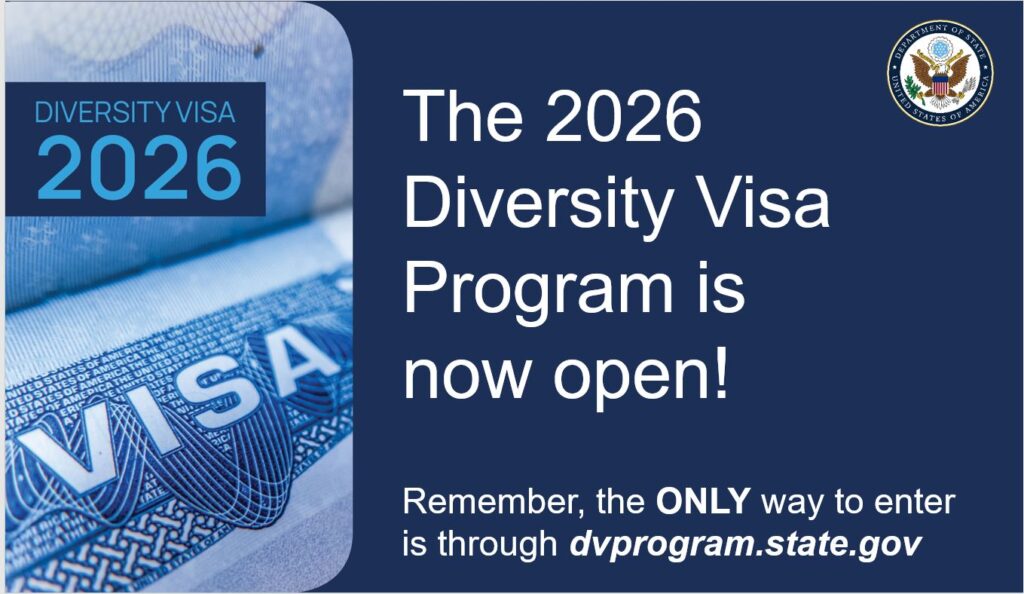
U.S. Embassy announces the opening of the 2026 Diversity Visa Lottery Program. File photo
Selectees can still file applications and attend interviews without cancellation of existing slots, but actual green card pathways stay blocked pending the security and vetting review. This situation affects not only principals but also derivatives as well, intersecting with separate pauses for certain nationalities on public benefits grounds.
Nepali winners must keep documentation current, including medicals and affidavits, while monitoring official channels closely. The pause underscores policy priorities on enhanced screening, turning lottery selection into a prolonged wait rather than guaranteed progress in the current environment.
What triggered the ongoing DV program suspension, and how does it specifically impact Nepali DV-2026 participants?
The DV issuance suspension, effective December 23, 2025, stems from a national security and public safety review following incidents involving prior program entrants. The State Department cited needs to strengthen identity verification, fraud prevention, and threat assessments across the entire process.
For Nepal’s 3,933 DV-2026 selectees, this halts visa stamping indefinitely while allowing DS-260 filings and interviews to proceed. No exceptions apply, and the September 30, 2026, deadline looms, risking number expiration if unresolved.
Financial and logistical strains mount as selectees maintain updated records without certainty of outcomes. The measure also overlaps with immigrant visa processing holds for Nepal due to broader policy reviews, compounding delays for families.
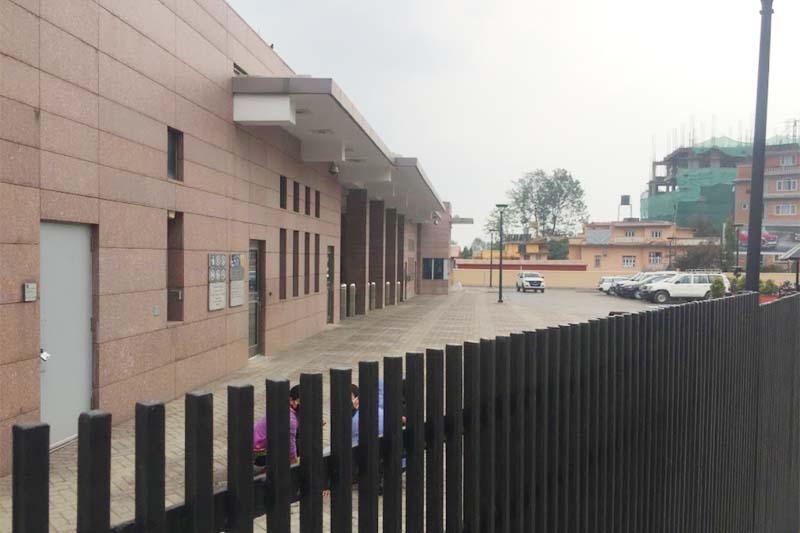
US Embassy in Kathmandu. File photo
It reflects a shift toward rigorous upfront safeguards, potentially reducing future DV volumes and pushing Nepalis toward alternative immigration routes like employment or family sponsorship. Participants should prepare comprehensive packages and stay informed via monthly bulletins, as any resumption may include stricter protocols.
The development highlights the program’s vulnerability to executive priorities, transforming what was once a straightforward pathway into one marked by extended uncertainty for high-success nationalities like Nepal.
What updated requirements apply to DV-2027 registration following the changes?
Starting April 10, 2026, DV-2027 entrants must provide a valid, unexpired passport number and upload scans of the biographic and signature pages during the online entry process to combat fraud and improve identity matching. A $1 electronic fee per submission was also introduced to offset administrative costs.
Terminology updates include “sex” instead of prior gender references and refined date-of-birth fields for accuracy. These build on the program’s random selection from low-admission countries, preserving the 55,000 annual cap and 7% per-country limit.
For Nepalis, historically strong performers due to lower prior migration volumes, the passport mandate raises preparation needs—applicants without current documents face ineligibility except in limited exemptions. Registration timing, traditionally early October, remains unannounced but is expected shortly.
The changes modernize vetting without altering core eligibility like education or work experience requirements. Prospective participants should obtain passports promptly and consult official instructions to avoid errors.
What do the latest deportation figures indicate about Nepali nationals in the US as of mid-April 2026?
Deportations of Nepalis have accelerated dramatically, surpassing 800 removals since January 2025 under intensified enforcement priorities targeting criminal convictions, visa overstays, and asylum denials.
Recent data shows 231 deportees in January-February 2026 alone (101 in January, 130 in February), followed by a 48-person charter flight on April 7 including two green card holders.
Many cases involve serious offenses such as fraud, drug trafficking, or violence, prioritized in “worst of the worst” lists. Fast-track immigration courts have expedited backlog clearances, contributing to monthly peaks. Even some long-term residents face removal for violations like DUI.
Nepali embassy coordination uses electronic verification for document lapses, streamlining returns. This surge, up from lower 2025 monthly averages, signals sustained focus on public safety threats and unlawful presence.
For the community, it has increased compliance awareness and anxiety around status reviews. Individuals with pending matters should seek legal advice promptly, as re-entry bars after removal carry severe long-term consequences.
What are the key economic and institutional effects on the US from sustained high student visa denials?
The 35% global F-1 denial rate in 2025 drove a 36% decline in new international enrollments, costing US institutions an estimated $3 billion or more in tuition revenue for 2025-26 while threatening program sustainability at tuition-dependent colleges.
Nepal’s 81% rate, alongside similar spikes in India (61%) and other South Asian nations, has particularly disrupted STEM graduate pipelines supplying over 70% of master’s and PhD enrollments in key fields.
Research output, classroom diversity, and innovation ecosystems suffer as students who typically transition to OPT and H-1B roles fill critical gaps in tech, healthcare, and engineering. Economically, this self-imposed talent reduction risks long-term competitiveness against nations like France and China recruiting aggressively from the same demographic pools.
For Nepal, redirected talent means missed skill transfers and remittances upon potential return. Experts project broader GDP impacts from workforce shortages in hospitals, startups, and labs. Calls for reforms—such as denial transparency, standardized guidance, and dual-intent options—aim to realign policy with global realities.
Absent changes, enrollment shortfalls could exacerbate domestic demographic challenges facing US higher education, underscoring the interconnected costs of current adjudication patterns.
How do Nepal’s F-1 denial rates stack up against other South Asian countries?
Nepal’s 81% F-1 refusal rate in 2025 surpassed India’s 61%, Bangladesh’s 73%, and Pakistan’s 71%, highlighting it as one of South Asia’s most affected despite smaller applicant volumes and recent enrollment momentum.
Regional averages hover around 41% for South Asia overall, far exceeding Europe’s 9% or steadier South American figures, with denials clustering heavily in Global South nations. Nepal’s 22-percentage-point year-over-year increase outstripped peers, tied to rapid demand growth and consular dynamics in Kathmandu.
Shared factors include 214(b) presumptions around ties in developing economies, financial scrutiny, and work intent perceptions. Yet Nepal-specific elements, like post-enrollment surges, may intensify subjectivity. These disparities have stalled prior gains—Nepal’s 48% growth in 2024-25 now vulnerable—while cutting broader talent pipelines affecting US sectors.
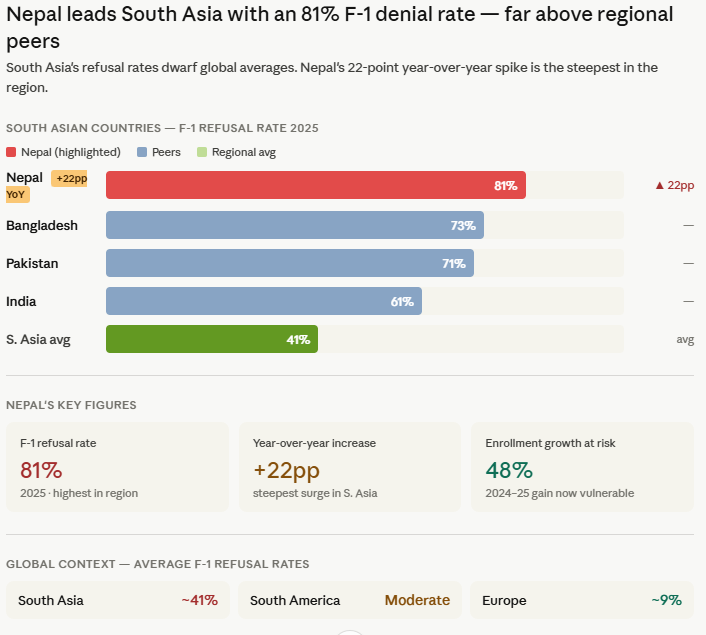
The data questions merit-only narratives, as gaps endure regardless of administration. Applicants from Nepal must prioritize even stronger return evidence compared to neighbors. Regionally, this drives diversification to alternatives, potentially eroding US influence in South Asia.
What actionable steps can Nepali F-1 applicants take to strengthen approval odds?
Nepali applicants confronting 81% F-1 denials should prioritize comprehensive evidence overcoming 214(b) presumptions.
Assemble a tailored portfolio featuring recent Nepali bank records, property deeds, family business details, and employer letters projecting post-graduation roles in Nepal. Develop a personal statement connecting the US program explicitly to Nepal’s needs in areas like renewable energy or digital innovation.
Rehearse interviews to emphasize family obligations, short-term academic goals, and no intent for unauthorized work. Submit full financial packages early, including sponsor tax documents and return-travel provisions.
Review social media for consistency with temporary plans and prepare explanations for any travel history. Previously denied applicants should accumulate substantial new proof before reapplying. Leverage university support letters highlighting program fit.
While outcomes vary, these strategies have improved individual success by focusing adjudicators on credibility rather than statistics. Experienced advisors familiar with Kathmandu patterns can refine approaches without guarantees.
In today’s environment, meticulous, individualized preparation separates viable cases amid regional pressures.
Why are strong financial evidence and home ties critical for Nepali visa applications, and which mistakes commonly lead to refusal?
Financial documentation and home-country ties are foundational to rebutting 214(b) for Nepalis, proving self-sufficiency and return likelihood in an 81% denial context. Officers require clear proof of funds for tuition, living costs, and departure without illegal US employment, plus ties like family interdependence or Nepali career prospects.
Common errors include inconsistent affidavits, unverified sponsors, or emphasis on US opportunities that suggest immigrant intent. Generic templates or “parked” funds appearing solely for visa purposes trigger scrutiny, as do incomplete files lacking translations or explanations.
In Nepal’s heightened review environment, discrepancies prompt immediate refusals. Tailor evidence to personal realities—such as linking family assets to future plans—and over-document rather than under-prove while ensuring clarity.
Recent policies on public benefits add emphasis on demonstrated independence. Proactive addressing of these factors minimizes subjectivity, presenting a coherent temporary narrative. Though adjudicators decide individually, thorough preparation directly mitigates risks prevalent in high-refusal regions.
How have intensified social media and travel history checks affected 2025-2026 outcomes for Nepali visa seekers?
Expanded reviews of up to five years of social media and full travel histories, implemented more rigorously since 2025, have influenced F-1 decisions at posts like Kathmandu by assessing overall credibility.
For Nepalis, content implying permanent relocation, undisclosed prior issues, or inconsistencies with application statements have contributed to the 81% refusal rate. Travel patterns suggesting irregular movements without purpose can prompt deeper intent questions.
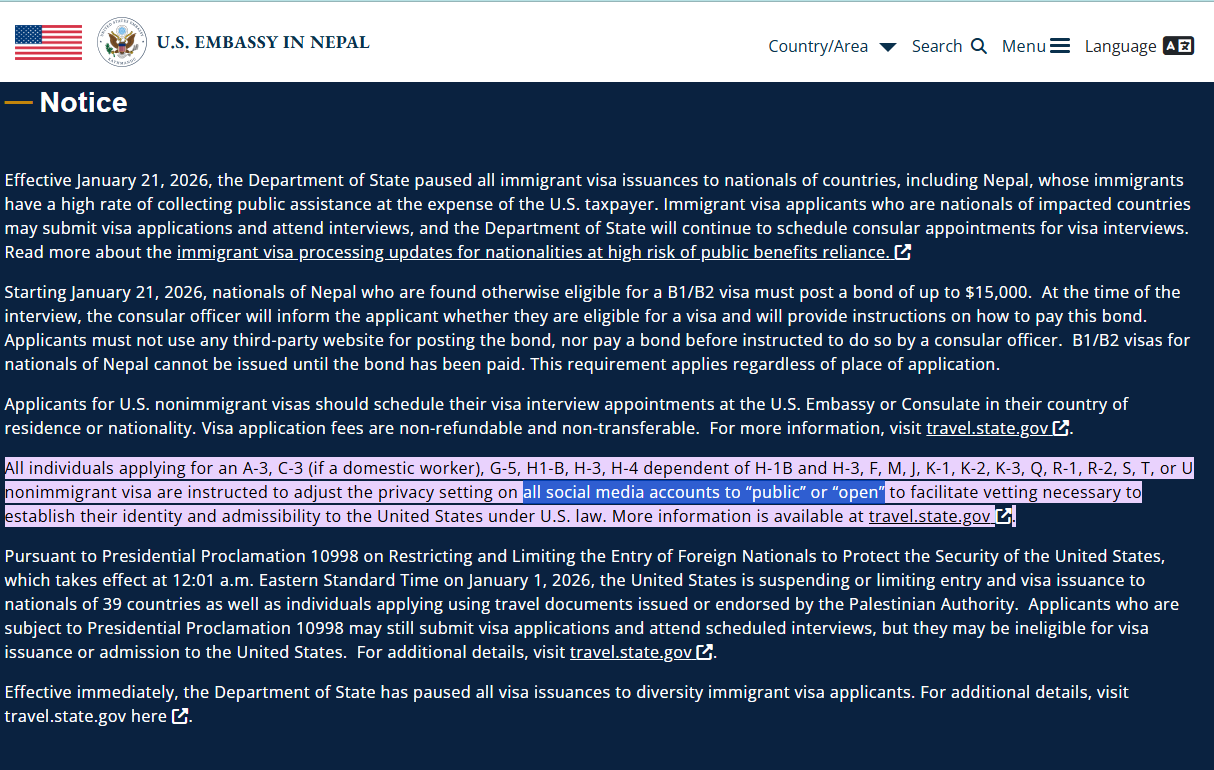
Screenshot of US Embassy in Kathmandu regarding social media accounts for visas
While not every profile receives exhaustive examination, flagged elements often lead to 214(b) citations even for qualified candidates. Positively, profiles showing genuine academic or cultural ties can reinforce return intent.
Applicants should conduct self-audits for professionalism, remove conflicting material, and prepare interview explanations. This vetting layer aligns with security priorities but amplifies disparities in high-volume nationalities.
Consistency across all submission elements remains essential to avoid preventable denials. In the current climate, digital footprint management has become a practical necessity alongside traditional documentation for successful navigation of consular processes.
Which alternative international study destinations are gaining traction among Nepali students facing US visa hurdles?
High US F-1 refusals at 81% have accelerated Nepali pivots to Canada, Australia, the UK, Germany, and France, offering more predictable approvals and robust post-study work options.
Canada’s study permits frequently achieve over 70% success for qualified Nepalis with clear pathways to residency. Australia provides straightforward visas with work rights, appealing to STEM applicants. European options feature affordable or tuition-free programs plus Schengen mobility.
These shifts consider costs, cultural alignment, and migration prospects, with France and Germany rising for accessibility. While the US holds prestige in select disciplines, uncertainty around OPT and processing has prompted exploration of competitors actively recruiting via targeted outreach.
Diversification lessens single-market dependence but may limit access to certain US networks. Students evaluate long-term returns, favoring destinations aligning with current mobility trends and scholarship availability.
How are recent Nepali deportation increases linked to broader visa and enforcement policies?
The deportation surge exceeding 800 Nepalis since early 2025 connects directly to stricter visa adjudication and interior enforcement, where initial refusals or overstays often lead to removal proceedings. Fast-track courts expedite asylum and status cases, while criminal records trigger priority actions—even for green card holders in violation cases.
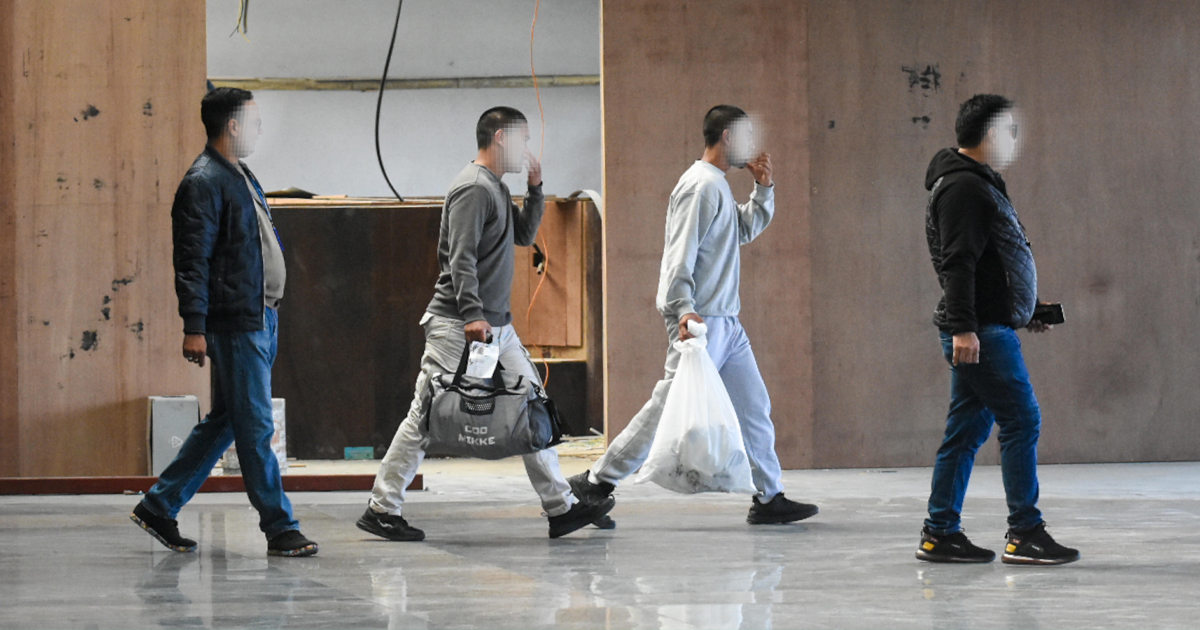
Deported Nepali from the US authorities at Tribhuvan International Airport. Photo: Nepal News / File pohoto
Policies emphasizing safety and benefit restrictions heighten consequences for unlawful presence. Upstream high denials limit legal entries, indirectly pressuring irregular attempts that later result in encounters. Embassy facilitation via electronic verification streamlines chartered returns when documents expire. This interconnected cycle shows how consular scrutiny upstream feeds downstream enforcement.
For Nepalis, it elevates risks for uncertain-status individuals, promoting early legal consultation and compliance. The trends serve deterrence while addressing specific concerns, though they carry humanitarian and community impacts. Awareness of these linkages encourages lawful pathways from the start, reducing escalation potential in an enforcement-heavy landscape.
What longer-term consequences might persistent high visa denials pose for US higher education?
Sustained 35% global F-1 denials, including Nepal’s 81%, threaten US universities with enrollment shortfalls, potential program cuts in STEM niches, and reduced research funding dependent on international tuition.
Diversity and innovation pipelines weaken as South Asian graduates, key to over 70% of certain advanced degrees, face barriers. This risks ceding ground to competitors like Canada and Europe in attracting demographic youth bulges projected for South Asia and Africa by 2030.
Economic projections indicate billions in lost contributions to GDP via workforce transitions. Institutions already navigating domestic declines face compounded pressures on sustainability. Policy recommendations focus on transparency and dual-intent measures to restore balance without security compromises.
For Nepal, redirected talent flows alter brain circulation patterns rather than pure drain. The decade trend warns of entrenched obstacles undermining America’s education leadership if unaddressed, affecting global competitiveness and soft power in key regions.
Do any targeted exceptions or programs exist to ease high denial rates for Nepali and similar applicants?
Broad nationality waivers for F-1 visas do not exist, with adjudication remaining individualized under 214(b). However, limited supports include university advocacy letters, sponsored exchange programs like Fulbright offering enhanced credibility, and STEM OPT extensions for those who secure initial approval.
Nepal falls outside Visa Waiver Program eligibility due to refusal thresholds. Bond options apply mainly to visitor categories post-determination. Dual-intent expansions for students remain under discussion rather than implemented. Reapplications demand fresh evidence rather than automatic relief.
Some institutions collaborate on pre-visa financial packaging or guidance to bolster files. Outcomes ultimately depend on personal circumstances, such as prior US success or skills in shortage areas, though high-refusal statistics constrain systemic relief.
Exploring sponsored routes can provide advantages. Direct consultation with the US Embassy in Kathmandu for current options is advisable, but core intent demonstrations remain non-negotiable. No shortcuts fully bypass prevailing scrutiny in challenged regions.
What does the current Visa Bulletin indicate about DV-2026 availability and constraints for Nepali selectees?
The April 2026 Visa Bulletin set Nepal’s DV-2026 cutoff at 10,000 (within Asia’s 35,000 except Nepal), allowing more of the 3,933 selectees to advance DS-260 processing. Subsequent movement to 11,000 in June reflects ongoing numerical availability despite the issuance pause since December 2025.
Constraints include the September 30, 2026, fiscal deadline and intersecting holds on certain immigrant processing for Nepal. Selectees retain ability to file and interview, but no visas issue pending the vetting review. This creates a holding pattern with urgency building toward program expiration.
Monthly bulletins will track further progress or potential retrogression. Preparation of full documentation packages is essential to capitalize on any resumption.
The bulletin illustrates numerical tracking amid policy overlays, emphasizing proactive case management for Nepali participants in an uncertain landscape. Future updates will clarify timelines, underscoring the need for vigilance in evolving DV dynamics.
How do criminal convictions or prior unlawful presence influence future US visa chances and deportation exposure for Nepalis?
Criminal records or unlawful presence significantly heighten inadmissibility risks, compounding 214(b) refusals and prioritizing enforcement for Nepalis. Serious offenses often impose permanent bars without rare waivers, feeding into “worst of the worst” removal lists and charter operations.
Even lesser violations can trigger expedited processes if status lapses. Prior overstays activate multi-year re-entry prohibitions, severely limiting reapplications. In Nepal’s denial-heavy context, these issues transform isolated incidents into enduring obstacles.
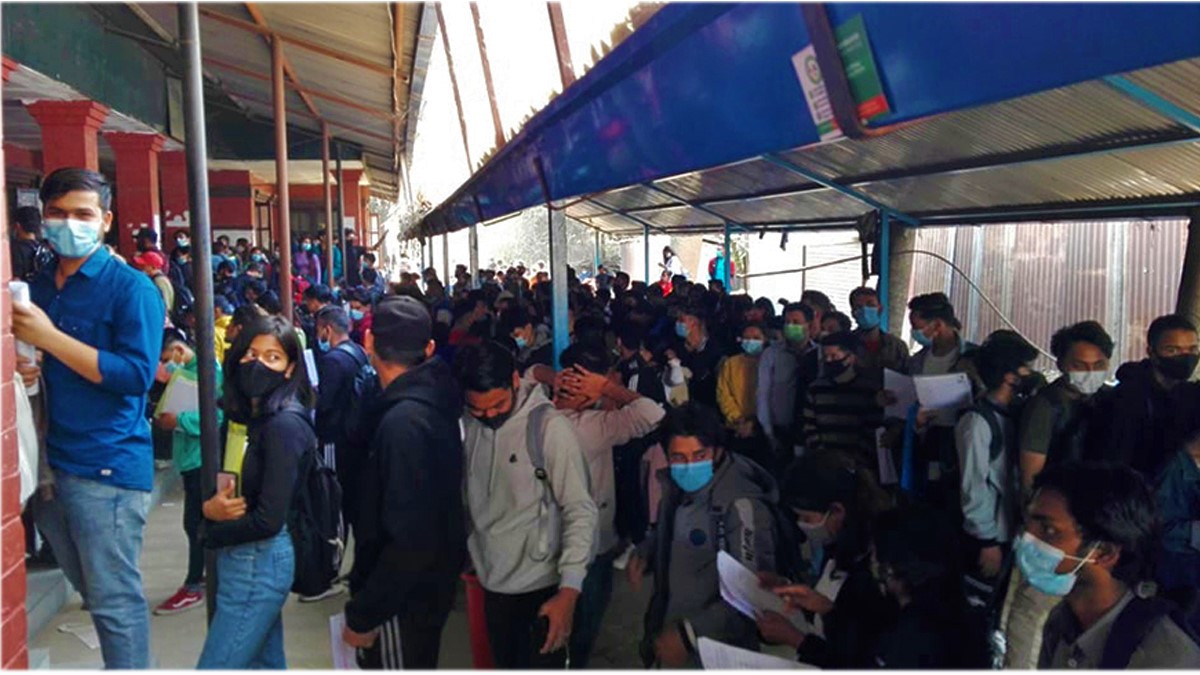
Over 600 students apply for NOC letter daily. File photo
Fast-track courts accelerate resolutions, and green card holders face revocation potential for certain crimes. Full disclosure and rehabilitation documentation are required for any waiver eligibility. Prevention through strict visa compliance avoids escalation.
Embassy reports link rising deportations partly to such backgrounds, highlighting community education needs on lawful adherence. Those with histories must consult qualified counsel before applications or travel to navigate complex inadmissibility grounds effectively.
What policy adjustments have experts proposed to reduce visa denial disparities for Nepal?
Experts recommend enhanced transparency in denial explanations, standardized financial templates, and targeted training for high-refusal consulates to minimize subjectivity in 214(b) reviews.
Extending dual-intent to F-1 visas would better accommodate legitimate work aspirations while preserving temporary status. Codifying OPT protections in law would add certainty for enrollees.
Data audits of regional patterns and streamlined processing for verified high-merit applicants from growth markets like Nepal could promote fairness. These suggestions aim to harmonize security with talent needs, mitigating projected shortages in US innovation sectors.
For Nepal, clearer embassy guidance on tie evidence could stabilize results. Bipartisan legislative efforts have surfaced related concepts, though progress varies. Incorporating demographic insights on South Asia’s youth potential could foster competitive policies versus global rivals.
Evidence-driven changes would modernize the system, benefiting institutions and applicants by emphasizing qualifications over origin-based trends. Continued advocacy stresses timeliness to prevent further enrollment erosion.