Kathmandu
Sunday, July 12, 2026





The report has neither conducted complete investigation nor has it recommended clear action to be taken against the guilty

KATHMANDU: Even before the government formally released it, the report of the Gen Z movement inquiry commission led by Gauri Bahadur Karki had been splashed across the media, and doubts about its implementation have already begun to surface.
The government of Prime Minister Sushila Karki established the commission on 21 September 2025 to investigate and report on the human and material losses that occurred during the Gen Z movement of September 8 and 9. The commission took approximately six months to complete its inquiry report, which it submitted to the government on 8 March 2026.
While the government was under pressure to release the report, news based on excerpts from it began appearing in the media from Wednesday morning. Only in the evening did the government finally decide to make the report public by placing it on record in the library of the Federal Parliament Secretariat. However, Parliament Secretariat spokesperson Ekram Giri said that as of Thursday evening, the secretariat had received no information about the report.
The 907-page Karki report has drawn criticism as confused, unclear, and meandering, with commentators saying its implementation will not be straightforward. Criminal law expert Professor Rajit Bhakta Pradhananga says the report has merely compiled a record of events. “Facts and truth can be different things, and on certain matters it may also be biased,” he says.
According to Pradhananga, who is also a senior advocate, once the report is made public the new government must decide to implement it and forward it to the District Government Attorney’s Office, which must then study it and decide whether or not to file a case; that decision must also be endorsed by the Office of the Attorney General; and the stage of registering a complaint for prosecution must be completed. Only then can police investigate and the government attorney file the case in court. “This process is not easy to complete. But the government that came to power on the strength of the Gen Z movement should be optimistic about implementing the report,” he says.
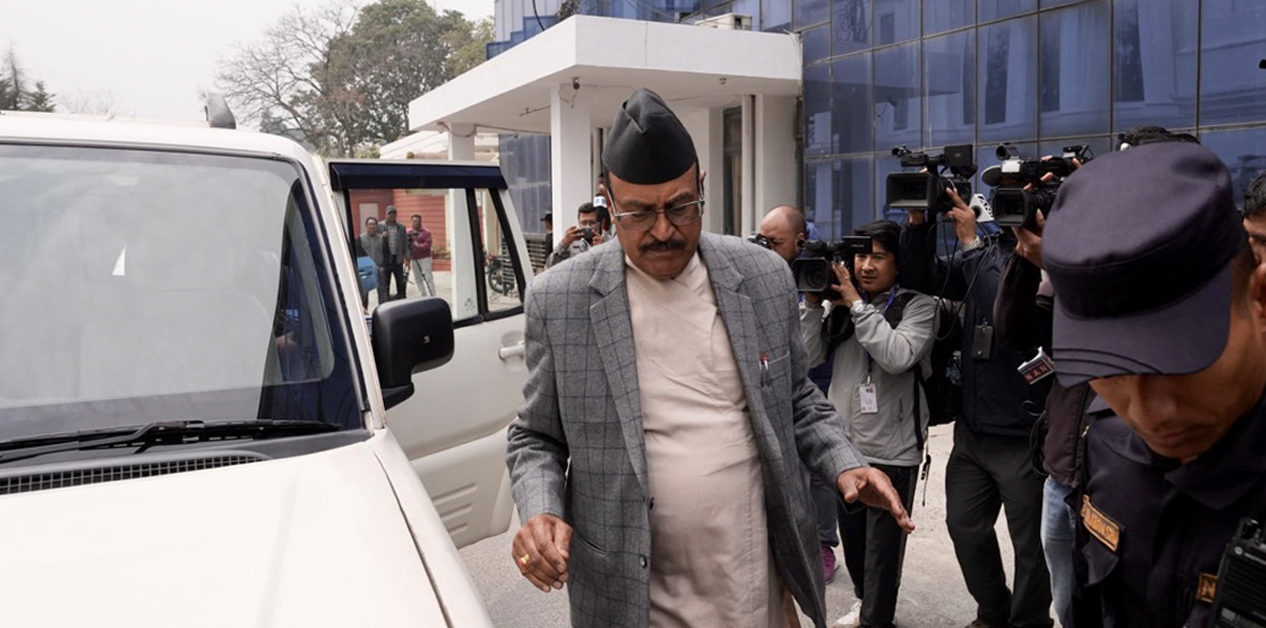
Gauri Bahadur Karki, Chairperson of the Judicial Commission formed to investigate the incidents that occurred during the Gen Z movement.
The Karki Commission report recommends criminal investigation and prosecution of the then-Prime Minister, Home Minister, and heads of security agencies on grounds of involvement, official responsibility, and negligence in the events of September 8 last year. For the events of September 9, however, it has advised the government to conduct further investigation.
The report repeatedly emphasizes that the events of September 8 occurred due to the negligence and indifference of those in government leadership. On September 9, Singha Durbar, the Supreme Court, the Parliament building, Bhat-Bhateni supermarket, and private property were vandalized, looted, and set on fire. Who was responsible for the arson and looting? On this, the commission is largely silent.
The report specifically names for investigation and prosecution under the Muluki Criminal Code 2017 – on charges of knowingly violating their duties while holding high office and failing to take effective measures to prevent human casualties on September 8 – then-Prime Minister KP Sharma Oli, Home Minister Ramesh Lekhak, then-Inspector General of Police Chandra Kuber Khapung, Home Secretary Gokarna Mani Duwadi, Armed Police Force Inspector General Raju Aryal, National Investigation Department chief Hutraj Thapa, and then-Chief District Officer of Kathmandu Chhabi Lal Rijal.
Finding weakness and negligence in the discharge of official duties when the security apparatus proved inadequate, the report recommends departmental action against then-Additional Inspector General and current Inspector General of Police Dan Bahadur Karki, among others. Also recommended for action are then-Additional Inspector General Siddhi Bikram Shah, Deputy Inspector General Om Bahadur Rana, Deputy Inspector General Bishwa Adhikari, Senior Superintendent Deep Shumsher JBR, and Superintendent Rishiram Kandel.
The report also recommends departmental action on the Armed Police Force side, naming Additional Inspector General Narayan Datt Paudel, Deputy Inspector General Suresh Kumar Shrestha, and Superintendent Jiwan KC.
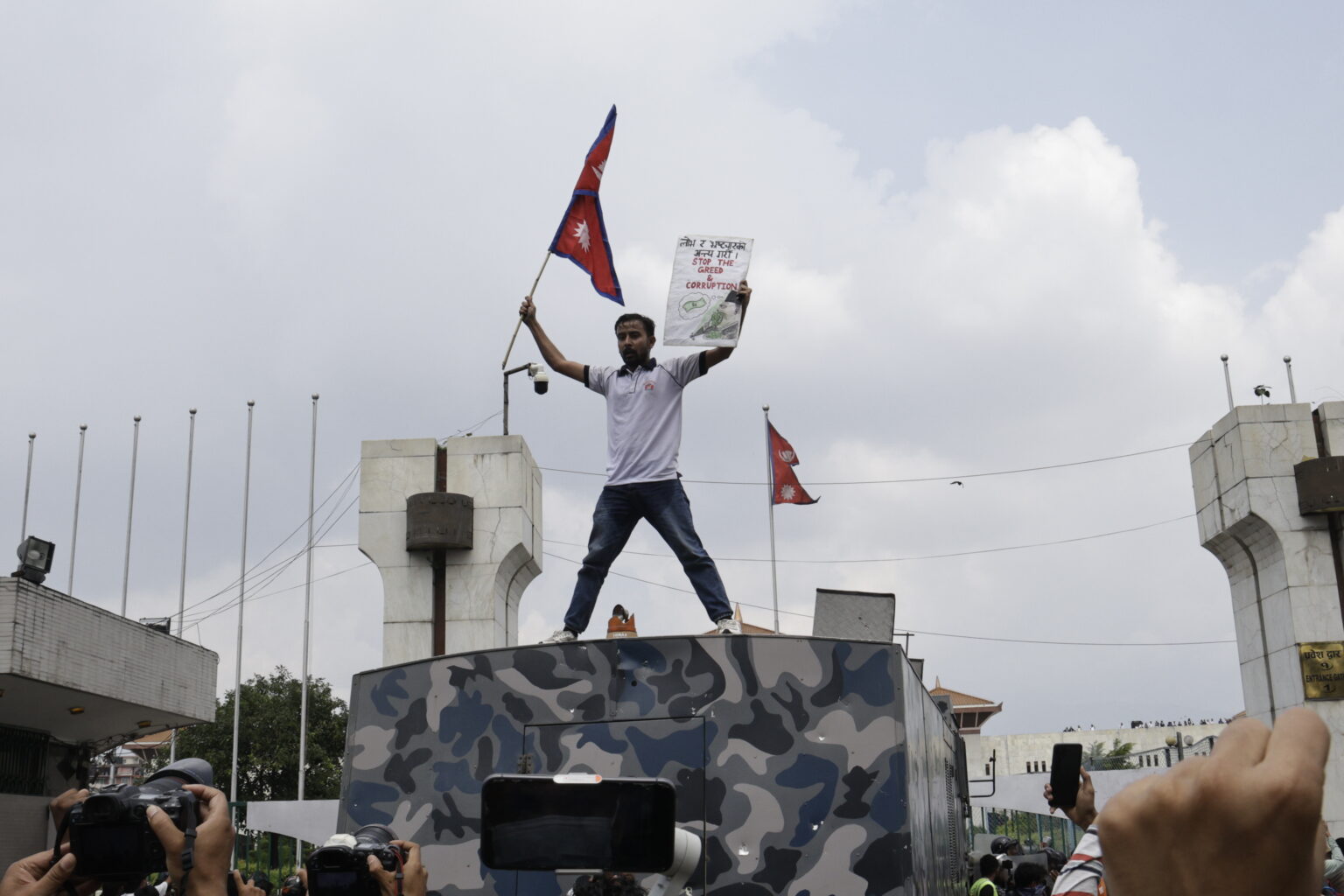
Protesters demonstrating in front of the Parliament building in New Baneshwor on the first day of the Gen Z movement. Photo: Bikram Rai.
National Investigation Department deputy director Krishna Prasad Khanal and deputy investigation director Riben Kumar Gachchhadar are also recommended for departmental action. Similarly, Nepal Army Brigadier General Manoj Baidwar (Sheetal Niwas security commander), Lieutenant Colonel Diwakar Khadka (Baluwatar security commander), Lieutenant Colonel Ganesh Khadka (Singha Durbar security commander), and Major Santosh Dhungel (Parliament building security commander) are also named in the action recommendations.
The report finds that the Gen Z demonstration of September 8 was incited by a group called TOB (Tibetan Origin Blood), later renamed The Original Brother. As members of this group appear to have been involved in inciting the crowd and provoking violence during the movement, the report recommends action against them under Section 35 of the Criminal Code. For the violent incidents, arson, and looting of September 9, it recommends that the government conduct further thorough investigation using BTS data and CCTV footage to identify those involved.
The same old doubts
A commission was formed under former Supreme Court Justice Krishna Jung Rayamajhi to investigate the government actions taken during the second people’s movement of 2006. Twenty people were killed during that movement, which lasted 19 days from 6 April 2006. The commission recommended action against more than 300 individuals, including then-Deputy Prime Ministers Tulsi Giri and Kirti Nidhi Bista, Home Minister Kamal Thapa, Law Minister Niranjan Thapa, Chief of Army Staff Pyara Jung Thapa, and Armed Police Force Inspector General Basudev Oli. But the report was never even made public, let alone acted upon.
Commission chairman Rayamajhi says that since previous governments had failed even to make the report public, the fact that this report has been released is itself something new. “Now the responsibility to implement the report rests with the government,” he says.
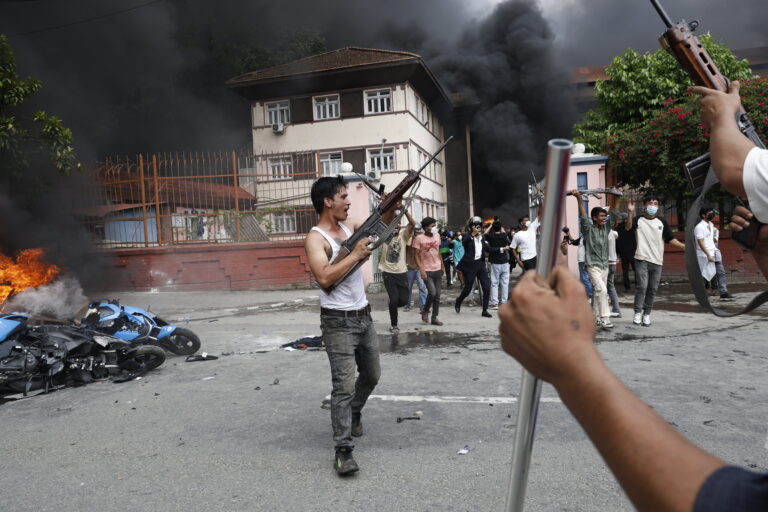
Protest held on 24 Bhadra, the second day of the Gen-Z movement. Photo: Bikram Rai.
During the 1990 people’s movement, the then-Panchayat government similarly crushed pro-democracy demonstrators with brutality. The government formed after the restoration of democracy established an inquiry commission under Justice Janardan Lal Mallik. The commission’s report named then-Prime Ministers Marichman Singh Shrestha and Lokendra Bahadur Chand, Panchayat Policy and Investigation Committee chairman Nawraj Subedi, then-ministers of state Kamal Thapa and Niranjan Thapa, and political figures Pashupati Shamsher JBR and Sharat Singh Bhandari as guilty and recommended action against them. That report too has never been made public to this day.
On Thursday, the advisory committee of the Nepal Bar Association issued a statement expressing serious concern about the Karki Commission report. The Bar concluded that the report, as published in the media, had gone beyond its mandated terms of reference and had also ignored the principle of separation of powers. The Bar expressed particular dissatisfaction with the report’s legal recommendations, especially the suggestion that a full bench of all Supreme Court justices should be able to amend the constitution and laws on its own.
The Bar has formed a study committee chaired by its president Bijaya Prasad Mishra, with senior advocates Sujan Lopchhan, Tikaram Bhattarai, Din Mani Pokhrel, and secretary-general Kedar Prasad Koirala as member-secretary, to study both the Karki report and the National Human Rights Commission’s report on the same subject.
A writ petition raising ethical questions about the impartiality of the inquiry commission itself had already been filed in the Supreme Court on 4 November 2025. In its ruling on that writ on 26 December 2025, the Supreme Court also raised questions about the commission’s impartiality and the ethical standing of chairman Karki.