Kathmandu
Sunday, July 26, 2026





Draft of a new bill to replace the Council for Technical Education and Vocational Training (CTEVT) Act, 1988

KATHMANDU: The government has drafted a bill to amend and integrate existing laws related to technical and vocational education and training. The drafted bill, aimed at replacing the currently prevalent ‘Council for Technical Education and Vocational Training Act, 1988’, aims to make quality education and training accessible in line with federalism.
Shiva Kumar Sapkota, Joint Secretary and Spokesperson of the Planning and Monitoring Division at the Ministry of Education and Sports, states that the bill has been introduced to make the Act—which was formed 37 years ago for the establishment of the Council for Technical Education and Vocational Training (CTEVT) to run technical streams—timely, more practical, and effective. “This bill aims to integrate the technical stream education currently being run through CTEVT and the Education and Human Resource Development Center,” he says.
The Ministry made the draft public on its website on May 26 to seek feedback and suggestions.
The bill clarifies the roles of provincial and local levels regarding the operation and management of technical education and vocational training. Clause 27 of the bill includes the authority for provincial governments to establish and operate technical schools within their provinces based on labor market needs and skill mapping. Similarly, Clause 32 mentions that provinces can operate, regulate, monitor, and evaluate schools that have been operating within the province so far, polytechnic education, partnership-model schools, and privately run schools. A province-level Technical Education and Vocational Training Council will exist for this purpose. The provincial council can operate, regulate, monitor, and evaluate technical schools under national policies, standards, frameworks, and provincial laws.

Shree Janata Secondary School, General and Technical Education, Siyari-7, Rupandehi. Photo Source: School’s Facebook Page
Similarly, Clause 33 includes provisions allowing local levels to operate, regulate, monitor, and evaluate school-level technical and vocational education and skill-based training. The operation, regulation, monitoring, and evaluation of technical stream education and training in public schools running so far have also been assigned to the jurisdiction of the local levels. The proposed authority allows local levels to run skill testing centers, monitor skill testing, and conduct short-term professional training, seminars, and workshops for the capacity development of instructors and staff. Local governments must regularly monitor and evaluate the technical stream academic programs of institutions they have permitted to operate and send an integrated annual report to the Ministry.
In contrast, the existing Act grants this authority solely to the Council for Technical Education and Vocational Training under the Ministry of Education. Until now, technical stream education has been conducted according to the Council’s curriculum. The bill proposes giving the provinces and local levels the authority to develop and implement curricula for programs within their jurisdictions. To gain recognition, provinces and local levels must submit the curriculum to the Council before implementing it.
The bill classifies the workforce prepared for the labor market through technical streams into levels 1 to 8 according to the National Qualifications Framework. The qualifications framework, approved by the government on May 3, 2020, is expected to assist in supplying skilled and competent human resources matching the qualifications achieved by students and the demands and needs of the labor market.
While the 1988 Act classified technical and vocational education into only three levels—basic, medium, and high-level—the draft of the new bill proposes a separation into eight levels. Basic Education Level-1 and Basic Education Level-2 are classified under levels 1 and 2. Following this, basic technical education or its equivalent is categorized as Level 3, National Technical Certificate (Class 10) or its equivalent as Level 4, National Diploma or Proficiency Certificate or Class 12 equivalent as Level 5, Bachelor’s degree or its equivalent as Level 6, and Master’s degree or its equivalent as Level 7. Similarly, a PhD is classified as Level 8.
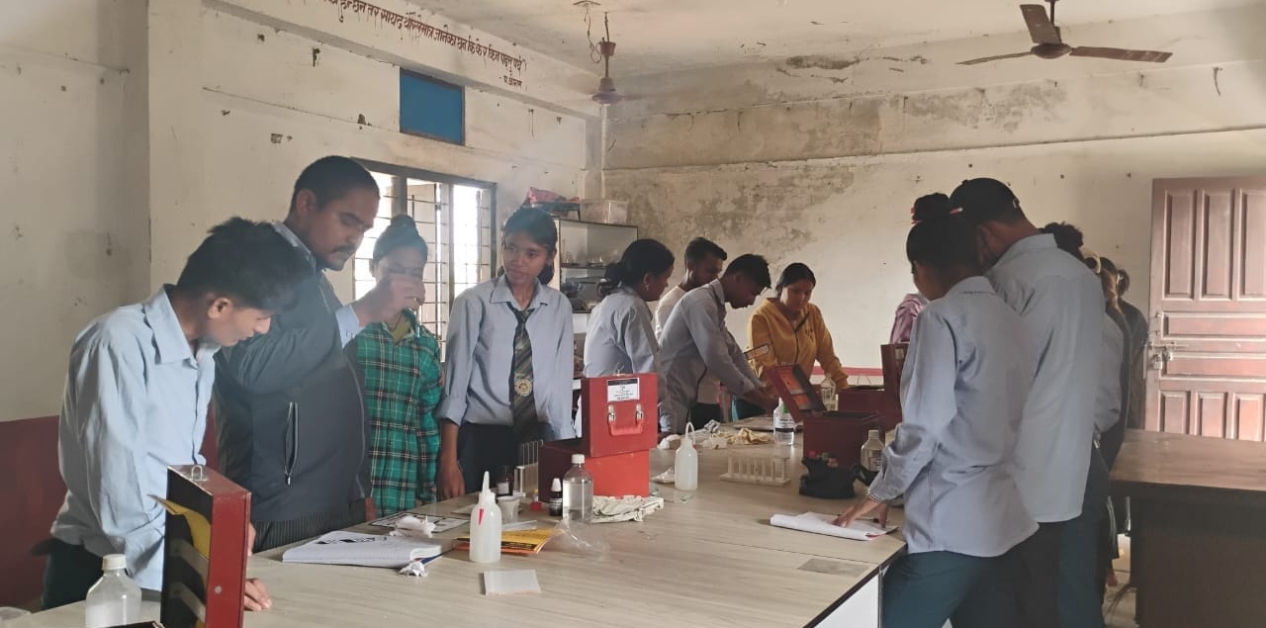
Students studying at the pre-diploma level in the Gurans Secondary School TEx program testing soil. Photo Source: School’s Facebook Page
Furthermore, the draft bill mentions the development of a ‘Bridge Course’ to provide access to technical and vocational education and training for individuals who have learned skills through informal or alternative means. The ‘Bridge Course’ is also proposed to facilitate those transitioning from one genre or level to another. “This has been proposed so that students do not face difficulties in changing technical subjects and can make selections easily; further clarity on this is yet to emerge,” says Ministry of Education Spokesperson Sapkota.
According to the Flash Report 2024 of the Education and Human Resource Development Center, technical stream education is being offered in 1,442 schools and training centers across the country. Technical stream classes run in 905 educational institutions under CTEVT and in the secondary level of 537 community schools under the Human Resource Development Center. Nationwide, there were 39,155 students in the school-level technical stream from classes 9 to 12 during the 2025 academic session.
On the CTEVT side, 32,000 students were enrolled in the fiscal year 2024/25, including 4,893 in pre-diploma, 24,678 in diploma/certificate, and 2,429 in the pre-diploma level apprenticeship program. While the government had been conducting technical stream education through CTEVT, it implemented technical and vocational education from the school level itself starting in the fiscal year 2012/13 with the goal of producing a skilled workforce required by the labor market.