Kathmandu
Saturday, July 25, 2026





Renowned children’s author Rambabu Subedi reflects on his 35-year teaching career, experience educating royalty at Eton College, and his lifelong passion for creating folk-inspired literature and songs for children
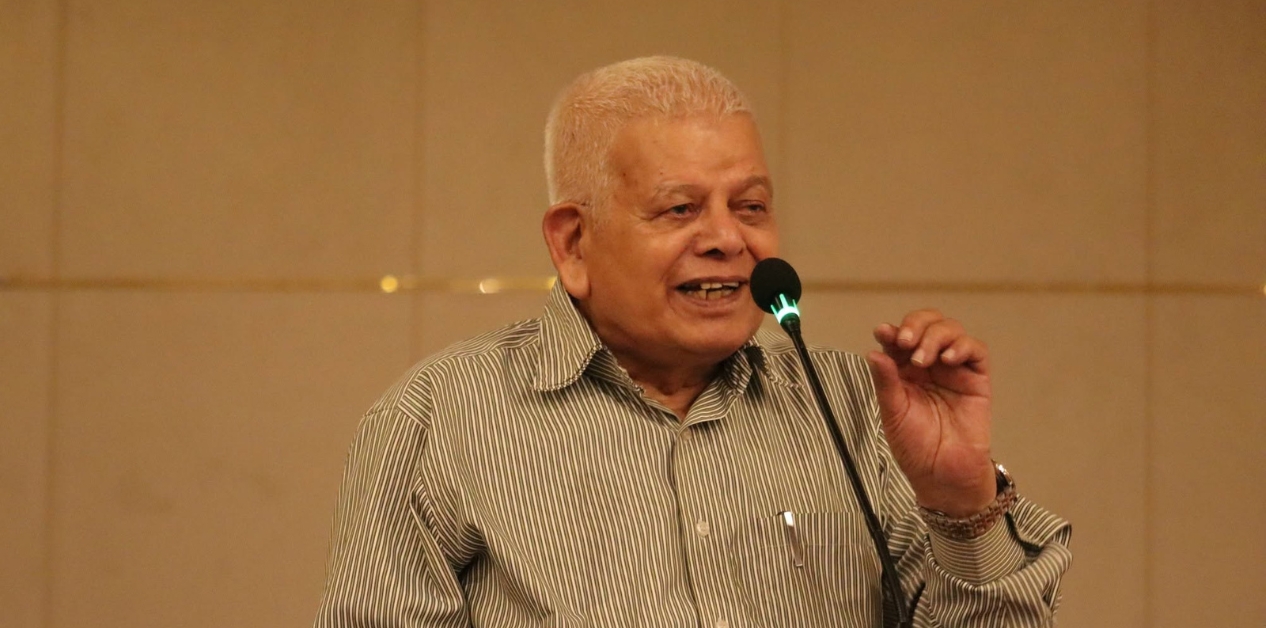
KATHMANDU: Rambabu Subedi, who has been continuously expressing rural life and settings in children’s literature and children’s songs, is a well-known creator in Nepali literature. Subedi, the creator of the popular children’s song “Mero Gaun Jyamire, Jamuniko Chhoro Ma” that has been echoing for generations, remains active in new creations even after crossing 80 years of age. He is still busy recording, video editing, and releasing new songs.
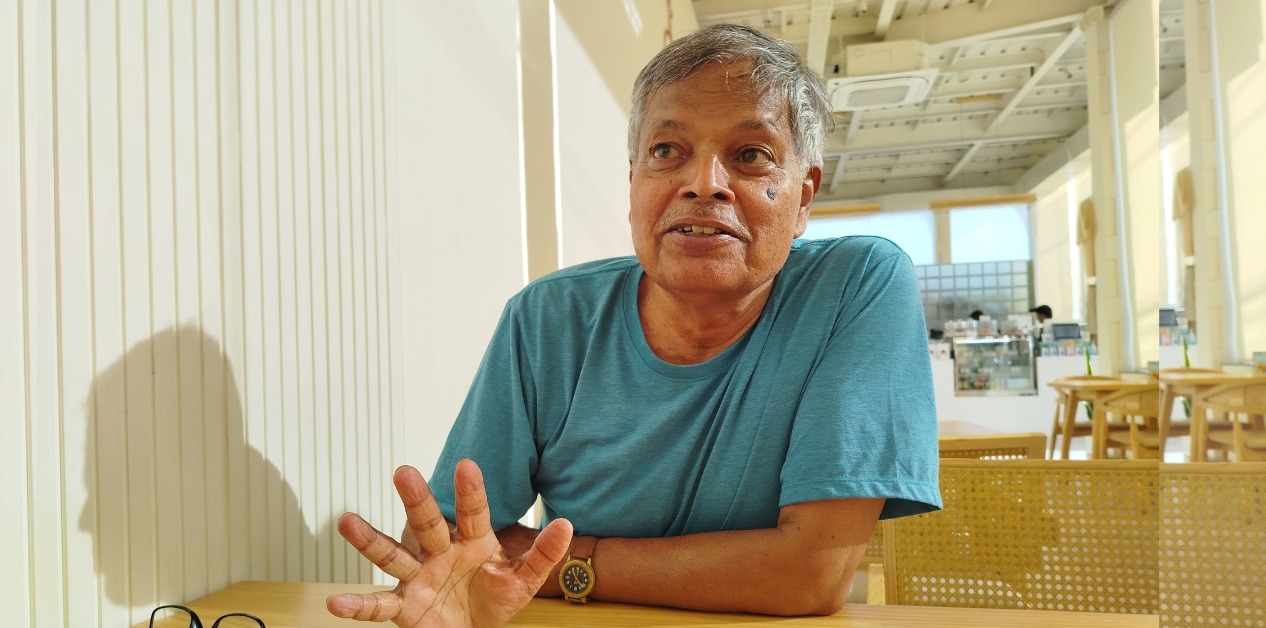
Just last month, some of Subedi’s new songs were released, one of which covered the topic of the World Cup. Subedi, who remained a Nepali subject teacher throughout his life, shared interesting experiences of teaching members of the royal family in this interview. Here is the conversation between children’s writer Subedi and Girish Subedi:
What kind of themes attract you more in creating children’s literature?
I am mostly deeply influenced by rural folk songs, folk tunes, and folk culture. I sort of pluck the popular language spoken in villages, rural idioms, and especially original words spoken by rural children, giving expression to them through my creations.
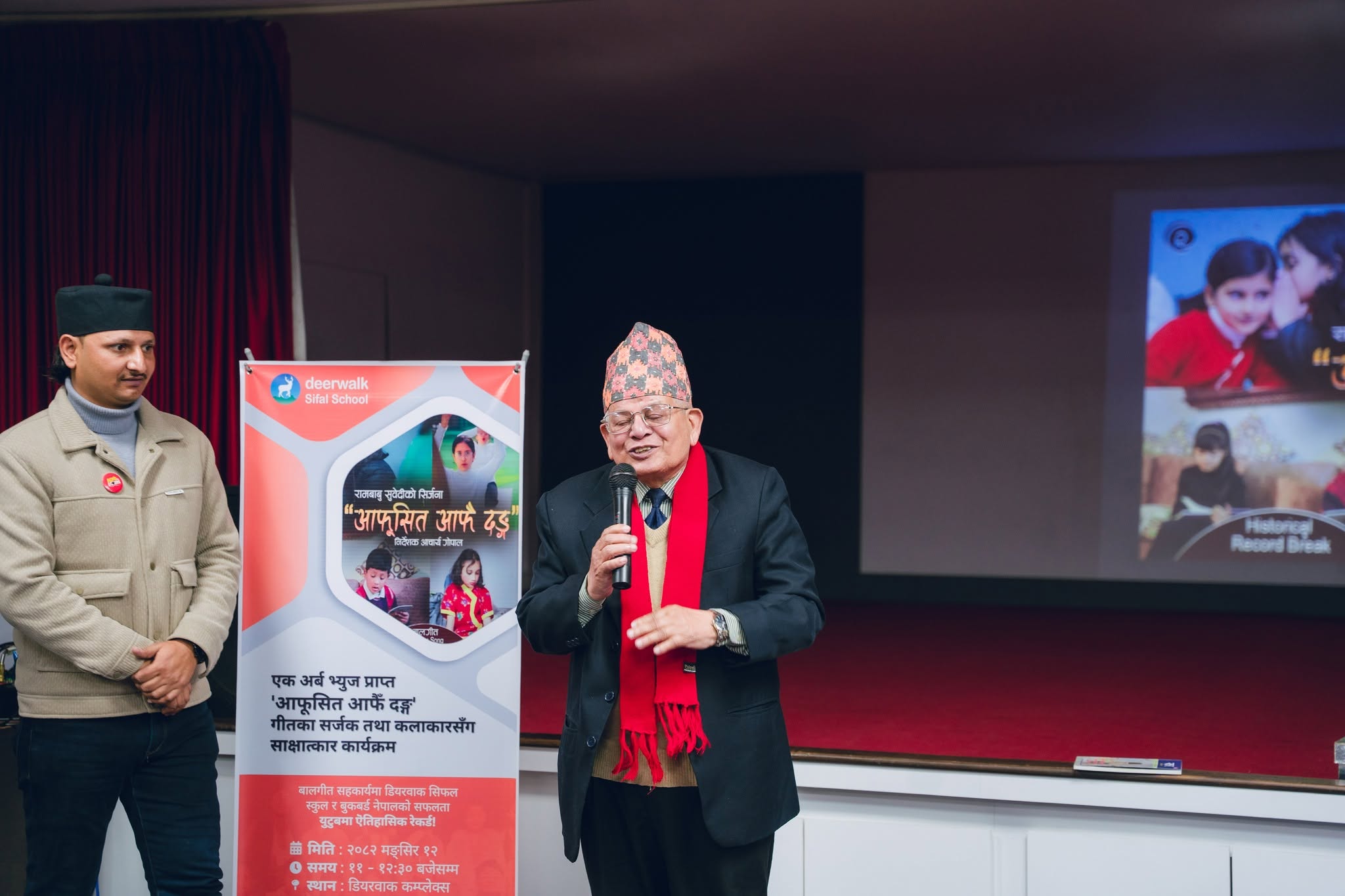
Writer Rambabu Subedi (right) during a program held following the success of the song ‘Aaphusita Aafai Danga’
Having worked as a teacher for a long time, how did you observe child psychology?
I spent a long time as a teacher at Budhanilkantha School. During that period, I tried to closely understand the psychology of children. Understanding what kind of words, feelings, music, or songs a child likes is child psychology. The psychology of children varies depending on their background. The psychology of students studying in the hills is influenced by the geography there. The psychology of children living in the Terai is found to be different according to that very geography. The psychology of children coming from poverty or deprivation and those from affluent families is also different. For example, the childhood psychology of former Crown Prince Dipendra, who grew up in the former royal family, was different, while that of those coming from ordinary families was different. I try to write children’s literature and children’s songs by understanding these various aspects of child psychology.
For which age group of children are your works more useful?
I am currently trying to write for small children in pre-primary levels below grade 1 as well. My focus is on how to teach them Ka, Kha, Ga (Nepali alphabets) or 1, 2, 3, 4 in a fun way. For instance, I have a song, “Aaitabar Bihani Ghamsita Uthe Ma.” This song is used a lot for small children in pre-primary classes. It has a beautiful rhythm, and while singing along with this rhythm, children easily learn the names of the seven days of the week.
So far, more than 100 videos featuring my songs have come out. Looking at the usage and feedback of those videos, I have found that my creations especially attract children from grades 3–4 up to grades 7–8. Slightly older students in grade 9–10 or 11–12 nowadays rarely read or listen to children’s songs. I am still striving to write for very small toddlers, but while the songs written for this middle age group are beloved, achieving that same success for very small ones is yet to come.
What kind of students did you get the opportunity to teach?
I spent almost 35–36 years in the teaching profession. I started teaching at Ramkot School in my own village located in Hansapur, Kaski, Pokhara. After that, I taught in Lamjung and taught at Pharping Boarding School from the fiscal year 1973/74 to around six years. Then, from the fiscal year 1979/80, I taught continuously for 28 years at Budhanilkantha School. During this period, I also had the opportunity to go to Eton College in the United Kingdom for two years to teach the Nepali language to the then Princes Dipendra and Nirajang.
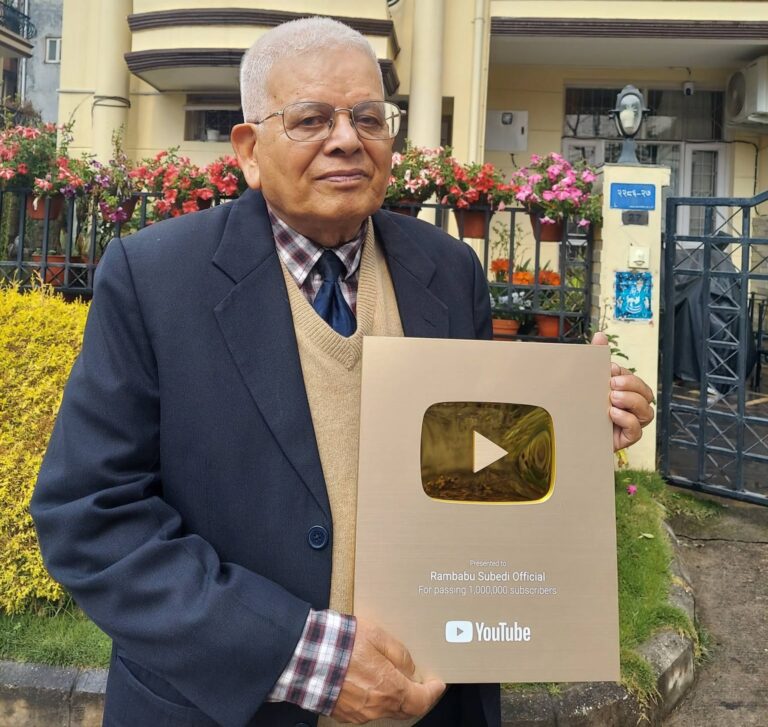
Rambabu Subedi
Often people or teachers think that we are teaching the child. However, in reality, that is not the case; we are also learning many things from them.
When I taught at Budhanilkantha School, I conducted an experiment. I recited 10 children’s songs written by me to students across all three sections of grade 5 and asked them to evaluate the songs and give marks. The song they gave the highest marks to was “Mero Gaun Jyamire Jamuniko Chhoro Ma.” This song is very famous among children in Nepal. Similarly, songs like “Aaitabar Bihani Ghamsita Uthe Ma” are also popular in the market because of their choice.
While teaching in institutions with excellent academic environments like Budhanilkantha and Eton College, I got the opportunity to learn even more clearly how to grasp child psychology and how to teach.
Your children’s songs are very popular on YouTube. What kind of feedback are you receiving?
There are more than 100 videos of my songs on YouTube. Among them, some have extraordinary views. For instance, the song “Aaitabar Bihani” has crossed over 1 billion views.
Through this medium, many mothers send me feedback in the digital world. In my experience, mothers show more interest and love on behalf of children on Messenger or other media than fathers. They send messages saying they really liked the song.
Some mothers even ask, “My daughter studies in grade 5, she is looking to meet you, when can I come?”, and they even come to meet. I also gift books written by myself to those small children. Seeing that joy on the children’s faces gives immense pleasure. It is clear from the feedback of these mothers how positive an impact the songs have made on children. This process and my journey of making new videos are still continuously ongoing.
Some of your works have also been translated into English and other languages. How necessary is it for Nepali children to understand and enjoy foreign children’s literature?
Some of my books have been translated into English and some into the Hebrew language as well. When the former president visited the Arab region, she had expressed a commitment to send children’s literature books there. Accordingly, we translated three or four of my Nepali children’s books into the Hebrew language and sent them. This was a good opportunity to take our literature to the world stage.
As far as children’s literature in the Nepali context is concerned, when the organization Room to Read came to Nepal, it brought a radical change in the format and printing of Nepali children’s literature. It established the culture that children’s books should come on quality paper, with beautiful, colorful pictures and a good format.
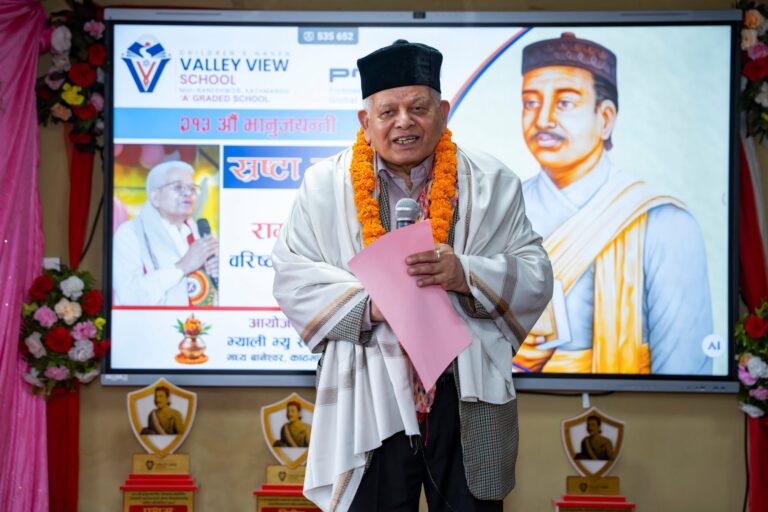
Rambabu Subedi
Currently, publishers are printing very good books, and there is no shortage of children’s literature in Nepal. But where the problem lies is that proper usage and access to those books have not been achieved yet.
Comments are heard that adequate work has not been done in children’s literature in Nepal yet. What is your opinion on this?
Unless our children are taught about their own country, art, culture, language, lifestyle, and their parents’ surroundings, their foundation will not be strong. The most effective medium to teach children is songs and music, which directly touch their hearts.
Ironically, such important children’s literature and children’s songs have not reached remote districts like Humla and Jumla in Nepal, hilly regions, and inner alleys of the Madhesh. Accessible places like Pokhara, Biratnagar, or Kathmandu have some access, but children in remote areas are still deprived of it.
In our education system and among parents, there is still a narrow mindset that studying textbooks is enough. Schools do not have good libraries, nor do books reach remote areas. Merely cramming textbooks cannot complete the mental and physical development of children. While we have a vast treasure of children’s literature and children’s songs, a major effort is still needed to bring it into the hands of every child reader.