Kathmandu
Tuesday, June 30, 2026





Divorce cases are rising sharply in Nepal, driven by changing social values, growing individualism, migration, and evolving gender roles, according to court data and legal experts.
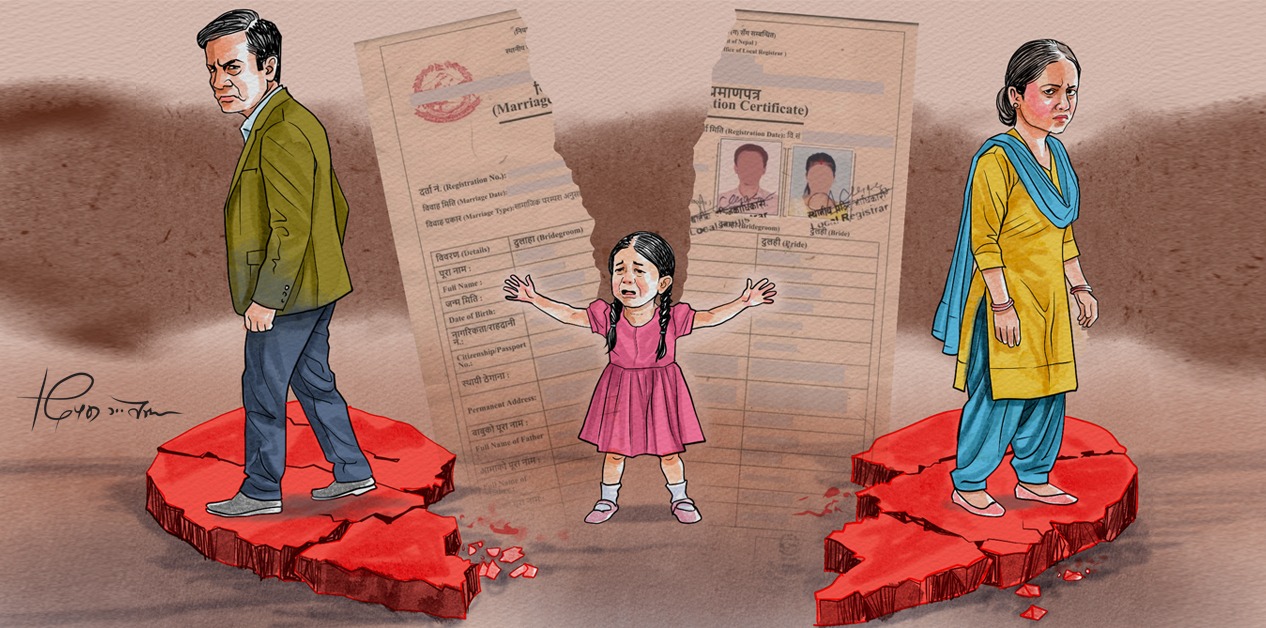
KATHMANDU: Last year, a couple from Kathmandu had a grand arranged marriage. However, within just seven months of the wedding, they reached the Kathmandu District Court for divorce. A 36-year-old woman from a high-class family filed for divorce this May, citing that her husband neglected her after marriage and showed signs of same-sex attraction.
Anila (name changed), a resident of Pepsicola, Kathmandu, began experiencing friction with her partner after 15 years of marriage. She suspected her husband was involved with another woman. She used to go live on the social media platform TikTok to share personal matters, a habit her husband did not particularly like. They began hurling accusations at each other.
As the disputes escalated, Anila filed a case against her husband in the Kathmandu District Court, claiming she was a victim of domestic violence. However, it was not proven. Unable to change each other’s habits, including the mutual suspicion, they reached a point where they could no longer live together. Two years ago, their married life ended in divorce. They have two children. Currently, the husband lives on the upper floor of the same house with their 11-year-old son, while she lives on the lower floor with their 14-year-old daughter.
The story of a couple originally from Baglung and living in Gongabu, Kathmandu, is similar. Sujina Magar had a love marriage 11 years ago. However, for the last five years, conflict began to grow between them. According to her, her husband would come home drunk almost every night, beat her, and threaten to kick her out of the house.
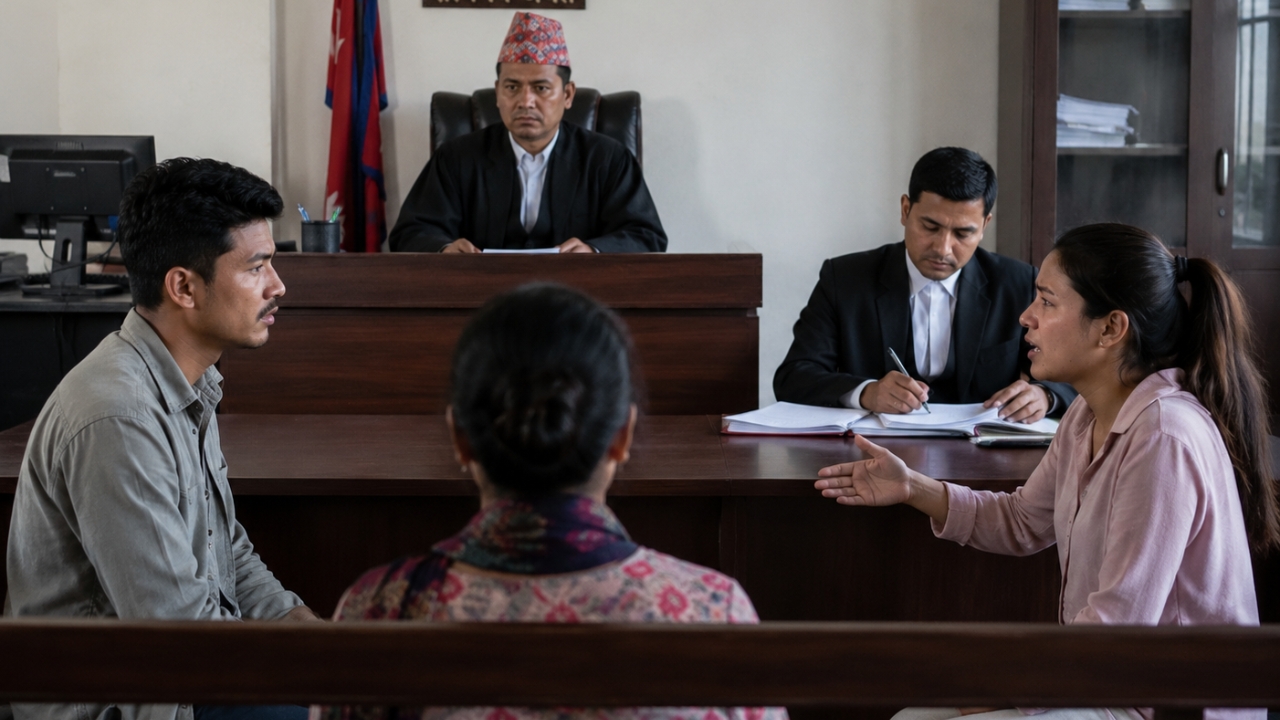
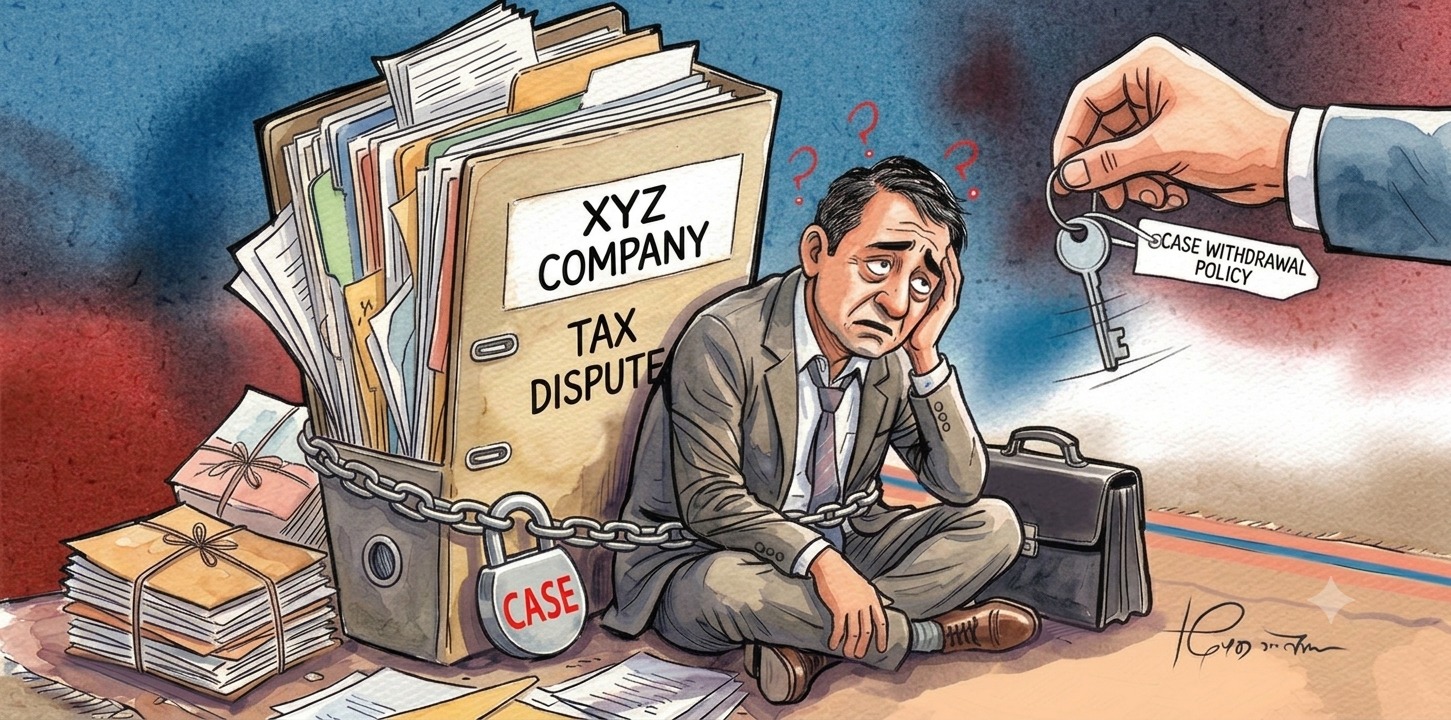
AI generated image
She began to fear that she might be killed one day if she continued living with her husband. They have a daughter. After enduring it for several years for the sake of their 10-year-old daughter, her patience finally ran out. Ultimately, she decided to divorce without claiming alimony or a share of the property. This couple divorced in April, 2026.
She says, “Though things were good between us initially, quarrels started during the COVID pandemic. I spent four or five years crying and enduring, hoping the relationship would improve. Finally, I decided to separate, realizing I could no longer live together while being beaten day and night.”
A man from Kavrepalanchok went to the United Arab Emirates (UAE) for employment. He returned home after 10 years. He heard rumors in the village and society about his wife’s involvement with another man. When he asked his wife about it, she admitted it. After that, the relationship between the couple could not remain as before. Disputes escalated. Instead of fighting every day, they decided to divorce.
Cases carrying examples like the ones above are increasing in the Kathmandu District Court. Looking at the statistics of cases filed in courts across the country since the fiscal year 2020/21, the number of divorce cases is the highest.
In the last FY 2024/25, 42,739 divorce cases were registered in courts nationwide. Based on this average data, 112 couples are reaching the courts for divorce every day.
According to Supreme Court statistics, the highest number of divorce cases is registered in District Courts. In the last FY 2024/25, 41,079 such cases were registered in District Courts across the country. Among them, 31,971 cases were settled.
In FY 2019/20, property partition cases were the highest in courts nationwide, while divorce cases were in second place. That year, 24,750 cases related to property partition and 14,161 cases of divorce were registered. Since then, divorce cases have consistently ranked at the top numerically in all fiscal years.
Analyzing the data of the last five years, divorce cases are the most frequent in courts across the country, and this number is increasing every year.
Legal practitioners state there are various reasons behind the increasing rift in marital relations. Advocate Bheshraj Pokhrel, who handles divorce cases, notes that the search for personal freedom and self-respect, mutual suspicion, and the modern woman’s refusal to endure a husband’s pressure—unlike previous generations—have contributed to the rise in divorce.
According to him, foreign employment is also a significant factor. “When the wife is abroad, the husband finds it hard to trust her, and when the husband is abroad, the wife in Nepal seeks to live on her own terms; both situations seem to increase divorce,” he says. “Relationships also break due to involvements with other men or women.”
Pokhrel adds that some marry at the age of 15 or 16 and only begin to understand life and see their desires change by 25 or 26, which contributes to the rising graph of divorce. Additionally, he estimates that the practice of “paper marriages” to go abroad, which are dissolved once they reach their destination, has added to the numbers. “Furthermore, the burden of responsibility in joint families and the inability to utilize property leads some women to seek divorce,” he says.
Sociologist Youba Raj Luintel observes that as individualistic tendencies dominate society and personal happiness becomes paramount, the concepts of community, family, and the institution of marriage are fading.
According to him, divorce is increasing in Nepali society due to three main reasons: geographical distance between couples, mobile phones, and flexible legal provisions. “When husbands and wives live apart for work or studies, suspicion, distrust, and the emotional distance that grows alongside geographical distance lead to family rifts,” he says. “On the other hand, smartphones and social media make it easy to contact and converse with people anywhere, increasing the possibility of extramarital affairs, which can escalate family conflict to the point of divorce.
Thirdly, he mentions that Nepal’s legal framework has become more flexible and has established women’s rights, providing a path to live independently when there is family discord. “With gender empowerment, access to education, and the evolution of expectations and thinking, there is no longer a compulsion for a husband and wife to stay together if they are incompatible. This is why the pressure of divorce cases in court has increased,” says Luintel.
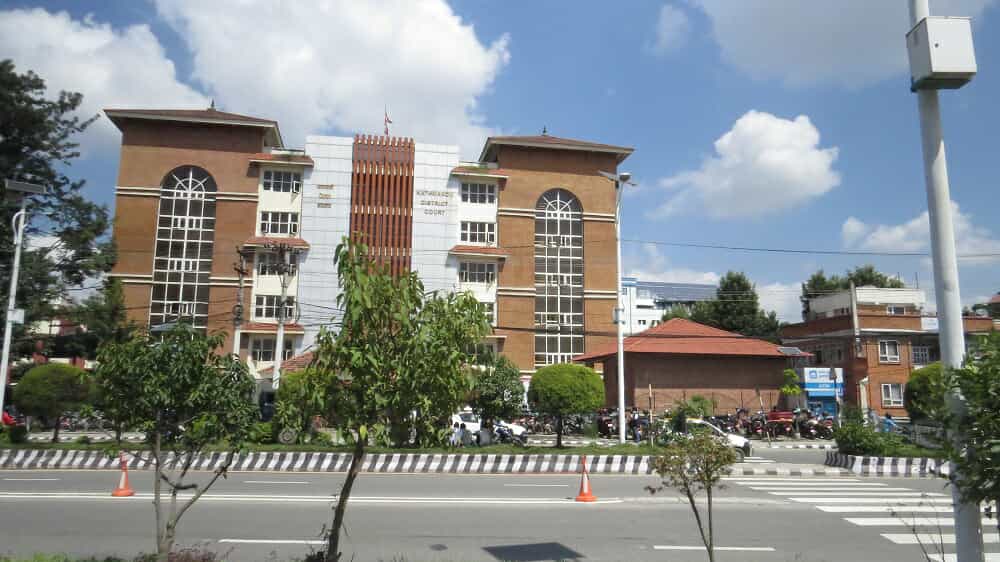
Kathmandu District Court
The Kathmandu District Court records the highest number of divorce cases in the country. In FY 2024/25, 4,589 cases were registered here, the highest among all district courts nationwide.
Subodh Babu Chiluwal, President of the Kathmandu District Court Bar Association, says that while women in the past used to endure domestic violence and oppression, the change in their social and economic status has led to an increase in divorce. “Previously, they depended on their husband’s income and would endure, but now women are becoming educated and self-reliant. With such economic independence, they do not want to compromise on anything,” he says.
He adds that extramarital affairs and the trend of “paper divorces” for property management have also contributed to the number of divorces.
Currently, if a woman desires it, divorce can happen easily and quickly, but it takes time if only the man wants it. In the old Civil Code (Muluki Ain) of 1963, there was not even a provision for men to go to court for divorce. The National Civil (Code) Act of 2017 has made a provision allowing men to also file cases in court. Chiluwal says, “Now men can go directly to court to file a case, but if the woman does not want it, getting a divorce is difficult and takes time.” He notes that since there are rights to property after marriage, women often play a decisive role in divorce compared to men.
Advocate Sapana Subedi, who handles divorce cases, says the number of divorces may have increased following the legal provision allowing men to go directly to court. However, in her experience, divorce is less frequently granted in cases filed by men. “Practically, divorce is easier for women than for men. The National Civil (Code) Act of 2017 specifies four conditions or grounds for divorce, and if reasons like physical assault, failure to provide food and clothing, or being kicked out of the house are mentioned, evidence is not even required,” she says.

Advocate Sapana Subedi
According to Advocate Subedi, most women coming for divorce state that their husbands neglect them or have relationships with other women. Some also come citing physical abuse and harassment. When men bring petitions, they often state that their wives do not share anything with them or express suspicion regarding their wife’s relationship with another man.
In Nepali society, marriage is a union between two individuals and a social, religious, and legal process. In Nepali culture, marriage is considered a sacred bond that gains social recognition and lays the foundation for lineage and family responsibilities. The law has provided that if it is impossible to move forward together in this relationship, it can be dissolved.
Section 93 of the National Civil (Code) Act, 2017 provides for divorce. Along with a simple provision where both husband and wife can divorce at any time if they both wish, separate rights for divorce are given to both.
Section 94 provides conditions under which a husband can seek divorce. This includes if the wife lives separately after taking her share of the property, if she lives separately for three consecutive years or more without the husband’s consent, if she fails to provide food and clothing or kicks him out of the house, if she plots to cause him physical or severe mental distress, or if it is proven that she has sexual relations with another man.
Section 95 grants the wife the right to divorce even without the husband’s consent. Other provisions are mostly similar for both. A wife can file a petition if she lives separately after taking her share of the property, lives separately for three consecutive years or more, if the husband fails to provide food and clothing or kicks her out, if he plots to cause her physical or mental distress, if the husband enters into another marriage, if it is proven he has sexual relations with another woman, or if it is proven the husband has raped the wife.
Once a divorce petition is filed in court, the legal requirement is to try and reconcile the parties through mediation; if they do not agree, the divorce is granted after one year. Additionally, there are provisions for property division between husband and wife and the provision of lump-sum alimony.