Kathmandu
Thursday, July 23, 2026





With local services unavailable, 67,733 landless families in Morang are forced into expensive trips to the district headquarters, spending an average of Rs 700 each to secure a free PAN for land ownership applications
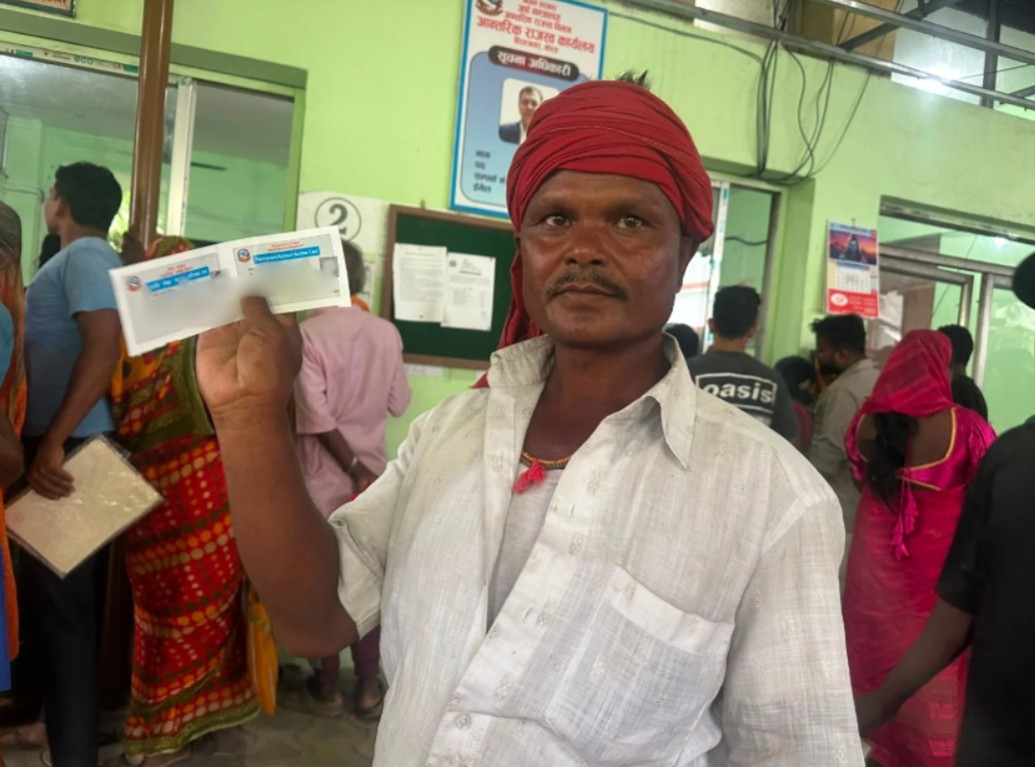
MORANG: Balak Das Rishidev, a man from Jahada Rural Municipality-2 in Morang, reached the Inland Revenue Office located at Traffic Chowk in Biratnagar before 10:00 AM on the morning of Wednesday (July 22).
In the process of providing land to landless families, a Permanent Account Number, or what is popularly known as PAN, has been made mandatory. However, there was no facility to make a PAN in the village itself. Therefore, braving the rainy season showers and the stifling heat of the Terai region, he traveled about 10 kilometers to reach the district headquarters.
Rishidev, who does not know how to read or write, does not have much information about the technical use of PAN. After the local government units issued a notice to submit a supplementary application along with a PAN, national identity card, and asset details by July 23, today, he left his farming work and rushed to the revenue office for fear of missing out on the process.
After standing in line for about five hours, he received the paper containing the PAN number at 3:00 PM. No government fee was charged to get the PAN. However, Rs 700 was spent on transportation, filling out forms, and food.
“While coming from home, I paid Rs 200 to the city safari, gave Rs 200 to the person who filled out the form, spent Rs 100 on snacks, and it will cost another Rs 200 in fare while returning,” he says while showing the PAN paper. “For us poor people, Rs 700 means two days of food rations.”
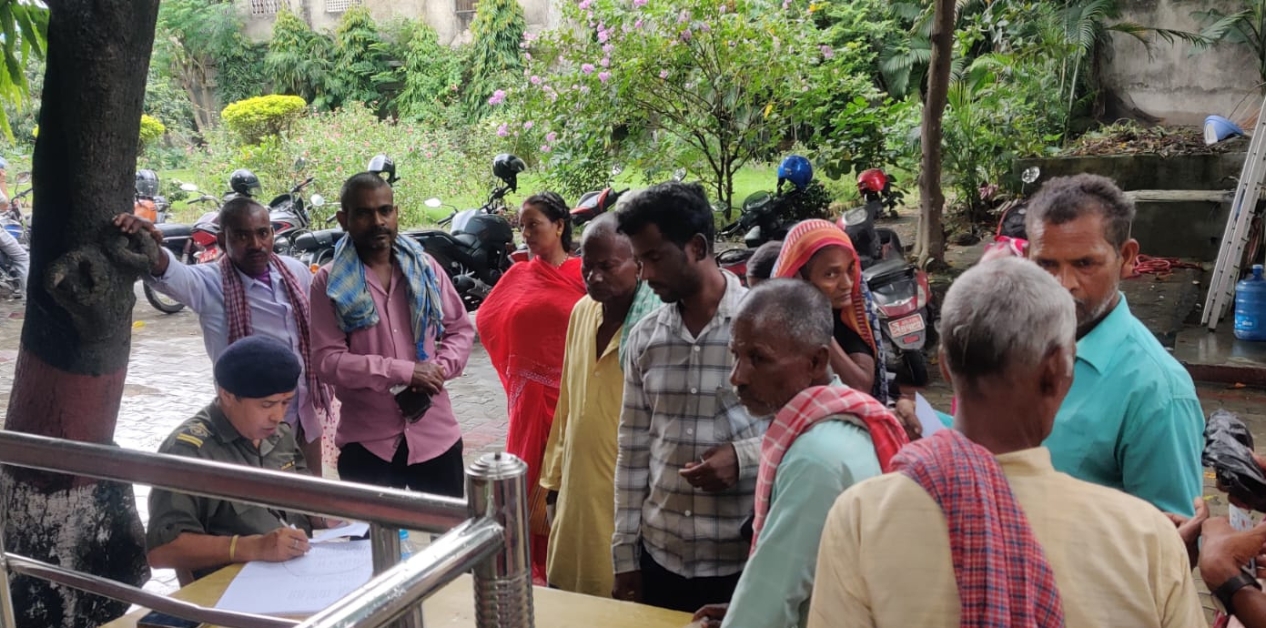
Landless and informal settlers standing in line at the Inland Revenue Office, Biratnagar, to obtain PAN card
The state has made PAN mandatory for public services. However, because services have not been expanded to the local unit accordingly, impoverished citizens like Rishidev have to lose money, time, and one day’s income just to get a free PAN.
Flocking to District Headquarters for land titles
Rishidev did not take a PAN to run a business or industry. He reached the revenue office in the hope of getting a land ownership certificate for the land he has been living on and cultivating for years.
Like him, thousands of landless and informal settlers in Morang are visiting revenue, administration, and ward offices to prepare PANs, national identity cards, and other documents.
While Rs 700 may seem negligible to many, for daily-wage workers earning just Rs 500 through hard physical labor, it is an exorbitant burden and essentially a form of quiet robbery targeting the poor.
Among them are Jogendra Yadav and Umesh Thakur of Rangeli. They were also met in the crowd at the Inland Revenue Office. “They say you cannot get land without a PAN,” says Thakur. “We don’t know when the land promised by the government will arrive, but the money in our pockets has already started running out.”
Ganesh Paswan of Sunwarshi is not even clear about which documents are required. “Some say a PAN is needed, some say a bank account,” he says. “Whatever is required to get land must be submitted. Otherwise, there is a fear that even the existing hut might be snatched away.”
According to the data of the Land Problem Settlement Commission, there are 8,919 landless Dalit, 18,561 landless squatter, and 40,253 informal settler families in Morang. The total number across all 3 groups comes to 67,733 families.
If each family spends an average of Rs 700, as much as Rishidev spent, to make a PAN, the total expenditure will reach over Rs 47.4 million. This does not include the daily wages lost while visiting offices and the expenses incurred in preparing other documents.
Service seekers queue up at the Inland Revenue Office in Biratnagar to apply for PAN card
Although PAN itself is free, because services are limited to specific locations, service seekers have to bear costs for transportation, food, form-filling assistance, and missed work.
Property declarations required from the propertyless
The Land Problem Resolution Committee, Morang, had earlier written to local government units in the district to have “supplementary application forms” filled out to collect additional details of landless people and informal settlers who had previously submitted applications.
The form requests the bank account numbers of family members along with the PAN number and national identity card of the head of the family.
Similarly, there is a provision requiring disclosure of details of shares, securities, or debentures; vehicles; and immovable property, as well as gold, silver, diamonds, and jewelry in their names.
Although asset details were requested to identify the actual financial status of the landless, service seekers complain that the process of gathering the necessary documents for it has added a financial and administrative burden.
Ram Karki, a local from Kerabari Rural Municipality, says that seeking details of valuable assets from citizens who are asking for land precisely because they have no property is unnatural.
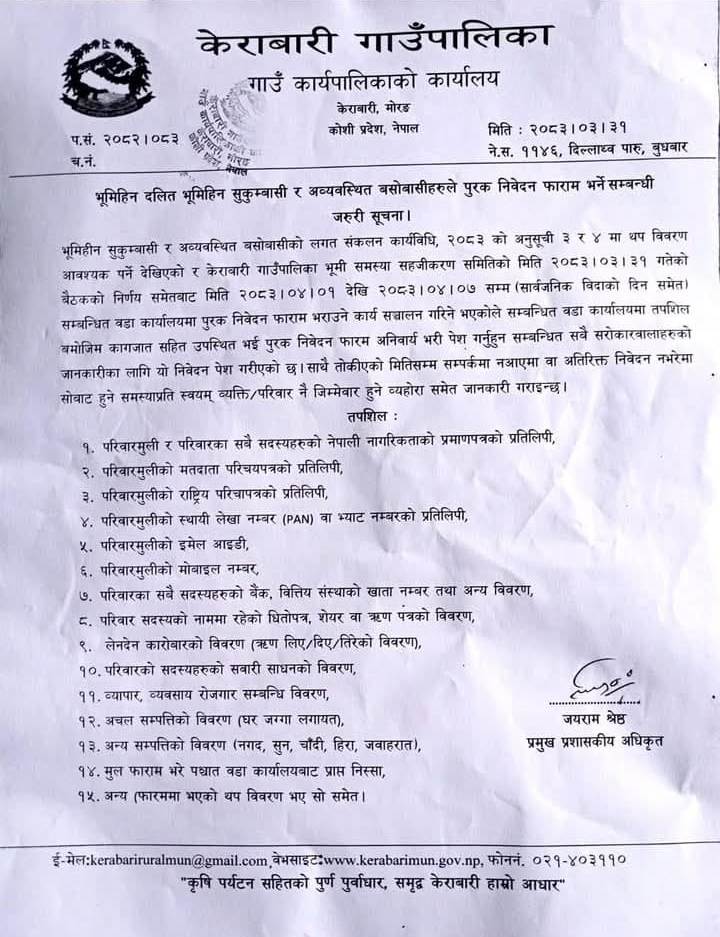
Land Problem Settlement Commission, Morang’s official letter dispatched to 17 local units for collecting supplementary data
“Asking for details of diamonds from someone who struggles to manage an evening meal at home is like sprinkling salt on the wounds of the poor,” he says. “Is this a process to give land to the landless squatters, or a way to push them out of the process itself?”
Short deadline, long distance
Sharan Thapa Magar, Ward Chair of geographically remote Kerabari Rural Municipality-1, says that citizens are suffering due to the short timeframe and adverse weather. “Amid the risk of floods and landslides, there is a compulsion to travel from rural areas to the district headquarters,” he says. “The time is very short. People are facing a lot of trouble.”
Tek Bahadur Chemjong, Ward Chair of Ratuwamai Municipality-6, says that making PAN, national identity cards, and other documents mandatory all at once has placed an additional burden on landless families. He mentions that during the rainy season, people have to wade through muddy roads to reach various offices and visit multiple times just to get a single document made.
Dinesh Paudel, Vice-Chair of Miklajung Rural Municipality, questions the very justification for asking for supplementary details again. “Work should have proceeded on the basis of the forms filled out previously,” he says. “Now, by repeatedly demanding new details, work is being done to cause distress to the public.” He states that for this reason, Miklajung did not rush to issue a notice.
Around 500 service seekers daily
Recently, the pressure of service seekers coming to get PAN at the Inland Revenue Office, Biratnagar, has increased.
According to Navaraj Bhattarai, Information Officer at the office, more than 400 to 500 service seekers are reaching the office daily for PAN. Among them, many have arrived to get PAN for supplementary applications related to land problem resolution.
As crowds grew, the office deployed additional staff. However, service seekers’ wait times sometimes get prolonged when server issues arise.
“More than 400 to 500 service seekers are coming daily to get PAN,” says Bhattarai. “We have deployed additional staff to manage the crowd. Sometimes service delivery becomes slow when there are server problems.”
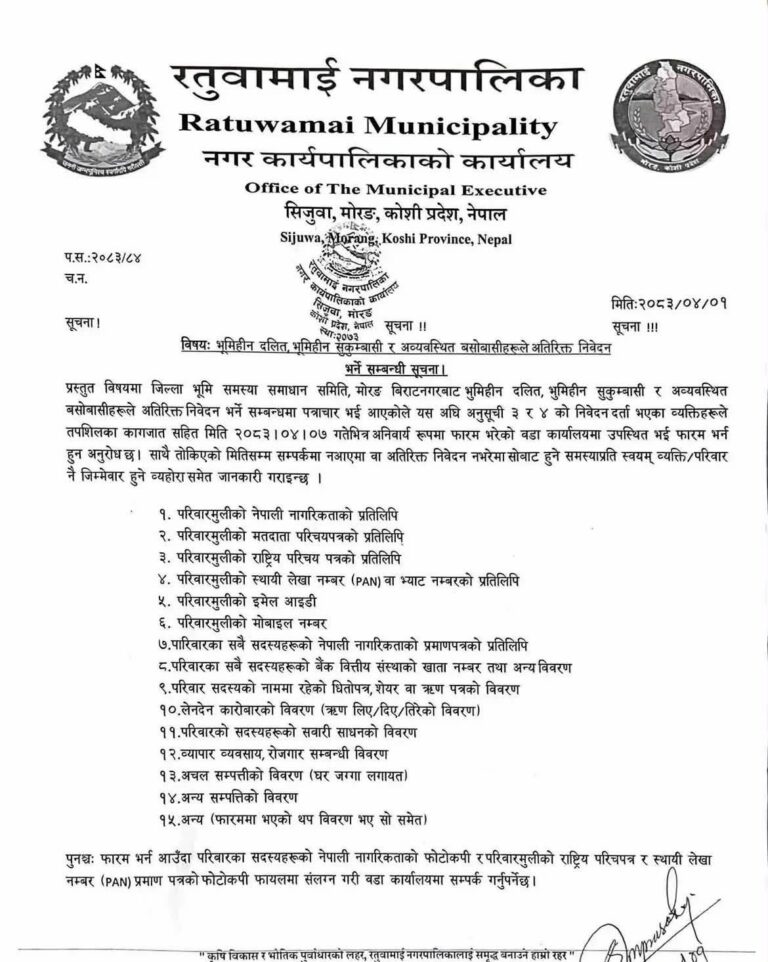
Notice issued by Morang’s local government units for landless families and informal settlers
Local representatives say that if camps or help desks could be operated at the local level itself, the compulsion to travel to the district headquarters and the expenses of service seekers could be reduced.
19 commissions in 4 decades
The problem of landless people and informal settlers in Morang is more than four decades old. Although various commissions and committees were formed at different times for solutions, many families have still not received land ownership certificates.
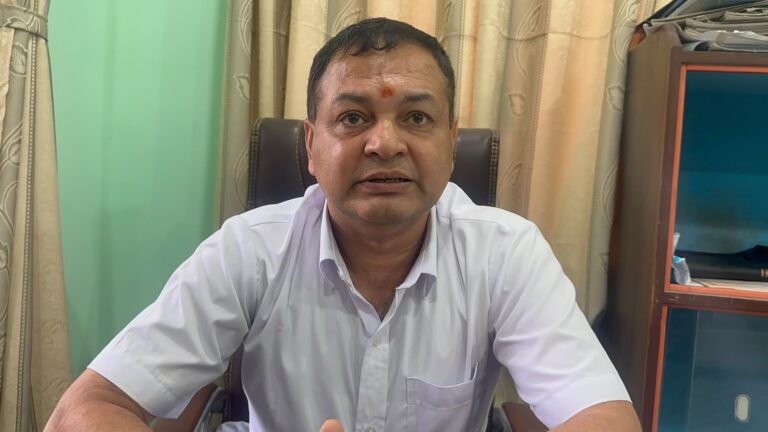
Information Officer Navaraj Bhattarai of the Inland Revenue Office, Biratnagar
From the Forest Consolidation Commission of the fiscal year 1975/76 to the commission formed under the leadership of Lal Babu Pandit in the fiscal year 1995/96, work regarding land was carried out. Locals say that although measurements were taken and money was collected in the fiscal year 1995/96, many certificates distributed later turned out to be fake.
After that, various commissions and committees were formed under the leadership of Shailaja Acharya, Dilip Gachhadar, Khem Pradhan, Man Bahadur Limbu, DP Rai, and others. Although 19 commissions and committees have been formed so far, the problem has not been solved.
In every election, land ownership certificates become a political issue. However, local stakeholders say that with changes in government, the cycle of dissolving and reconstituting commissions has been repeated.
The government led by Prime Minister Balendra Shah had expressed a commitment to form a new commission within 100 days and start work. Accordingly, although new procedures came out, there are complaints that the process of collecting supplementary details has brought more expense and hassle to landless families rather than relief.
Among the 17 local units in Morang, all details of landless people and informal settlers have not yet been entered into the system in many of them.
It is estimated that when all details are updated, the number of landless and informal settler families in the district will reach around 100,000. Preliminary estimates suggest that about 1,439.51 hectares (2,130 bighas) of land will be required for their management.
However, there is still no clarity regarding available land, family verification, the status of old applications, and the timeline for land ownership certificate distribution.
Deadline extended, trouble remains the same
Yuvraj Kattel, Chief District Officer of Morang, informs that although initially asked to submit supplementary applications by July 23, today, the deadline has been extended until Tuesday in coordination with the center.
He states that the purpose of the supplementary application is to update the details submitted previously.
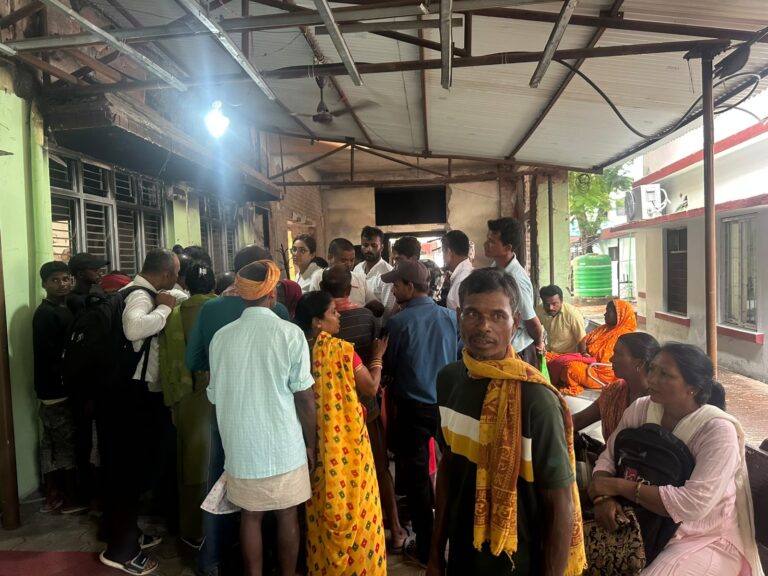
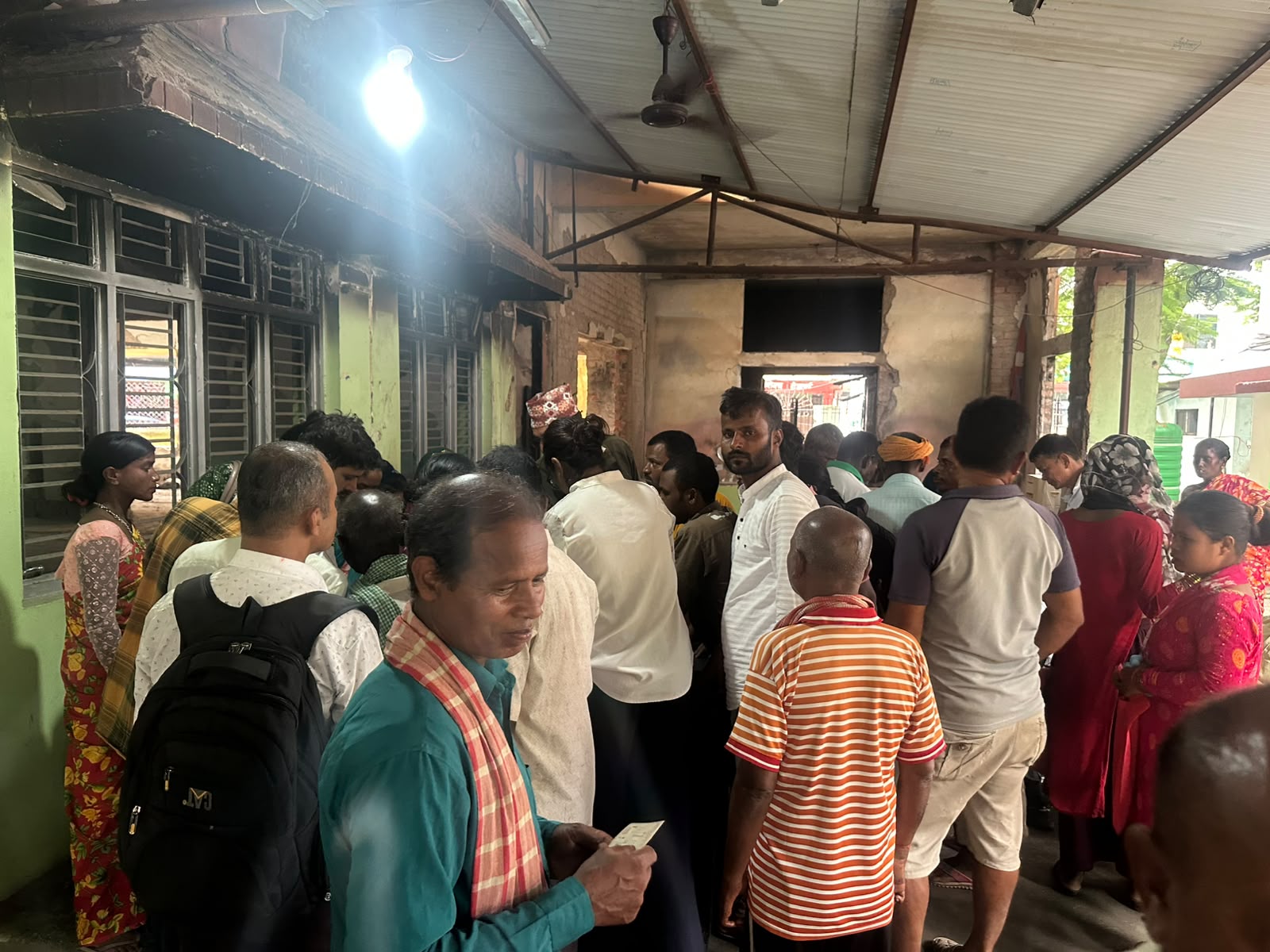
Service seekers standing in line for PAN creation at the Inland Revenue Office, Biratnagar
“Supplementary applications were requested to see whether the land being resided on according to the application previously submitted to the commission remains intact or if the details have changed due to sales and transfers,” says Kattel.
Even though the deadline has been extended, the compulsion to travel from the local unit to the district headquarters to make the necessary documents has not gone away.