Kathmandu
Thursday, June 11, 2026





Nepal’s weakened opposition may have found an unexpected standard-bearer.
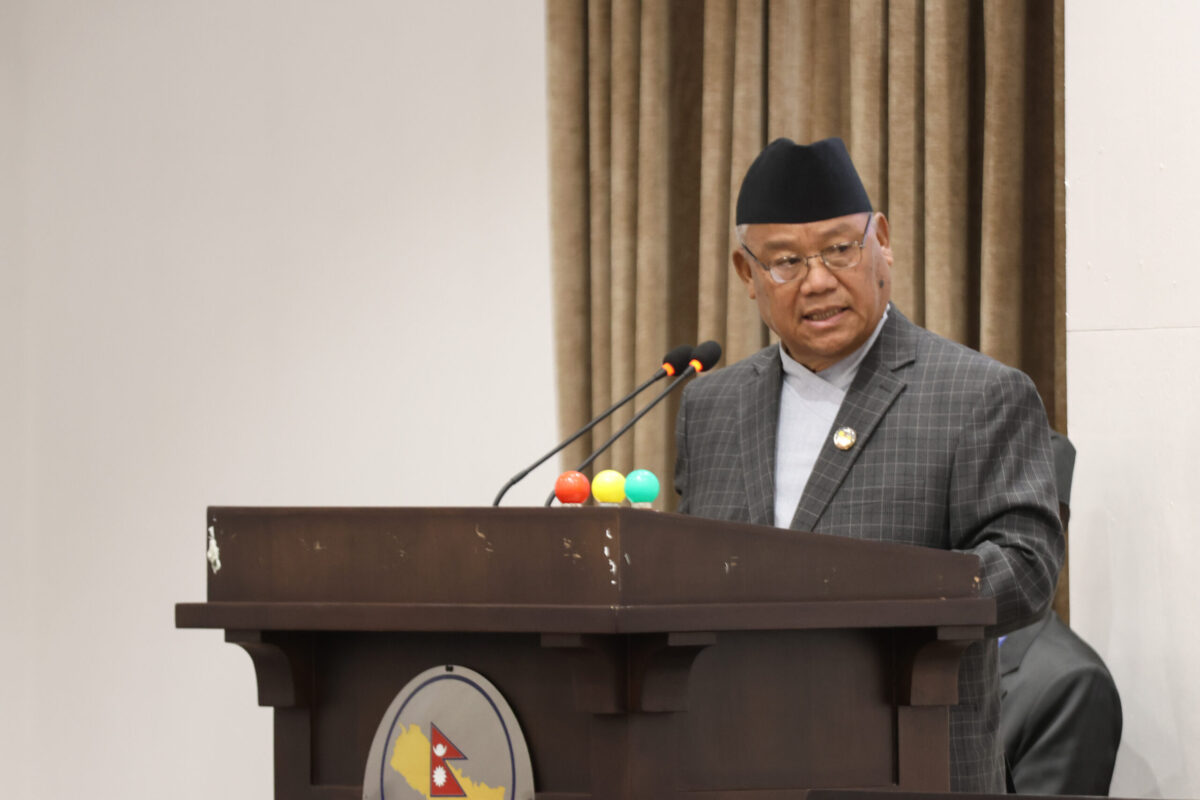
KATHMANDU: Bhishma Raj Angdembe, the leader of the Nepali Congress parliamentary party, has emerged as an unlikely political sensation following his intervention in the House of Representatives on Wednesday.
Speaking after Foreign Minister Shishir Khanal sought to clarify Prime Minister Balendra Shah’s controversial remarks on Nepal’s border issues, Angdembe delivered a speech that quickly transcended Parliament itself. Clips of his remarks spread rapidly across social media, turning a veteran but previously understated politician into an overnight political phenomenon.
In a legislature dominated by the governing majority, his performance earned praise across much of the opposition spectrum and reignited debate about the role of dissent in Nepal’s Parliament.
After taking time to settle on leadership following its electoral collapse, the Nepali Congress appointed Bhishma Raj Angdembe as its parliamentary party leader in the House of Representatives. Few expected him to become one of the most discussed figures in national politics within days. Yet a single speech in Parliament this week has thrust the veteran politician into the center of Nepal’s political conversation.
Following its humbling electoral defeat, the Nepali Congress spent months struggling to do something a defeated opposition must do quickly: choose a leader. Rival claims from competing factions left the party unable to agree on who should lead it in House of Representatives, exposing the depth of its post-election disarray.
The deadlock ended only in April last week, when Bhishma Raj Angdembe emerged as a rare consensus candidate. He secured the backing of all major power centres within the party, including President Gagan Thapa’s camp, former party president Sher Bahadur Deuba’s faction, and Shekhar Koirala’s group. With other names such as Mohan Acharya and Arjun Narsingh KC briefly in contention, the parliamentary party ultimately settled on unanimity rather than another factional contest.
Angdembe’s selection was less a triumph of personal ambition than an exercise in organisational necessity.
The context matters. Following the post–Gen Z Movement election on March 05, 2026, Nepal’s political landscape has been transformed. The ruling The Rastriya Swatantra Party (RSP) commands a near two-thirds majority in the House, while the Nepali Congress-once the country’s largest party-has been reduced to just 38 seats, making it the second-largest force but a shadow of its former self. Several of Congress’s most prominent figures, including party president Gagan Thapa, lost their elections. Many high-profile leaders from other traditional parties also disappeared from Parliament.
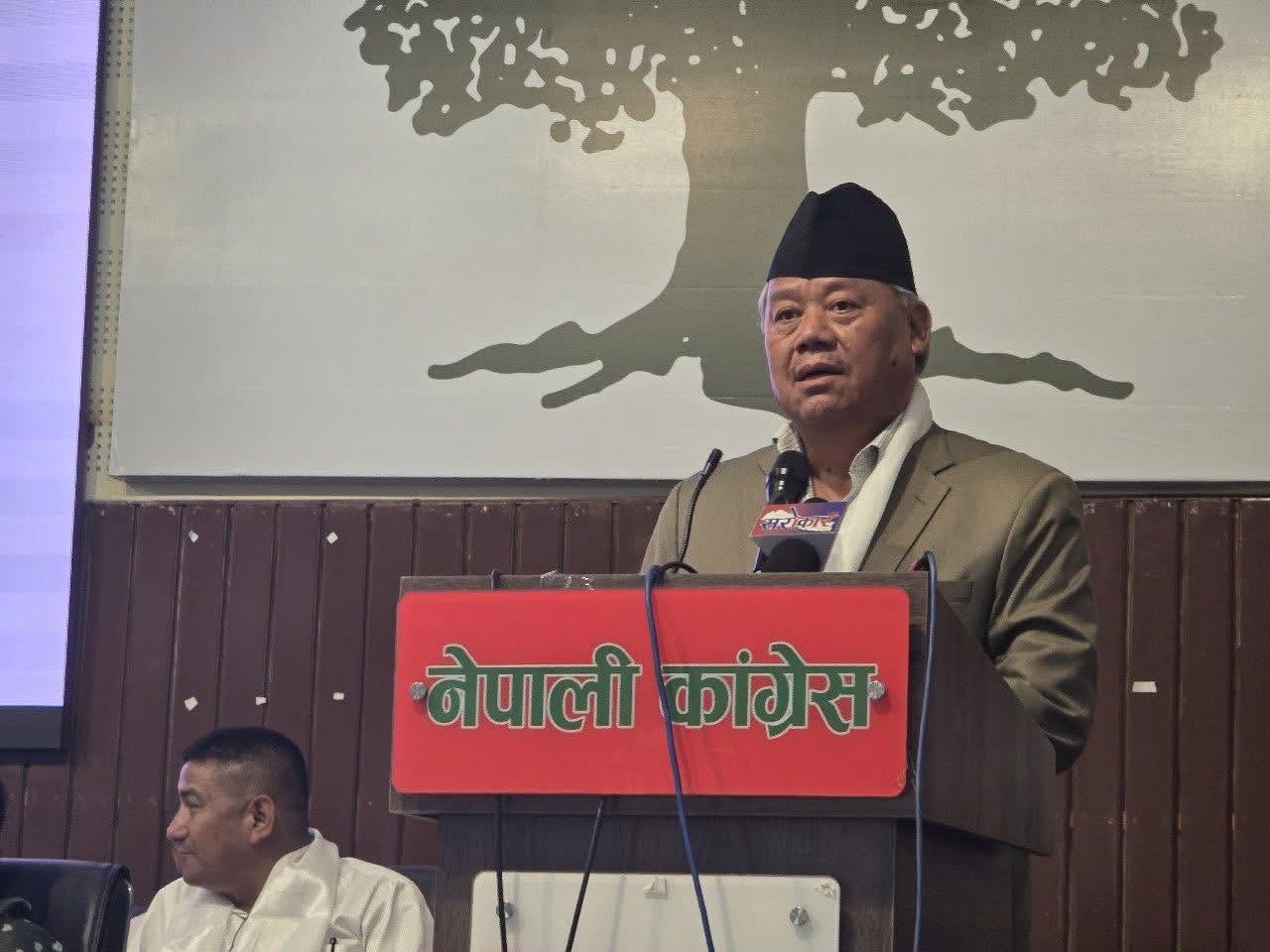
The result is a legislature dominated by a powerful governing majority and a fragmented opposition. In such circumstances, the effectiveness of parliamentary democracy depends less on numbers than on the quality of dissent. It is precisely in that vacuum that Angdembe has emerged.
A speech that cut through
Bhishma Raj Angdembe, a proportional representation lawmaker and former Constituent Assembly member, entered Parliament carrying relatively modest expectations. Some questioned whether he could project a strong opposition voice against an overwhelmingly dominant government.
His first major parliamentary intervention answered those doubts.
Speaking for the third time on Wednesday, Angdembe targeted the government, Prime Minister Balen Shah, ruling-party leaders, and the Speaker in a speech that quickly spread across social media. His remarks centered on a controversy sparked weeks earlier when Prime Minister Shah discussed Nepal–India border disputes and suggested that Nepal had also encroached on Indian territory in several places.
Rather than merely challenging the government’s position, Angdembe used symbolism, satire, and parliamentary rhetoric to frame a broader critique of governance and institutional conduct.
Angdembe’s speech stood out not merely for what it said, but for how it said it. At a time when Nepal’s Parliament is often trapped between populist slogans and partisan shouting, he demonstrated a rarer skill: language that was sharp without being crude, symbolic without being obscure, and critical without abandoning parliamentary decorum. The result was immediate. A politician long overlooked by the national spotlight became a social-media sensation overnight.
In an era of political soundbites, Angdembe demonstrated something increasingly rare in Nepal’s legislature: the ability to combine substance with performance.
The return of parliamentary oratory
The rise of Bhishma Raj Angdembe reflects a broader political phenomenon.
For years, Nepali politics was dominated by a handful of nationally recognized leaders whose speeches monopolized public attention. Their electoral defeats have created space for lesser-known figures to occupy the parliamentary stage.
Angdembe belongs to an older political tradition in which public speaking was considered a core political skill rather than merely a vehicle for social media clips.
Angdembe’s emergence may appear sudden, but his oratory is decades in the making. His reputation as a formidable speaker dates back to student politics at Nepal Law Campus in the 1980s, where allies and rivals alike regarded him as one of the most persuasive voices of his generation. Yet unlike many contemporaries, he never cultivated a public persona around that talent. While others built careers through visibility, factional prominence and relentless self-promotion, Angdembe remained a largely peripheral figure in national politics.
The ability was never absent; the platform was. For years he operated in the shadows of bigger personalities, often overlooked by both the media and his own party. Electoral defeats, changing political currents and the dominance of higher-profile leaders limited his opportunities to command national attention. Even in Parliament, he rarely occupied centre stage.
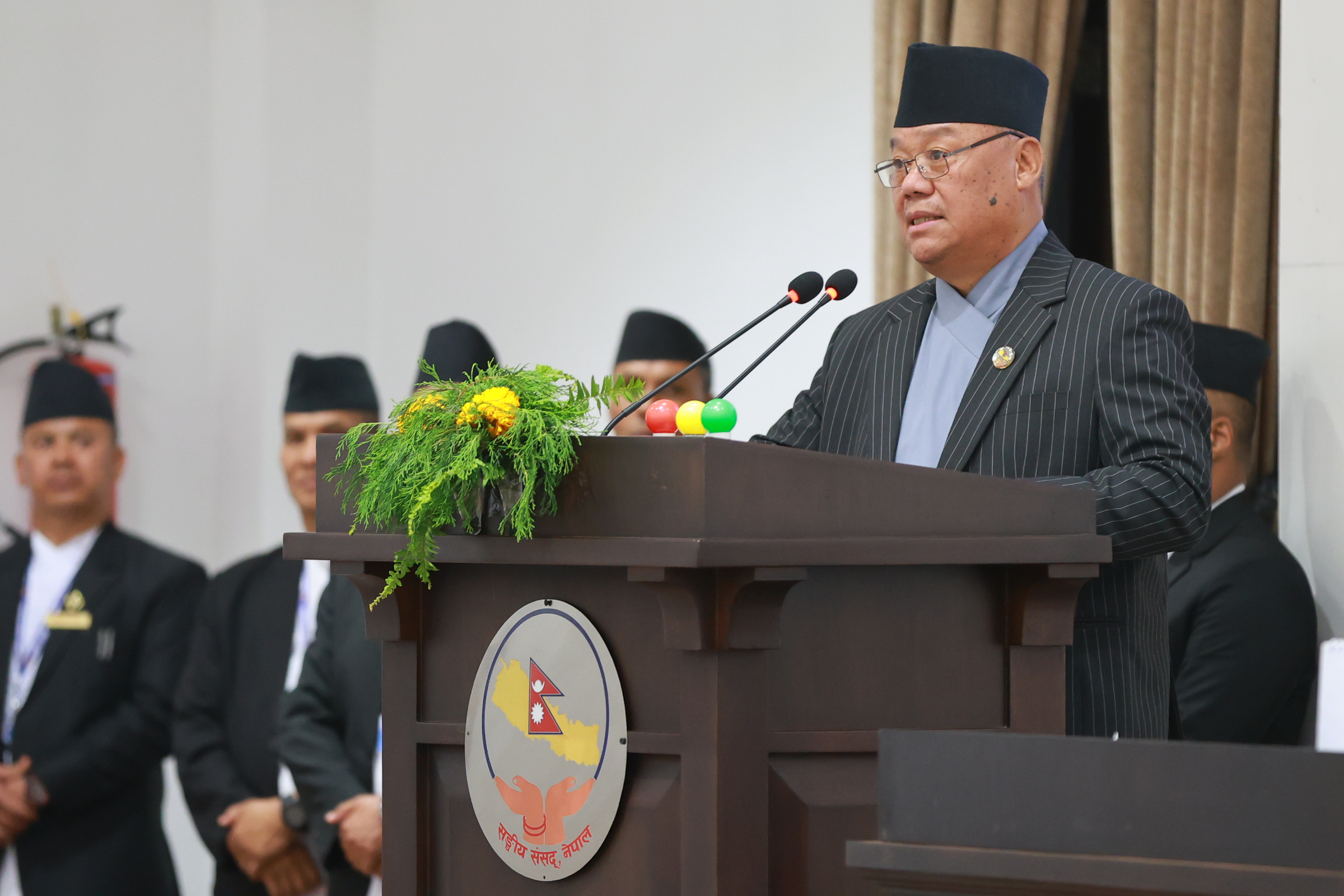
That is what makes his recent rise noteworthy. Nepal did not suddenly discover a gifted speaker. Rather, a Parliament stripped of many of its established stars has finally given a veteran politician the microphone-and the country is only now noticing a talent that had long been hiding in plain sight.
That assessment highlights an increasingly important distinction in modern politics: visibility and influence are no longer the same thing. Angdembe may have lacked the former, but his parliamentary performance suggests he retained the latter.
A political survivor: Who is Bhishma Raj Angdembe?
At 61, Bhishma Raj Angdembe is hardly a newcomer.
He comes from a family deeply rooted in Nepal’s political history. His grandfather, Devman Angdembe, served as Deputy Minister for Finance and Land Revenue in the 1950s under Prime Minister Tanka Prasad Acharya. His uncle also held ministerial office in the government of B.P. Koirala. His father was a local political figure. Yet Angdembe’s own career has been marked less by inheritance than by persistence.
Angdembe’s political career spans nearly five decades, mirroring Nepal’s own turbulent democratic journey. Born in what is now Phalgunanda Rural Municipality-1 of Panchthar district, he first entered politics as a student activist during the 1979 referendum, campaigning in favour of multiparty democracy at a time when such advocacy carried significant political risks.
Unlike many politicians whose careers were shaped by a single political moment, Angdembe remained active through successive democratic struggles. He rose through the ranks of the Nepal Students Union, Nepal Tarun Dal and the Nepali Congress, building a reputation as an organiser rather than a headline-seeker. During the 1990 People’s Movement that ended the Panchayat system and restored multiparty democracy, he emerged as a frontline youth leader and was arrested for his role in the protests.
Between 1990 and 1996, he served two terms as a central committee member of the Nepal Students Union, helping expand the party’s organisational network and democratic outreach. In 1998, he became central vice-president of the Nepal Tarun Dal, further consolidating his standing within the Congress’s younger generation of leaders.
When Nepal’s second democratic uprising erupted in 2006 against monarchical rule, Angdembe was again on the streets and again detained by authorities. His political record thus places him among a generation of Congress leaders whose credentials were forged through activism rather than inheritance alone.
Yet electoral success proved more elusive. In the 1999 parliamentary election, he contested from Panchthar-2 but lost to UML candidate Dambar Singh Sambahamphe. More than a decade later, he finally secured national office when he was elected to the Constituent Assembly from the same constituency in 2013.
His most significant parliamentary role came as chair of the Industry, Commerce, Labour and Consumer Interest Committee, where he oversaw deliberations on economic policy, trade regulation and consumer protection. Although he never became one of Congress’s nationally dominant figures, Angdembe accumulated something often overlooked in modern politics: experience. His rise to the leadership of the parliamentary party is therefore less the story of a newcomer breaking through than of a long-serving political operative finally stepping into the spotlight.
Unlike many politicians who rise through uninterrupted success, Angdembe’s trajectory has been defined by setbacks. His political relevance today owes more to endurance than momentum. Though once associated with Sher Bahadur Deuba’s faction, he later aligned more closely with the reformist camp represented by Gagan Thapa and maintain personal relationship with Shakher Koirala.
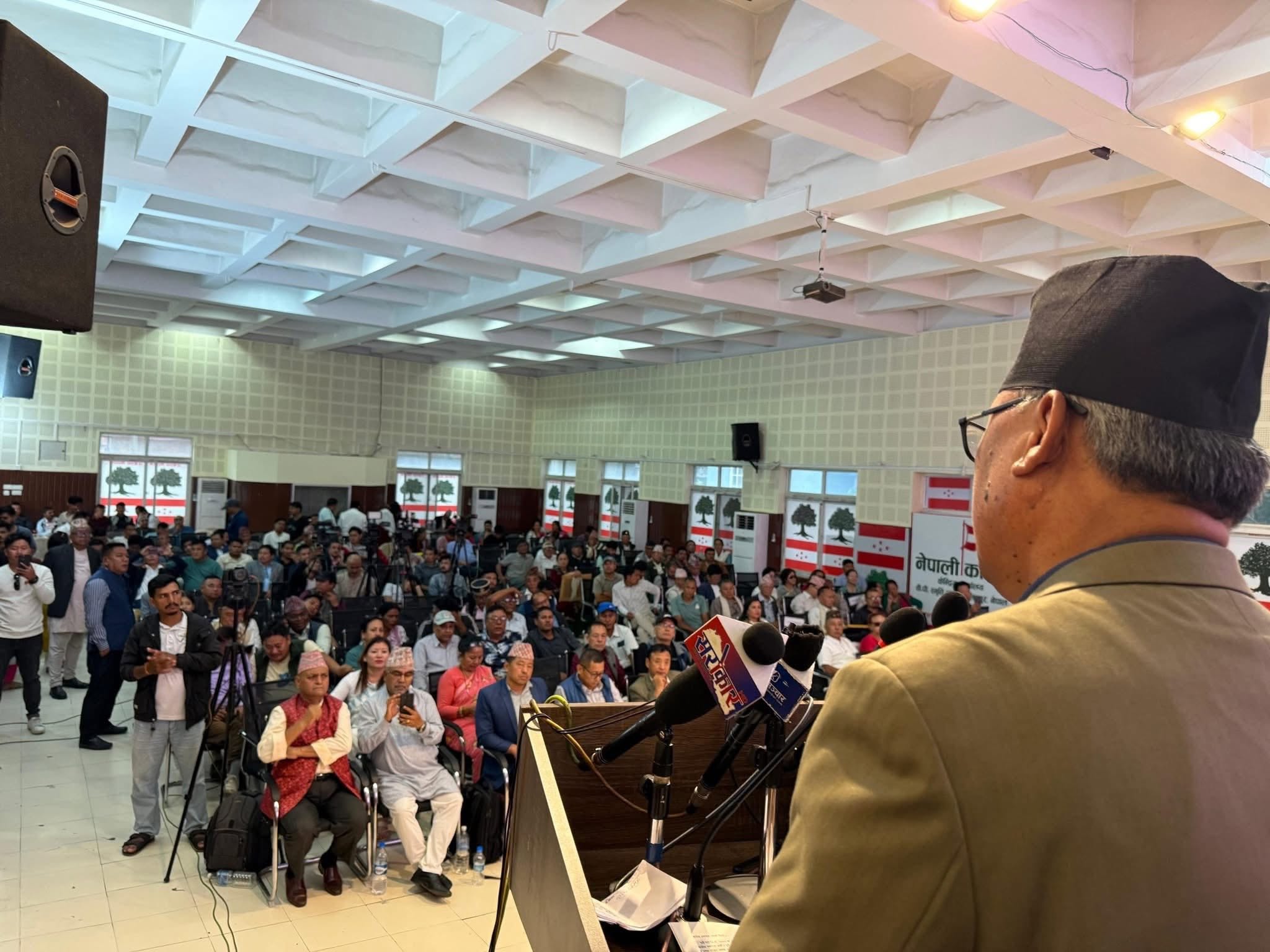
His appointment as leader of the parliamentary party-and as head of the opposition’s shadow government-therefore represents the culmination of a long political apprenticeship rather than a sudden ascent.
The real story: Parliament under strain
The significance of Angdembe’s speech extends beyond the man himself. The more revealing story is what the parliamentary reaction exposed.
As Angdembe questioned the Speaker’s conduct and employed pointed satire toward the government, ruling-party lawmakers repeatedly banged their desks in protest. Even RSP chairman Rabi Lamichhane joined expressions of dissatisfaction.
According to parliamentary observers, such a coordinated reaction from government lawmakers toward an opposition speech is unusual in Nepal’s legislative history.
The episode revealed growing tensions between a dominant governing majority and a weakened opposition struggling to assert itself.
The opposition has occasionally crossed parliamentary boundaries in expressing dissent. But the governing side has also shown signs of growing intolerance toward criticism. At the heart of the debate is the role of the Speaker. In principle, the Speaker belongs neither to the government nor to the opposition. Yet Nepal’s parliamentary history has often blurred that distinction. Critics accused former Speaker Agni Sapkota of favouring the Maoists, while the current Speaker, Dev Raj Ghimire, is frequently viewed by opponents as being closer to the UML line. A healthy parliamentary democracy requires a Speaker who is seen not as a party representative, but as a guardian of the institution itself.
That observation touches on a larger challenge facing Nepal’s young democratic institutions. Strong governments often create an illusion of political stability. Yet parliamentary systems derive legitimacy not from the strength of majorities alone, but from the protection of dissenting voices.
An unexpected test for the government
Angdembe’s emergence does not suddenly make the opposition powerful. Congress remains numerically weak, and the ruling coalition retains overwhelming control of the legislative agenda.
But politics is not governed solely by arithmetic.
History repeatedly shows that effective opposition leaders often emerge not when their parties are strongest, but when they are weakest. Electoral defeat can force parties to rediscover the forgotten arts of scrutiny, persuasion, and accountability.
In that sense, Angdembe’s speech may represent more than a fleeting viral moment.
It may signal the beginning of a new phase in Nepal’s Parliament-one in which the opposition, despite lacking votes, seeks to regain relevance through argument.
For a government enjoying unprecedented dominance, that may prove a more difficult challenge than expected.