Kathmandu
Thursday, June 11, 2026





How the world's largest hotel company is transforming Nepal's luxury hospitality industry
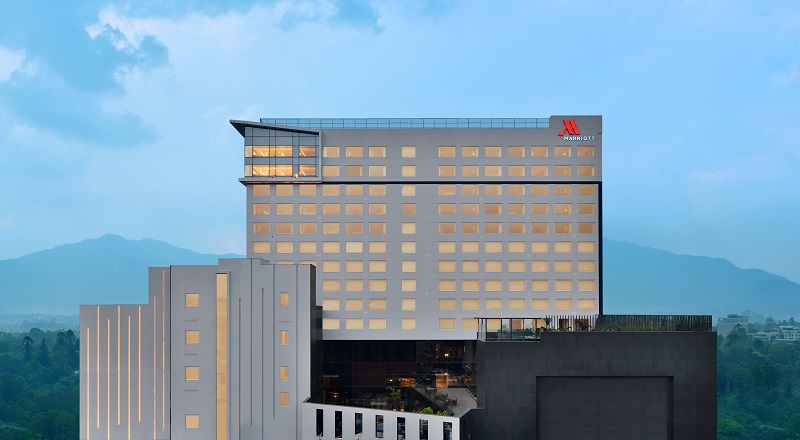
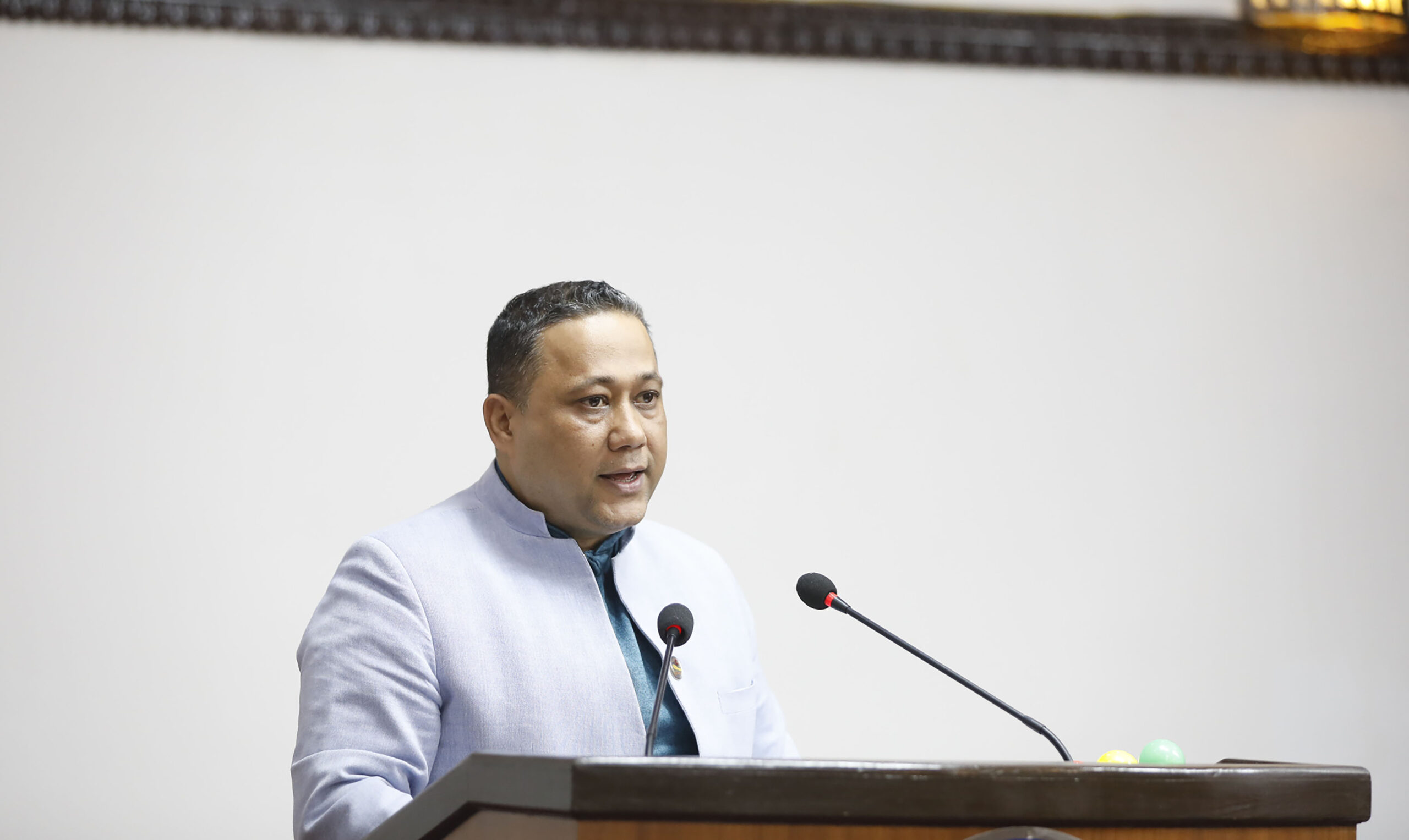
KATHMANDU: When David S. Marriott stepped onto a stage in Kathmandu this week, it was more than another corporate appearance by a global hotel executive. The first visit to Nepal by the chairman of Marriott International symbolized something much larger: a growing international belief that Nepal is no longer merely a niche adventure tourism destination but an emerging luxury travel market worthy of billions in long-term investment.
The announcements that followed were substantial. Three new luxury properties were confirmed: The Ritz-Carlton Kathmandu and The Westin Kathmandu, both developed in partnership with CG Hospitality Global under the umbrella of the Chaudhary Group, along with JW Marriott Hotel Siliguri in neighboring India.
In a separate ceremony, former Non-Resident Nepali Association president Shesh Ghale signed an agreement with Marriott International to bring The Luxury Collection brand to his long-anticipated hotel at Keshar Mahal in Kathmandu’s Lainchaur area.
And on the same day, MS Group’s Capital Hotel and Hospitality Limited signed yet another agreement to introduce the JW Marriott brand to Nepal through a 221-room property planned for the Kathmandu-Bhaktapur corridor. In the span of a few days, Nepal’s hospitality sector signed more major international hotel agreements than it had in any comparable period in its history.
Yet the real story lies beneath the headlines. Marriott’s accelerating expansion offers a glimpse into how Nepal’s tourism economy is changing, and why some of the world’s biggest hospitality brands are increasingly viewing the Himalayan nation as one of South Asia’s most promising frontiers.
From One Hotel to a Hospitality Empire
Only a few years ago, Marriott’s presence in Nepal did not exist.
That changed in July 2019 with the opening of Kathmandu Marriott Hotel in Naxal-Nagpokhari. Developed by MS Group’s Everest Hospitality arm with an investment of approximately Rs 4.5 billion, the 215-room property ended what had been nearly two decades without a new five-star international hotel opening in the country. At the time, the project was viewed as an important addition to Nepal’s upscale hospitality landscape. Few expected it would become the foundation of a rapidly expanding hotel empire.
The origins of that partnership stretch back even further. In 2015, MS Group had already signed a management agreement with Marriott International for the Naxal property, and had opened Fairfield by Marriott Kathmandu in Thamel as a four-star mid-market offering that same year. Fairfield’s 115 rooms brought Marriott’s first operational presence to Nepal and tested the market well before the flagship brand arrived. By the time Kathmandu Marriott opened in 2019, the group had already accumulated meaningful experience managing an internationally branded hotel in a market where such experience was rare.
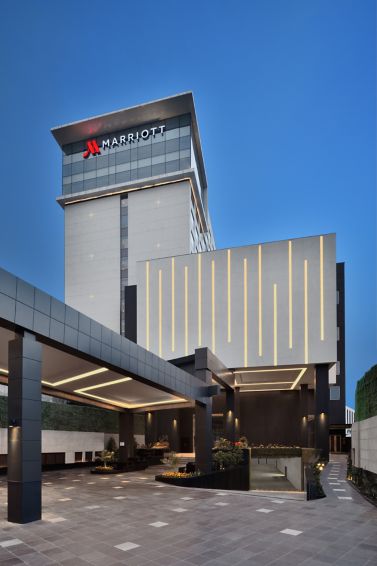
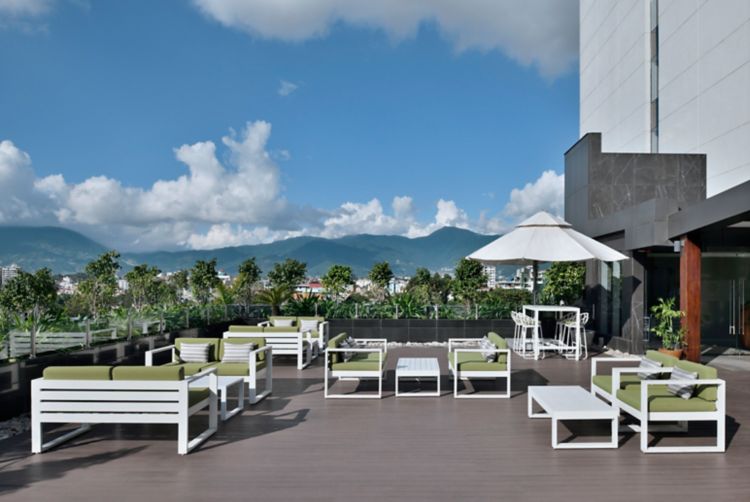
Today, Marriott’s footprint extends across nearly every major segment of the hospitality market. Fairfield by Marriott serves business and mid-market travelers in Thamel. Aloft Kathmandu, another property in Thamel, appeals to younger international guests who want design-forward accommodation without the premium price of a luxury hotel. Moxy Kathmandu, which opened in December 2025 in the Kamaladi area, targets the growing lifestyle and experience-driven travel segment with a 101-room property developed by MS Group at a cost of around Rs 2 billion. The hotel is notable as only the third Moxy property in South Asia, after Mumbai and Bengaluru, and its arrival in Kathmandu reflects a broader trend of global lifestyle hotel brands testing South Asian markets beyond the traditional gateway cities.
The Soaltee Kathmandu, meanwhile, operates under Marriott’s Autograph Collection brand, combining Nepal’s established hospitality heritage with global distribution networks and international service standards. The Soaltee’s conversion to the Autograph Collection in 2025 was particularly significant as it marked the brand’s debut in South Asia.
The future pipeline is even more ambitious. The Ritz-Carlton Kathmandu, The Westin Kathmandu, The Luxury Collection Kathmandu, and JW Marriott Hotel Kathmandu Valley are all expected to reshape the upper end of Nepal’s hospitality market. What began as a single hotel has evolved into one of the most diverse collections of international hotel brands operating within any single South Asian city outside of India.
The Ritz-Carlton Arrives
Among all the projects announced or under development, none carries greater symbolism than The Ritz-Carlton Kathmandu.
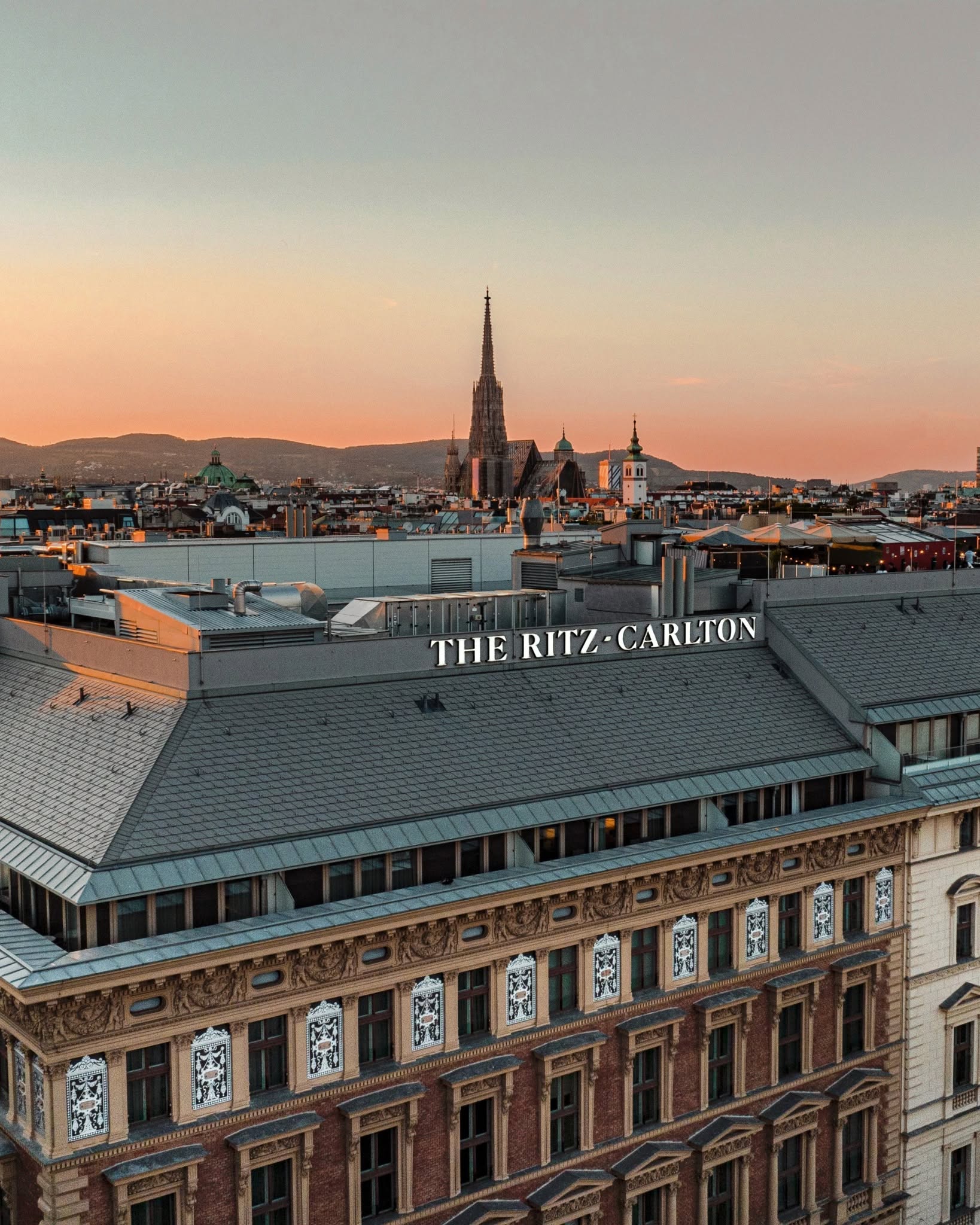
In global hospitality, The Ritz-Carlton is more than a luxury hotel brand. It is a statement of market confidence. The brand, which became part of Marriott International’s portfolio after the company acquired majority ownership of Ritz-Carlton in 1998, operates properties typically reserved for cities and destinations where developers and operators believe there is sufficient sustained demand from affluent international travelers, business executives, global elites, and high-spending leisure tourists. To invite The Ritz-Carlton into a market is to signal that the destination has crossed a threshold of credibility.
Developed by CG Hospitality Global, the hospitality arm of the Chaudhary Group, The Ritz-Carlton Kathmandu will be located in Thamel, approximately five kilometers from Tribhuvan International Airport. The hotel will feature 150 rooms and suites including 30 dedicated suites, five dining venues, an outdoor swimming pool, a fitness center, the brand’s signature Ritz-Carlton Spa, and more than 1,100 square meters of meeting and event space. It is expected to open by 2031.
Its arrival suggests that Kathmandu is beginning to be viewed differently by international investors.
Historically, Nepal’s tourism image has revolved around mountains, trekking trails, and backpacking culture. The Ritz-Carlton represents a shift toward a different narrative, one centered on luxury experiences, premium travel, destination weddings, corporate events, high-value conferences, and travelers for whom the standard of their accommodation is as important as the landscape surrounding it.
In economic terms, attracting a smaller number of high-spending visitors can often generate more value than attracting a larger volume of budget tourists, and this is precisely the market segment Marriott and its partners appear to be targeting with the new wave of properties.
The Westin Kathmandu complements this strategy with a distinct positioning. Designed around the Westin brand’s wellness-centered philosophy, the hotel will also offer 150 rooms and suites and will be located approximately seven kilometers from Tribhuvan International Airport.
Its facilities will include three dining outlets, a WestinWorkout fitness studio, the Heavenly Spa by Westin, a rooftop swimming pool, and over 700 square meters of event and banquet facilities. The Westin brand has long been associated with restorative travel experiences, positioning it well for a destination where international visitors often arrive jet-lagged after long-haul journeys from Europe, North America, or East Asia.
Together, the two properties being developed by CG Hospitality Global will add approximately 300 keys to Marriott’s Nepal portfolio by 2031 and represent a combined investment that places the Chaudhary Group among the most significant luxury hospitality developers in South Asia.
Why Nepal Suddenly Looks Attractive
For much of the past two decades, Nepal remained largely overlooked by major international hotel operators.
Political instability, weak infrastructure, and uncertainty about tourism growth discouraged long-term investment. The country’s frequent changes of government, a decade-long Maoist insurgency that formally ended in 2006, and the subsequent years of political fragmentation created an environment in which international capital was cautious. While neighboring destinations attracted billions in hospitality investment, Nepal remained a relatively small market dominated by independent operators and a handful of older internationally managed properties.
Several factors have begun to change that equation.
International arrivals have steadily recovered after the pandemic. Air connectivity has improved incrementally, with Gautam Buddha International Airport in Bhairahawa and Pokhara Regional International Airport adding to the country’s aviation infrastructure beyond the single Tribhuvan International Airport that had long been a binding constraint on growth.
Nepal’s middle class has expanded in line with broader economic development. Domestic corporate travel has increased as more multinational companies establish regional offices. More importantly, global travelers increasingly seek authentic cultural experiences rather than standardized tourism products, and Nepal possesses what many mature tourism markets cannot offer: living heritage.
Kathmandu is home to seven UNESCO World Heritage Sites within a compact geographic area. Pashupatinath, Boudhanath, Swayambhunath, and the Durbar Squares of Kathmandu, Bhaktapur, and Patan represent a density of cultural heritage that few other destinations on earth can match.
For global hotel brands searching for destinations that offer guests something genuinely irreplaceable, this combination of natural drama, living religious tradition, and relatively untapped luxury demand presents an attractive long-term investment thesis.
There is also a broader economic argument. The hospitality sector is one of the most labor-intensive industries in any economy. A single luxury hotel generating revenues across rooms, food and beverage, spa, and events can sustain hundreds of direct jobs and thousands more through supply chains. For a country seeking to expand formal employment and develop its service sector, attracting luxury hotel brands carries value well beyond the room revenue they generate.
The Hotel That Never Closed
One reason Kathmandu Marriott quickly established itself as the country’s flagship international hotel was its response during the Covid-19 crisis.
While much of the global hospitality industry was forced to shut down operations, Kathmandu Marriott remained open. The hotel accommodated diplomats, airline crews, personnel from international organizations, and essential travelers who needed a reliable base during a period of extraordinary disruption. To maintain operations during a global pandemic required not only financial commitment from MS Group but also the implementation of strict health protocols, extensive safety measures, and a willingness to operate at a loss in anticipation of a longer-term recovery.
That decision carried significant risks. Yet it ultimately strengthened the property’s reputation and its relationships with exactly the clientele that international luxury hotels depend on most. When travel resumed, Marriott emerged as one of the most trusted hospitality brands operating in Nepal. Visiting heads of state, foreign ministers, senior business leaders, and members of royal families increasingly chose the hotel for official stays, which in the hospitality industry is among the most powerful forms of endorsement.
The trust built during those difficult years is not easily replicated. In a market where reputation is often built over decades, Kathmandu Marriott achieved in a few years what many hotels spend generations trying to establish. That institutional credibility became a foundational asset as Marriott and its partners set about planning a dramatically expanded presence in the country.
The Long Road to The Luxury Collection
Another major chapter in Nepal’s luxury hospitality story is being written at Keshar Mahal in central Kathmandu, and its full history is worth understanding.
Former NRNA president Shesh Ghale first broke ground on what was then intended to become Sheraton Kathmandu Hotel in October 2014, with then-Prime Minister Sushil Koirala laying the foundation stone. The original project, conceived through MIT Group Holdings Nepal jointly owned by Ghale and his wife Jamuna Gurung, was signed under an agreement with Starwood Hotels and Resorts Worldwide, which owned the Sheraton brand before Marriott acquired Starwood in 2016. The original plan called for 225 rooms in a 17-storey building at a projected investment of Rs 8 billion, with an anticipated opening in February 2018.
That timeline was not met. The 2015 earthquake, the subsequent economic disruption from the border blockade, and then the Covid-19 pandemic collectively extended the construction timeline by several years. As delays mounted, the branding agreement with Sheraton was eventually terminated. The project appeared, at various points, to be in genuine jeopardy.
The signing with Marriott’s The Luxury Collection brand during David Marriott’s Kathmandu visit therefore represents the resolution of a decade-long story. Built on approximately 13 ropanis of land, the 17-storey property will feature 225 luxury rooms and suites, a banquet hall capable of hosting 2,000 guests, multiple restaurants, a fitness center, spa, and an infinity swimming pool.
The total investment has risen to approximately Rs 15 billion, reflecting both the scale of ambition and the inflationary pressures of a project whose timeline stretched across more than a decade of construction. The hotel is expected to begin operations in October 2026.
According to Ghale, the property will become the first Luxury Collection hotel in South Asia, across India, Sri Lanka, Bangladesh, and Nepal. If that claim holds, it would represent a significant moment for Nepal’s positioning within the regional hospitality hierarchy.
The project highlights an important shift in investor thinking. A decade ago, a luxury hotel of this scale in Kathmandu would have been considered excessively risky. The fact that it has reached its conclusion, despite years of setbacks, and that it has attracted one of Marriott’s most prestigious brand names in the final stage of development, suggests that the destination has earned a level of credibility that it previously lacked.
JW Marriott and the Expansion Beyond the City Center
The newest addition to Marriott’s growing Nepal portfolio will rise on the Kathmandu-Bhaktapur route in Thimi.
JW Marriott Hotel Kathmandu Valley, developed by Capital Hotel and Hospitality Limited, a subsidiary of MS Group, represents the fourth Marriott brand that the group will operate in Nepal and another major statement of confidence in the country’s hospitality future. Located approximately 20 minutes from Tribhuvan International Airport and connected by both the ring road and the Kathmandu-Bhaktapur highway, the property will feature 221 rooms and suites, multiple dining venues including an all-day dining restaurant, specialty restaurants, a lobby lounge, and a JW Market cafe.
Facilities will also include a Spa by JW, a fitness center, swimming pool, a JW Garden, and more than 1,600 square meters of meeting and event space. The hotel is expected to open in early 2031 and will form part of a larger mixed-use development that includes retail, entertainment, and an independently operated casino. MS Group’s investment in the project is estimated at Rs 9 billion.
The JW Marriott brand occupies a distinct position in Marriott’s portfolio. It is positioned above the flagship Marriott brand but below the Ritz-Carlton in the luxury tier, emphasizing what the brand describes as mindful luxury, a combination of refined accommodation, distinctive dining, wellness programming, and cultural engagement. Kiran Andicot, Senior Vice President for South Asia at Marriott International, noted during the signing that Kathmandu’s combination of tradition, spiritual richness, and growing global appeal makes it an exceptional fit for the brand’s positioning.
The project’s location is significant for reasons beyond its operational details. Rather than concentrating solely within the central ring of Kathmandu, major hospitality investments are beginning to spread into adjacent municipalities in the wider valley. Bhaktapur, one of Nepal’s three historic city-kingdoms and home to a Durbar Square that rivals those of Kathmandu and Patan, is a UNESCO-listed destination in its own right.
Placing a JW Marriott on the corridor connecting Kathmandu to Bhaktapur positions the hotel as a gateway to both cities rather than a property anchored to a single urban location. This spatial thinking suggests that developers increasingly view the Kathmandu Valley as a unified tourism and business geography, not merely a city-centered market.
This shift has meaningful implications. If future properties are distributed across the valley rather than clustered in Thamel and Naxal, the economic benefits of hospitality investment will be distributed more widely. Communities along the Kathmandu-Bhaktapur corridor, many of which have long been economically adjacent to the tourism economy without fully participating in it, could see direct employment and supply chain opportunities that a more centralized hotel market would not have generated.
The Brand That Opened the Floodgates
Perhaps Marriott’s most important contribution to Nepal is not any particular hotel.
It is the confidence effect.
After Hyatt Regency entered Nepal in 2000, nearly two decades passed without a significant wave of international hotel brands following. Political uncertainty and market concerns kept most global operators on the sidelines. The country had a small number of domestically managed five-star properties and a handful of internationally affiliated brands, but no sustained momentum that suggested a broader opening of the market.
Marriott’s arrival changed perceptions in a measurable way.
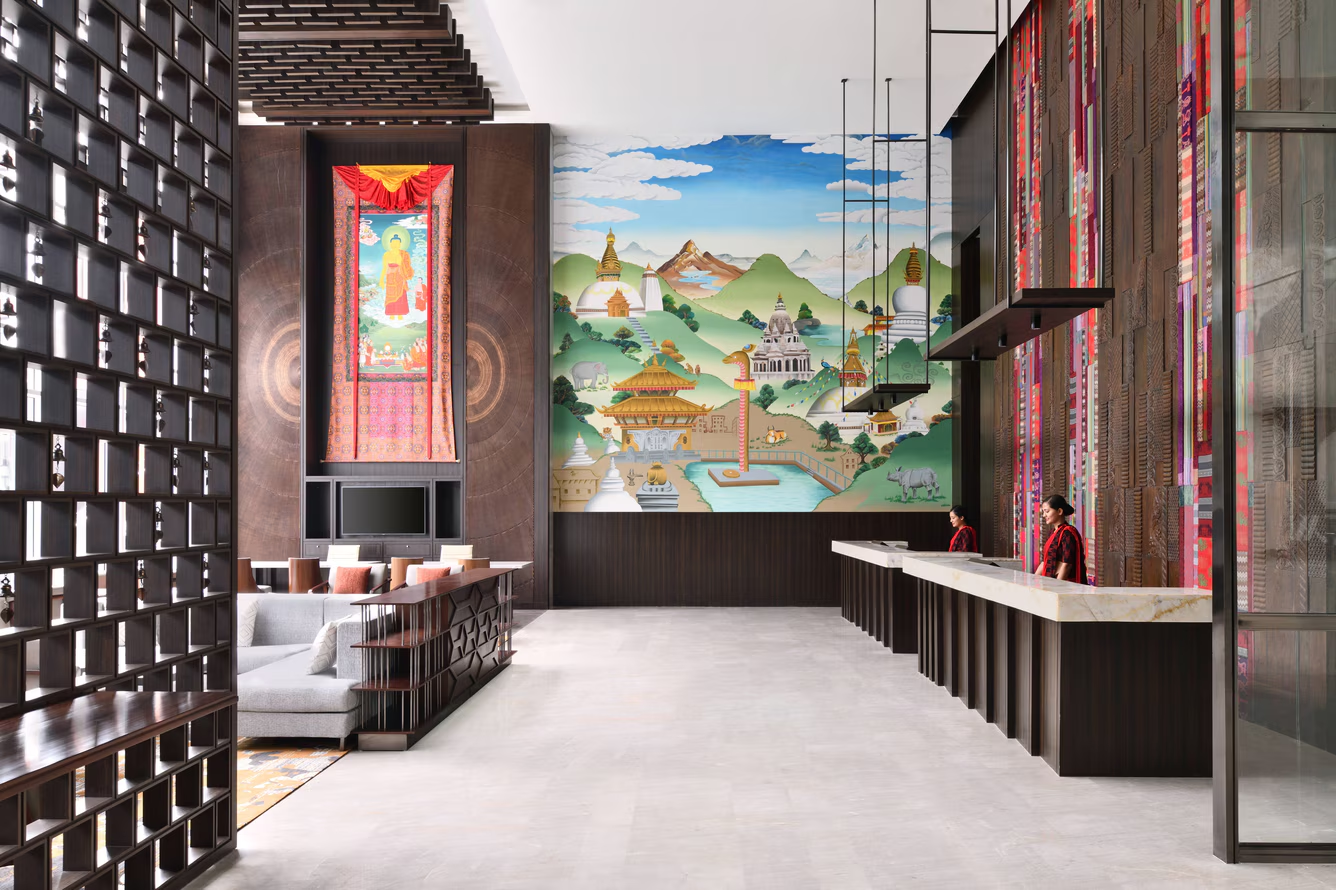
Its operational success with Kathmandu Marriott demonstrated that Nepal could sustain an internationally branded luxury hotel at a viable occupancy and rate. Once that assumption was established in practice rather than theory, other global operators began paying serious attention. Hilton, Dusit, Mercure, Royal Tulip, Holiday Inn, Vivanta, Lemon Tree, ITC, and several other international chains either entered Nepal or accelerated expansion plans. Each subsequent entry made the next one slightly less risky, slightly less uncertain, and slightly more likely to attract capital.
This pattern is common in emerging hospitality markets. The first major investor absorbs the greatest uncertainty, incurs the highest cost of learning, and takes the longest to recover its initial investment. Those that follow benefit from reduced risk, established supply chains, a trained labor pool, and a market that has already begun to mature. In that sense, Marriott’s influence extends far beyond the properties it manages.
The cumulative investment now associated with the Marriott brand in Nepal, when the pipeline projects are included, runs well above Rs 40 billion across all partners and properties. That figure does not include the investments made by the many non-Marriott international brands that entered the market in the years following Marriott’s original arrival. The knock-on effect of a single anchor investment of this kind is often larger than the anchor investment itself.
Betting on Nepal’s Next Decade
Hotel companies think in decades.
A luxury hotel announced today may not open for five years. Investors therefore make decisions based not on current market conditions but on what they believe a destination will look like ten or twenty years from now. Revenue projections, return models, and brand decisions are all shaped by long-term assumptions about how a destination will develop, not by where it stands today.
That is what makes the current wave of Marriott signings in Nepal so strategically revealing.
The company and its partners are not investing in today’s Nepal, a country that receives approximately one million tourist arrivals annually, a figure that MS Group chairman Shashikant Agrawal has noted falls far short of the country’s actual accommodation capacity, which he estimates at several times the current level of demand.
They are investing in what Nepal could become: a destination with stronger air connectivity, higher-spending tourists, growing inbound business travel, expanded domestic corporate demand, and a hospitality sector capable of competing with regional destinations across South Asia and Southeast Asia.
Whether that vision fully materializes remains uncertain. Infrastructure challenges remain significant. Tribhuvan International Airport’s capacity constraints have been a persistent barrier to growth, and while the opening of new regional airports has helped, Nepal’s total aviation connectivity still falls well short of what a genuinely competitive luxury destination typically requires.
Policy inconsistencies, including issues around foreign investment procedures, repatriation of returns, and the regulatory environment for hospitality businesses, continue to pose obstacles to the scale of international capital that the country will need to realize its potential.
And yet the market signal embedded in the current wave of signings is difficult to ignore.
Seven years ago, Marriott had no presence in Nepal. As of 2026, it operates five properties in the country and has signed agreements for at least four more, spanning everything from the youth-focused Moxy brand to the ultra-premium Ritz-Carlton and Luxury Collection.
Its partner roster includes some of Nepal’s most prominent business groups: the Chaudhary Group, one of the country’s largest industrial conglomerates; MS Group, which has now committed to four separate Marriott-branded properties; and Shesh Ghale’s MIT Group Holdings, which has spent more than a decade and over Rs 15 billion building what will become Nepal’s first Luxury Collection hotel.
Taken together, these investments represent a structural shift in how international capital perceives Nepal as a hospitality destination. The arguments against investing, long centered on political risk, infrastructure gaps, and uncertain demand, have not disappeared.
But they are increasingly being weighed against a set of arguments in favor that would have seemed overstated a decade ago: a living UNESCO heritage landscape that no amount of capital can replicate elsewhere, a growing middle class and diaspora community with deep emotional connections to the destination, rising global demand for culturally authentic travel experiences, and a demonstrated track record of international branded hotels finding viable markets in Kathmandu.
For investors, the accumulation of those factors is a powerful statement.
For Nepal, the question is whether the institutions and policies surrounding this wave of private investment are capable of maximizing its national benefits. Hotel rooms and brand logos are the visible outputs. The more important outcomes are employment at scale, skills transfer to a growing hospitality workforce, supply chain development that connects local agriculture and craftsmanship to international hotel procurement, and the positioning of Nepal as a destination that sophisticated global travelers genuinely choose. On all of those dimensions, the next decade will be critical.
Marriott has made its bet. Nepal now needs to make the most of it.