Kathmandu
Thursday, July 2, 2026





The proposed Water Resources Act 2026 modernizes decades-old legislation but also recentralizes decision-making, tightens environmental rules and creates fresh uncertainty for hydropower developers, raising questions over whether reform could come at the expense of investment
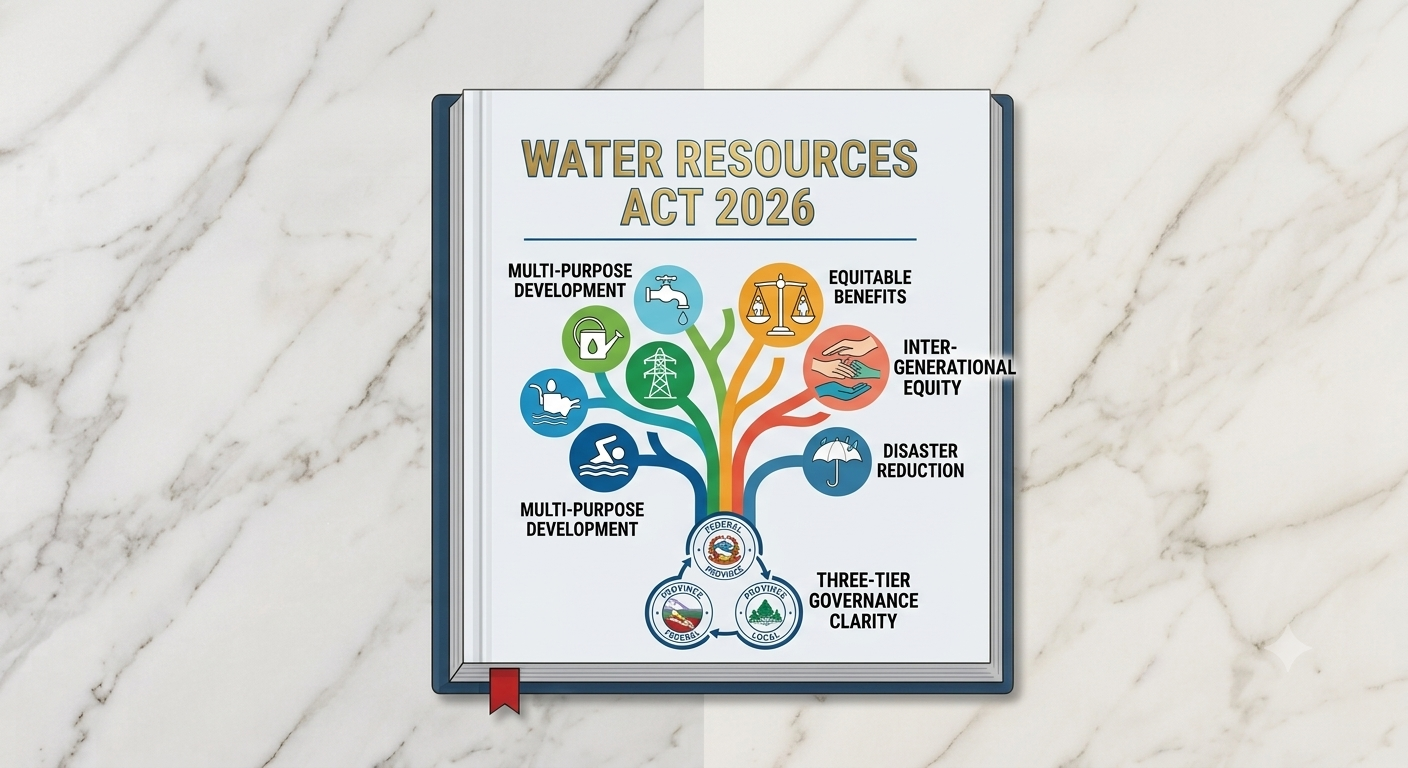
KATHMANDU: On paper, the proposed Water Resources Act 2026 reads like exactly the kind of law Nepal has needed for years: a single, modern statute governing everything from a village tube well to a storage dam, replacing a thirty-four-year-old act drafted before federalism existed and before hydropower became the centrepiece of the national growth story.
Strip away the preamble’s language about equity, sustainability and inter-generational justice, however, and what remains is a bill that quietly redraws the balance of power over Nepal’s most valuable natural resource, tightens the ecological terms on which that resource can be monetised, and adds a thick new layer of bureaucracy on top of a hydropower sector that is already, by its own account, drowning in approval delays.
The bill is not simply a technical housekeeping exercise. It is a document with real political and commercial consequences, several of which sit uneasily next to each other, and at least a few of which look like they were written without much thought for how they would actually be implemented.
The quiet return of centralized control
The single most consequential provision in the entire bill is also the one dressed up as a formality: no provincial or local government can issue a water-use licence to a person, company or institution without first securing the Water and Energy Commission’s consent. Nepal’s 2015 constitution was built around the idea that water resources, along with forests and land, would be governed through shared and concurrent powers between three tiers of government, precisely to prevent Kathmandu from monopolising the country’s most contested natural assets the way the unitary state once did.
The consent requirement does not formally strip provinces and local governments of their licensing powers. But it inserts a single federal gatekeeper into every transaction of consequence, which functionally achieves the same result through the back door. A province that wants to license a forty-megawatt hydropower project inside its own constitutionally assigned capacity band still cannot move without a nod from a commission chaired by a federal minister and staffed overwhelmingly by federal secretaries.
This is not a hypothetical concern. Nepal has already been through repeated, bruising fights between federal and provincial authorities over who controls royalties, forest clearances and large infrastructure decisions since federalism took effect, and those disputes have rarely been resolved cleanly. Layering a mandatory federal consent step onto every water licence, at precisely the moment provinces are trying to establish their own institutional credibility in the energy sector, all but guarantees a fresh round of jurisdictional friction.
The commission’s own composition compounds the problem: it includes no permanent, guaranteed seat for the provinces themselves, only federal secretaries and centrally appointed experts. A structure billed as coordination will, in practice, be experienced by subnational governments as supervision.
Given how much political capital has already been spent litigating exactly this kind of dispute in mining, forestry and hydropower royalties, it is difficult to see how this provision survives implementation without triggering exactly the kind of federal-provincial standoff the bill’s drafters presumably wanted to avoid.
The hidden energy-ecology collision
The bill’s environmental flow requirement is, in isolation, a defensible and even overdue piece of conservation policy. Requiring a fixed minimum release below every dam, pegged to whichever is higher between a percentage of average flow and the recommendation of a project’s own environmental impact assessment, protects downstream ecosystems, fisheries, and communities that have historically borne the environmental cost of upstream generation with none of the financial upside. But policy coherence requires looking at what else the government is simultaneously trying to do with the same rivers, and that is where the tension becomes obvious.
Nepal’s hydropower fleet is overwhelmingly run-of-river, meaning generation tracks the natural hydrograph almost directly: abundant output during the monsoon, and a steep, well-documented collapse in capacity factor during the dry winter and spring months, precisely the period when the country still imports power from India to cover its own domestic shortfall and when any serious ambition to become a net electricity exporter depends on firming up dry-season supply.
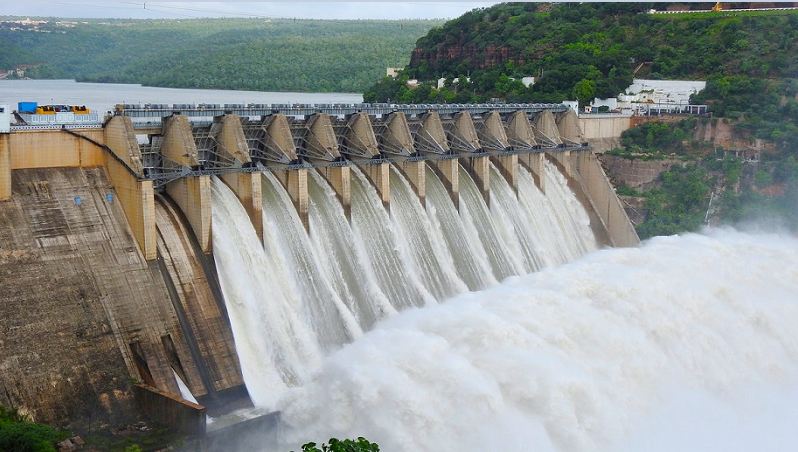
Hydropower. File photo
A stricter minimum flow requirement bites hardest exactly when river discharge is already at its lowest, which means the marginal megawatt-hours it removes are disproportionately dry-season megawatt-hours, the very ones Nepal’s energy planners have spent a decade trying to build storage projects and reservoir peaking plants to protect. The government’s own roadmap talks about tens of thousands of megawatts of hydropower capacity and a multi-thousand-megawatt export target within the next decade.
A bill that simultaneously tightens the ecological floor under dry-season generation, without pairing that tightening with compensating measures such as storage incentives, capacity payments for dry-season output, or transitional flow schedules for projects already financed, is pulling in two directions at once. Developers who built their financial models, and in many cases secured lending, around the older, looser flow standard now face a retroactive tightening of the resource envelope their revenue depends on, a classic regulatory-risk problem that tends to show up later as renegotiated power purchase agreements, stalled financial closes, or disputes over who absorbs the shortfall.
There is also a quieter irony here. The same bill formally ranks hydropower third in the national priority order for water use, below drinking water and irrigation. That ranking is unremarkable as a statement of values, but combined with a stricter mandatory environmental release and a commission empowered to reallocate water during droughts or “changed circumstances,” it hands the state multiple independent levers to squeeze hydropower output whenever it wants to, without necessarily calling it expropriation.
None of this needs to be exercised in bad faith to matter commercially; the mere existence of that much discretionary authority over a project’s water input, which is to say its entire revenue stream, is the kind of thing credit rating agencies and international lenders price into the cost of capital.
The dam security muddle
If the environmental flow provision is a case of one clear policy value crowding out another, the dam security clause is closer to an outright drafting failure. The bill assigns responsibility for a dam’s security, understood as protection from deliberate interference, sabotage or attack, to the government, which is a sensible allocation given that this is fundamentally a state security function rather than a private engineering one. But it then requires that if a dam operator asks the government to actually provide that security, the operator must cover the full cost of doing so. This is not a minor technical wrinkle; it is a structural contradiction.
If security is genuinely a government responsibility, the government should bear its cost, the way it does for other strategic infrastructure. If it is really the operator’s financial burden, then labeling it a government responsibility is a distinction without a difference and simply obscures who is actually accountable when something goes wrong.
The practical effect will fall hardest on precisely the projects Nepal most wants to encourage: large storage and semi-reservoir schemes, which by design carry more geopolitical and security sensitivity than small run-of-river plants, sit in more remote and occasionally less secure terrain, and are exactly the category of project the country needs to solve its dry-season deficit and firm up export volumes.
Ambiguity over who ultimately pays to protect these assets, and how that cost is calculated, is the kind of unresolved liability question that shows up in due diligence reports and gets flagged by lenders as an unpriced risk, which either raises financing costs or simply pushes sponsors toward smaller, less strategically valuable projects that avoid the issue altogether.
A bill whose preamble explicitly champions “multi-purpose development,” the shorthand for exactly these larger storage projects, undercuts its own stated priority by leaving their single biggest new compliance risk undefined.
One commission, too many responsibilities
Much of the bill’s coherence problem traces back to how much is being asked of one body. The Water and Energy Commission is simultaneously expected to be the country’s water and energy policymaker, its river basin planner, its sectoral master plan author, its groundwater regulator, its dam safety standard-setter, its licensing gatekeeper, its water accountant, its water auditor, its inter-basin transfer arbiter, its international treaty adviser, and its dispute-resolution body of first resort.
Each of these functions, taken individually, is a reasonable thing for some agency to do. Bundled into a single commission staffed largely by secretaries who already run full-time ministries and attend meetings only a few times a year, the design invites exactly the kind of bottleneck that Nepal’s hydropower developers have spent years complaining about in the forestry and environmental clearance process.
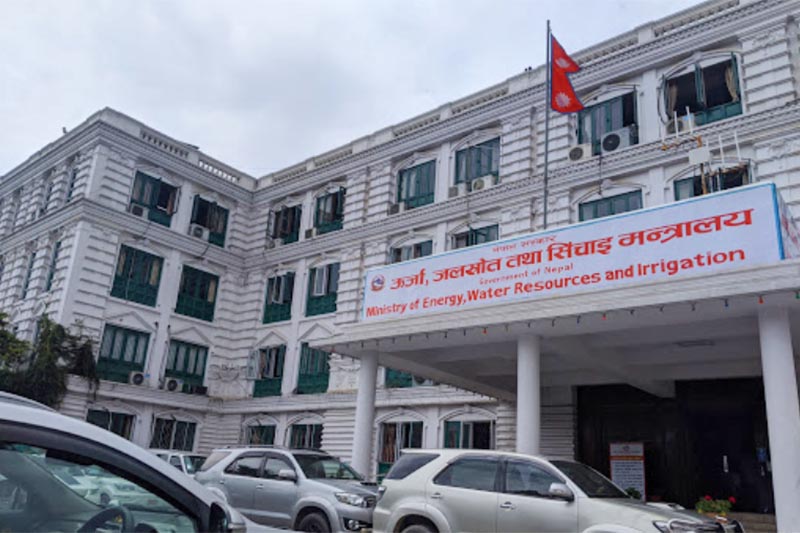
Private developers have already gone on record, through their industry association, describing existing approval chains as slow enough to strand investments worth hundreds of billions of rupees.Concentrating an even larger share of licensing authority in one commission, without a commensurate investment in its technical staffing, digital infrastructure or independent secretariat capacity, risks reproducing the same delays at a higher, more consequential choke point.
The commission’s independence is also worth interrogating. Its voting membership is composed almost entirely of government secretaries appointed by their own ministries, chaired by a sitting minister, with only three technical experts selected through a government-influenced recommendation process. This is not an independent regulator in the sense that, say, an energy regulatory commission with fixed, insulated terms and a transparent, competitive selection process would be.
The commission is closer to an inter-ministerial coordination committee wearing a regulator’s clothing, which means its decisions on licensing consent, water allocation during shortages, and dam safety enforcement will inevitably be read, fairly or not, through a political lens, particularly given how frequently hydropower licensing has intersected with patronage politics in Nepal in the past.
A water ledger Nepal is not yet equipped to keep
The bill’s water accounting and water audit provisions are conceptually its most modern feature, and also its most aspirational. Requiring the commission to maintain a live, basin-by-basin record of water availability and use, fed by mandatory reporting from every licensed user, is standard practice in water-stressed jurisdictions worldwide and long overdue in Nepal.
But, the bill requires this system to function from day one, including retroactive reporting within a single year by every existing water user, in a country where basic hydrological and groundwater monitoring infrastructure is thin, where many older irrigation and drinking water systems have never been metered or formally surveyed, and where digital record-keeping across government agencies is inconsistent at best.
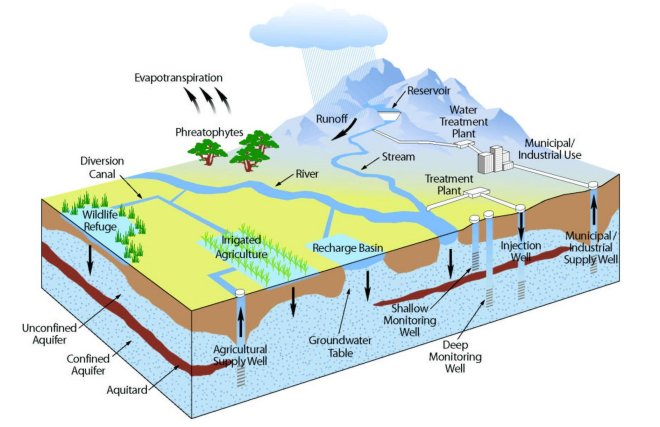
Kathmandu Valley’s own groundwater crisis, marked by falling water tables and visible land subsidence in places, has persisted for decades despite years of policy attention, largely because enforcement capacity at the municipal level has never matched the ambition of the rules on paper.
A national accounting system layered on top of that same enforcement gap risks becoming another well-intentioned mandate that exists mostly as a compliance obligation on paper rather than a functioning management tool, while still generating real penalty exposure for water users who cannot meet its reporting timelines simply because the data infrastructure to do so does not yet exist.
When the penalties don’t match the offences
The bill’s offence and penalty chapter contains an internal inconsistency that deserves more attention than it has received. Using water without the commission’s required consent, arguably the single most economically significant violation a large developer could commit, since it goes to the heart of whether a multi-billion-rupee project is even legally entitled to operate, is punishable only by a fine capped at five hundred thousand rupees, with no prison term attached at all.
Kathmandu Valley’s own groundwater crisis, marked by falling water tables and visible land subsidence in places, has persisted for decades despite years of policy attention, largely because enforcement capacity at the municipal level has never matched the ambition of the rules on paper.
Meanwhile, violating water quality standards, a genuinely serious but typically less commercially consequential offence, can carry up to a year in prison in addition to a fine. For a project generating tens or hundreds of megawatts, a fine in the hundreds of thousands of rupees is not a deterrent; it is a rounding error, the kind of number a developer’s legal team would simply model as a cost of doing business if the alternative were months of delay waiting for commission consent.
A penalty structure that treats unauthorized large-scale water appropriation as a minor civil matter while threatening individual criminal liability for lesser infractions sends an odd signal about what the state actually considers its most serious water governance risk, and it is precisely the kind of mismatch that gets exploited by well-resourced actors while falling hardest on smaller, less legally sophisticated water users who cannot absorb even the smaller fines as easily.
The next jurisdictional war
The bill’s attempt to divide authority over irrigation, hydropower and river classification between the three tiers of government through capacity and hectare-based thresholds is a reasonable technical solution to a genuinely hard problem, but thresholds create edges, and edges create disputes.
A hydropower project initially licensed at four point five megawatts by a local government, which later seeks to expand to six megawatts as its detailed engineering study firms up, does not have an obvious answer in this bill for whether it stays under local jurisdiction, migrates to provincial jurisdiction, or requires an entirely fresh licensing process at the new tier.
Nepal has already litigated almost exactly this kind of boundary dispute in mining and forestry, where threshold-based jurisdictional splits have repeatedly produced turf conflicts between provinces and the centre, sometimes freezing projects for years while the dispute is resolved.
Given how contentious inter-governmental relations over natural resources have already been since 2015, a bill that reintroduces hard numerical thresholds without an explicit, fast-track dispute resolution mechanism for edge cases is setting up its own implementation headaches rather than avoiding them.
A reform agenda in search of coherence
None of this is happening in isolation. The water resources bill is moving through the legislative process at the same time as a separate renewable energy and energy efficiency bill and an anticipated sunset law governing licence terms and incentives for private hydropower projects. Each of these instruments touches licensing, consent, tax treatment or land access in overlapping ways, and investors evaluating a single hydropower project may now need to reconcile requirements across three simultaneously evolving pieces of legislation rather than one settled framework.
Private developers, through their industry association, have already been explicit that their central demand of government is not resistance to state oversight of water resources in principle, but predictability: fixed timelines for clearances, a single-window licensing system, and stable fiscal terms they can underwrite against.
A bill that adds a new mandatory federal consent layer, tightens ecological release requirements without transition provisions, leaves a major cost liability undefined, and concentrates an unprecedented range of regulatory functions in one under-resourced commission is, almost by definition, the opposite of predictability, regardless of how sound its underlying conservation and equity goals may be.
Nepal genuinely needs a modern water law. The 1992 act was never built for a federal, climate-stressed, hydropower-export-oriented country, and the new bill’s instincts toward integrated planning, groundwater protection, disaster risk mapping and dam safety are, in isolation, sound and in some cases overdue.
The risk is not that the bill aims too high. It is that in trying to centralize coordination, tighten ecological protections, and modernize regulatory tools all at once, without fully working through how those goals interact with each other or with the practical capacity of the institutions meant to implement them, it may end up delivering less certainty, not more, to the sector the government has publicly staked its economic growth strategy on.