Kathmandu
Sunday, July 26, 2026





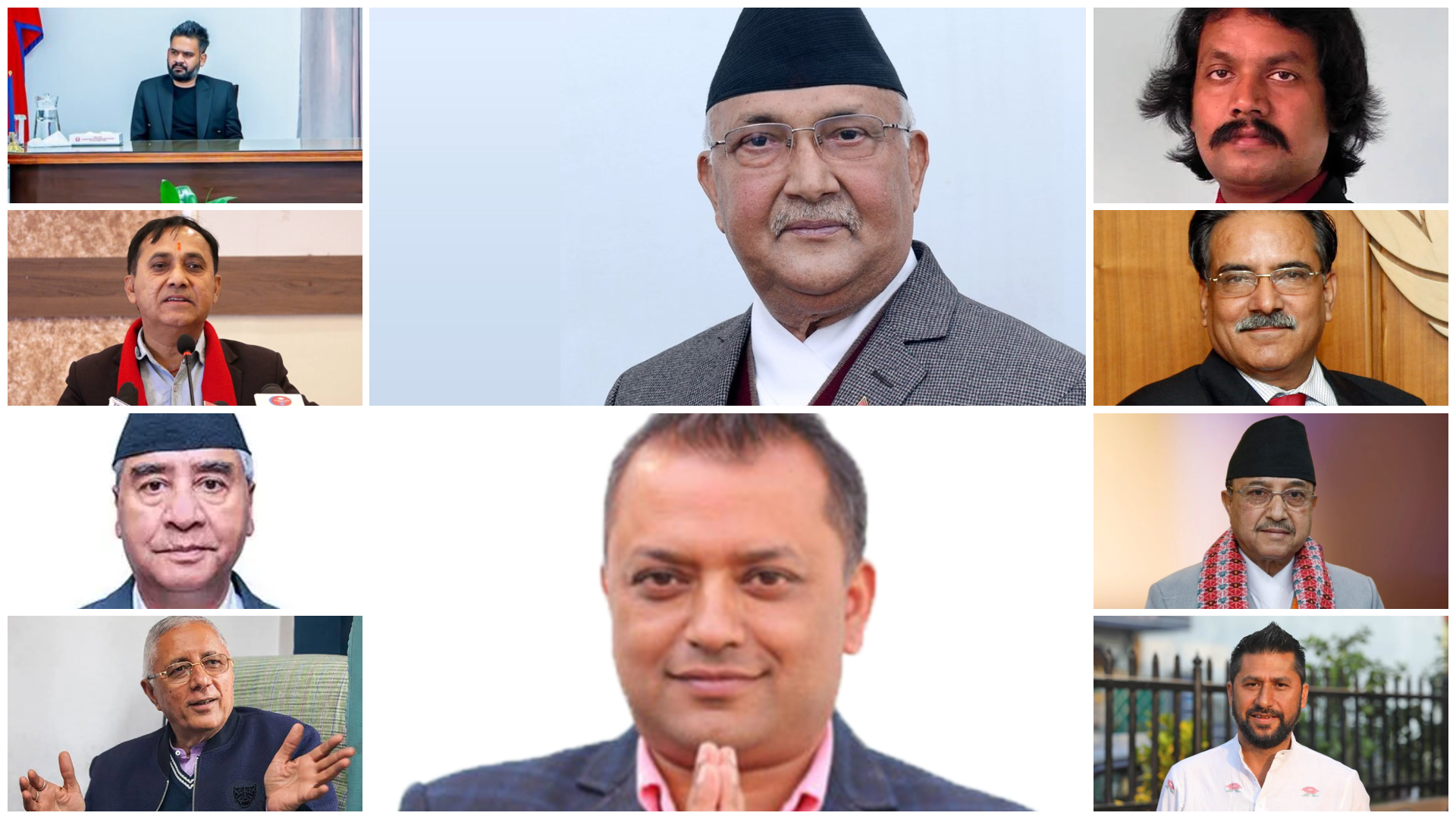
KATHMANDU: Nepal’s political establishment has been jolted by an election result none anticipated, and even fewer seem prepared to interpret. The country’s major parties-once the defining pillars of the post-2006 political order-have been reduced to weakened shells of their former selves, prompting talk among analysts of a slow, potentially terminal decline.
Fifteen years on from the People’s Movement II of 2006, which elevated the Maoists and Madhesh-based forces to the center of national politics, the architecture they helped construct now appears to be fraying. The Nepali Congress, the CPN-UML, the former Maoists (now Nepali Communist Party) the Rastriya Prajatantra Party and the broader Madhesh bloc all find themselves politically diminished, their organizational reach weakened and their electoral legitimacy in question.
In the intervening period, Nepal’s political trajectory was largely shaped by the very forces that have now been unsettled. Yet the latest results suggest that the era they defined may be drawing to a close-not with a clear alternative emerging, but with the old order fading faster than a new one can take its place.
Nepal’s post-election moment was meant to signal renewal. Instead, it has exposed something closer to systemic fatigue. The ascent of Balen Shah-an outsider elevated by public impatience with party cartels-appeared to puncture the long-standing dominance of entrenched political machines. Yet, beneath this apparent disruption lies a more unsettling continuity: the inability of Nepal’s political class, old and new alike, to sustain internal coherence once power is within reach.
Across the spectrum-from the Nepali Congress to the CPN-UML, from the Rastriya Prajatantra Party to Madesh based parties and emergent forces orbiting the RSP-the crisis is less about ideology than about legitimacy. Authority is contested not only between parties, but within them. Leadership is no longer assumed; it must be constantly performed, defended, and renegotiated.
Nepali Congress: A party at war with itself
Few episodes have so starkly unsettled the rank and file of the Nepali Congress as the present standoff. What began as a procedural dispute has hardened into a contest over legitimacy itself-raising, once again, the spectra of a split in Nepal’s oldest democratic party. The Nepali Congress establishment faction seek clarification from Purna Bahadur Khadka over the alleged use of a forged party letterhead may seem minor, even bureaucratic. But in institutional politics, such episodes are rarely trivial. They are symptoms of deeper malaise.
The immediate trigger is institutional. The Election Commission’s recognition of a new central working committee led by Gagan Kumar Thapa has redrawn internal lines of authority. Thapa, alongside Bishwa Prakash Sharma, has moved swiftly to consolidate control-announcing a fresh special convention in January and proposing a wholesale reset of active membership most recently. To supporters, this is overdue renewal; to rivals, it looks like an institutional coup executed under procedural cover.

The opposition, led by Sher Bahadur Deuba and Shekhar Koirala, has chosen the courts over compromise. Their writ before the Supreme Court of Nepal challenges both the legality of the special convention and the authority of the newly recognized committee. Until a verdict is delivered, the party exists in an uneasy duality: two centers of power, each claiming constitutional legitimacy, neither commanding universal obedience.
In the meantime, procedure has become proxy warfare. The disciplinary notice issued to Purna Bahadur Khadka-and his refusal to recognize it-illustrates how statutes are being weaponized. To Thapa’s camp, the rules are being enforced; to Deuba’s allies, the very bodies enforcing them are illegitimate. Parallel meetings, competing statements and dueling claims to the party’s letterhead have turned the organization into a hall of mirrors.
President Thapa’s own posture reflects the tension. Publicly, he speaks the language of unity and institutional discipline-warning that “unauthorized activities” have limits, while urging cooperation to rebuild the party as an effective opposition.
This is not new. The Congress has historically managed factionalism through delay and diffusion. What is different now is the erosion of deference. Senior leaders no longer command automatic compliance; instead, they must navigate a party rank-and-file increasingly willing to test institutional boundaries. The Khadka episode, therefore, is less about forgery than about authority-who possesses it, and who recognizes it.
Yet the simultaneous push to reset membership and centralize authority suggests impatience with the old equilibrium. Conciliation is offered, but on terms that many veterans read as conditional surrender.
This is not merely an elite quarrel. It follows a bruising electoral setback that exposed the party’s organizational frailties and eroded its aura of inevitability. In defeat, the old mechanisms of accommodation have faltered. A younger leadership cohort, emboldened by shifting voter expectations, is less inclined to defer; an older guard, steeped in the party’s struggles against autocracy, is less willing to be displaced by procedural innovation.
The deeper problem is structural. For decades, the Nepali Congress managed factionalism through informal hierarchy and negotiated coexistence. That system depended on shared acceptance of authority. Today, that acceptance has fractured. Competing claims are no longer mediated-they are litigated.
The courts may yet impose clarity. But judicial verdicts cannot manufacture political consent. Even a definitive ruling risk producing losers who refuse to reconcile, entrenching rather than resolving division. In that sense, the legal battle is less a solution than a staging ground for further conflict.
For now, the infighting remains contained-fought through notices, petitions and carefully calibrated rhetoric. But containment is not stability. The ingredients of rupture are already present: parallel chains of command, contested legitimacy and a breakdown of trust. If compromise continues to elude its leaders, the Nepali Congress may find that its gravest danger is no longer electoral defeat, but disintegration from within.
UML unravels
If the Nepali Congress is mired in procedural decay, the UML is grappling with something more combustible: a crisis of authority that has exposed deeper ideological and generational fault lines. What once appeared a tightly disciplined party now looks contingent-its cohesion less institutional than personal, and its future newly uncertain.
The removal-by arrest-of KP Sharma Oli from active leadership has created a vacuum that no formal mechanism seems able to fill. For years, the UML’s vaunted unity rested heavily on his ability to arbitrate between factions and impose coherence on competing tendencies. In his absence, those tendencies have not merely resurfaced; they have hardened into rival visions of what the party is, and ought to be.
Into this breach has stepped Ram Bahadur Thapa, whose elevation as acting chairman and parliamentary leader signals more than a temporary rearrangement. It marks a shift in tone and direction. His rhetoric-steeped in the idiom of struggle, distrustful of institutions, and unapologetically confrontational—sits uneasily with the UML’s more recent effort, under Oli, to present itself as a nationalist but constitutionally anchored force. The result is a party speaking in two registers at once: one looking backward to revolutionary legitimacy, the other forward to electoral pragmatism.
Resistance has followed swiftly, and from within the establishment itself. Figures such as Bishnu Paudel and Yogesh Bhattarai articulate not simply a tactical disagreement but a strategic anxiety. Their argument is, at heart, about the party’s social contract: that the UML’s durability has depended on its ability to reconcile leftist identity with multiparty democracy. Drift too far toward populist radicalism, they fear, and the party risks alienating the moderate constituency that underwrites its electoral viability.
What is striking is that dissent is no longer peripheral. The emerging alliance between Bishnu Paudel and Shankar Pokharel-long regarded as pillars of the Oli establishment-suggests that the center of gravity within the UML is shifting. Their call for leadership change, once unthinkable, now carries organizational weight. When loyalists turn revisionist, parties rarely remain unchanged.
The aborted signature campaign for a special convention is revealing in this regard. That roughly a quarter of delegates reportedly backed it is less important than what the effort signifies: a rank-and-file no longer content with choreography from above. The UML’s famed discipline, it turns out, may have been less a product of robust internal processes than of deference to a dominant leader. With that figure absent, institutional thinness is laid bare. Meanwhile, the party establishment’s response—insisting on procedural constraints and dismissing dissent as rumor-betrays a familiar reflex: to manage a political crisis as a technical one. Yet this is not, at root, a procedural dispute. It is a reckoning prompted by electoral humiliation and sharpened by the aftershocks of the Gen Z protests, which appear to have punctured the party’s claim to represent a broad, forward-looking electorate.
The deeper risk for the UML is fragmentation through ambiguity. If it cannot decide whether it is a vehicle for insurgent populism or a custodian of constitutional leftism, it may end up being neither. Parties can survive defeat; they struggle to survive identity drift.
For now, the balance of forces remains unsettled. KP Sharma Oli retains formal authority, and the procedural barriers to his removal are real. But politics rarely waits for procedure to catch up. The convergence of organizational heavyweights against him, combined with a restless base and an emboldened interim leadership, points toward an eventual reckoning.
The UML’s predicament is thus more than a leadership tussle. It is a test of whether a party long defined by centralized authority can reinvent itself as an institution-or whether, deprived of its axis, it will splinter under the weight of its own contradictions.
NCP: A party shrinks, a reckoning deferred
Within Nepali Communist Party and the shifting constellation of Maoist-derived alliances that orbit it-the argument is no longer about insurrectionary zeal or tactical positioning. It is, more starkly, about institutional survival. Leaders such as Agni Sapkota concede what is increasingly obvious: months after successive realignments, organizational integration remains partial, authority diffuse, and purpose uncertain. Proposals for term limits and age caps, once peripheral, now carry the weight of necessity.
The numbers explain the urgency. From commanding 220 seats in the 2008 Constituent Assembly, the Maoists-then the insurgent force turned electoral juggernaut—have been reduced to a mere 17 seats in the federal parliament. This is not cyclical decline; it is structural erosion. In such a context, procedural reform is not administrative tidiness but a last attempt at political renewal. The planned August convention, therefore, assumes outsized importance: it may either mark a managed generational transition or confirm the party’s inability to adapt.
At the heart of this crisis lies a generational rupture. Nepal’s political class remains dominated by leaders forged in the twin crucibles of the 1990 democratic movement and the subsequent insurgency. Their legitimacy, long anchored in sacrifice and struggle, is now contested by a younger, digitally native electorate. The Gen Z protests of 2025 did not merely signal dissatisfaction; they redefined political credibility. Competence, delivery and personal integrity now weigh more heavily than revolutionary pedigree.
1611021204.png)
(Left)Pushpa Kamal Dahal (‘Prachanda’) and Madhav Kumar Nepal (Right). File photo
For the Maoist current, the contradiction is particularly acute. Having entered mainstream politics as the largest force in 2008, it now struggles to maintain coherence, let alone dominance. The creation of the Nepali Communist Party-an amalgam of disparate leftist factions under the leadership of Pushpa Kamal Dahal-was presented as strategic consolidation. An 18-point agreement reaffirmed adherence to Marxism-Leninism, offering ideological continuity amid organizational flux.
Yet unity has come at a cost. Senior figures such as Janardan Sharma, Ram Karki and Sudan Kirati have exited, alleging that the merger bypassed internal processes and was designed to pre-empt a potentially disruptive general convention. Their critique is less about doctrine than procedure: a party that once mobilized on principles now appears to manage dissent through expedience.
This tension between continuity and rupture is not new in Pushpa Kamal Dahal’s political method. Party formation and dissolution are framed as “discontinuity within continuity”-a dialectical adjustment to changing conditions. But such elasticity risks eroding the very ideological coherence it seeks to preserve. As one internal critique puts it, the movement has drifted from its professed values, amounting to a quiet “assassination” of its founding ideals.
The deeper problem is that organizational fluidity, once a source of tactical strength, now signals strategic confusion. Voters, particularly younger ones, are less interested in ideological lineage than in administrative competence. If the left cannot reconcile its revolutionary heritage with the demands of governance-and cannot credibly renew its leadership-it risks sliding from diminished relevance into political marginality.
In that sense, the Maoist dilemma is emblematic of a broader truth: movements that fail to institutionalize themselves eventually become prisoners of their own past. For now, the factional tensions within the Communist Party of Nepal remain contained-managed through closed-door meetings and uneasy compromises. But suppression is not resolution.
After electoral humiliation and organizational drift, the absence of open conflict reflects not unity but fragility. The risk is not whether divisions exist, but when they surface. And when they do, they are unlikely to be orderly. Without credible reform and generational renewal, today’s quiet infighting may yet erupt into a public fracture-further hastening the party’s slide from relevance to redundancy.
RPP at the brink
For the Rastriya Prajatantra Party (RPP), after election crisis is at once more straightforward and more existential than that facing its rivals: it is a question not of factional balance, but of political survival. The party’s poor showing in the March 5 elections has stripped away any lingering optimism that it might convert a seemingly receptive political climate into durable support. In the aftermath, dissent has hardened into open revolt against Rajendra Lingden, whose leadership style-centralized, opaque, and increasingly unilateral-is now under sustained internal attack.
The challenge is being led by figures such as Dhawal Shamsher Rana, alongside a cluster of mid- and senior-level leaders who no longer conceal their frustration. Their critique is not merely electoral. It is institutional. Decisions of consequence—from electoral strategy to the ill-fated bid in the Deputy Speaker contest-appear to have bypassed the party’s formal structures altogether, reinforcing the perception that authority has become personalized rather than procedural.
Such complaints are familiar in Nepali party politics. What makes this episode different is the convergence of grievance and timing. Electoral defeat has deprived the leadership of its principal defense-performance-while the delay in accepting responsibility has deepened rank-and-file disillusionment. As one critic acidly noted, promises to transform the RPP into the country’s leading force have instead yielded “unimaginably negative” results.
Yet the turmoil is not simply about leadership failure. It reflects a deeper ambiguity at the heart of the RPP’s political identity. Is it, at its core, a vehicle for monarchist restoration-an appeal to nostalgia anchored in the legacy of the crown-or does it aspire to become a modern conservative party capable of competing within a republican framework? The party has attempted, at various moments, to be both. It has succeeded at neither.

The dissidents’ demands-a rapid general convention, a neutral organizing mechanism, and an internal review of decisions taken since the unity convention-are therefore about more than process. They are an attempt to force a reckoning: to re-anchor the party either in a coherent ideology or in credible institutional practice. Without such a recalibration, organizational renewal will remain elusive.
The leadership’s response so far has been cautious, even dismissive, invoking procedural timelines and constitutional requirements. But these risks misreading the nature of the crisis. The insistence that a convention can wait until mandated deadlines may be legally sound; politically, it appears evasive. Parties rarely collapse because they violate procedure. They do so when they lose the confidence of their own cadres.
There is, in this sense, a paradox at the center of the RPP’s predicament. Its internal dissent is often framed as destabilizing. In reality, it may be the only force preventing terminal drift. A party unsure of what it stands for-and unwilling to confront that uncertainty-cannot long endure. The ultimatum issued by dissidents is therefore less a threat than a diagnosis. Reform, or irrelevance. For the Rastriya Prajatantra Party, the margin between the two is narrowing.
Madhesh parties wiped out, still in disarray
After the Gen Z uprising in September 2025, Nepal’s Terai-Madhesh parties have suffered a total political extinction. In the House of Representatives elections held on March 5th, 2026, not a single Madhesh-based party secured a seat-a collapse as sudden as it was self-inflicted, despite repeated unifying efforts in the run-up to the vote. Instead of consolidation, infighting deepened within every major formation.
The decline had been underway for months. The Janata Samajbadi Party, led by Upendra Yadav, entered a downward spiral after factional splits, strategic missteps, and an ill-judged withdrawal from government without securing provincial leverage. Now Yadav party itself faction deep internal infighting. Its uneasy merger with the Loktantrik Samajbadi Party, under Mahantha Thakur, proved too little, too late-elite-driven and electorally sterile.
Elsewhere, fragmentation was the rule. The Janamat Party, led by CK Raut, imploded under the weight of internal purges, leadership nepotism, and aborted alliances. The Nagarik Unmukti Party split along personal lines, while the Rastriya Mukti Party Nepal drifted without ideological anchor or organizational discipline.
Attempts at unity fared no better. The Federal Democratic Front dissolved into irrelevance, its member parties too divided to contest elections jointly. Even when Madhesh-based parties briefly captured provincial power, infighting ensured it slipped quickly from their grasp—reinforcing public perceptions of opportunism over principle.
At heart, the crisis is one of identity. These parties have long oscillated between movement politics and patronage politics, between representing regional grievances and pursuing narrow power bargains. The Gen Z movement, with its impatience for both, exposed that ambiguity. While the country demanded change, Madhesh leaders appeared preoccupied with office.
Voters responded accordingly. Leaders who once commanded decisive mandates were reduced to null. CK Raut himself fell to third place in Saptari-2, later announcing his withdrawal from parliamentary contests. Across the board, the verdict was the same: rejection.
The result is less a temporary setback than a systemic failure. Fragmentation, weak organization and ideological Ambiguity have hollowed out a once-influential political bloc. Despite repeated unifying efforts, no Madhesh-based party secured a single seat in the House of Representatives. In the end, infighting proved more decisive than ideology. Without a coherent reset-of leadership, structure and purpose-the Madhesh parties risk not revival, but obsolescence.
The uneasy alliance of Balen and Rabi
Hovering above these parties’ struggles is the more fluid, personality-driven dynamic between Balen Shah and Rabi Lamichhane. Their pre-election alignment was rooted in shared opposition to the political establishment. In government, that shared opposition offers diminishing returns.
The tensions are structural. Balen embodies technocratic populism: a focus on delivery, efficiency, and visible outcomes. Lamichhane represents media-driven populism: narrative, mobilization, and rhetorical dominance. These modes are not easily reconciled.

RSP Chairman Rabi Lamichhane (left) and Prime minister Balendra Shah (right)
Moreover, asymmetries of vulnerability are becoming apparent. Balen’s political capital rests on a relatively clean image and administrative ambition. Lamichhane, by contrast, operates under the shadow of legal controversies, which complicate his claim to moral authority.
As analysts have noted, this creates the conditions for a “dual power” struggle-an arrangement inherently unstable in a system designed for singular executive leadership.
For now, public expectations act as a binding agent. But such “glue” is contingent. As governance challenges accumulate, the incentives to differentiate-and eventually compete-will grow.
A system in transition
What unites these disparate threads is a broader transformation in Nepal’s political economy of power. The era of stable parties’ dominance is giving way to a more fragmented, volatile landscape. Authority is decentralizing, but not necessarily becoming more accountable.
The Gen Z factor is critical. It has introduced a new baseline: intolerance for opacity, impatience with hierarchy, and a demand for tangible results. Yet this pressure has not yet translated into institutional reform. Instead, it has intensified existing contradictions.
In this sense, Nepal is experiencing not a clean political transition but a messy political transition. Old structures are weakening faster than new ones can consolidate. The result is a politics of perpetual contestation-energetic, but unstable.
The immediate future will likely be characterized by continued turbulence. The UML must decide whether to recalibrate or radicalize. The Congress must determine whether its proceduralism can evolve into genuine renewal. The NCP face a test of whether they can institutionalize generational change. The RPP must resolve its identity crisis or risk marginalization. And the Balen-Rabi axis must either mature into a functional partnership or fracture under the weight of competing ambitions.
None of these outcomes is predetermined. But one conclusion is increasingly difficult to avoid: Nepal’s crisis is not merely one of leadership, but of political architecture itself. Until parties develop mechanisms to manage dissent, renew leadership, and align rhetoric with governance, the cycle of infighting will persist. In the end, the paradox remains. Nepal’s democracy is vibrant-noisy, contested, and alive. Yet its institutions are brittle. The challenge is not to generate conflict, which is abundant, but to channel it productively. That, for now, remains an unfinished project.