Kathmandu
Thursday, July 9, 2026





Biodiversity conservation is possible only if it is linked to the livelihoods of communities.

KATHMANDU: Nepal is rich in biodiversity, but it faces growing challenges from climate change, haphazard exploitation, and smuggling. Technology and social media are being misused for the illegal trade of biological resources. Regulation has not been effective because many existing laws have become irrelevant.
On the occasion of International Day for Biological Diversity (May 22), Bidhya Rai spoke with Reshu Bashyal, Program Manager at Greenhood Nepal and a researcher who has spent a decade conserving endangered plants. Below is an edited excerpt of the conversation:
What is the significance of ‘International Day for Biological Diversity’ for Nepal?
This day is an opportunity to remember and review the activities taking place in biodiversity conservation and utilization. On this occasion, achievements are celebrated. A greater sense of responsibility for the future is realized.
We also need to understand what biodiversity actually means. Biodiversity is the variety of life—including animals, plants, and fungi—found in a single area. In Nepal, 46.08 percent of the land area is forest land (around 68,000 Square Kilometers); there are numerous types of flora; and there are various living organisms dependent on them. Human roles within this system are equally important. Therefore, this day is also an opportunity to appreciate species like forests, wildlife, plants, fungi, and bacteria.
On this occasion, conservation efforts made at the community level get featured in the media. This encourages those who are working and provides an opportunity for those who are unaware to learn about it.
What have you found the state’s policy regarding biodiversity conservation to be like?
For this, the National Biodiversity Strategies and Action Plans (NBSAPs) has been formulated. There are many policies, laws, guidelines, and procedures directly or indirectly linked to biodiversity. However, most of the laws created by the government for communities have not been implemented at all.
One of the major challenges in implementing the law is geographical remoteness. For instance, if news arrives that a bear has been killed in a forest, by the time personnel from the Forest Division reach the ‘field’ to understand the facts, the perpetrator has already fled, or the incident has been manipulated into a different form. The government also does not seem interested in deploying the specialized, skilled human resources required to implement legal provisions.

Reshu Bashyal, Program Manager of Greenhood Nepal. Photo: Bidhya Rai
The impacts of climate change are starting to appear rapidly on biodiversity. However, many existing acts and laws are based on old data and details, which is why they have become irrelevant. The craze of extending ‘development’ to every nook and corner of the country has destroyed forests and natural habitats. Because of this, it is necessary to understand the needs by interacting directly with communities. Based on that, it will be effective only if the existing laws are updated and implemented.
Organizations working in conservation should not just question the government, but also provide whatever support they can from their own level.
How practical are the biodiversity plans included by the government in its policies and programs for the fiscal year 2026/2027?
The policies and programs include issues such as conserving biodiversity while improving soil health, promoting indigenous crops, and supporting a biodiversity-based green economy. It is also mentioned that the river system will be conserved by considering it not just as a water resource, but as the foundation of civilization, culture, biodiversity, and human existence. These programs are indeed practical.
The policies and programs include the conservation of habitats for rare and endangered wildlife through the effective management of national parks, reserves, and conservation areas. It would have been even better if the conservation of rare plants had been included in this.
Without plants, the existence of animals and humans might not even remain. However, the level of advocacy and debate that wildlife is receiving has not been mirrored for plants.
Most of the issues covered in the policies and programs are repeated year after year. It is not that they shouldn’t be repeated, but they must be improved. For example, until a few years ago, it was enough to just take basic awareness programs to the communities. But now, communities have become ‘smart’ and pay attention to every word. Access to technology is everywhere, and they ‘cross-check’ information. Even those who do not have access to technology inquire among each other. Because of this, community participation will only occur if innovation-oriented policies and programs connected with technology are introduced. This makes implementation easier.
It is essential to take suggestions from experts and researchers when formulating such programs. Currently, I see a lot of tree plantation happening in the name of biodiversity. But let’s discuss the example of Taxus Wallichiana (Lauth Salla). It has male and female species. Both are necessary to produce new seeds. The saplings cannot be distinguished as male or female. If only one species is planted during afforestation, new seeds will not be produced. This will put the very existence of Taxus Wallichiana in danger in the future. There are many such overlooked matters. Therefore, advice and suggestions from subject experts and researchers must be taken when formulating or implementing policies and programs related to biodiversity.
What are the opportunities and challenges of biodiversity in the context of Nepal?
Over the past year, I had the opportunity to observe forests, wildlife, and plants closely by visiting various places from east to west and north to south in Nepal; I got to interact with communities. During this process, I have found numerous opportunities.
There is a demand in the market for valuable medicinal herbs found in Nepali forests. However, we have not been able to generate income from them. This is also due to policy hurdles. For example, trading orchids (Sunakhari) is not allowed in Nepal. It is considered illegal simply because no law has been made regarding its utilization or management. Yet, there is a widespread demand for it in the market for medicinal purposes. As a result, other plants are being bought and sold under its name. Haphazard exploitation is also taking place. This seems to threaten the existence of orchids in Nepal even further. Therefore, it appears necessary to reconsider some laws to emphasize sustainable utilization.
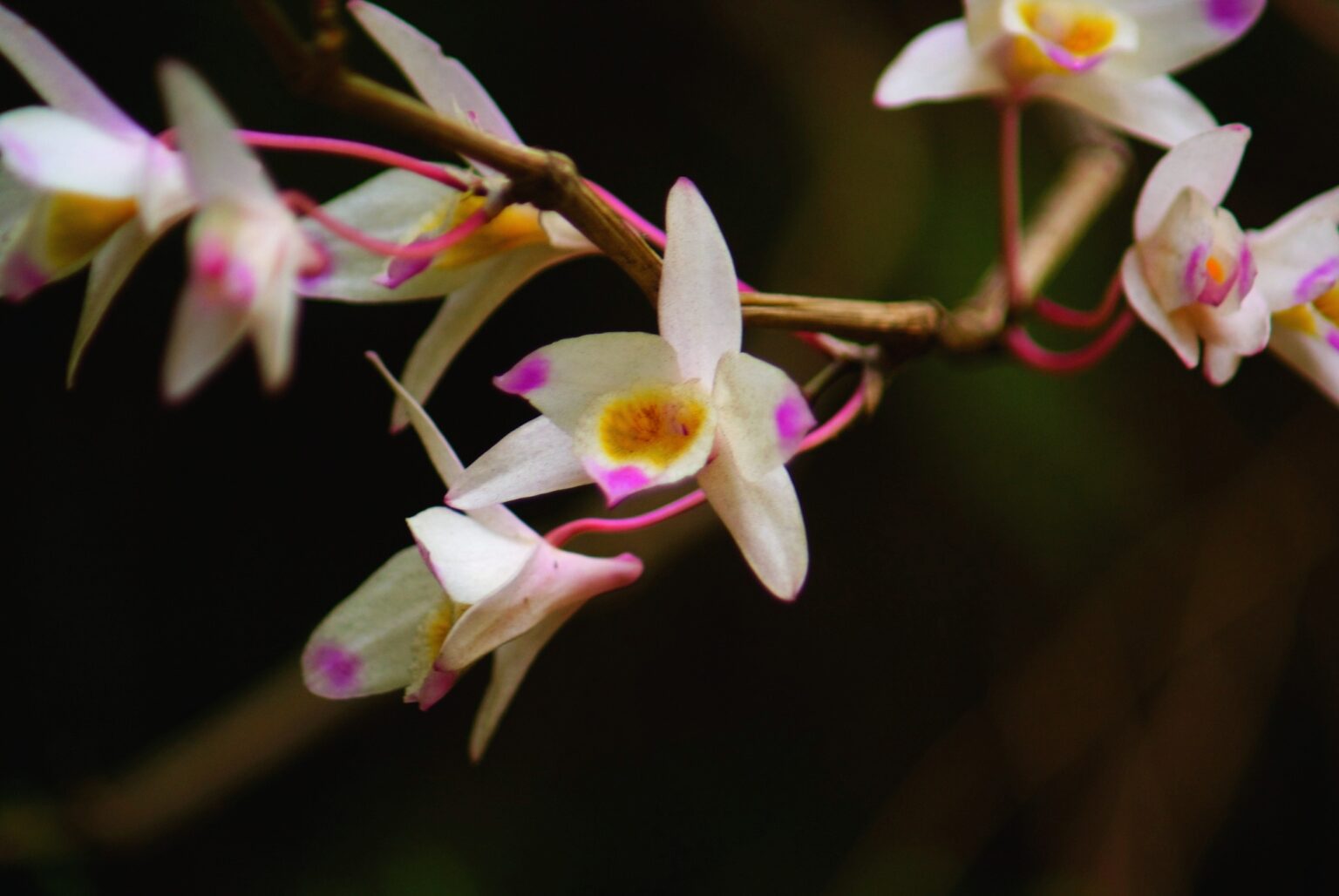
Orchids. Photo Source: Greenhood Nepal’s Facebook
Different types of animals and plants are found in any corner of Nepal. Some have not even been studied yet. Therefore, there is an opportunity to conduct studies by fully mobilizing researchers, communities, and scientists. Nepal can be made a destination country for foreign researchers.
There is an opportunity to run programs through local levels that link livelihood and biodiversity. For instance, if the forest is growing all around, but there is no cooking fuel at home, the program becomes impractical. Buffer zone communities are facing this exact problem. When this happens, the community does not feel ownership over conservation; rather, it makes them resentful.
In that case, how is a balance between community livelihood and the conservation of wildlife and plants possible?
Based on a decade of research experience, I am clear—communities play a huge role in conservation and promotion work. However, the investment made in conservation yields results only if it is linked to the community’s livelihood. The needs of communities evolve with time. Policies, rules, and laws should be formulated to address them. In this age of technology, it is foolish to think that a law made today will sustain for the next five years.
What kind of impact is climate change having on Nepal’s biodiversity?
Biodiversity is the very first target of climate change. Community experiences and various studies have confirmed this. The biodiversity that once existed in Nepal is no longer there; it has declined. Flowers that used to bloom in a specific month have started blooming earlier or later in recent years. This affects pollinators. Looking at it simply, it just seems like a flower bloomed early or late, but it disrupts the entire ecosystem. Advocacy and debate on this have become absolutely necessary.
Due to inadequate snowfall, the availability and quality of herbs like Yarsagumba (caterpillar fungus) in high Himalayan regions have declined. On the other hand, because people uproot them along with the roots thinking they are free, they stop growing from the following year. If we pick them before they mature, they lack quality and do not fetch a good price. This has directly affected the livelihoods and food security of the people in Sudurpashchim and Karnali provinces. Those who used to earn a living by selling Yarsagumba are now forced to go to India with their families to work as daily wage laborers for their livelihood.
As the Himalayan environment gets disrupted, the traditional schedule of yak and sheep farmers, who descend to the valleys in winter and ascend to the highlands in summer, has been completely disturbed.

Conservationist Reshu Bashyal receiving the prestigious environmental award, the ‘Whitley Award 2025’/ ‘Green Oscar’, for her contribution to the conservation of Nepal’s endangered plants. Photo: Greenhood Nepal’s Facebook Page
Climate change has caused many herbs to ripen early. If they are not harvested on time, they rot, get destroyed, or their quality degrades. However, some laws regarding the collection of herbs were made based on old seasonal characteristics. If government agencies strictly enforce that collection can only be done on specified dates, the direct impact falls on the livelihood of the herb collectors.
Climate change didn’t just appear out of nowhere today; it was there before too. We became accustomed to it. Right now, because of the rise in temperature, its impacts are highly visible within a short period. This has noticeably disrupted biodiversity as well. When biodiversity is disrupted, it directly impacts human existence, food security, and ecological balance. There is no alternative but to accept this.
What kind of practice have you observed from the government regarding collaboration with experts on biodiversity?
Every agency of the government has attempted to collaborate with subject experts in one way or another, from policy and law formulation to implementation and evaluation. However, such attempts are limited to a small, network-based circle. Furthermore, it completely lacks an inclusive character. I am not aware of any collaboration done through an open call for this. Even among the experts within the network, it would have been better if the opportunity was given to someone who has set foot in the ‘field’ at least once or understands the ground reality. Research and studies conducted sitting in Kathmandu, solely relying on analyzing information and data gathered through technologies like drones and satellite systems, do not yield substantial results.
What is the interrelationship between biodiversity and women, and have women been able to benefit from it?
In rural areas, women play the leading role in protecting forests and plants. It is usually women who go to the forest to fetch fodder for livestock, firewood for cooking, leaves for weaving plates (Tapari), or fiddlehead ferns (Niuro) for vegetables. Therefore, I have found women to be very conscious when it comes to protecting and utilizing forest resources.
Since most of the male members in villages are in cities or abroad for employment, the responsibility of protecting forests falls on the shoulders of women.
Women also feel a sense of ownership in conservation. However, women rarely seem to get opportunities to directly generate income based on forests or nature.
What kind of pressure exists on Nepal’s biodiversity?
There is pressure of over-exploitation on forest products. As the market demand for valuable herbs and forest products increases, exploitation has risen. At a time when seasonal changes are hindering the availability of forest products, uncontrolled exploitation puts even more pressure on endangered plants.
Poaching, smuggling, and illegal trade of wildlife are ongoing. The smuggling and illegal trade of plants are also on the rise.
Similarly, the rapid spread of invasive plant species like Mile-a-minute weed (Mikania micrantha) is another challenge. Alien plants introduced under the pretext of decoration have affected indigenous ones.
What have you found the situation of poaching, smuggling, and illegal trade of wildlife and plants to be like in Nepal?
Data shows more cases regarding the smuggling or illegal trade of various body parts of large animals like rhinos, tigers, and elephants. Smuggling of peacock feathers, owls, turtles, etc., is taking place. Pangolins are being heavily poached and smuggled. I have also found data on bear bile being smuggled. Illegal trade of plants is ongoing as well. For example, the trade of orchids under the name of other plants.
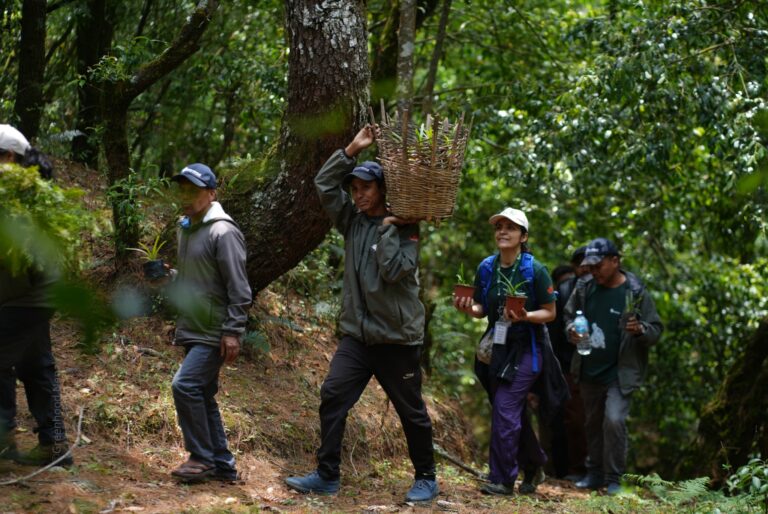
Reshu Bashyal collaborating with locals in Makwanpur for orchid conservation. Photo Source: Greenhood Nepal’s Facebook
As Nepal is situated between two large countries that manufacture substances with medicinal properties, such exploitation is happening in Nepal to meet their demands. Illegal trade is also happening for imitation, decoration, and hobbies. For instance, parrots are bought and sold just to show off a distinct status to neighbors and society. Similarly, some plants are being illegally bought and sold to be used as ornaments.
Traditionally, there is also a practice of hunting and consuming certain wildlife in the name of medicine or other purposes. Smuggling is also happening into neighboring or other countries by exploiting legal loopholes in Nepal.
In this context, what have you found the role of social media and online mediums to be like?
If internet technology and social media can be used properly, it is an opportunity, but in this context, it is being misused. For example, previously, if a Chinese trader needed a Nepali herb or plant, reaching a collector in a remote area was possible only after contacting many people. Face-to-face meetings between individuals were necessary. Now, using social media, contact can be made from any corner of the world. All information is available with a single click. Traders take photos and send them, asking, “Is this available in your forest?” Locals search for it in the forest and then handle all ‘deals’ through the internet.
Advertisements and sales of orchids are happening openly on TikTok, and there is no regulation. Many citizens do not even know that they are doing something illegal by advertising, sharing information, or buying and sold for commercial purposes via social media. If we do not move toward regulating this in time, it will take on a disastrous form. Awareness is also needed, and the media has a significant role to play in raising awareness.
Looking at it from an economic perspective, what do you find the situation of valuable herbs like Yarsagumba and forest garlic to be like in Nepal?
In Nepal, forest-based herbs are being collected and sold without any study. Adequate studies have not been conducted regarding what the production capacity is, why scientific and sustainable harvesting is necessary, or how to produce quality products to fetch a good price. Awareness about this has not been spread among the locals. The practice is to collect and sell simply because a demand comes in. Due to the lack of organized production and distribution, it feels like the opportunity to earn a good income is being lost.
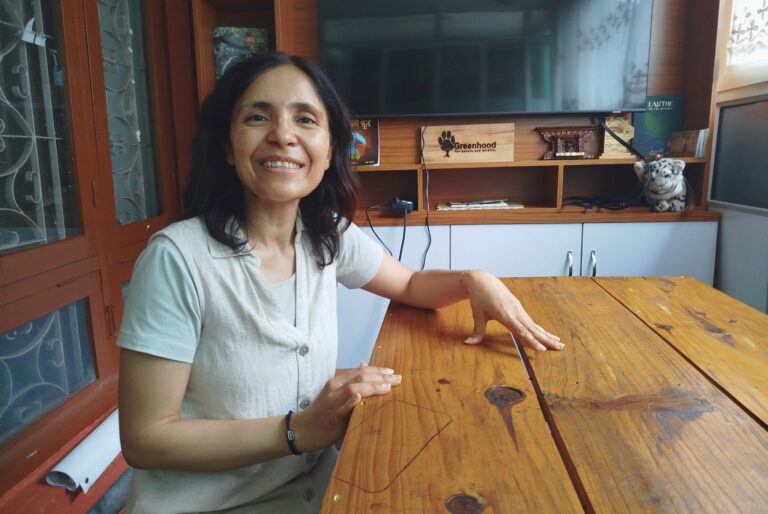
Greenhood Nepal’s Program Manager Reshu Bashyal. Photo: Bidhya Rai
To the common eye, an orchid is just a flower, but what do you see?
Orchids are not found only on trees; they grow on rocks and even underground. If observed closely, it is an entire world of micro-climate or micro-ecosystem. Therefore, I see a whole world even within an orchid. That’s why it feels delightful.
In today’s time, what are the opportunities and challenges of terrestrial biodiversity monitoring?
When the field cannot be reached due to geographical complexities, monitoring can be done using technology. While doing so, sometimes local human resources can be provided with training to seek their assistance. For example, we ran a ‘patrolling’ campaign against pangolin smuggling by mobilizing the community. They would go to the field, and whatever they saw, they would take pictures with their mobiles and provide the details. We would monitor and evaluate while sitting in Kathmandu. This process also proved effective in the context of conservation.
What kind of initiatives are necessary to keep biodiversity in balance?
We must adopt policies of conservation, promotion, and balance in biodiversity according to changed circumstances. This task cannot be left solely to the community. Experts, researchers, conservationists, activists, citizen scientists, the government, and all stakeholders must take equal responsibility. Problems, challenges, and risks that may arise in the future must be identified in advance, and preparedness must be adopted. Indigenous knowledge must be utilized for this.
Organizations and stakeholders should not just point fingers at the government saying it did not do this or that. They must also point fingers at themselves to see how much support they were able to give to the government. Wherever one is, whatever support can be provided, everyone must join hands for it.
Whether making policies and laws or conducting public debates, the focus should not only be limited to regulating the illegal trade of large wildlife species. The poaching, exploitation, and smuggling of small and microscopic wildlife and plant species must be discussed and debated equally.
Priority must be given to policy and law formulation. The awareness level of citizens, which has increased compared to before, must be directed toward technology. The time has come to make laws to regulate advertisements and illegal trade occurring through internet technology and social media. We must be equally alert in this direction too.