Kathmandu
Friday, June 12, 2026





The Supreme Court has directed the state to compensate former child soldiers, stop using terms such as “disqualified” and “discharged,” and enact laws making child recruitment into armed conflict a punishable crime.
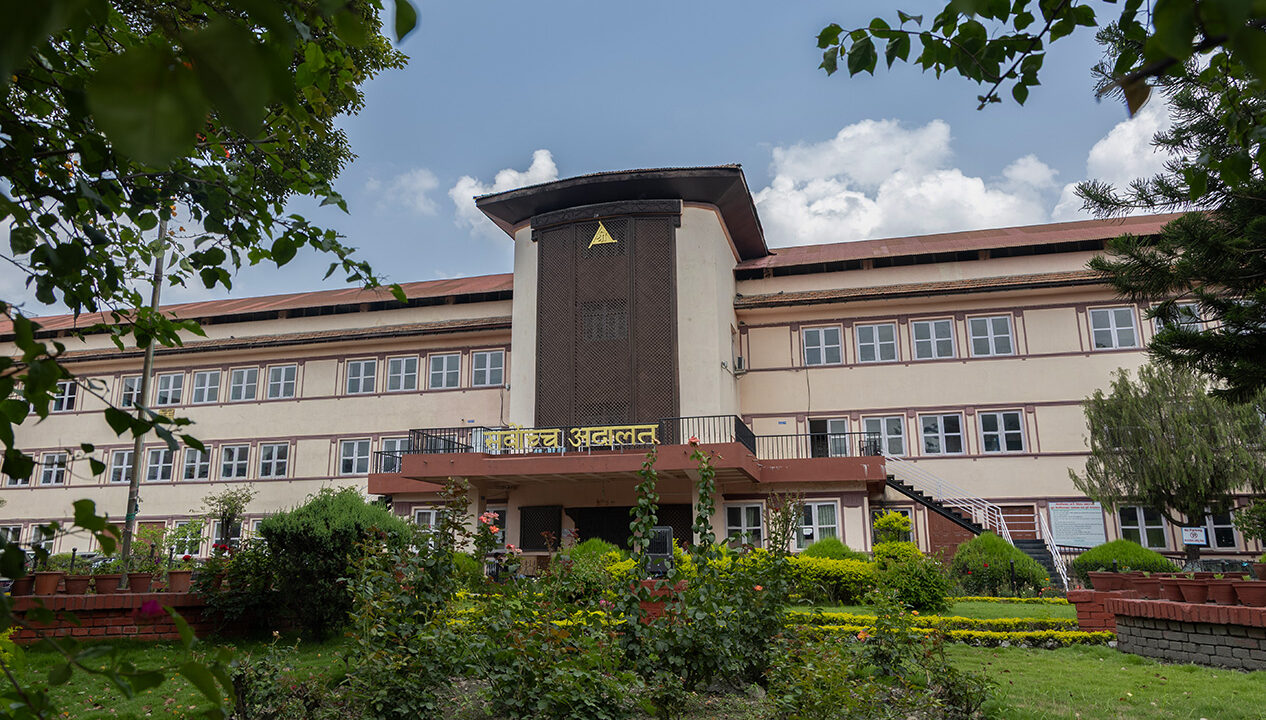
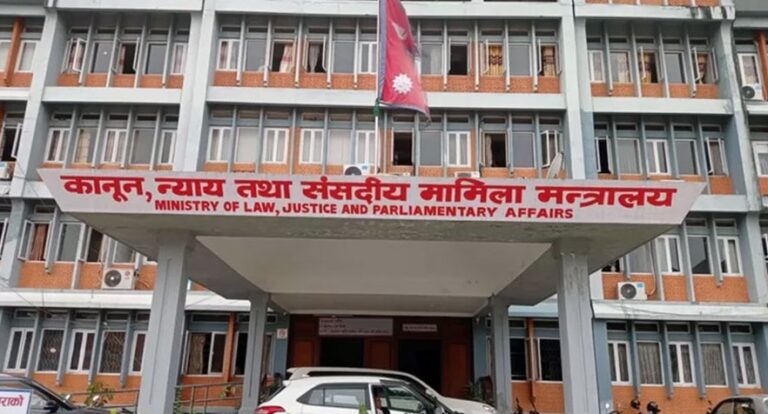
KATHMANDU: Two decades after Nepal’s decade-long armed conflict ended, the Supreme Court has transferred legal grievances regarding the recruitment of child soldiers to the nation’s dual transitional justice mechanisms.
Reviewing a high-profile case filed against current and former top Maoist leaders—including the chairman of the former rebel CPN (Maoist) party, Pushpa Kamal Dahal, and leader Baburam Bhattarai—the apex court ruled that issues surrounding underage combatants fall under the jurisdiction of the Truth and Reconciliation Commission (TRC) and the Commission of Investigation on Enforced Disappeared Persons (CIEDP).
A full bench of the court—comprising Justices Sapana Pradhan Malla, Sunil Kumar Pokharel, and Shanti Singh Thapa—released a summary order directing the government to draft strict statutory legislation to ensure children are never again used by military forces.
Crucially, while the court delegated the broader transitional justice process to the commissions, it explicitly clarified that the question of personal accountability for command-level decisions made during the war remains open. The bench noted that individual liabilities will be guided by the final findings and recommendations put forth by these specialized, constitutionally mandated commissions.
The civil war in Nepal spanned from February 13, 1996, to April 24, 2006. Throughout the conflict, then insurgent CPN (Maoist) faced international and domestic condemnation for deploying minors on the battlefield.
Lenin Bista, a prominent former child soldier, along with other victims, petitioned the court to initiate criminal prosecutions against Dahal and Bhattarai, arguing that utilizing children in warfare constitutes a war crime. Two distinct petitions were filed at the Supreme Court—one by Gyan Bahadur Basnet in January 2, 2026 and another by Bista in February 13, 2026. The court consolidated both petitions into this single landmark ruling.
The war formally concluded with the signing of the Comprehensive Peace Accord (CPA) on November 21, 2006. During the subsequent disarmament process, the United Nations Mission in Nepal (UNMIN) verified the rebel forces, ultimately categorizing 2,973 minors out of roughly 30,000 combatants as “minor” and “disqualified” to join the national army integration program.
Article 7.6.1 of the CPA explicitly binds the state to protect children under 18 from being weaponized or recruited into any armed wing.
On December 8, 2006, an ‘Agreement on Monitoring of the Management of Arms and Armies’ was signed in the presence of the Representative of the UN Secretary-General. The verification of combatants involved in the armed conflict was conducted under the auspices of UNMIN. Out of around 30,000 combatants, 2,973 were categorized as ‘minors’ and ‘disqualified’.
Following this, the government provided them with Rs 10,000 at that time. Later, it was announced that an additional Rs 200,000 each would be given as relief to the combatants labeled as disqualified. However, the writ petitioners claim that not everyone received this relief. On the other hand, adult combatants who did not opt for integration but took voluntary retirement received between Rs 500,000 and 800,000.
Writ petitioner Bista claimed that not only did they fail to receive compensation, but being labeled ‘disqualified’ also caused deep psychological trauma. He asserted that terms like ‘disqualified’ and ‘discharged’ used in government records had a negative financial, educational, health, social, and psychological impact.
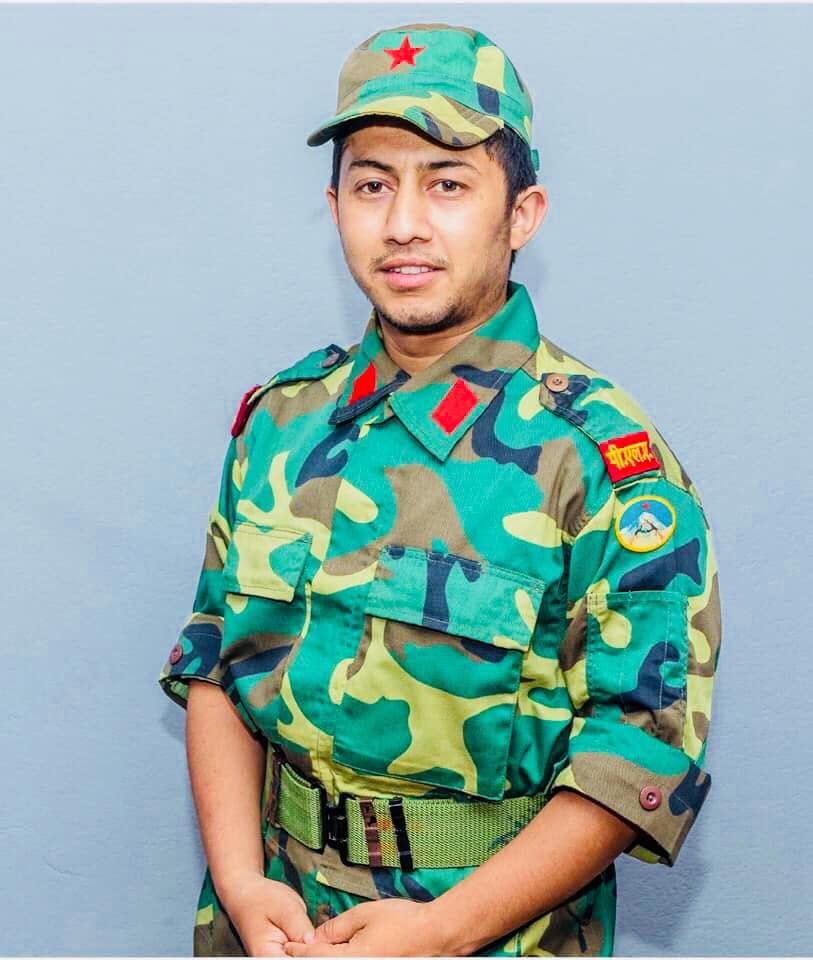
Former child soldier Lenin Bista. Photo: Bista’s Facebook
The Supreme Court has now issued a mandamus order instructing state bodies not to use stigmatizing terms like ‘disqualified’ and ‘discharged’ for conflict-affected individuals.
The court issued a directive order to formulate laws that completely prohibit the inclusion or utilization of children aged 18 or below in any military force and make such acts a punishable offense.
The petitioners had demanded that child soldiers be given legal recognition, provided with compensation, and that the leadership responsible for recruiting child soldiers in violation of international humanitarian law be held accountable for war crimes.
Continuous violation of orders
Stating that previous orders had been consistently ignored, the Supreme Court held that the ‘doctrine of continuous violation’ is attracted in this case.
The court interpreted that social reintegration programs must be introduced to address those suffering from mental trauma, fear, insecurity, and social exclusion caused by the conflict. The Supreme Court mentioned that it is the state’s responsibility to reconnect individuals with society who were alienated from it due to the conflict.
The Supreme Court had previously issued verdicts to provide relief to martyrs, families of the disappeared, disqualified combatants of the conflict era, and combatants who went into voluntary retirement.
The court interpreted that the relief received by victims cannot be limited to financial compensation alone. The Supreme Court’s order states that adequate and proper relief must encompass aspects such as restitution (return to original status), compensation, rehabilitation, satisfaction, and memorialization.
“The suffering experienced by the petitioners includes not just financial loss, but also the loss of educational opportunities, impacts on physical and mental health, societal perceptions, and the decline of social prestige,” the Supreme Court stated.
The court also issued a mandamus order in the name of the government to immediately arrange for adequate reparation.
Injustice due to lack of law
It has been 24 years since Nepal ratified the ‘Optional Protocol on the Involvement of Children in Armed Conflict’. However, domestic law classifying the recruitment of children into armed conflict as a punishable criminal offense has still not been formulated.
The Supreme Court held that due to the lack of legislation, Nepal’s treaty obligations under the said protocol have been continuously violated. As a result, the court interpreted that victims have been unable to pursue criminal prosecution through legal remedies.