Kathmandu
Tuesday, July 21, 2026





Without transforming governance behavior, decision-making, data systems, and employee workflows, digital systems will remain limited to temporary administrative decorations
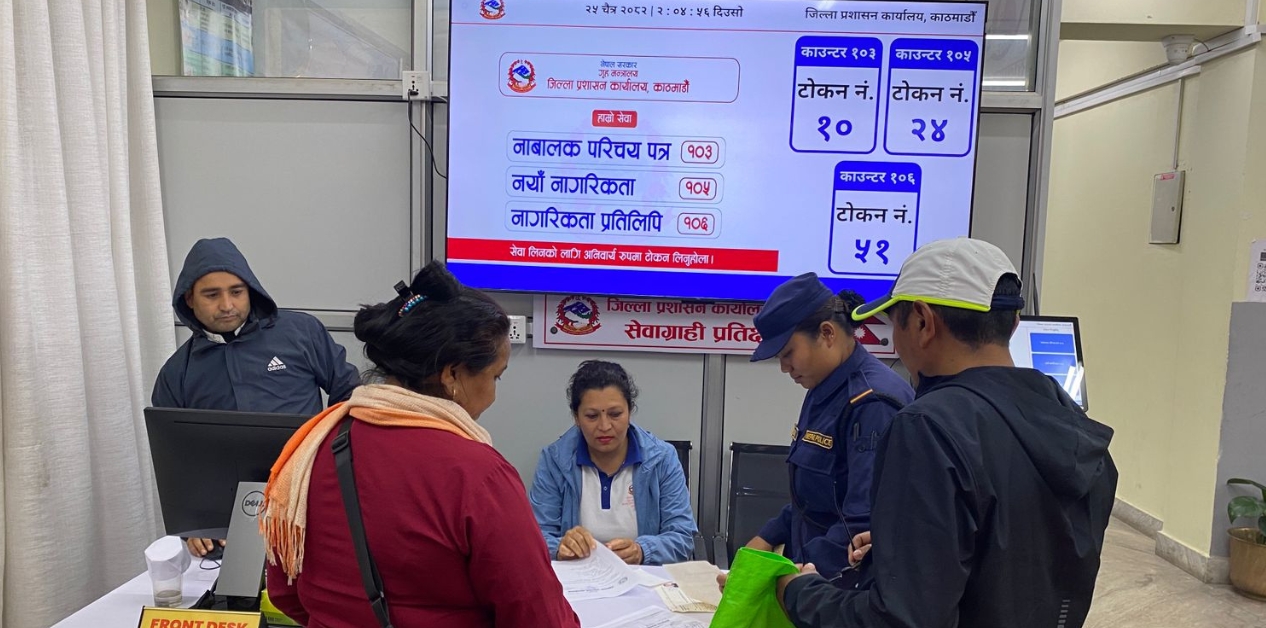
KATHMANDU: The debate over digital governance in Nepal has intensified once again. While the new government’s latest policies, programs, and budget rightly prioritize information technology, highlighting advancements in the Nagarik App, digital services, artificial intelligence (AI), data centers, startups, and digital payments to revamp public service delivery, the initial optimism masks a deeper systemic flaw. Our experience reveals a critical question: is Nepal truly building a modern digital governance system, or are we simply masking a legacy bureaucracy behind a new digital screen?
Today, many of us citizens fill out online forms, but ultimately, we still have to go to offices carrying paper to receive civic services. Details appear in the Nagarik App, but to complete a service, an employee’s signature, recommendation, stamp, phone call, personal connection, or duplicate certificates are required. National identity cards have been made, but many offices still demand citizenship certificates, birth certificates, photos, recommendations, and old papers all over again. An online system exists, but citizens cannot find out where a file has gotten stuck. Therefore, Nepal’s problem is not just a lack of technology; it is a lack of governance mindset, structure, and a sense of accountability.
Digital governance does not just mean having many government websites. It is a system where citizens have to visit the government less for their work, and the government must be more accountable to the citizens. Turning paper applications into online forms is “digitization.” However, making the service process itself simple, transparent, accountable, and citizen-friendly is “digitalization.” Until the behavior of governance, decision-making processes, data systems, and the unaccountable working structure of employees change, the digital system will remain merely an administrative decoration.
To understand this, Richard Heeks’ 2014 concept of the “design-reality gap” is useful. He states that the main reason information systems fail in developing countries is not that the technology is bad, but that there is a large gap between government systems and local realities/conditions. To put it in simple terms, when a system designed in an air-conditioned room in Kathmandu does not match the real lives of citizens in Jumla, Mugu, Bajura, Sarlahi, Manang, or Dolpa, that system fails. In the government’s imagination, a citizen possesses a smartphone, internet, English/Nepali literacy, a bank account, time, and patience. However, citizens sometimes have neither internet nor digital literacy, nor money to travel to offices, nor a place to ask when the system breaks down. This “design-reality gap” is the first disease of Nepal’s digital governance.
Therefore, it is not enough for words like “digital,” “AI,” “data,” “innovation,” or “platform” to merely appear in the government’s policies, programs, and budget. The question is: where do those plans reduce the actual suffering of citizens? Will the rounds made at the Land Revenue Office decrease or not? Will the hassle of getting a passport be reduced or not? Will social security allowances reach people on time, respectfully, and transparently or not? Will small businessmen paying taxes be able to understand the system or not? Will scholarships, health insurance, agricultural subsidies, and foreign employment services be smooth for citizens or not? If there are no clear answers to these, it clearly shows that the government’s budget and digital plans are technology-centric, not governance-centric.
Similarly, the concept of “Digital Era Governance” put forward by Patrick Dunleavy and his colleagues in 2017 points out Three problems of old public administration: departmental fragmentation, a citizen-detached structure of services, and the old burden of processes. According to them, digital era governance must break down departmental walls, join services according to the needs of citizens, and fundamentally restructure processes. In the context of Nepal, the meaning of this is clear. Citizens should not have to wander around asking, “Which ministry? Which department? Which branch? Which room?” ” The system itself should understand civic life-events to provide services.
For example, after a child is born, birth registration, vaccination, health insurance, child nutrition, school, local records, and information regarding social security are not subjects of separate offices but are subjects of a single citizen’s life event. Similarly, death, migration, marriage, business registration, foreign employment, old-age allowance, disability identity cards, or agricultural subsidies are also not departmental files; they are services connected to a citizen’s life journey. Digital governance should not impose the structure of offices onto citizens; it must connect offices according to the needs of citizens.
Nepal’s digital problem is no longer about technology. It is about governance, accountability, and a bureaucracy that still operates on paper despite being wrapped in digital language
In some situations, new governments consider the evolution of digital government merely as a process of moving from online services toward governance transformation. This thinking leaves them unaware of the important challenge regarding how the government understands the entry of digital into the state mechanism. In 2015, Tomasz Janowski suggested understanding the steps of digital government in at least five stages. The first stage is providing information; the second stage is providing services; the third stage is connecting systems; the fourth stage is building participatory relationships with citizens; and the final fifth stage is contextual transformation aligned with the goals of governance. From this perspective, Nepal is currently stuck in the first and second stages in most places. There is information, there is a form, there is a portal, and there is an app as well; but the systems do not recognize or coordinate with each other. Citizens have to repeatedly submit proofs. The journey of a file is invisible. Even if a grievance is registered, the accountability for its resolution is unclear. This shows that we are using the language of digital government, but we are not yet building the structure of digital governance.
Despite the immense potential of utilizing rapidly evolving digital technology to assist in operating governance, it is seen to have limited achievements or to be largely unsuccessful in developing nations. An article published by Richard Note: The source text states Denisa in 2017 after reviewing available research studies points out another important thing—the failure of e-governance is not solely due to technical weaknesses, but due to a lack of political willpower, institutional coordination, employee capacity, social acceptance, local context, and managerial accountability.
In Nepal as well, many digital projects are inaugurated, but after a few years, they become ineffective, and in some cases, they fail to such an extent that they even affect the existing old system. For instance, the technologies used break down, do not get updated, do not connect with one another, or citizens stop using them altogether. The reason for this is not just technological mismatch; it is the lack of ownership by the government or service providers. Which agency is responsible? Who provides the budget? Who keeps the data complete? Who looks after security? Who resolves citizens’ grievances? Who has the authority to improve the system? Until there are answers to these questions, digital projects become merely a temporary show of display.
Regarding digital good governance, the experiences of neighboring and some external nations can be useful for us too. From Estonia’s experience, Nepal can learn the “once-only principle,” the essence of which is that the state should not request information from citizens again if it already possesses it. From India, one can learn the power of UPI (Unified Payments Interface), DigiLocker, and Digital Public Infrastructure. However, one must also learn a lesson of caution from the opposition and boycott campaigns against the “Aadhaar” system there, which questioned citizens’ data privacy. From Bangladesh, a lesson can be taken that apps should not be primary but supportive digital services, where arrangements can be made to connect citizens with low literacy, the elderly, rural populations, or those without internet access to digital services through service centers. From Singapore, a framework of life-event-based services can be learned, where the needs of citizens are primary, not the structure of the government. The essence of all these experiences is the same: the foundation of successful digital governance is not technology but a trustworthy institution.
The recently presented policies, programs, and budget for the upcoming fiscal year 2026/27 by the government can be put into practice from this very perspective. Giving national priority to information technology is welcome. Announcements regarding AI, digital infrastructure, the Nagarik App, digital payments, the startup ecosystem, and integrated data centers are timely. However, the results of these announcements will be limited unless they bring a clear plan to break the old bureaucracy, departmental data ownership, obsession with paper evidence, delays in service, and file invisibility. Before building an “AI Computational Center,” citizens must be allowed to see where their file is. Before saying “Digital Nepal,” the compulsion of citizens having to submit the same paper to five offices must be removed. Before saying “Smart Governance,” public decisions must be based on the Three ‘A’ principles: Attributable (a specific individual can be caused or credited for the relevant work), Appealable (a complaint can be filed), and Accountable.
For this, the government can immediately move forward with some tasks.
First, a public audit of the 25 services where citizens have faced the most hardship and suffering must be conducted. It should be made public how many steps a citizen crosses, how many papers they submit, how many days they wait, where the file gets stuck, and who makes the decision in services such as passports, driving licenses, land revenue, birth-death registration, taxes, company registration, foreign employment, social security, scholarships, health insurance, agricultural subsidies, and recommendations from local bodies. Therefore, service improvement must start from data, not from speeches.
The real test of Digital Nepal is not the number of apps launched, but whether citizens can access services without queues, duplicate documents, and endless visits to government offices
Second, the Nagarik app must be transformed from merely a medium to view information into a system that provides complete services. Applications, fees, verification, status tracking, responsible officials, estimated completion dates, grievances, appeals, and certificate availability must all be within a single system. Citizens should not receive vague notifications like “your file is in process” but clear information stating “which official it has reached, since when it has been there, and why it is there.”
Third, a “Once Only Nepal” policy must be implemented. A rule must be made that if evidence regarding birth registration, citizenship, national identity card, tax clearance certificate, company registration, land registration, education, health, social security, and vehicles is with the state, it cannot be demanded from the citizen again. For this, a secure government data exchange layer, role-based access, audit logs, consent mechanisms, and data minimization are required. This is not a disorder where data exchange happens openly; it is a governance process within the boundaries of legal purposes and citizens’ rights.
Fourth, a digital service unit must be established in every ministry, province, and local level. However, this should not be limited merely to a group of computer engineers. It must include experts in public administration, law, data governance, cybersecurity, language localization, inclusion, and communication. Digital good governance is a multidisciplinary task. An information technology branch alone cannot transform the state.
Fifth, ward offices, post offices, community schools, libraries, cooperatives, or local service centers must be turned into supportive digital governance units. The thinking that all citizens must run apps is wrong. The state must provide services; it does not need to make citizens pass a technology exam. Digital inclusion means bringing technology to the citizens, not shutting citizens out in the name of technology.
Sixth, work must be done on a system of transparency. A public dashboard for public procurement, budget expenditures, project progress, subsidies, licenses, tax exemptions, appointments, and service timelines must be mandatory. For good governance, a stronger measure than speeches on controlling corruption is to make the digital footprint of every decision visible. Until it is visible who made which decision, when, and on what basis, digital governance will not be democratic and people-oriented.
Ultimately, the future of Nepal’s digital governance will not be determined by apps, portals, servers, or AI alone. The main thing that will determine it is: how does the state view its citizens? If the old culture of looking at citizens with suspicion, hiding information, controlling files, and evading responsibility persists in the state, the digital system will not liberate citizens; instead, it will build an invisible digital wall. However, if the government understands Richard Heeks’ “design-reality gap,” breaks down departmental walls according to “Digital Era Governance” put forward by Patrick Dunleavy and his colleagues, moves from online services toward governance transformation according to Tomasz Janowski’s concept of “digital evolution,” and learns from the factors of failure shown by Denisa, then Nepal can build true digital good governance.
Digital Nepal means not many apps, but the end of the painful rounds that people are suffering through. Not many portals, but the bearing of clear accountability. Not many data centers, but the ensuring of citizens’ data rights. Not many announcements, but service improvement that citizens can feel. Now, Nepal’s policy debate must make technology the tool and governance improvement the goal. Otherwise, in the name of digital governance, we will merely be giving the old bureaucracy a new screen.